

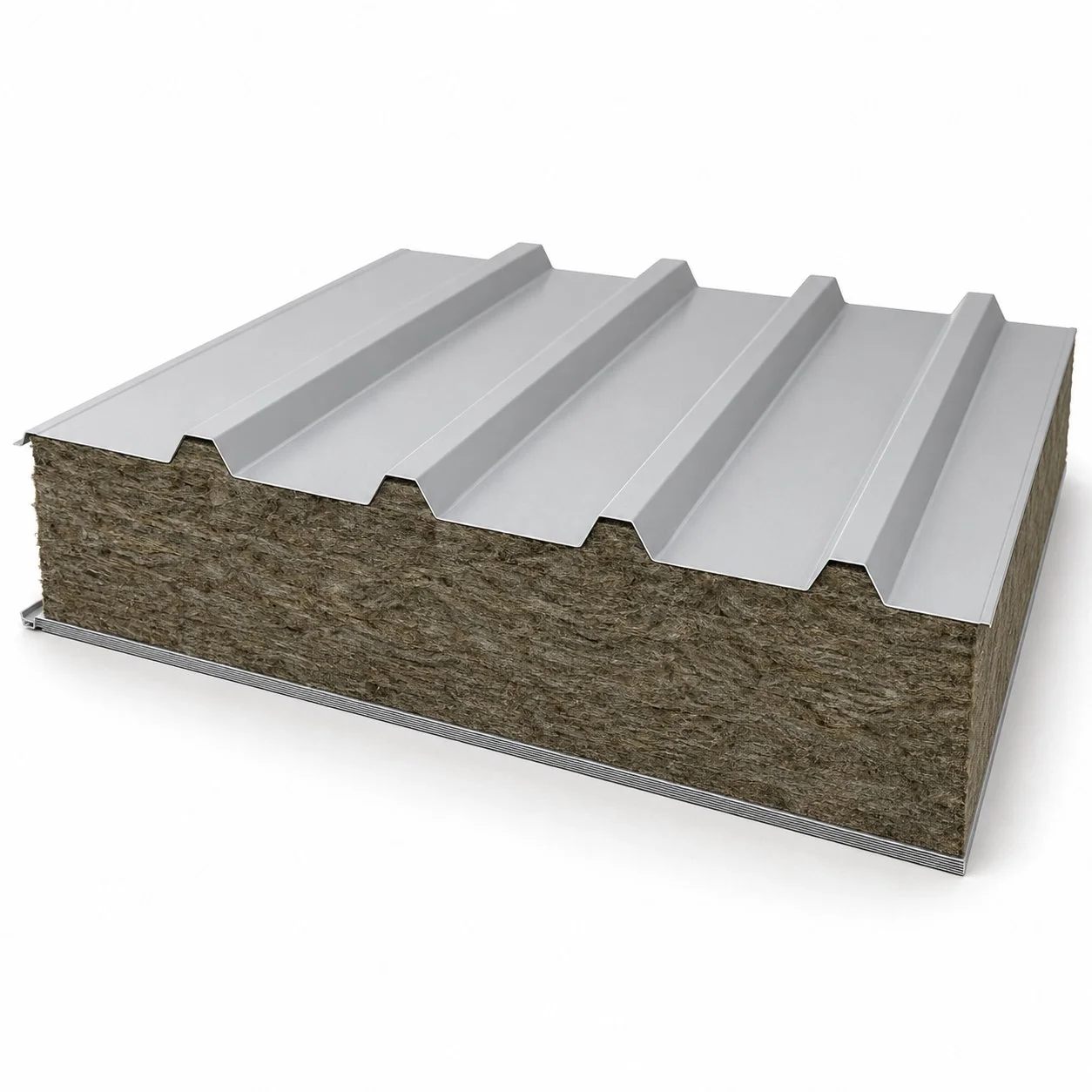
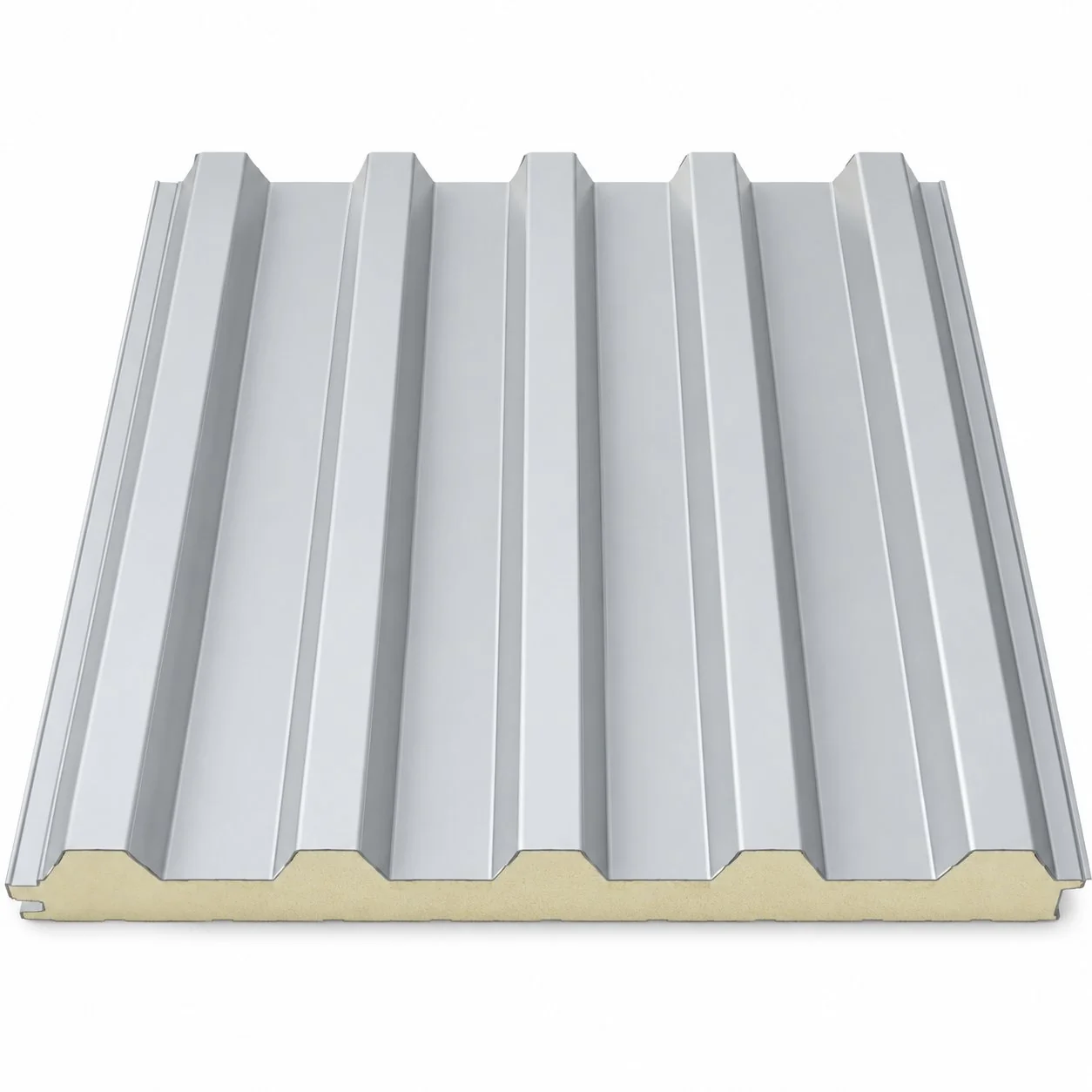
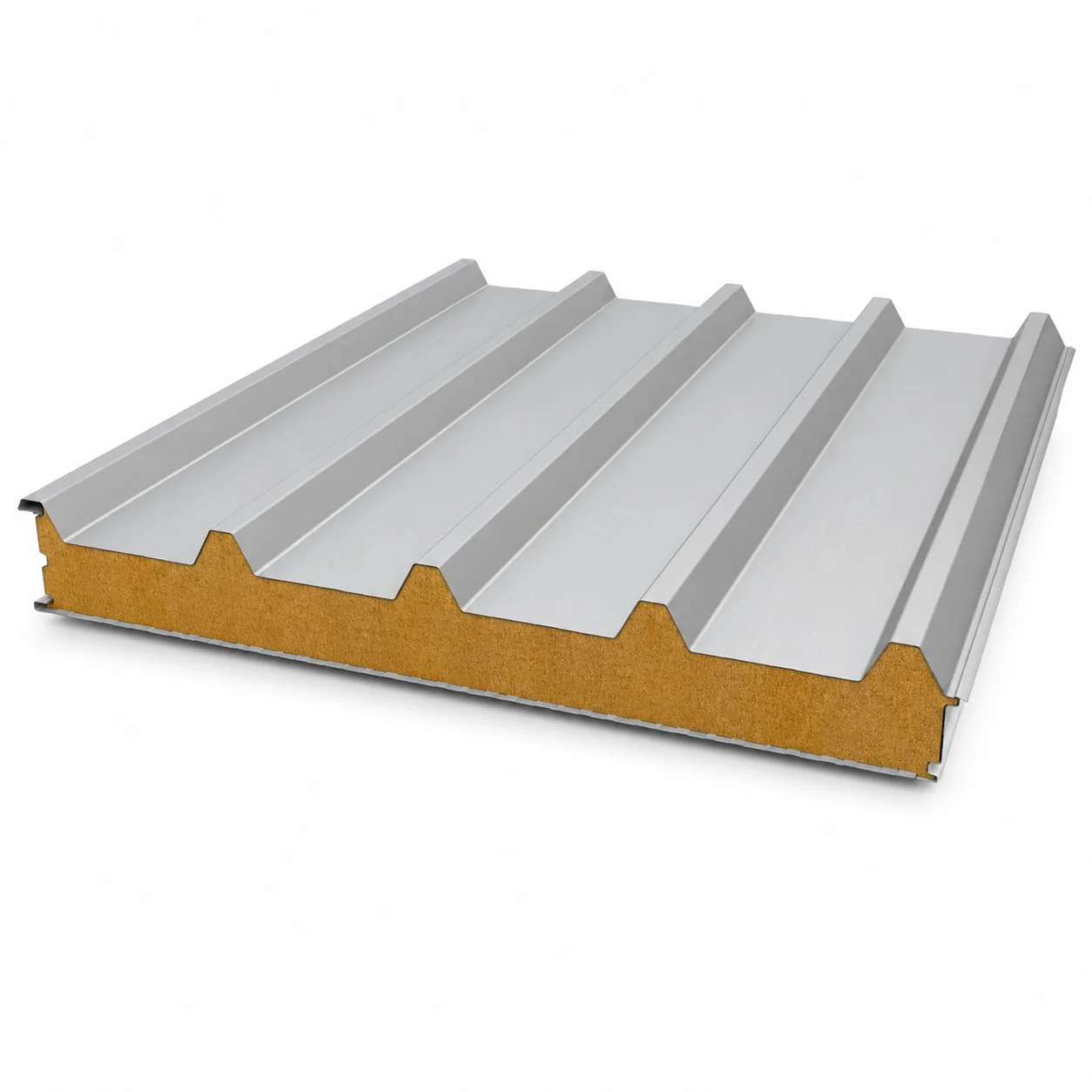
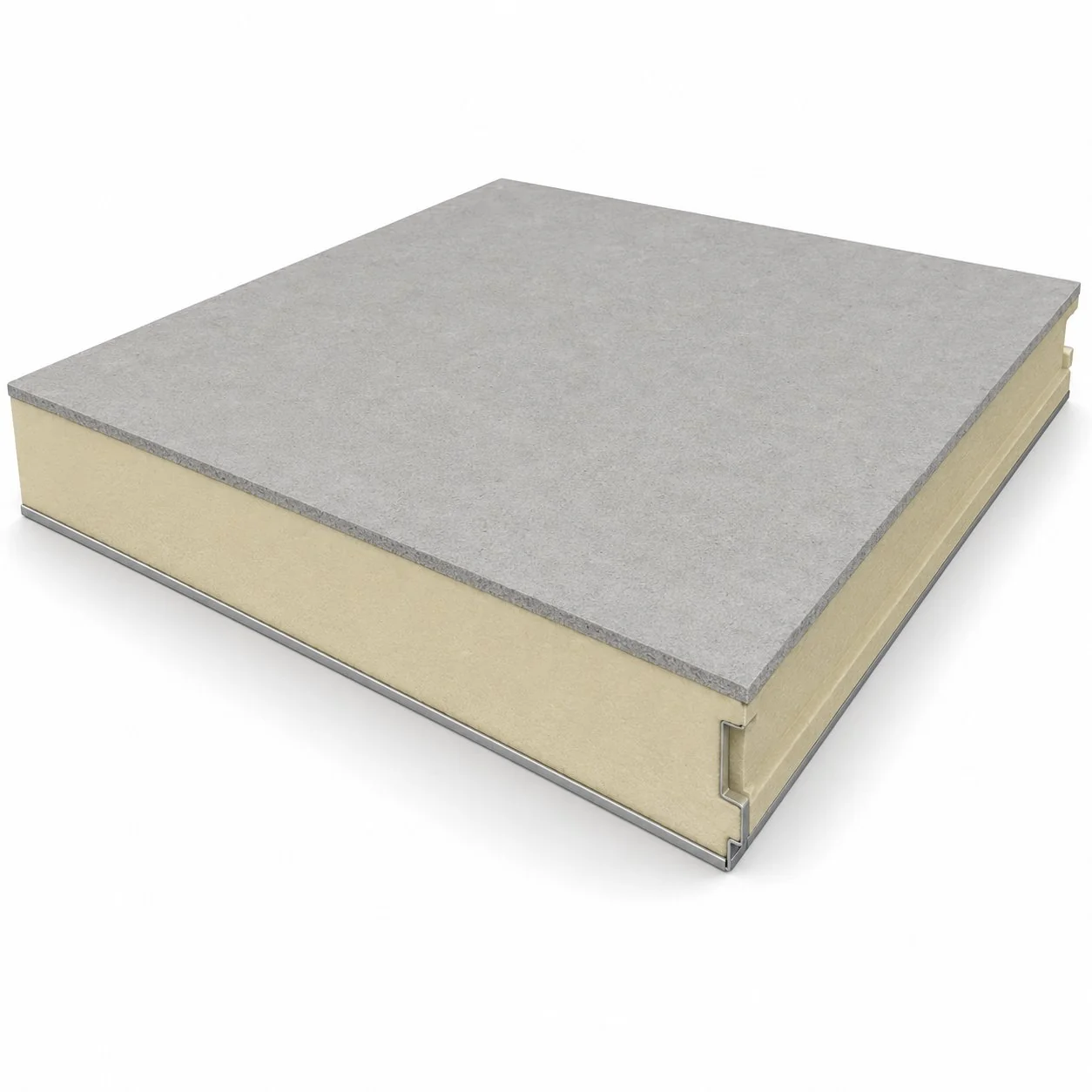
EPS Roof Panel
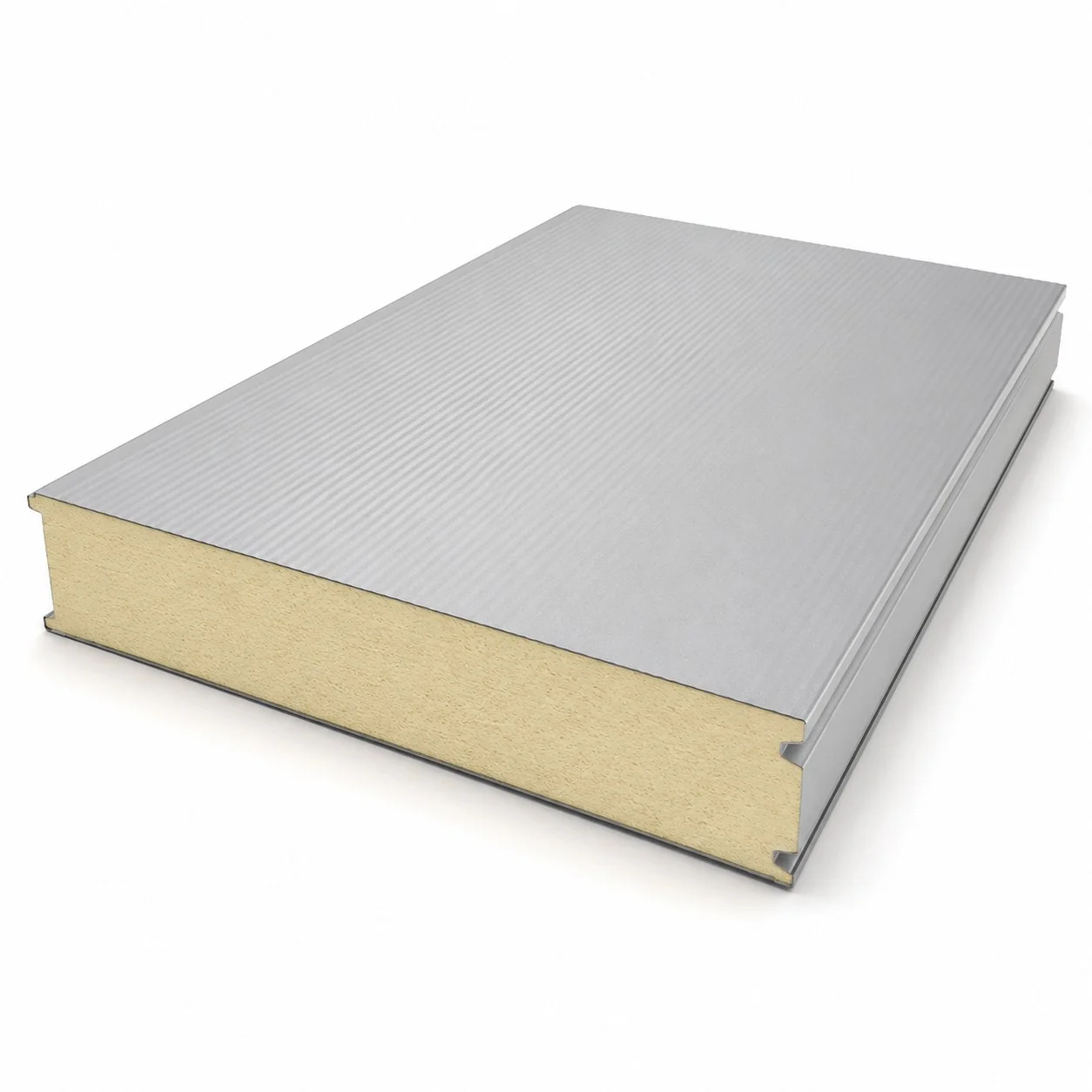
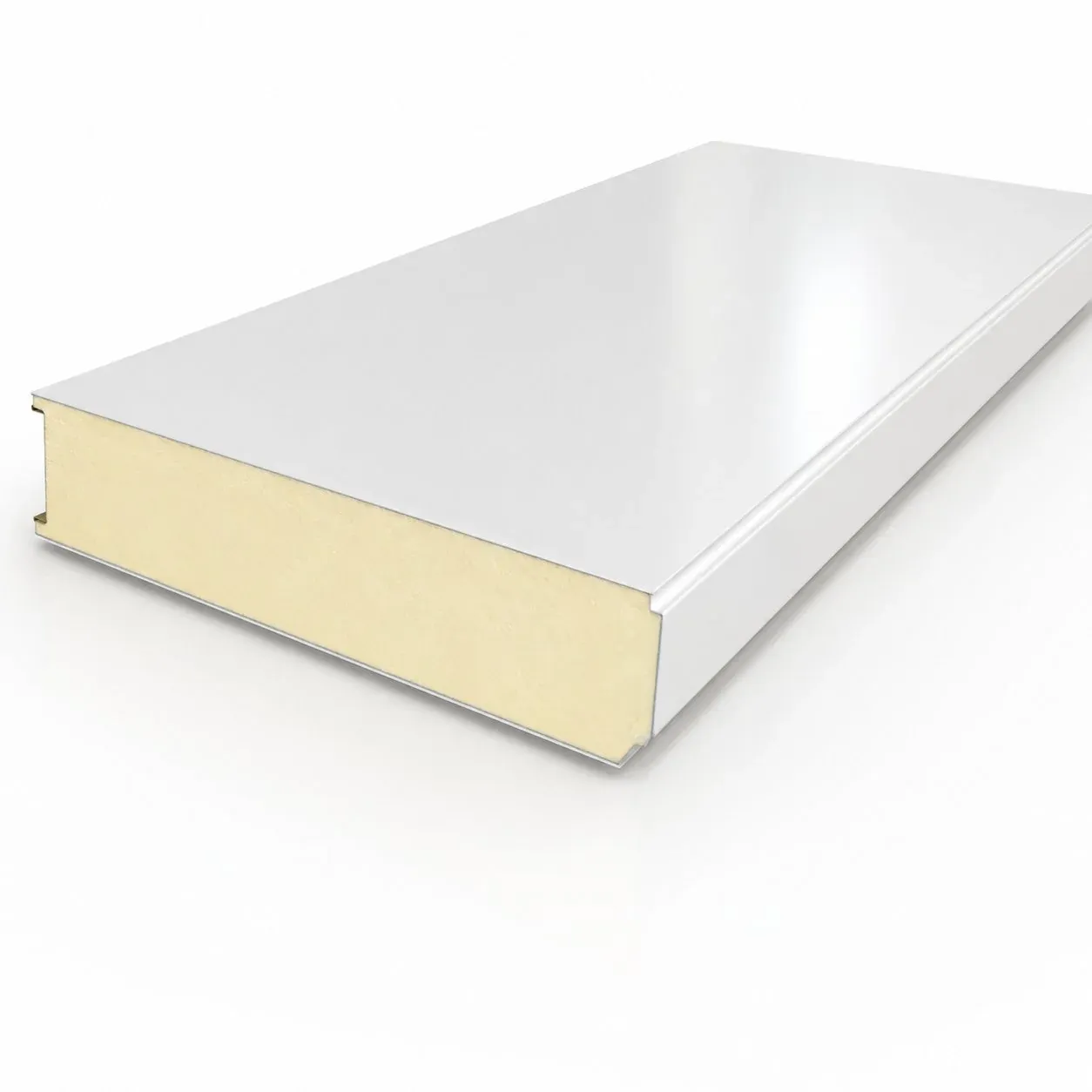
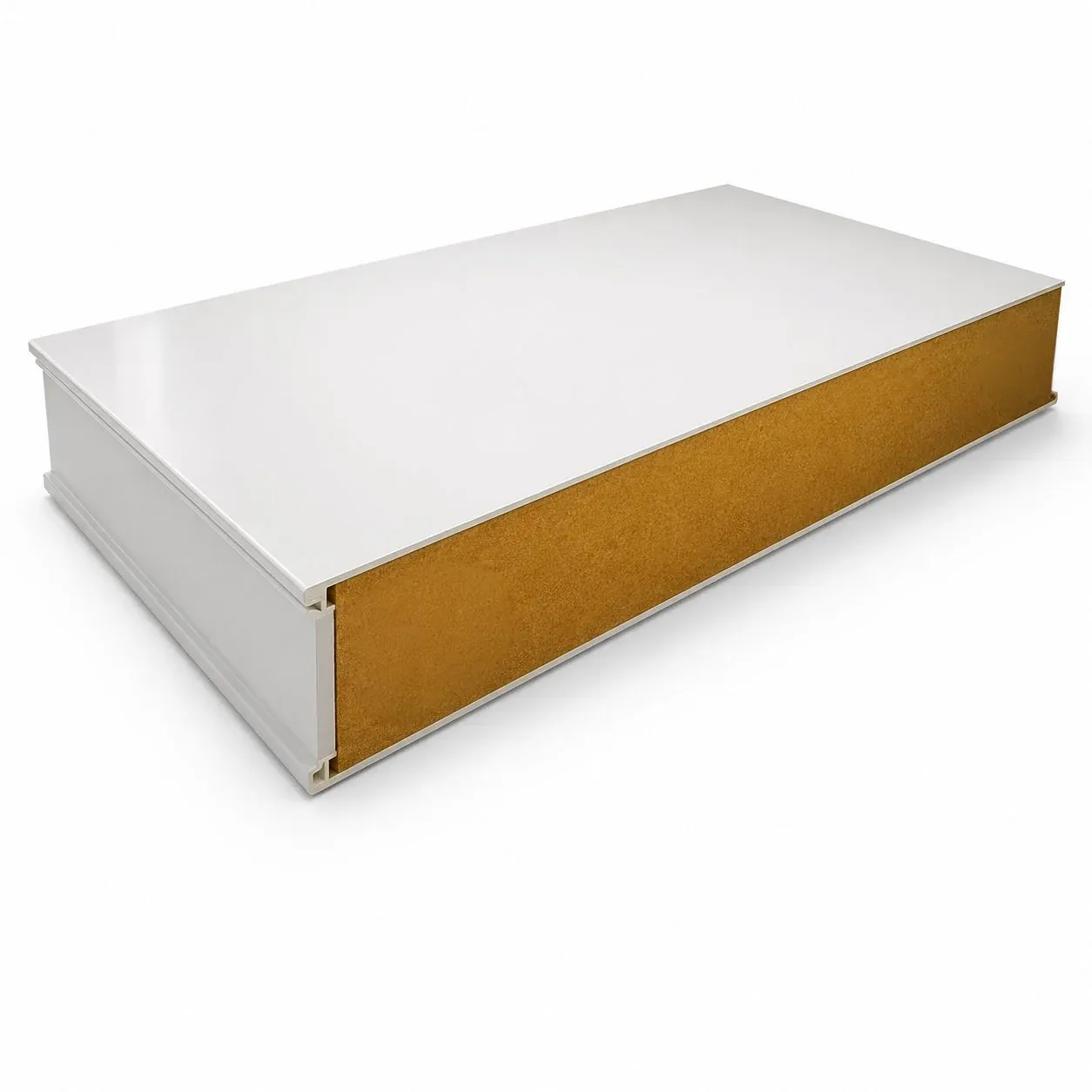
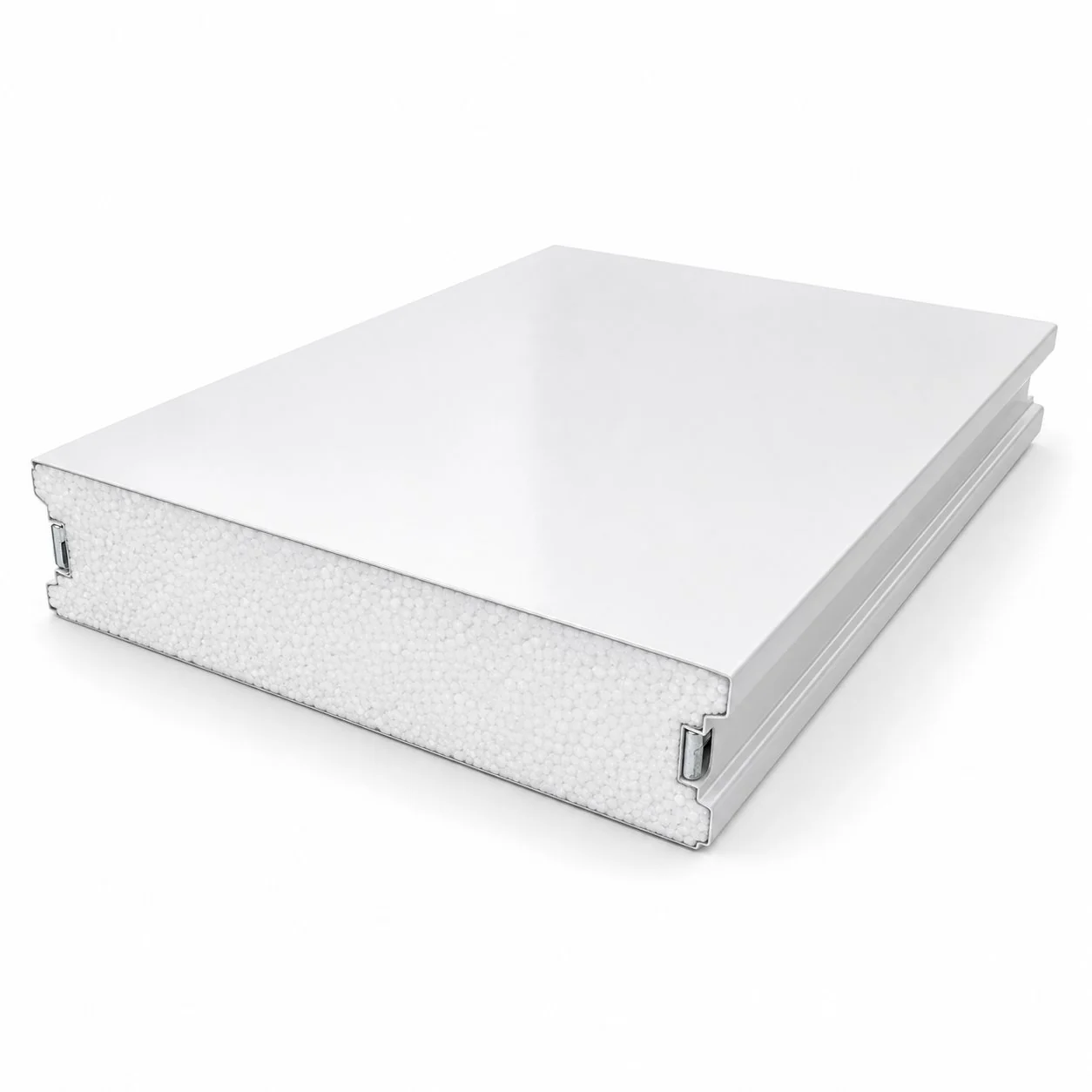
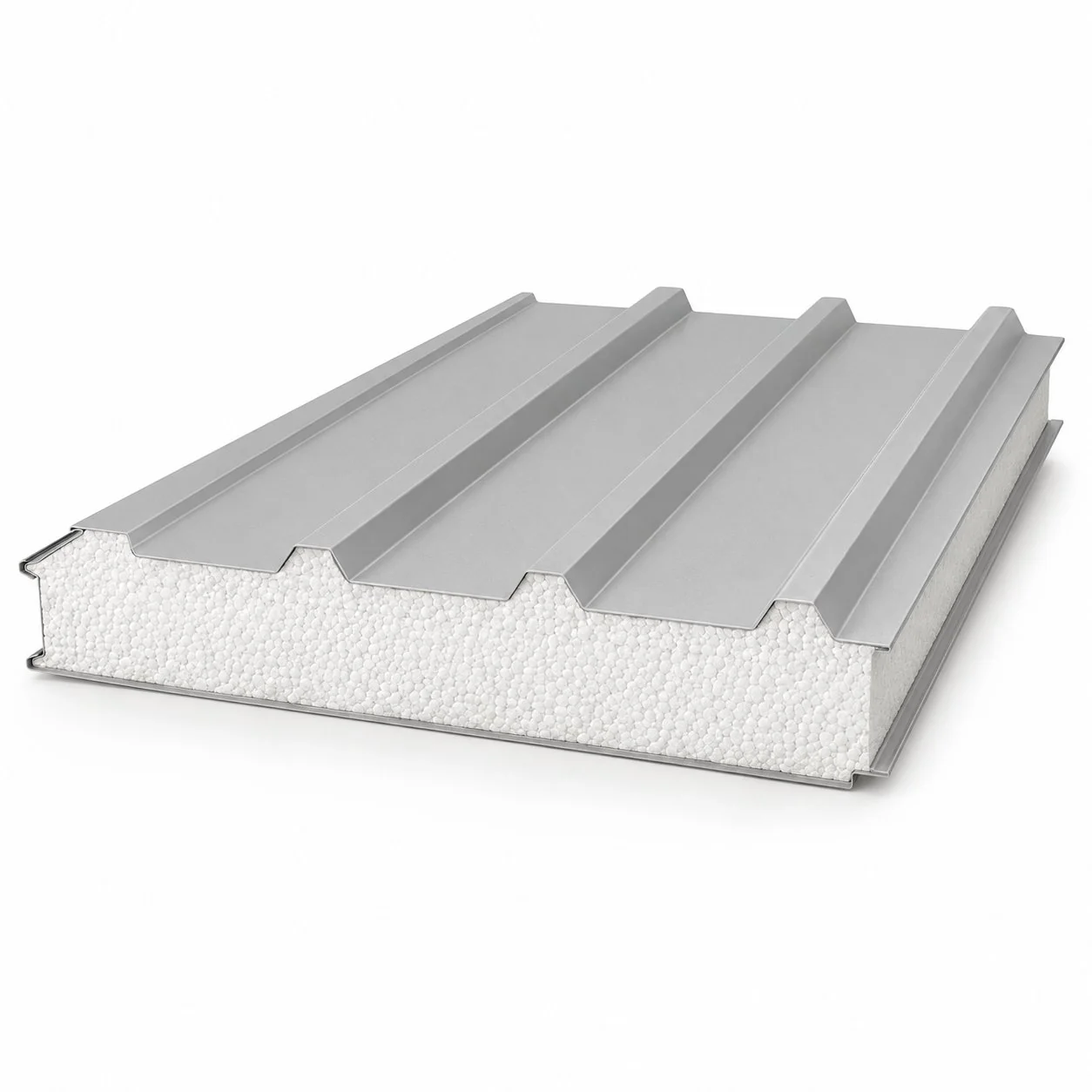
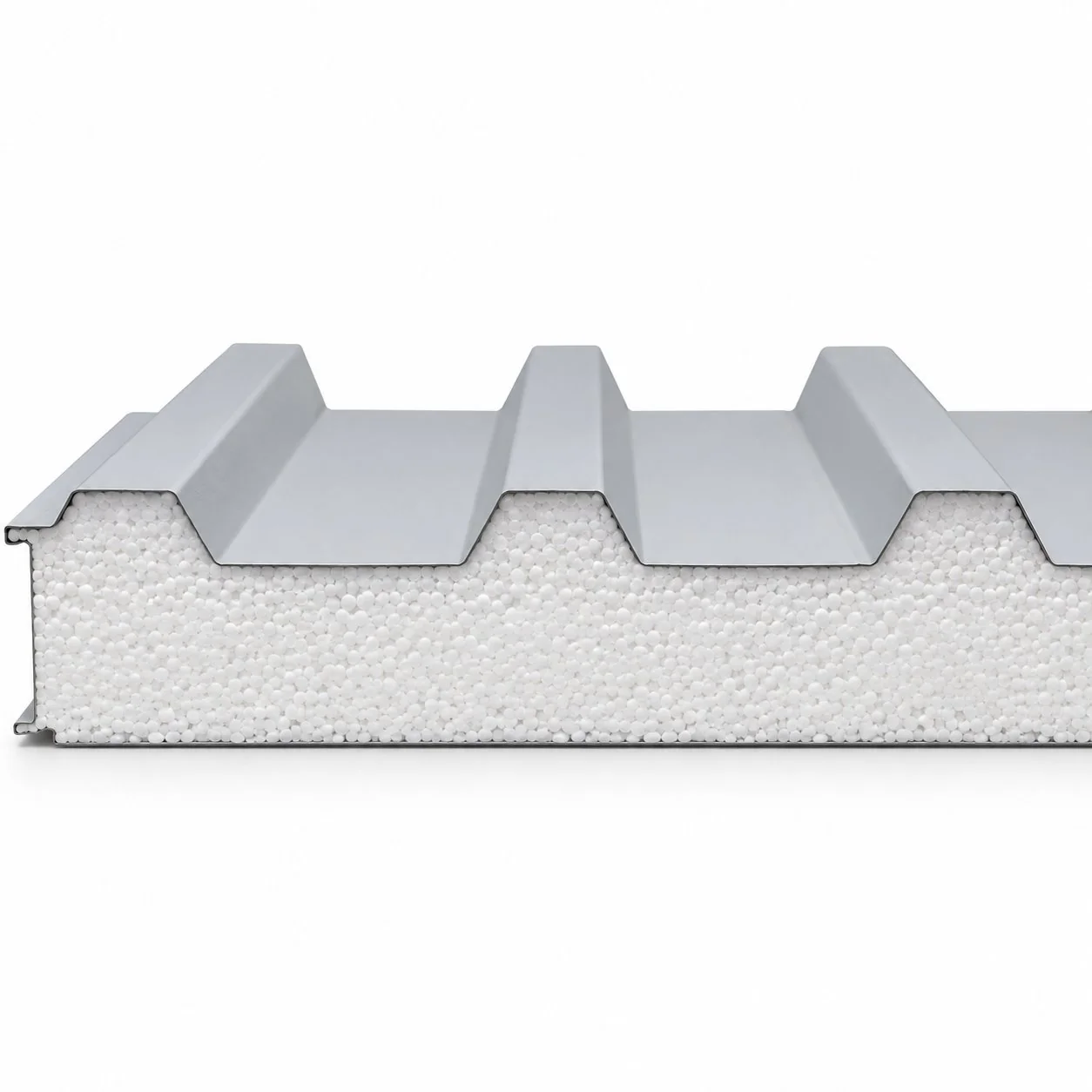
Budget-optimized EPS roof panel with expanded polystyrene core and trapezoidal profile. Cover maximum roof area at the lowest cost per square metre — the smart roofing choice when budget drives the decision.
- Thermal Conductivity: 0.035 W/mK
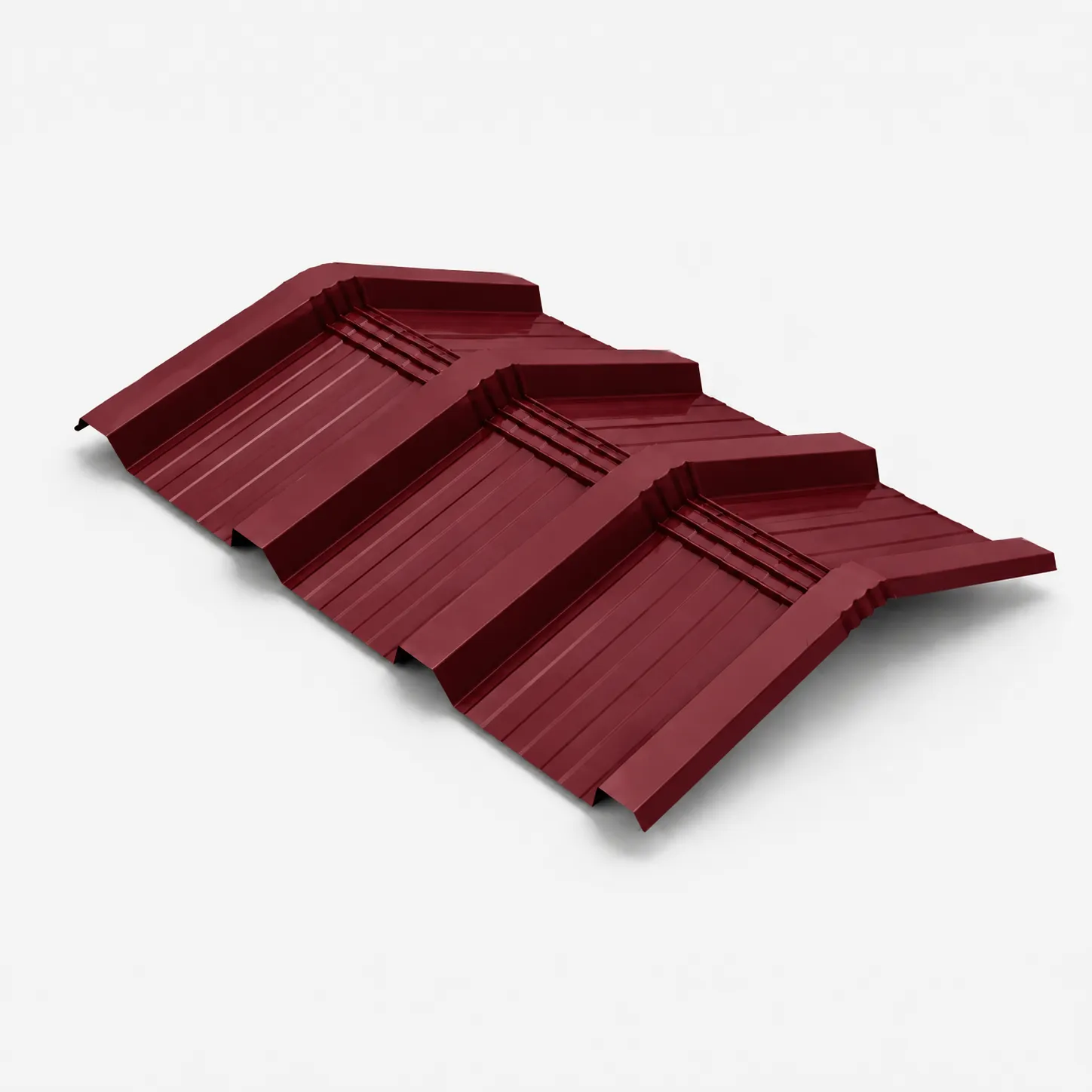
- Exterior Profile: Trapezoidal (3- or 5-rib) — structural + drainage
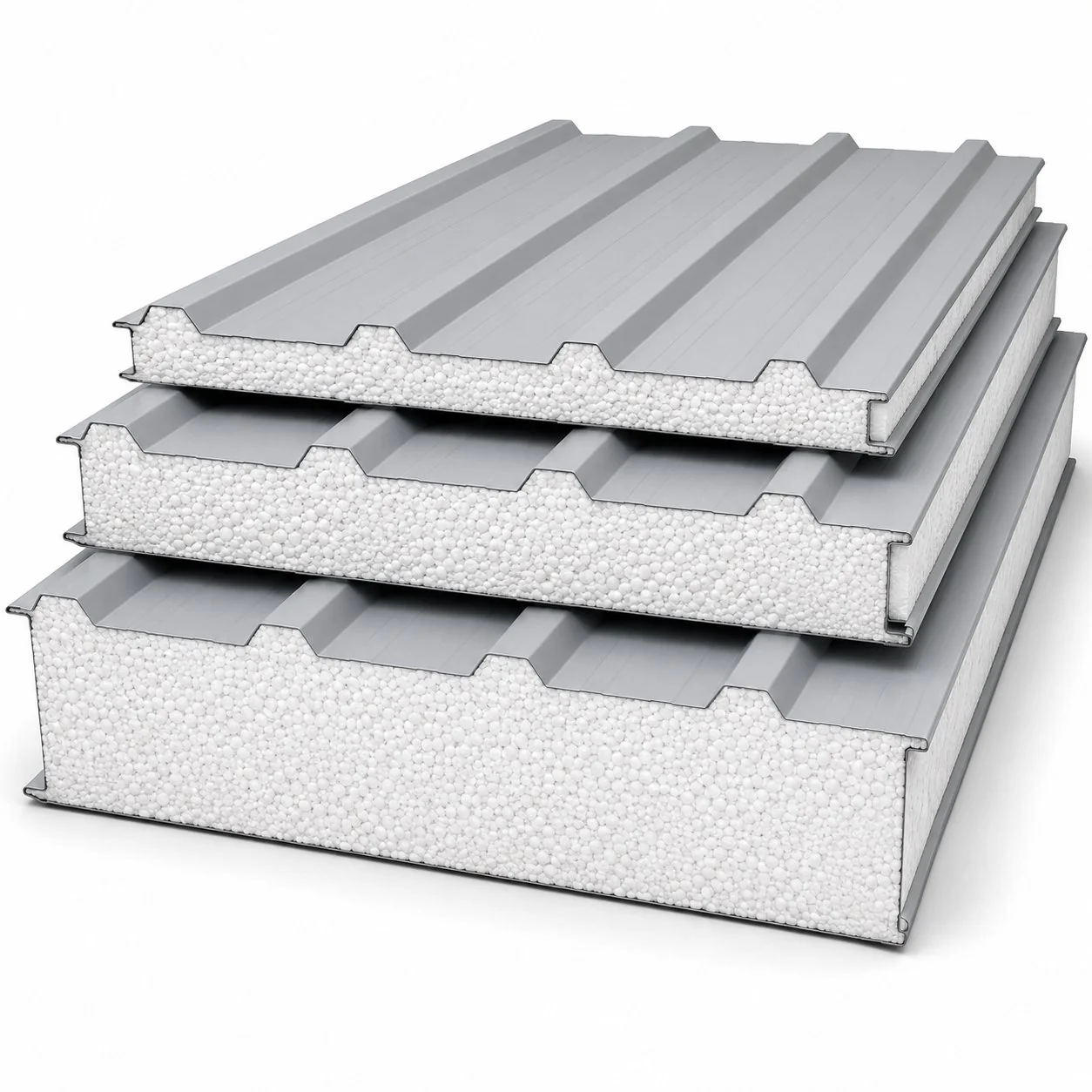
- Thickness Range: 50 – 200 mm
- Fire Classification: Euroclass E (fire-retardant EPS)
- Weight: Ultra-lightweight — lightest roof panel in our range
- Standards: EN 14509, CE Marked
Need better fire rating? PUR roof panel (B-s2) or PIR roof panel (B-s1). Compare: Panel Selector.
Maximum Roof Coverage, Minimum Budget
The EPS roof panel is the most cost-effective insulated roofing solution in Real Panel’s product range. Combining an expanded polystyrene foam core with a structural trapezoidal steel profile, EPS roof panels let you cover large roof areas quickly and affordably — without compromising on weathertightness or basic thermal insulation.
For projects where the roofing budget is fixed and every square metre of coverage counts, EPS delivers more roof per dollar than any other panel type. The ultra-lightweight construction further reduces costs by requiring lighter purlins, smaller cranes, and fewer man-hours on the roof.
Key Benefits
- Lowest Roofing Cost: EPS roof panels cost 25–40% less per m² than PUR equivalents. For large-area roofing on budget-driven projects, the savings are substantial.
- Ultra-Lightweight: At just ~7–9 kg/m² (80 mm), EPS roof panels are the lightest option available. This directly reduces structural steel requirements — lighter purlins, columns, and foundations.
- Moisture Resistant: EPS’s closed-cell bead structure does not absorb water. Even in prolonged rain exposure during installation, the core maintains its insulation value — an advantage over rockwool in wet-climate roofing.
- Trapezoidal Profile: Same 3- or 5-rib structural exterior as PUR and PIR roof panels. Provides structural spanning capability and efficient rainwater drainage to gutters.
- Fast Installation: Low weight means panels are easy to lift, position, and fix. Installation rates of 250–400 m² per day are achievable with experienced crews.
- Proven Material: EPS insulation has a 50+ year track record in construction. It does not settle, degrade, or lose thickness over time.
Manufactured at our production facility in Turkey. Export available to Romania, Bulgaria, Georgia, Macedonia, and Kosovo.
Ideal Applications
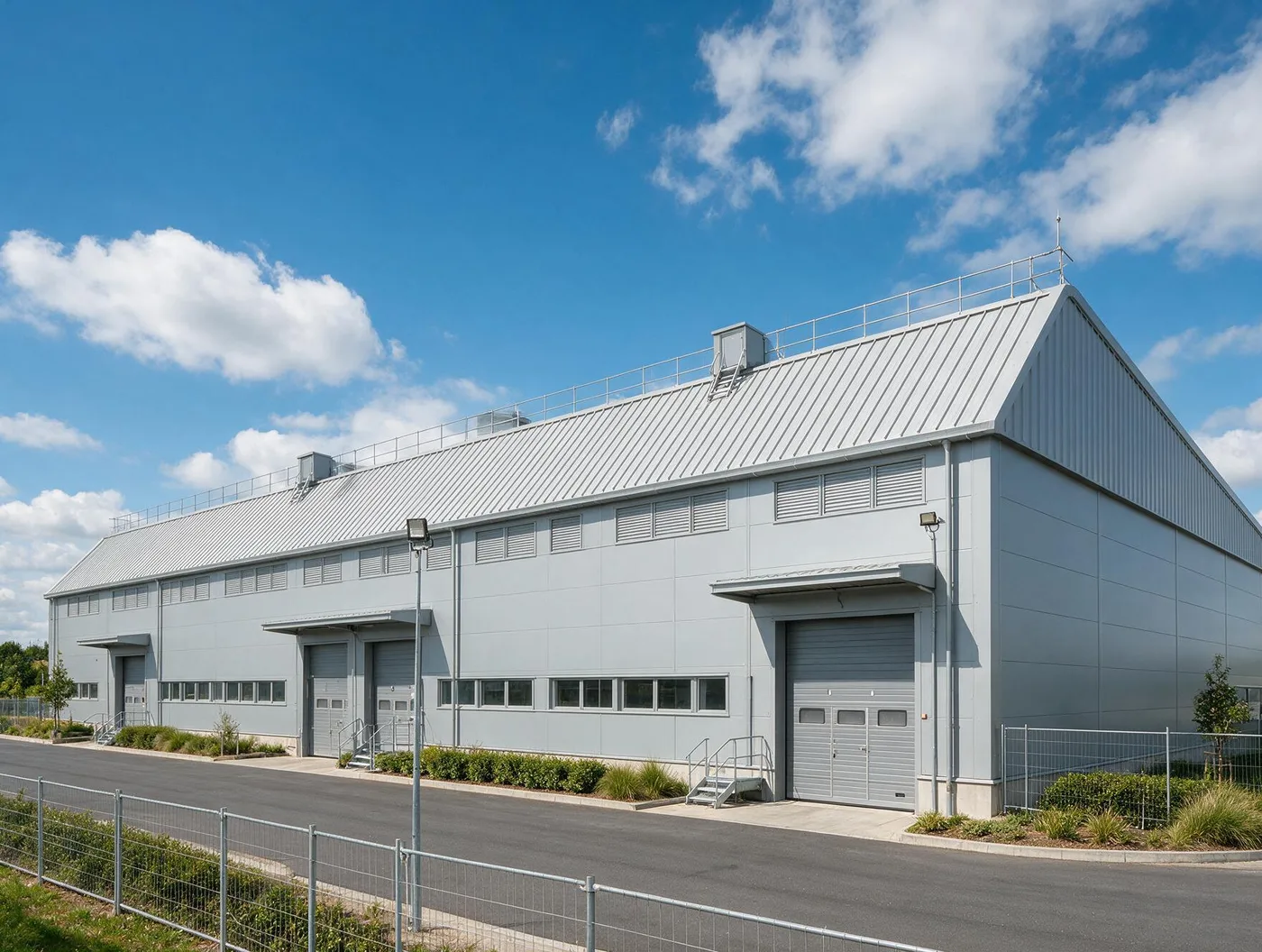
- Industrial Buildings — factories and workshops where budget and speed are priorities
- Logistics & Warehousing — large distribution centers with maximum roof area
- Agriculture — livestock shelters, poultry houses, barns, grain storage
- Temporary and semi-permanent structures — site offices, seasonal storage, exhibition pavilions
- Multi-building complexes — industrial parks and farm clusters where volume drives the budget
- Interior mezzanine roofing — where fire rating requirements are minimal
Not suitable for roofs requiring B-class fire rating. For fire-enhanced roofing: PUR (B-s2) or PIR (B-s1). For non-combustible: rockwool roof panel.
Panel Specifications
| SPECIFICATION | VALUE |
| Core Material | Expanded polystyrene (EPS), fire-retardant grade |
| Core Density | 15–25 kg/m³ (customizable) |
| Thermal Conductivity (λ) | 0.035 W/mK (declared value per EN 14509) |
| Panel Thickness | 50 / 60 / 80 / 100 / 120 / 150 / 200 mm |
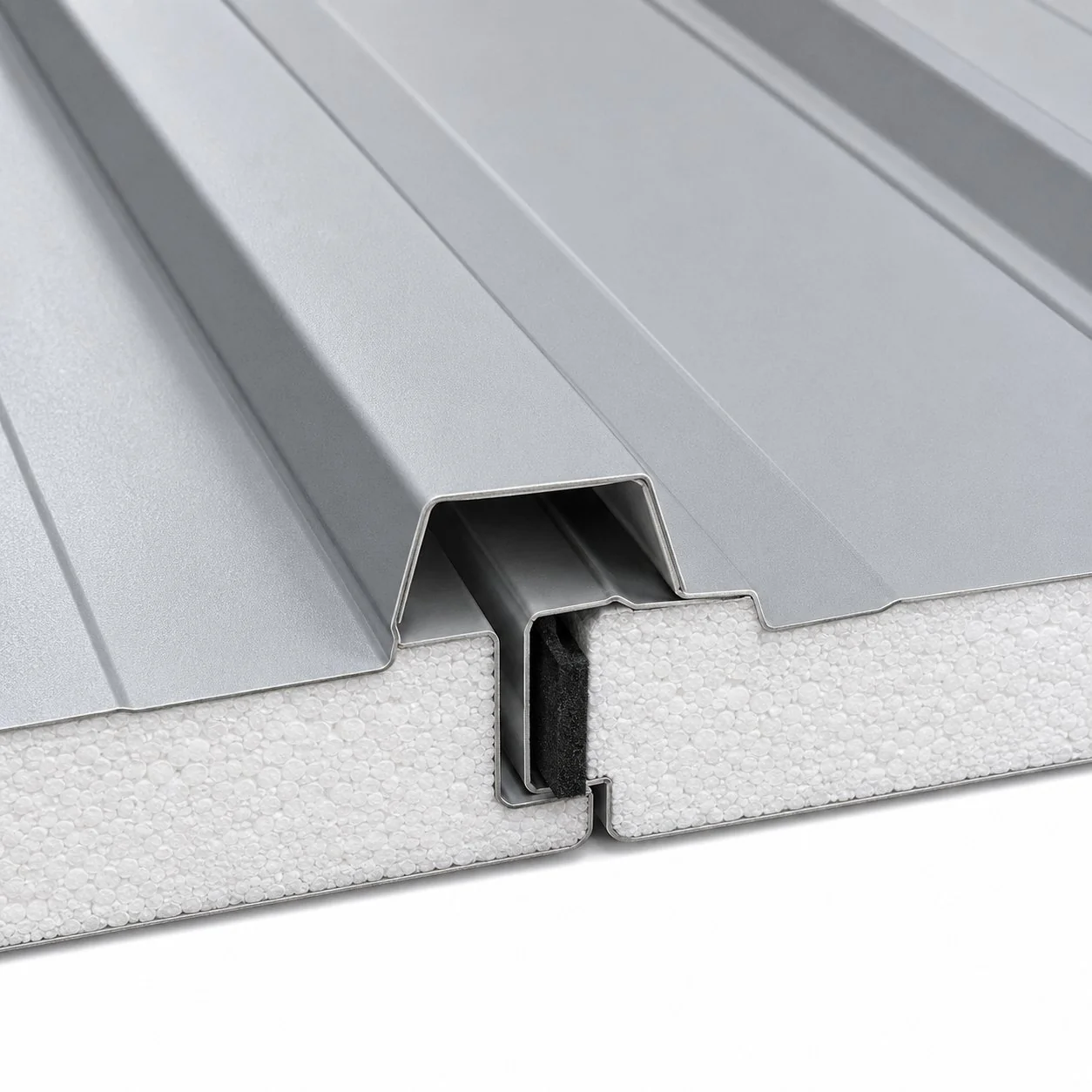
| Exterior Profile | 3- or 5-rib trapezoidal (structural) |
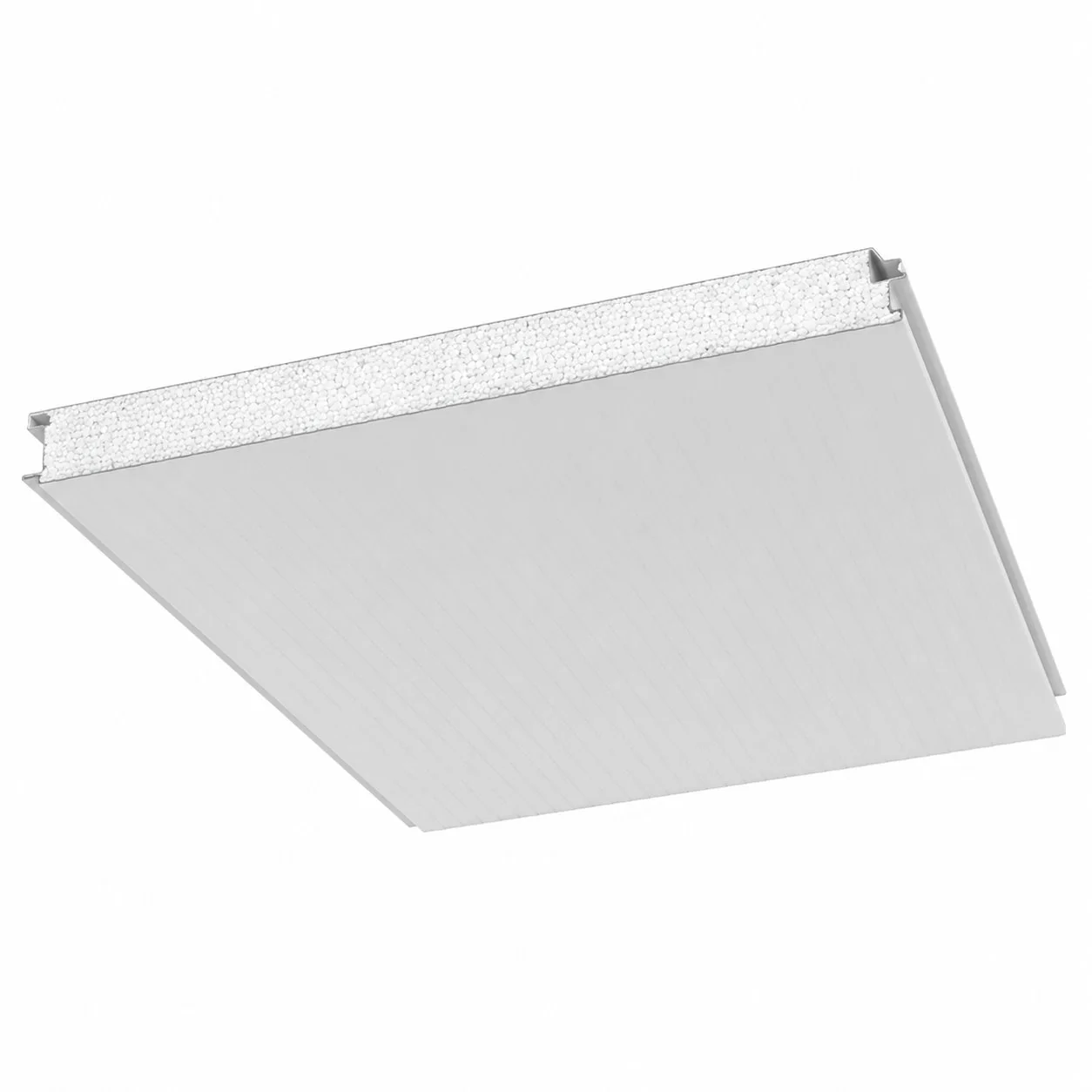
| Interior Profile | Micro-rib (flat liner) |
| Effective Width | 1000 mm (standard) |
| Maximum Length | Up to 12,000 mm |
| External Facing | Pre-painted galvanized steel (PPGI), 0.4–0.6 mm |
| Internal Facing | Pre-painted galvanized steel (PPGI), 0.4–0.5 mm |
| Coating Options | Polyester (25 µm), PVDF (25 µm) |
| Joint System | Side-lap overlap with pre-applied sealant strip |
| Fire Reaction | Euroclass E (per EN 13501-1) |
| Weight (approx.) | ~7–9 kg/m² (at 80 mm) — lightest roof panel |
| Min. Roof Pitch | 7° (recommended minimum) |
| Max. Purlin Span | Up to 3,500 mm (varies by thickness and load) |
| Moisture Absorption | <2% by volume (closed-cell) |
| Service Temperature | -40°C to +70°C |
| Color Options | Full RAL color range |
| Standards | EN 14509, EN 13163, CE Marked, ISO 9001 |
U-Value by Panel Thickness
| SPECIFICATION | VALUE |
| 50 mm | U = 0.66 W/m²K |
| 60 mm | U = 0.55 W/m²K |
| 80 mm | U = 0.42 W/m²K |
| 100 mm | U = 0.34 W/m²K |
| 120 mm | U = 0.28 W/m²K |
| 150 mm | U = 0.23 W/m²K |
| 200 mm | U = 0.17 W/m²K |
Calculate: U-Value Calculator.
EPS Density Options for Roofing
| SPECIFICATION | VALUE |
| 15 kg/m³ | Basic insulation, sheltered locations, agricultural buildings |
| 18 kg/m³ | Standard roofing, most common for general industrial use |
| 20 kg/m³ | Enhanced for wind-exposed roofs and wider purlin spacings |
| 25 kg/m³ | Maximum compressive strength for maintenance traffic and snow loads |
Total Roofing Cost Breakdown
EPS roof panels reduce total roofing costs from three directions simultaneously:
- Panel Material: 25–40% lower panel cost per m² compared to PUR. On a 5,000 m² roof, this alone represents significant savings.
- Structural Steel: EPS panels at 80 mm weigh ~8 kg/m² versus PUR at ~12 kg/m² and rockwool at ~22 kg/m². Lighter panels mean lighter purlins (smaller C/Z sections), lighter columns, and lighter foundations. On large buildings, structural steel savings can equal or exceed the panel cost savings.
- Installation Labor: Ultra-light panels require smaller cranes (or no crane for single-story buildings), fewer workers for lifting and positioning, and faster fix rates. Installation speed can reach 400 m²/day — 50–70% faster than rockwool panels.
Cost Comparison: Roof m² Budget Scenarios
| SPECIFICATION | VALUE |
| Entry-level budget | EPS: Achievable | PUR: Tight | PIR: Over | RW: Over |
| Mid-range budget | EPS: Comfortable | PUR: Achievable | PIR: Tight | RW: Over |
| Higher budget | All options available — choose by performance requirement |
Thickness vs Cost Trade-Off
Because EPS has a higher lambda (0.035) than PUR (0.022), you need thicker EPS panels to match PUR’s thermal performance. But even with thicker panels, EPS often remains cheaper overall:
| SPECIFICATION | VALUE |
| Target U = 0.42 | PUR: 50 mm | EPS: 80 mm — EPS still ~20% cheaper |
| Target U = 0.28 | PUR: 80 mm | EPS: 120 mm — EPS still ~15% cheaper |
| Target U = 0.22 | PUR: 100 mm | EPS: 150 mm — Cost approaches parity |
At very high insulation targets (U < 0.20), the thickness difference becomes so large that PUR may become more cost-effective when accounting for increased structural steel needs for thicker, heavier panels.
When to Upgrade from EPS
Consider upgrading to PUR or PIR roof panels when:
- Fire regulations require B-class rating (EPS is Euroclass E)
- Purlin spacings demand maximum span performance (PUR spans further at equivalent thickness)
- Thermal targets require U-values below 0.20 (EPS panels become very thick)
- Insurance premiums are significantly affected by roof fire classification
Use the Panel Selector to find the optimal balance.
How does the EPS roof panel compare?
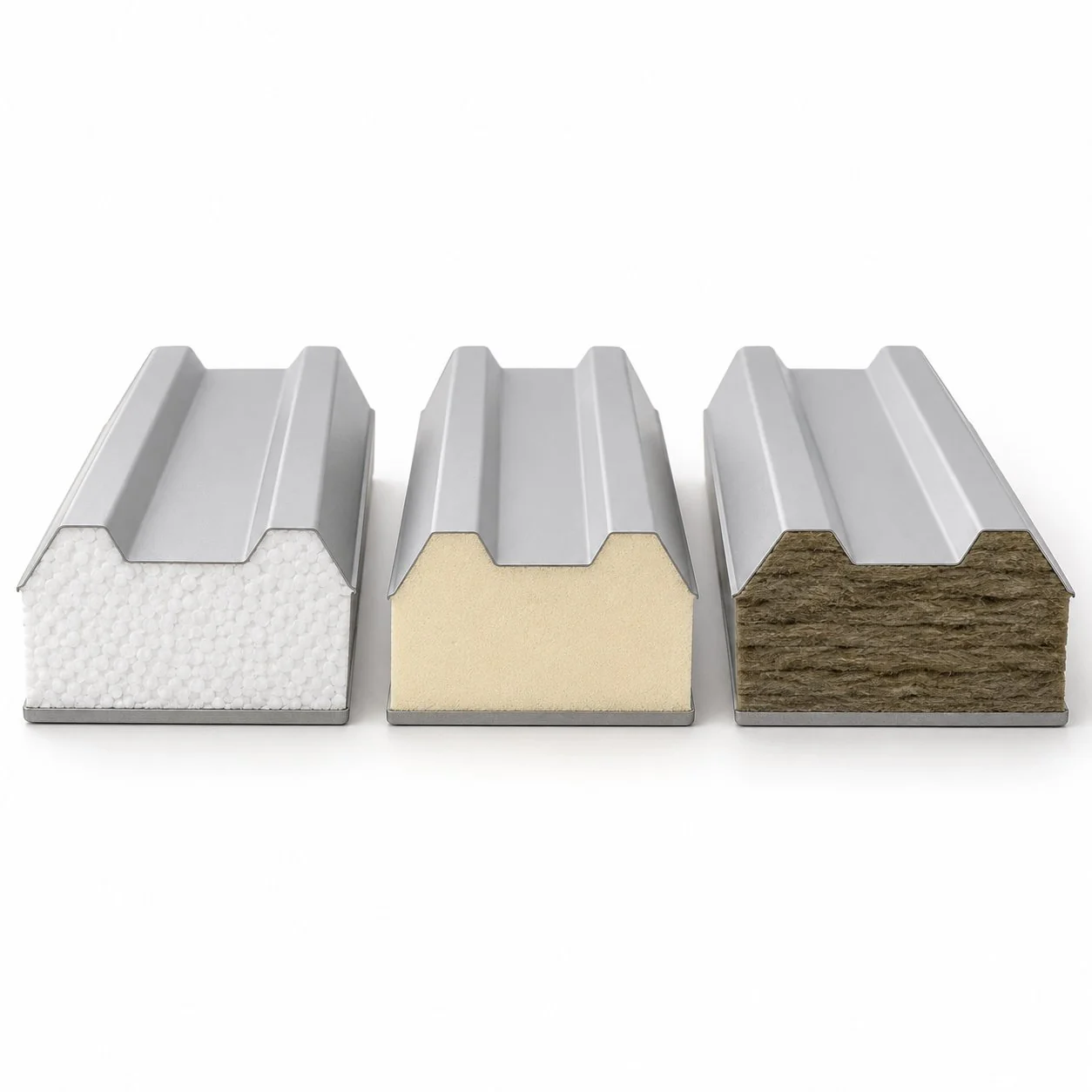
| Feature | EPS | PUR | PIR | Rockwool |
| Thermal (λ) | 0.035 | 0.022 | 0.023 | 0.040 |
| Fire Class | E | B-s2, d0 | B-s1, d0 | A1 / A2 |
| Weight | 7–9 kg/m² | 11–13 | 12–14 | 18–25 |
| Cost | $ | $$ | $$$ | $$$$ |
| Max Span | Shorter | Longest | Same as PUR | Shortest |
| Moisture | Excellent | Good | Good | Absorbs |
| Best For | Budget | All-round | Fire zones | Non-combustible |
Explore: PUR Roof · PIR Roof · Rockwool Roof
Certifications
- EN 14509: Self-supporting double skin metal faced insulating panels.
- CE Marking: Full compliance for European markets.
- EN 13501-1: Fire reaction — Euroclass E.
- EN 13163: Thermal insulation — factory made EPS products.
- ISO 9001: Manufacturing quality management.
All certificates: Quality & Certificates.
How much cheaper is EPS roofing compared to PUR?
EPS roof panels typically cost 25–40% less per m² than PUR equivalents. When combined with structural steel savings (lighter purlins, columns) and faster installation, total roofing project savings can reach 20–30%. The exact figure depends on panel thickness, order volume, and project-specific structural requirements.
What is the fire rating of EPS roof panels?
EPS roof panels use fire-retardant grade EPS and achieve Euroclass E per EN 13501-1. This is acceptable for many single-story industrial, agricultural, and storage buildings. For projects requiring B-class or higher fire ratings on the roof, choose PUR (B-s2), PIR (B-s1), or rockwool (A1/A2) roof panels.
Can EPS roof panels handle snow loads?
Yes. Snow load capacity depends on panel thickness, EPS density, and purlin spacing. Higher-density EPS (20–25 kg/m³) provides better compressive strength for snow-prone regions. Full load-span tables accounting for snow zones are available in our technical catalog. For heavy snow areas, consider thicker panels or tighter purlin spacing.
What is the minimum roof pitch for EPS panels?
We recommend a minimum pitch of 7° for EPS roof panels (slightly higher than PUR/PIR’s 5° minimum). EPS panels have lower compressive strength in the overlap joint area, so a slightly steeper pitch ensures reliable water drainage and prevents ponding.
Are EPS roof panels affected by moisture?
No. EPS has a closed-cell bead structure that absorbs less than 2% water by volume. This is a significant advantage over rockwool roof panels, which can absorb moisture if joints are compromised. EPS maintains its insulation value even in prolonged damp conditions.
What thicknesses are available for EPS roof panels?
EPS roof panels are available from 50 mm to 200 mm. The 30 mm and 40 mm thicknesses available in PUR/PIR are not offered in EPS, as they would provide insufficient thermal and structural performance for roofing applications.
Do you export EPS roof panels?
Yes. Romania, Bulgaria, Georgia, Macedonia, Kosovo. Request a quote or visit Export Markets.