

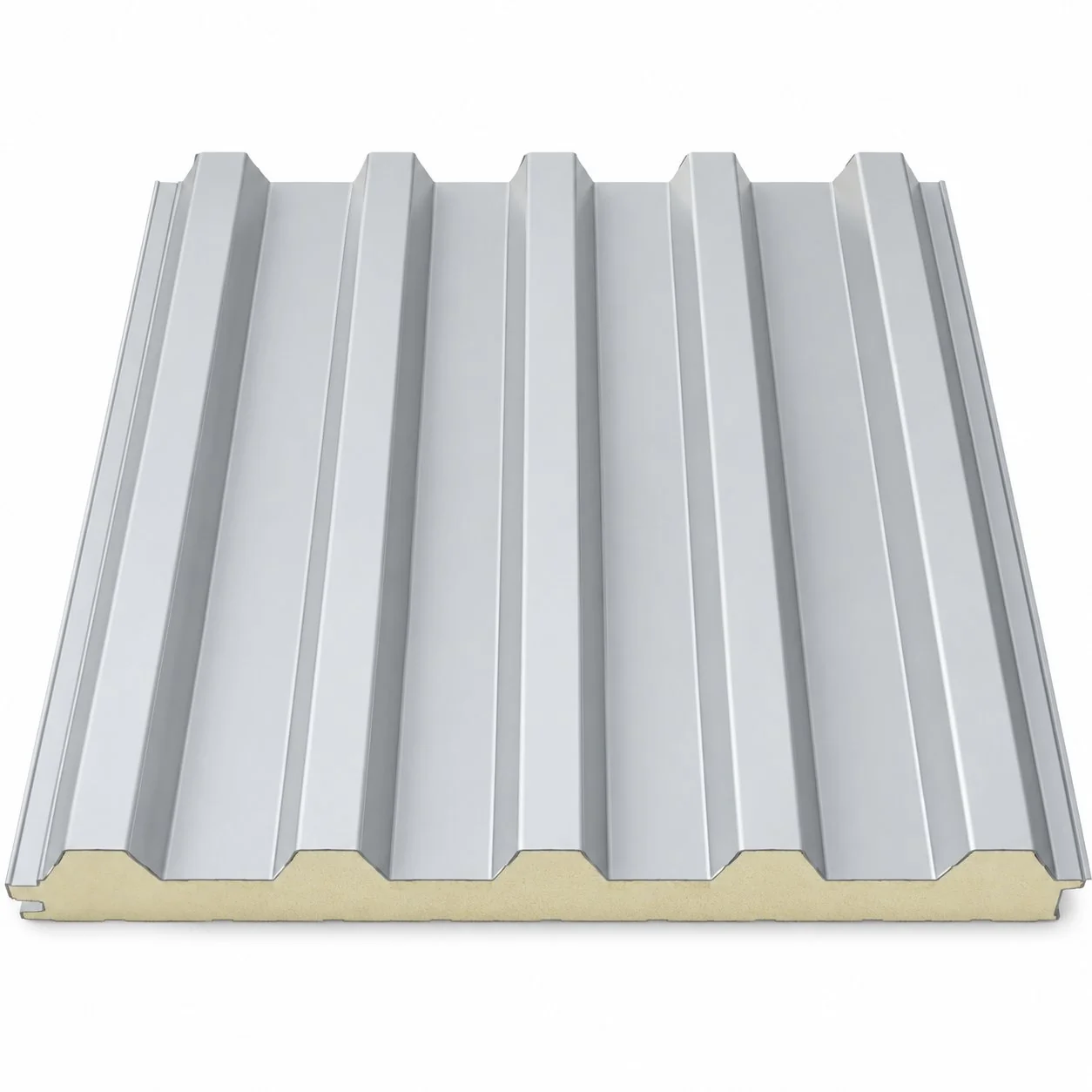
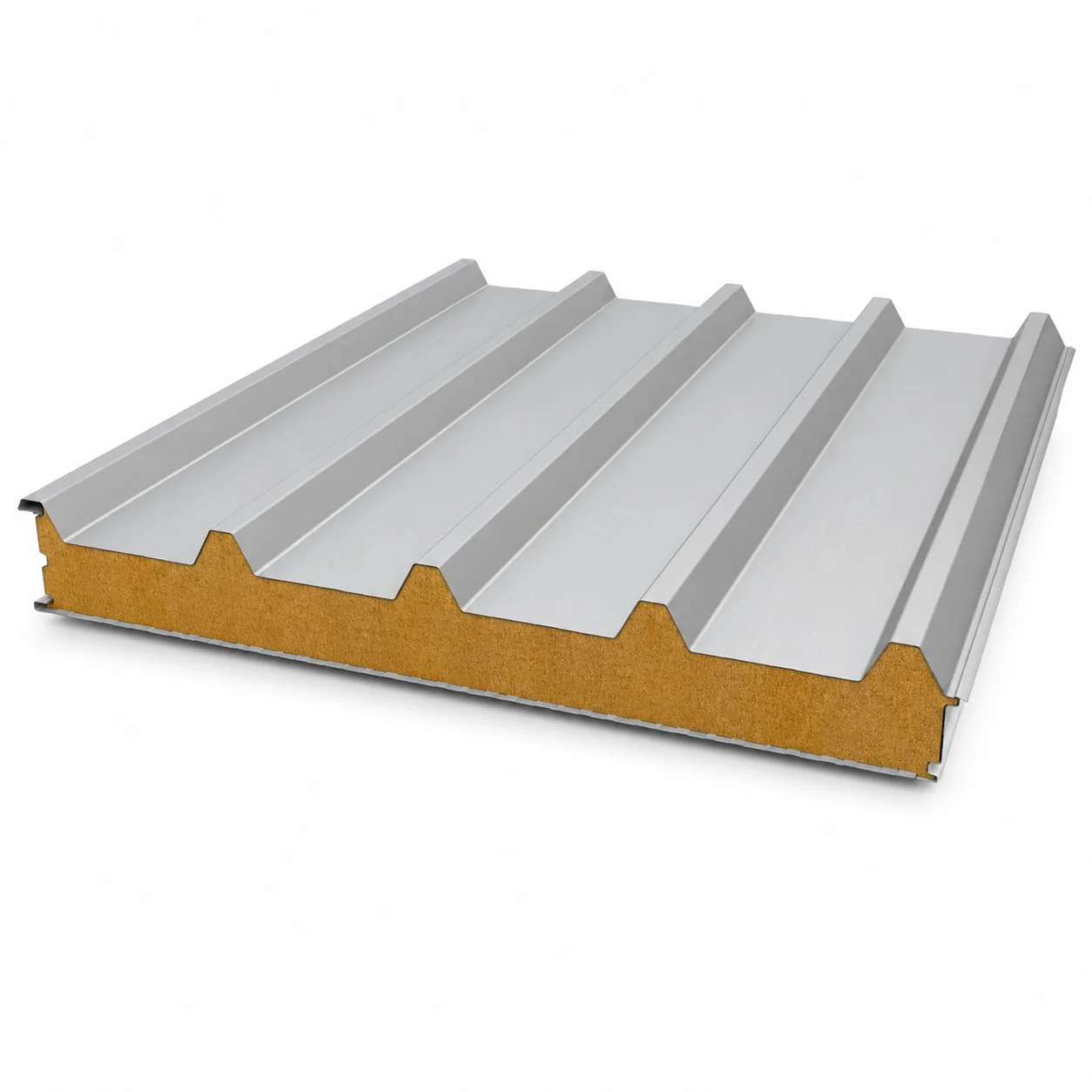
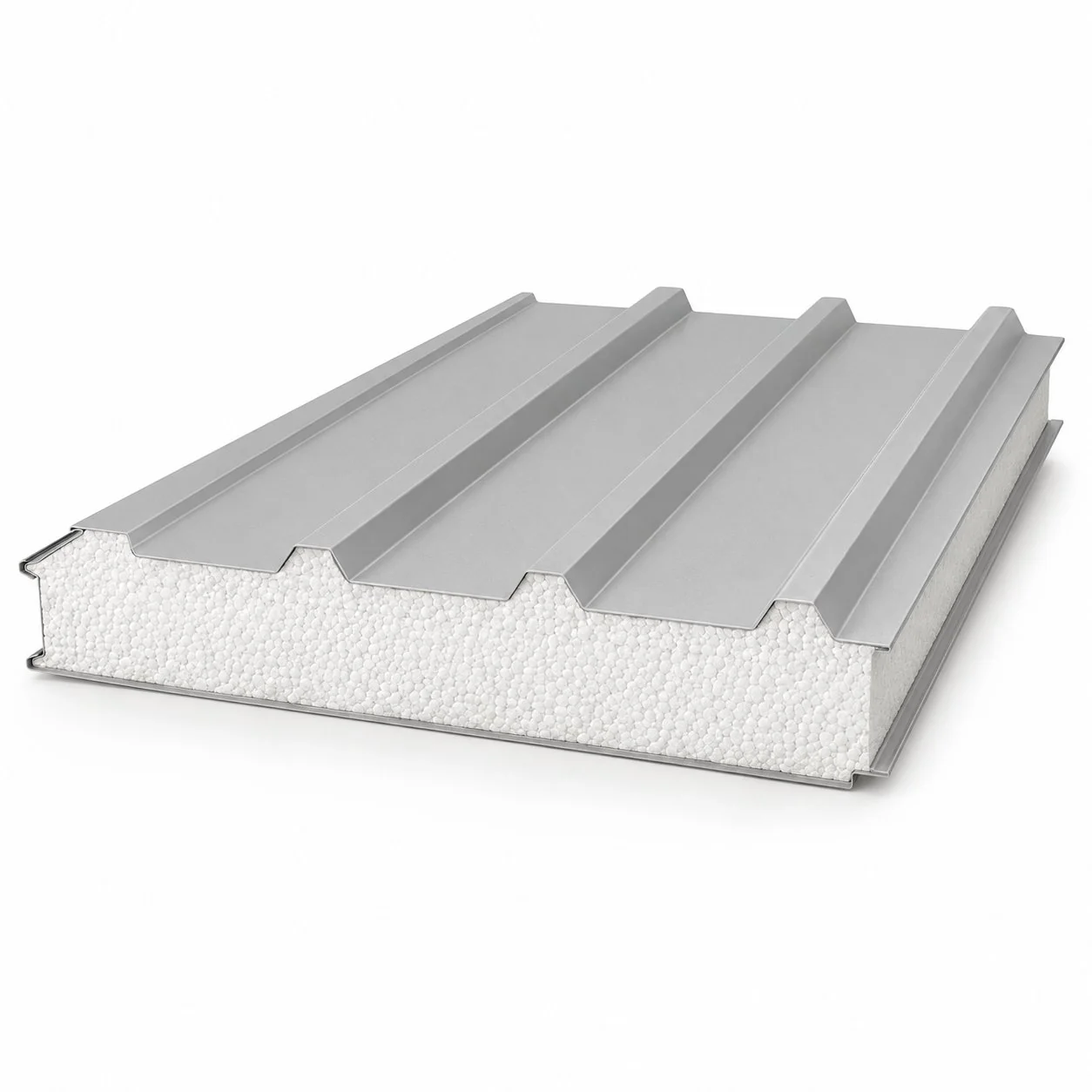
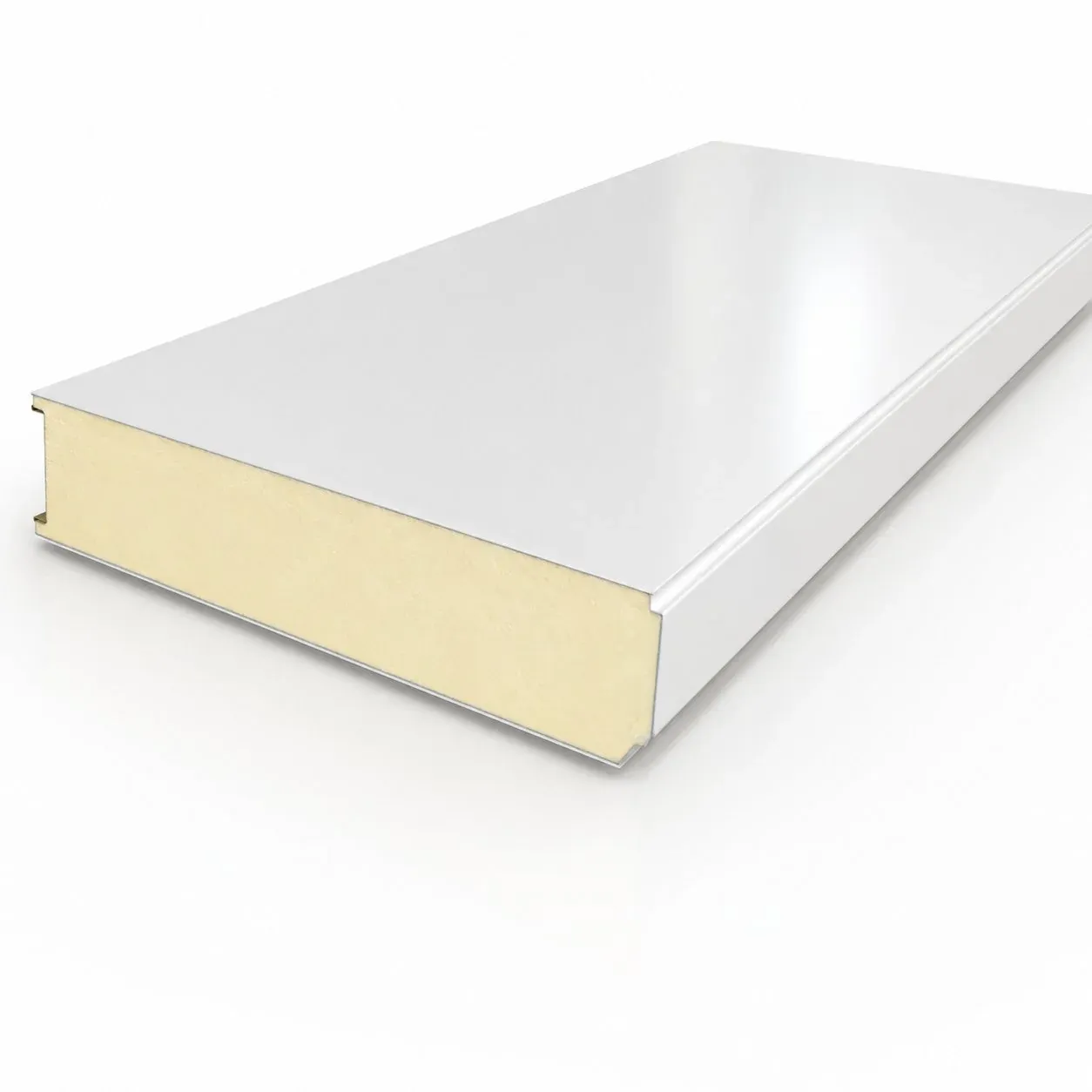
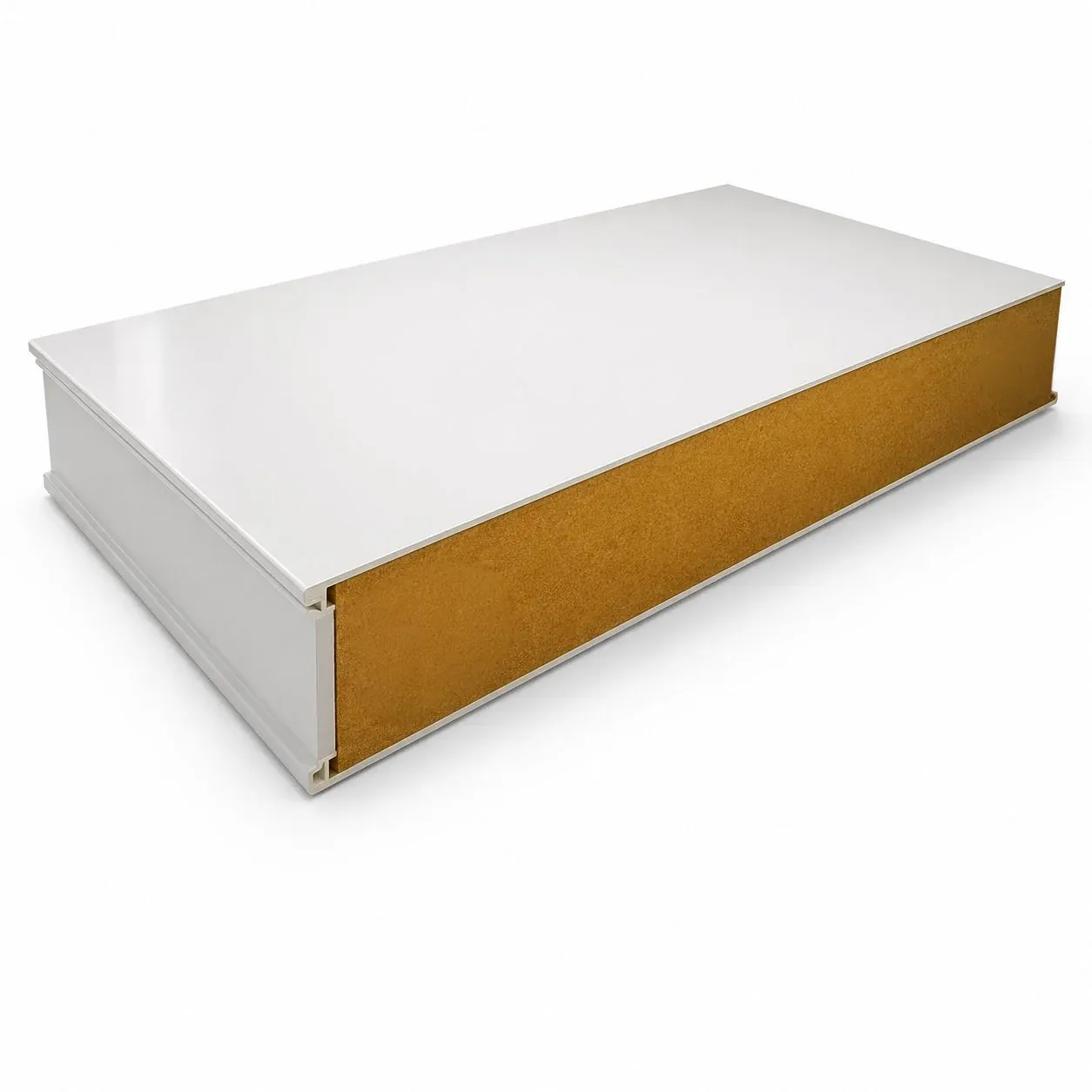
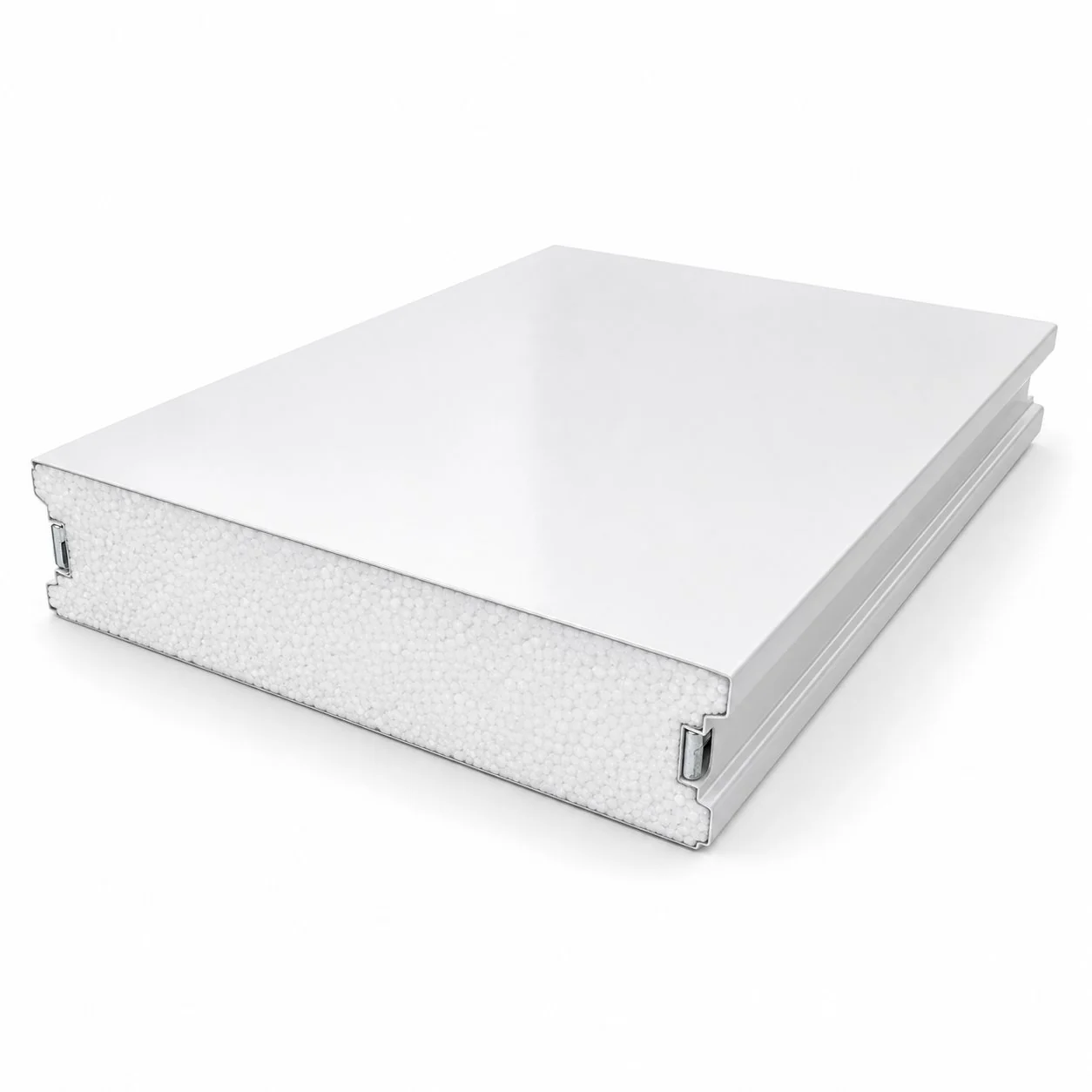
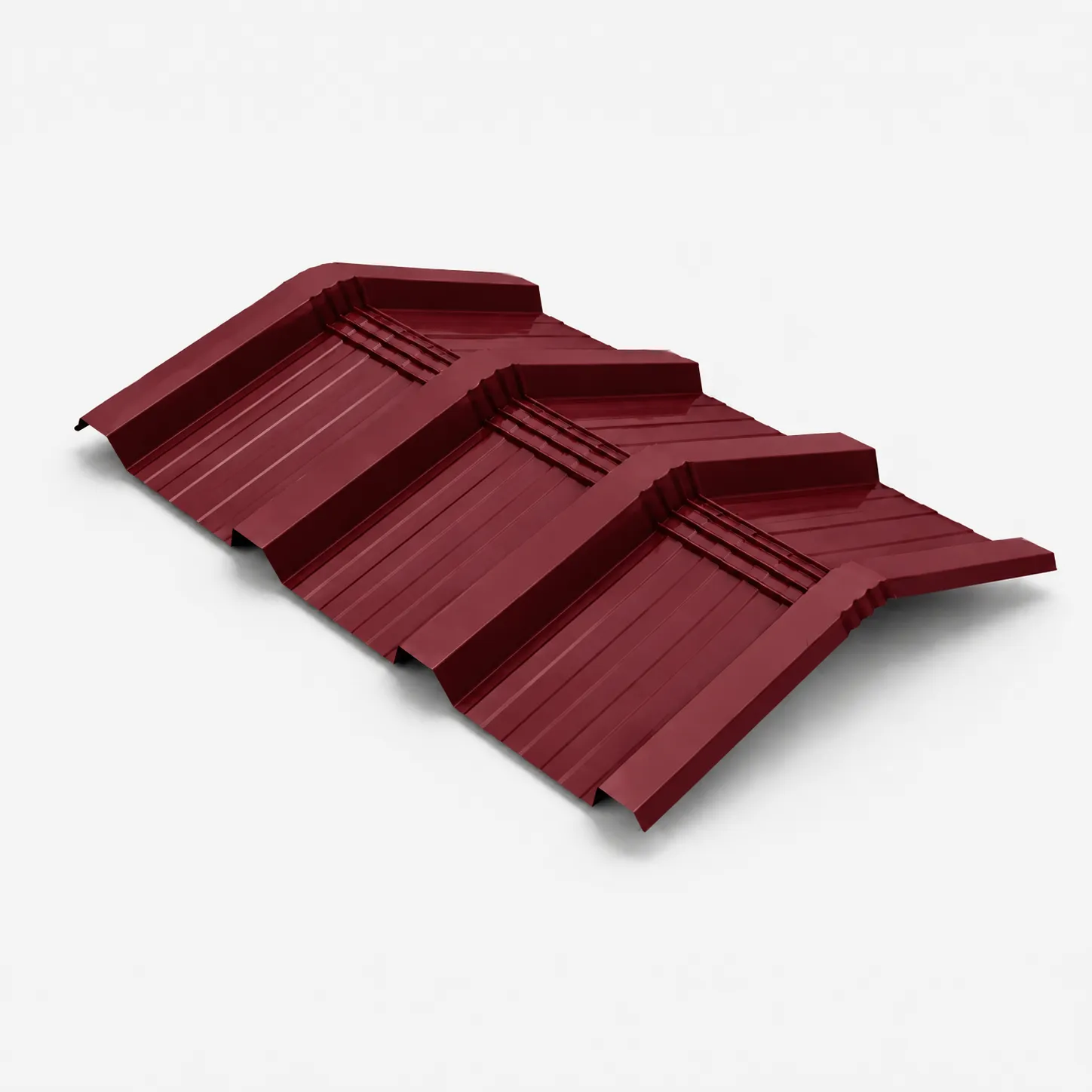
Rockwool Roof Panel
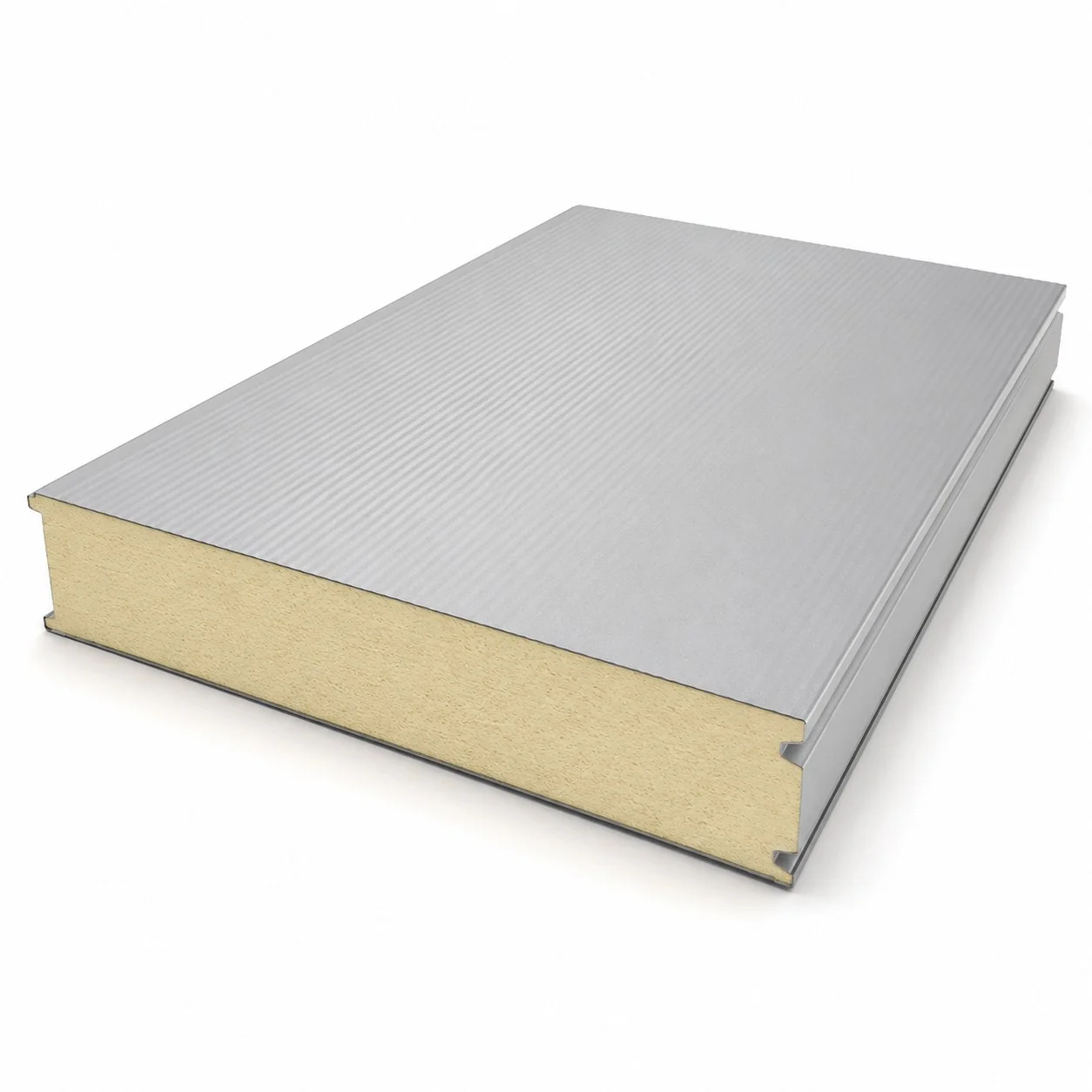
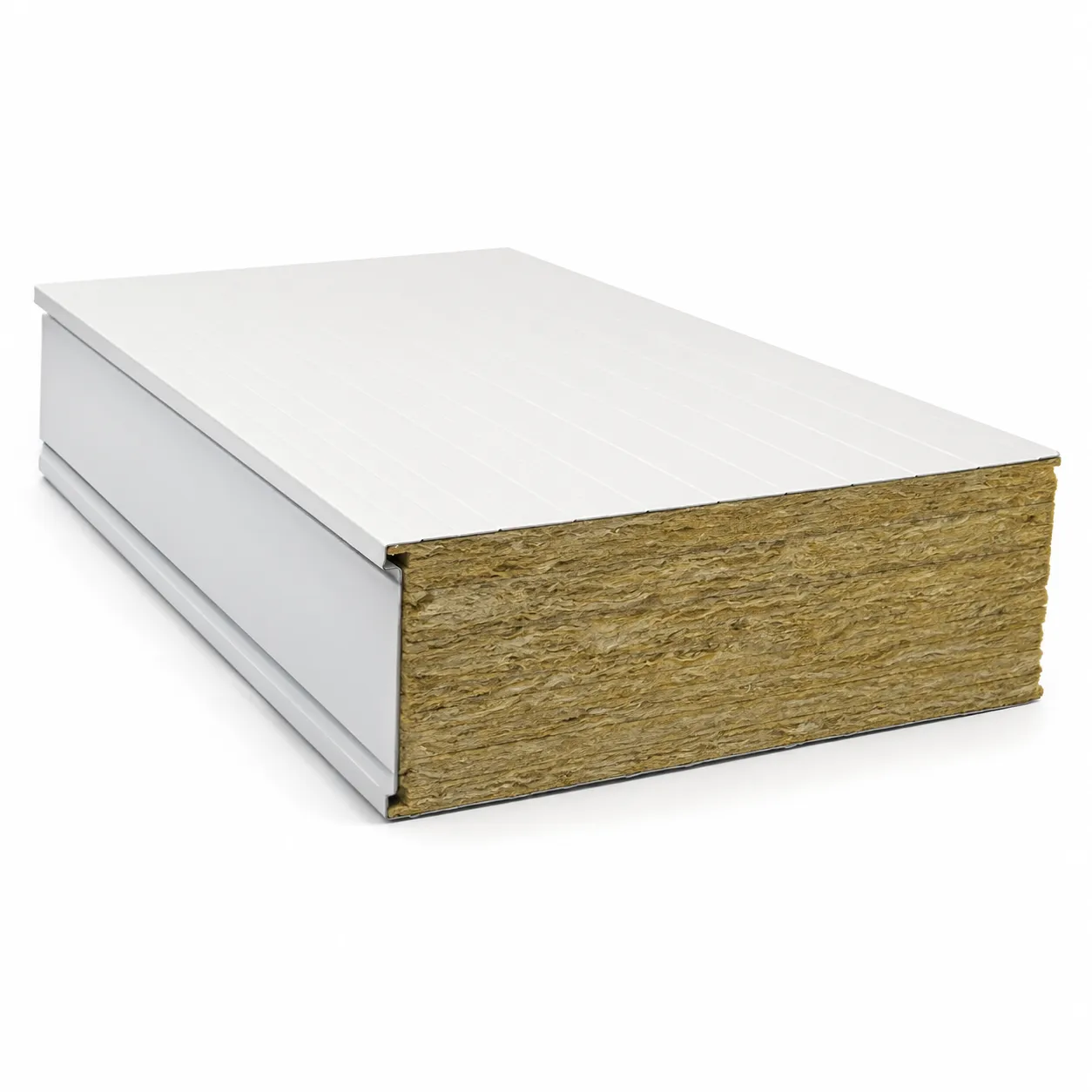
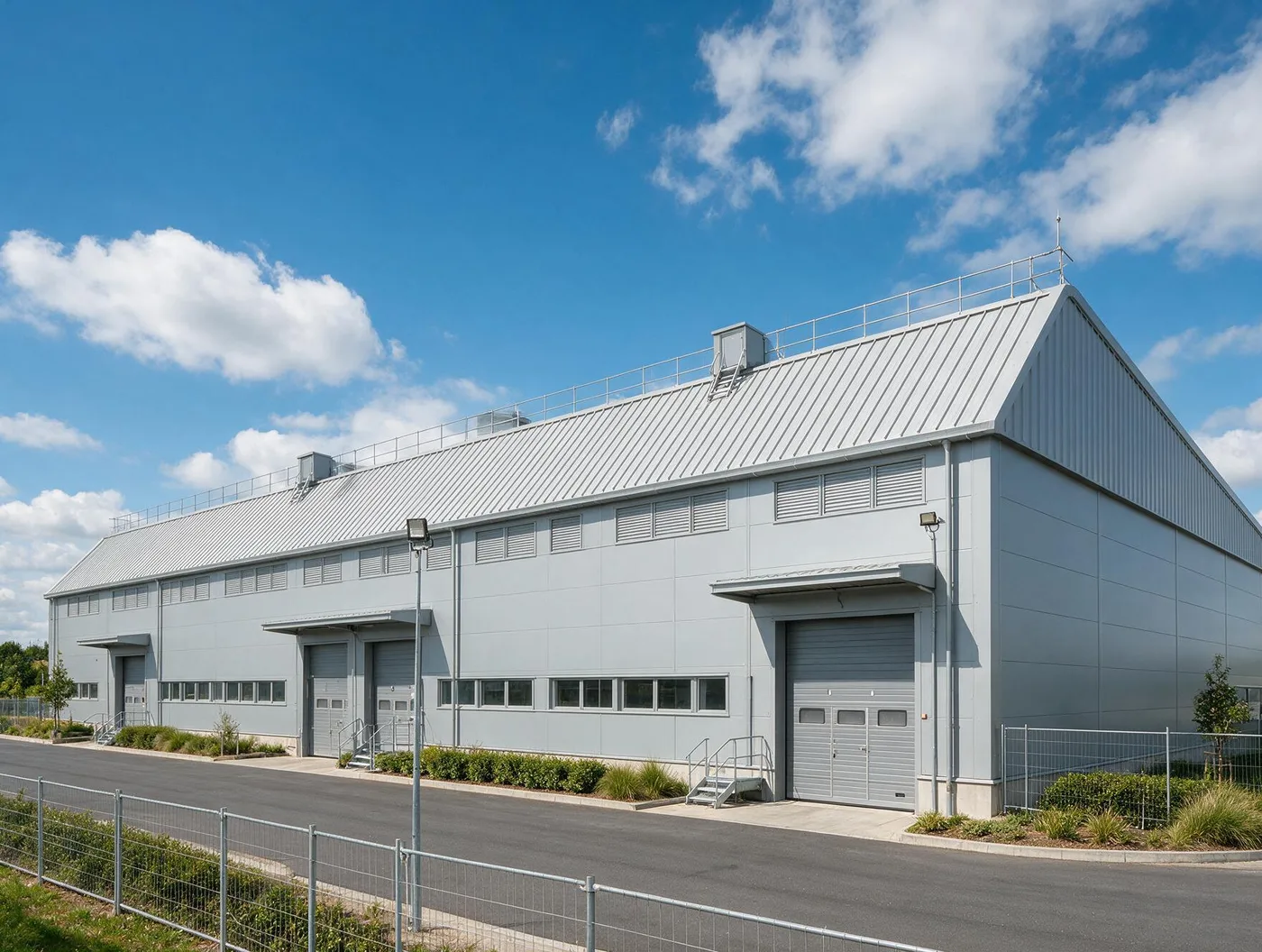
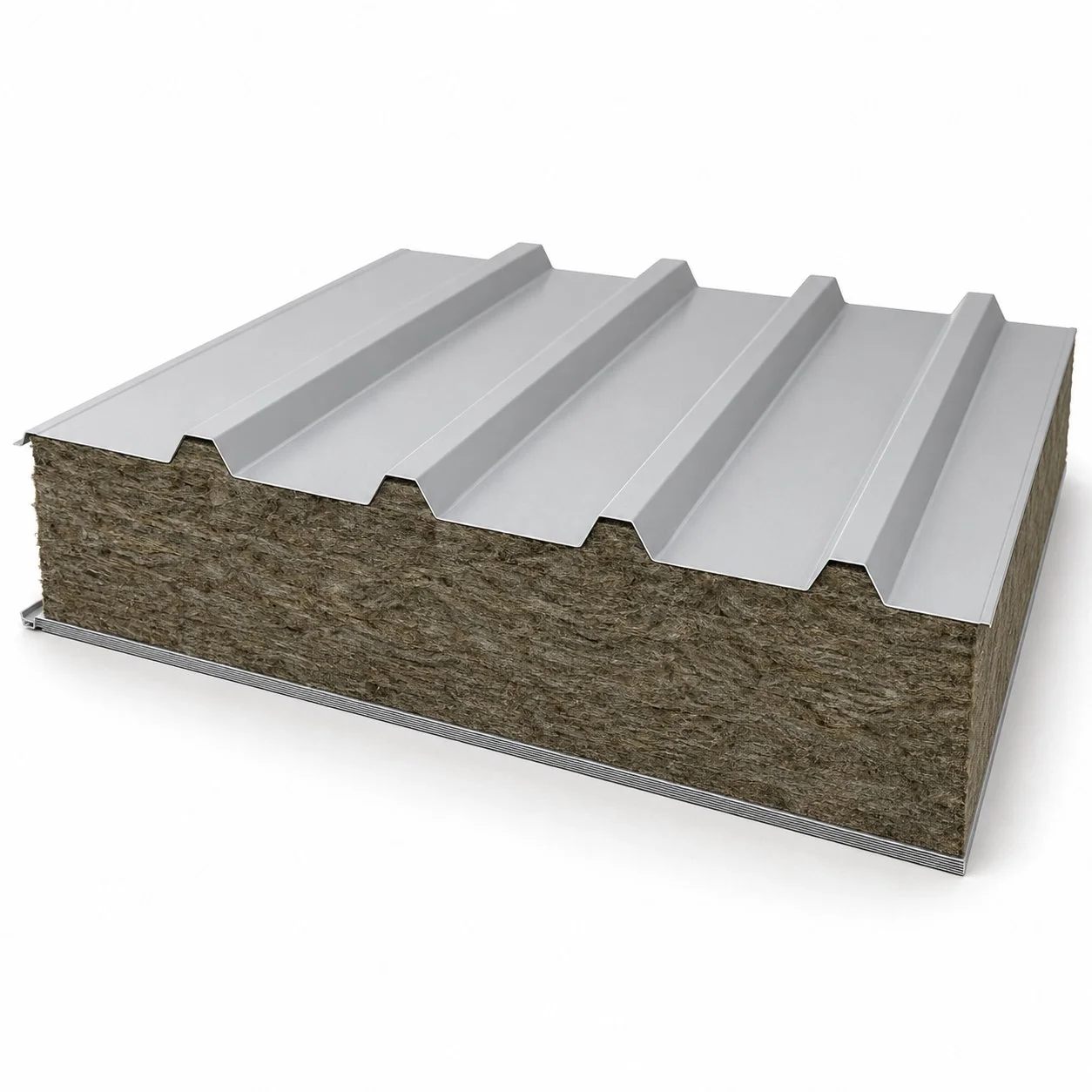
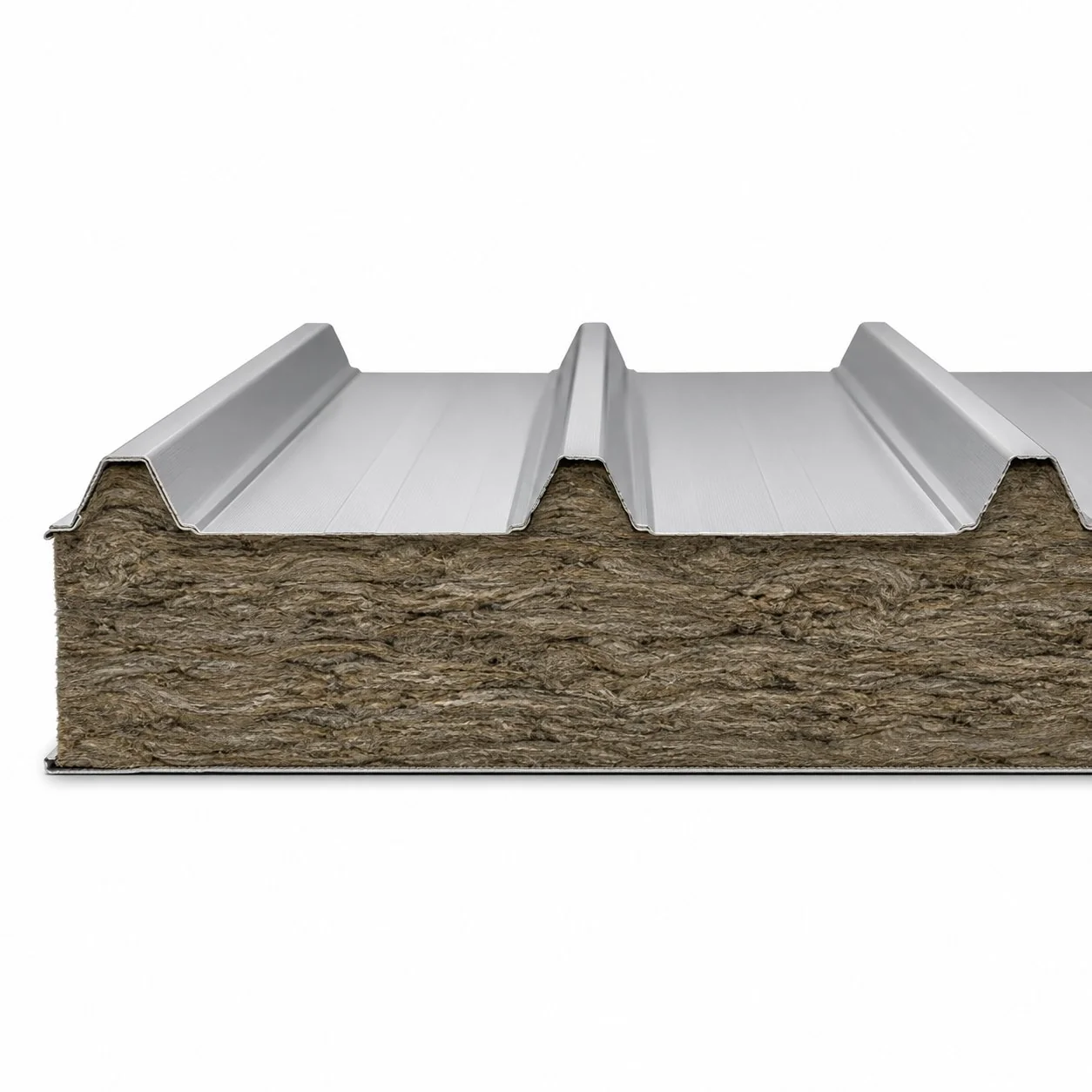
Non-combustible rockwool roof panel with stone wool core and structural trapezoidal profile. The ultimate roof system when fire safety, acoustic performance, and regulatory compliance must be absolute.
- Fire Classification: A1 or A2-s1, d0 — non-combustible
- Thermal Conductivity: 0.040 W/mK
- Acoustic Insulation: Rw up to 33 dB — best roof panel for noise
- Exterior Profile: Trapezoidal (3- or 5-rib)
- Thickness Range: 50 – 200 mm
- Standards: EN 14509, EN 13162, CE Marked
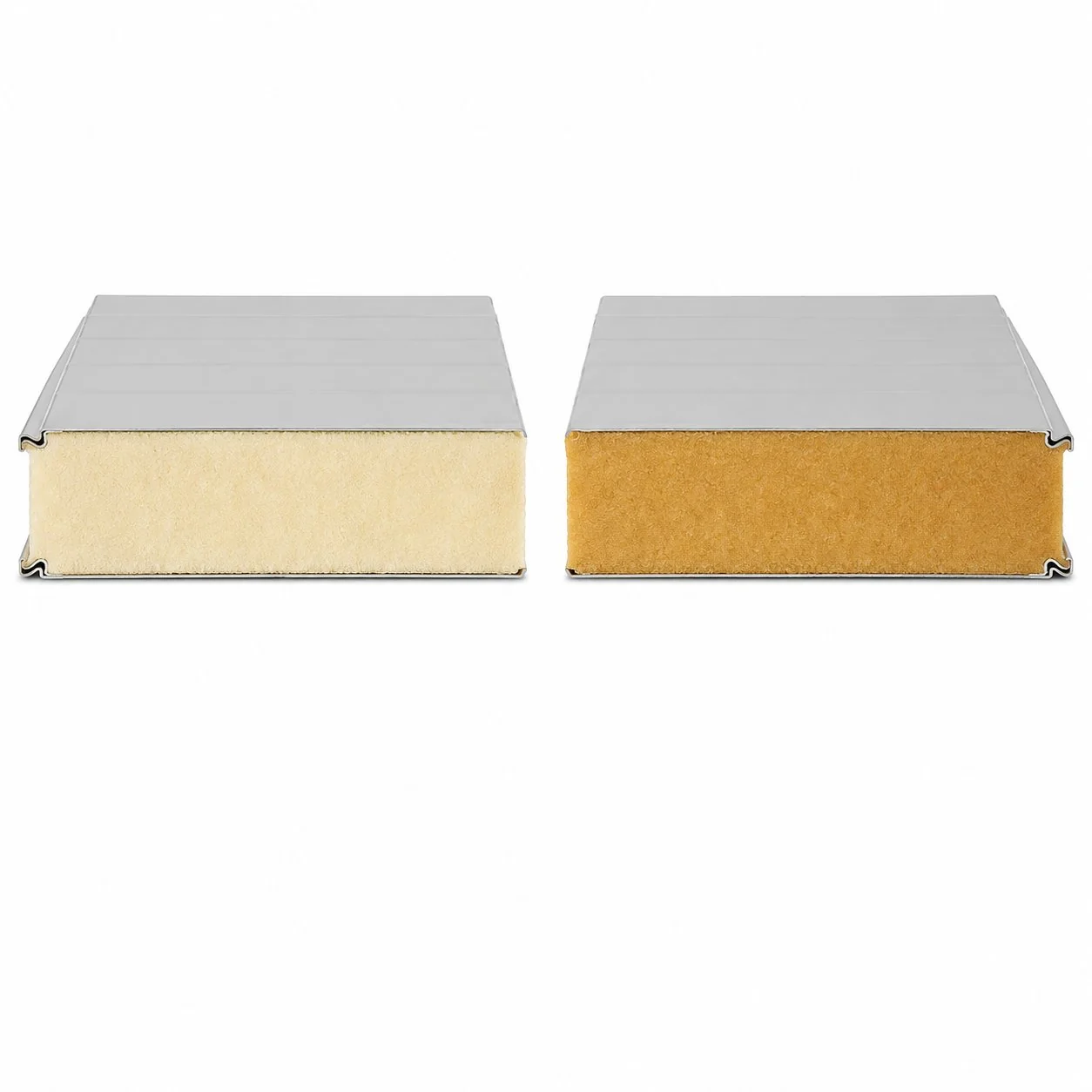
Fire-enhanced foam alternative? PIR roof panel (B-s1). Budget option? EPS roof panel. Compare: Panel Selector.
Zero Compromise on the Roof
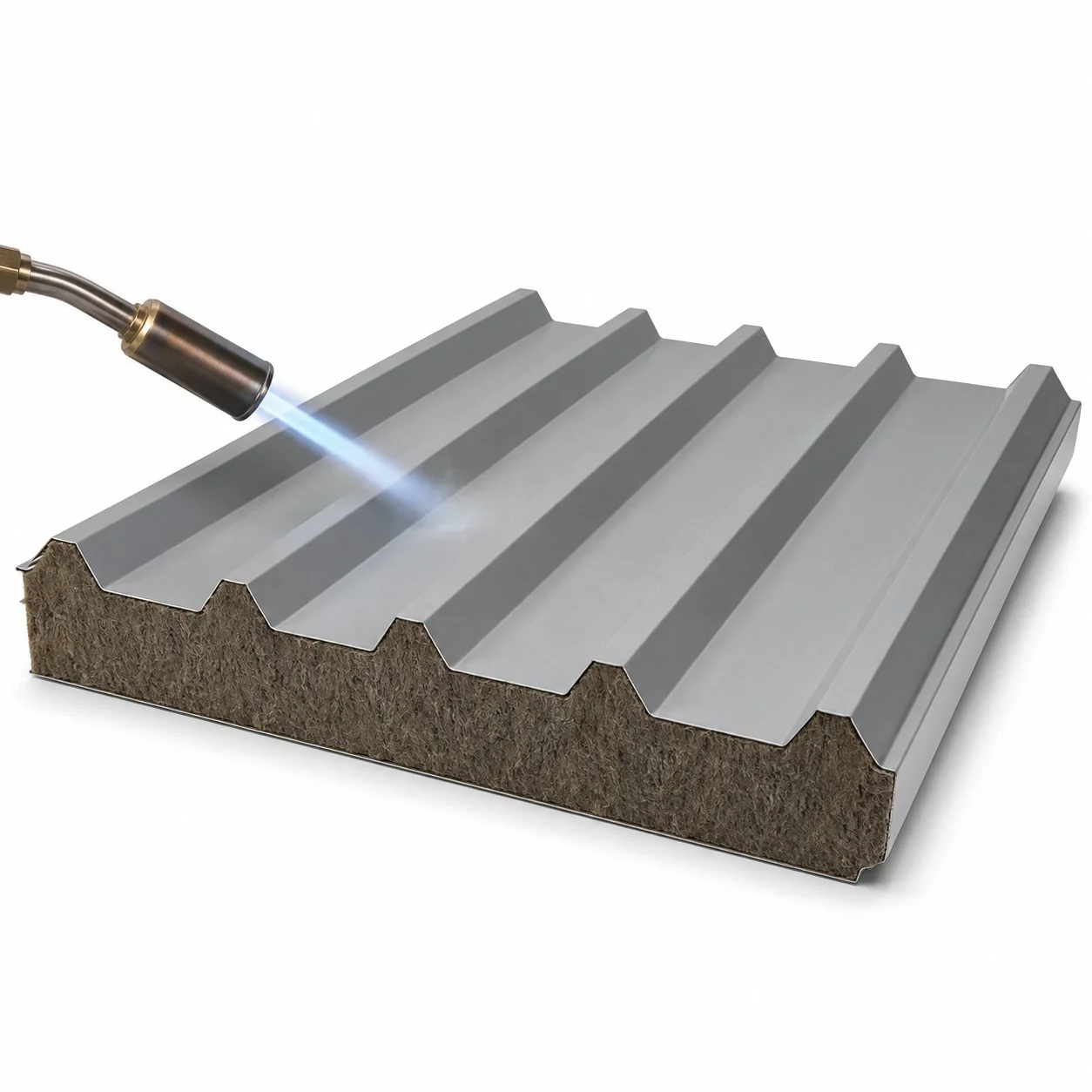
The rockwool roof panel is Real Panel’s most fire-safe roofing solution. With a basalt-derived stone wool core that achieves Euroclass A1 or A2-s1, d0, this panel simply will not burn — even at temperatures exceeding 1000°C. When your building code, insurer, or risk assessment demands absolute non-combustibility overhead, rockwool is the only option.
The roof is the most critical surface for fire safety. It represents the largest single area of the building envelope, and a roof fire can spread across the entire footprint in minutes, compromise structural steel through radiant heat from above, and generate smoke plumes visible for kilometers. Non-combustible roofing eliminates these risks at the source.
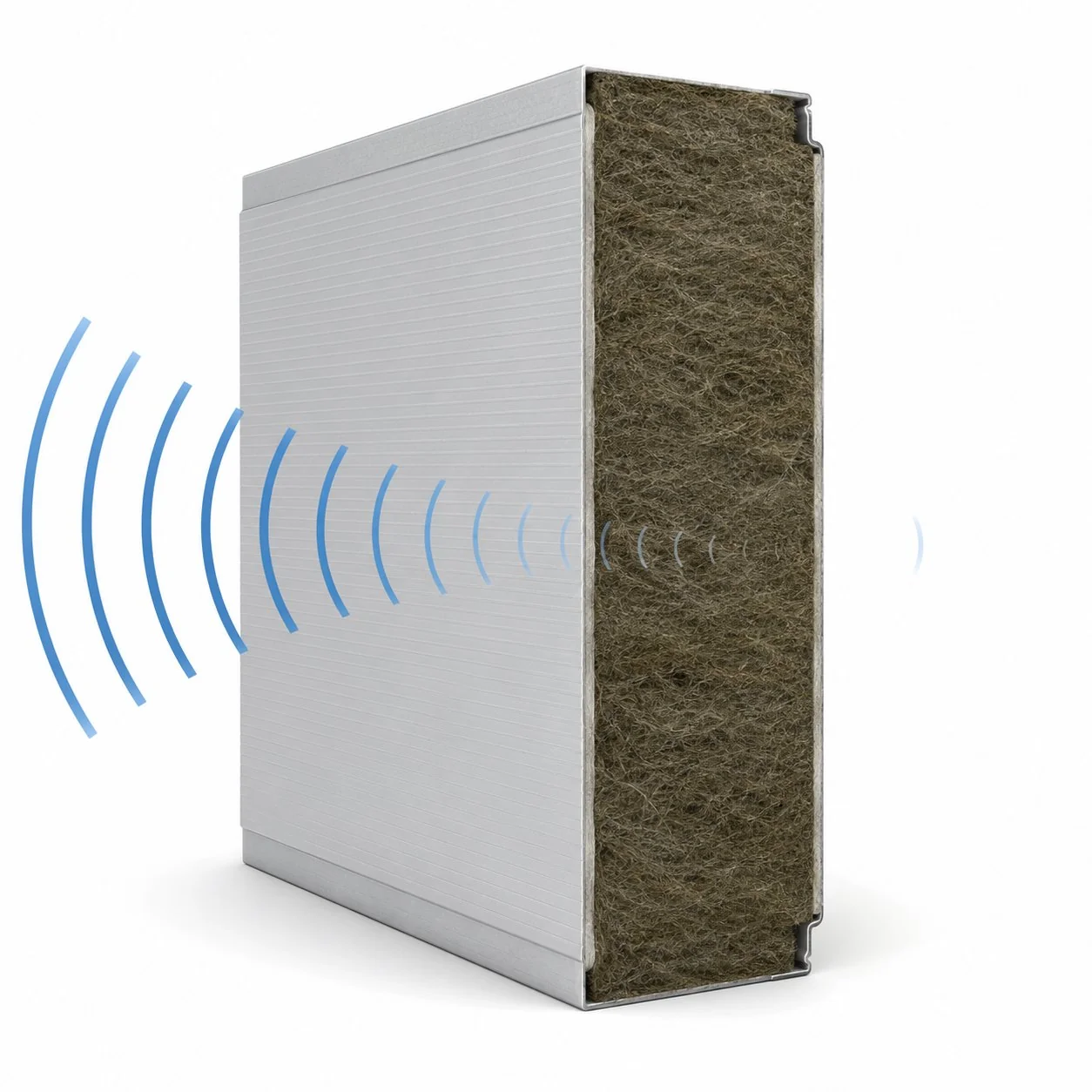
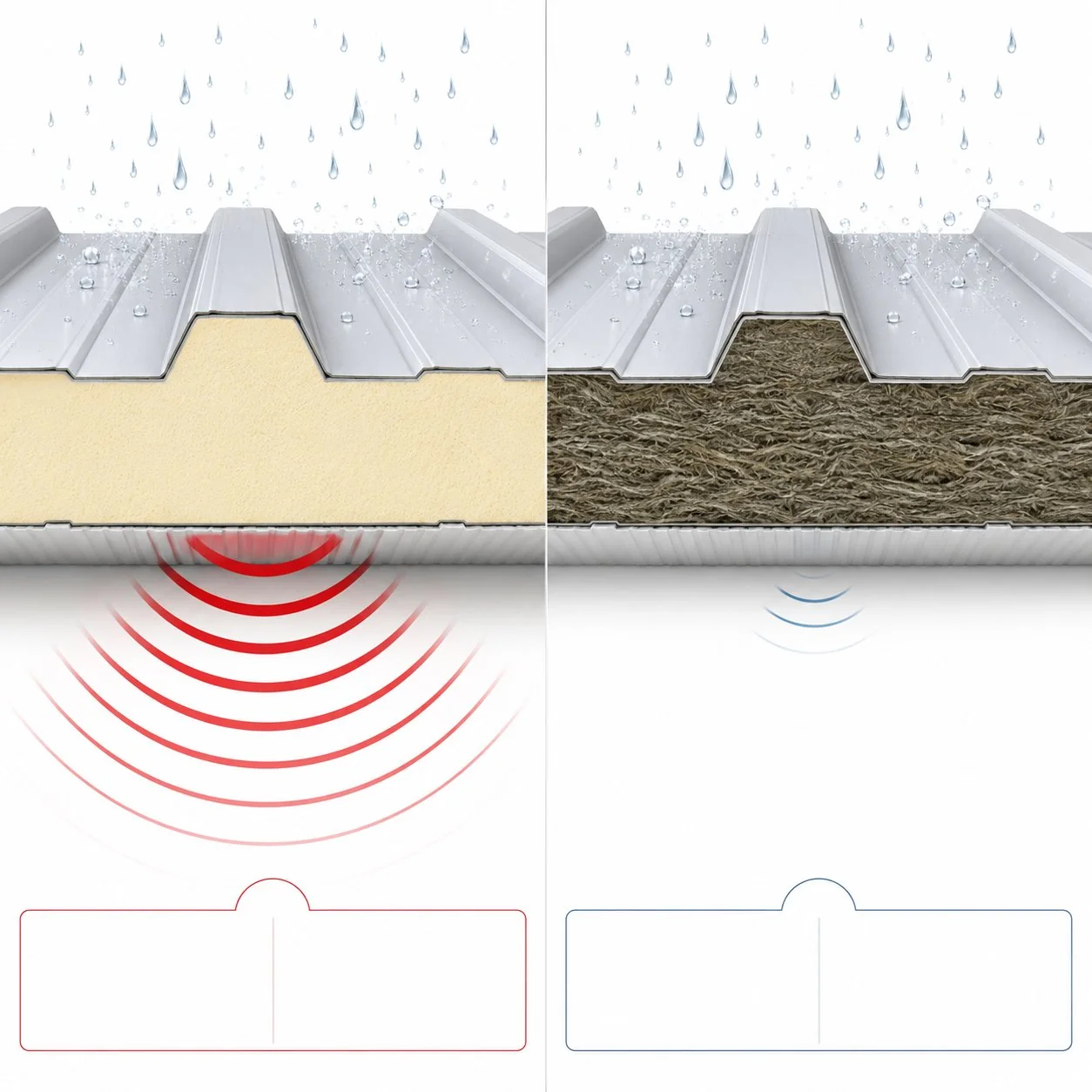
Rockwool roof panels also deliver a second advantage no foam-core roof can match: superior rain noise reduction and acoustic insulation. The dense stone wool fiber matrix absorbs sound energy from rainfall, hail, industrial machinery below, and external noise sources — creating quieter, more productive interior environments.
Key Benefits
- Non-Combustible (A1/A2): The highest fire classification. Rockwool will not burn, will not produce smoke, will not release flaming droplets. Complete fire safety above your building’s occupants and assets.
- External Fire Exposure: Rockwool roof panels can achieve BROOF(t1) to BROOF(t4) external fire exposure ratings per EN 13501-5, critical for buildings near property boundaries or in high-risk fire zones.
- Superior Acoustic Insulation: Rw up to 33 dB for roof panels — dramatically reduces rain noise, hail impact, and transmission of external sounds through the roof. Essential for offices, retail, and production environments under metal roofing.
- Rain Noise Reduction: Stone wool’s fibrous structure dampens the characteristic drumming noise of rainfall on metal roofing. Occupants notice the difference immediately compared to foam-core roofed buildings.
- Temperature Stability: Rockwool maintains structural integrity up to 1000°C. The roof panel will not deform, sag, or lose its load-bearing capability during fire, maintaining the roof structure until emergency response arrives.
- Condensation Management: Stone wool fibers allow moisture vapor to pass through (breathable), reducing the risk of trapped condensation that can corrode internal steel components over time.
Manufactured at our production facility in Turkey. Export to Romania, Bulgaria, Georgia, Macedonia, Kosovo.
Ideal Applications
- Fire Resistance Solutions — any building where non-combustible roofing is mandated by code or insurance
- Commercial Buildings — offices, retail, schools, hospitals where occupant safety is paramount
- Multi-story buildings — where roof fire would compromise all floors below
- Acoustic Insulation — buildings near airports, highways, railways, or noisy industrial areas
- High-value asset storage — data centers, archives, pharmaceutical warehouses, server rooms
- Property-boundary roofing — where external fire exposure ratings (BROOF) are mandatory
- Insurance-mandated specifications — when A-class roof rating is required for coverage
For fire-enhanced roofing at lower weight and cost: PIR roof panel (B-s1). For all-round roofing: PUR roof panel.
Panel Specifications
| SPECIFICATION | VALUE |
| Core Material | Basalt stone wool (rockwool), hydrophobic treated |
| Core Density | 100–150 kg/m³ |
| Thermal Conductivity (λ) | 0.040 W/mK (declared per EN 14509) |
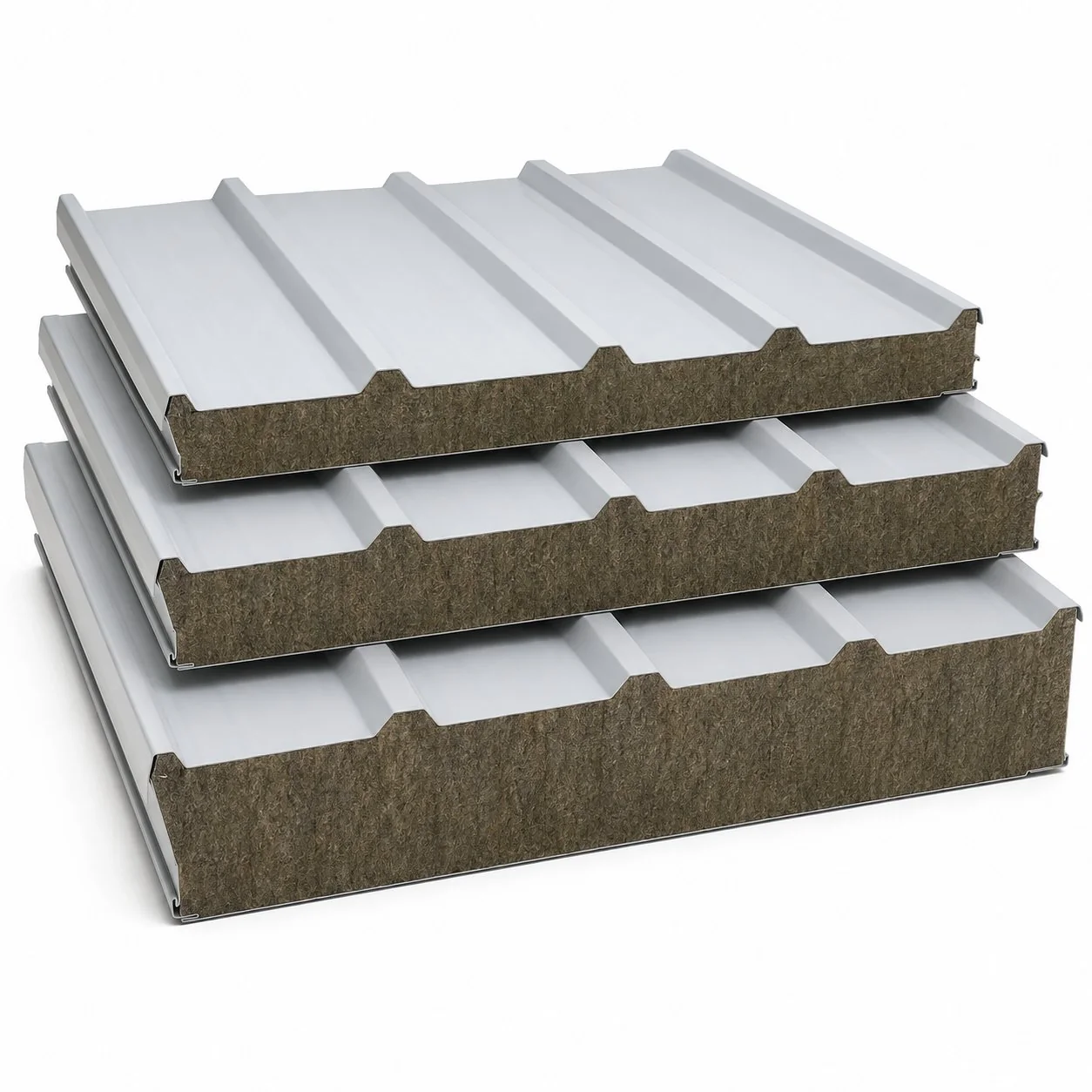
| Panel Thickness | 50 / 60 / 80 / 100 / 120 / 150 / 200 mm |
| Exterior Profile | 3- or 5-rib trapezoidal (structural) |
| Interior Profile | Micro-rib (flat liner) or trapezoidal |
| Effective Width | 1000 mm (standard) |
| Maximum Length | Up to 12,000 mm |
| External Facing | Pre-painted galvanized steel (PPGI), 0.5–0.7 mm |
| Internal Facing | Pre-painted galvanized steel (PPGI), 0.4–0.5 mm |
| Coating Options | Polyester (25 µm), PVDF (25 µm) |
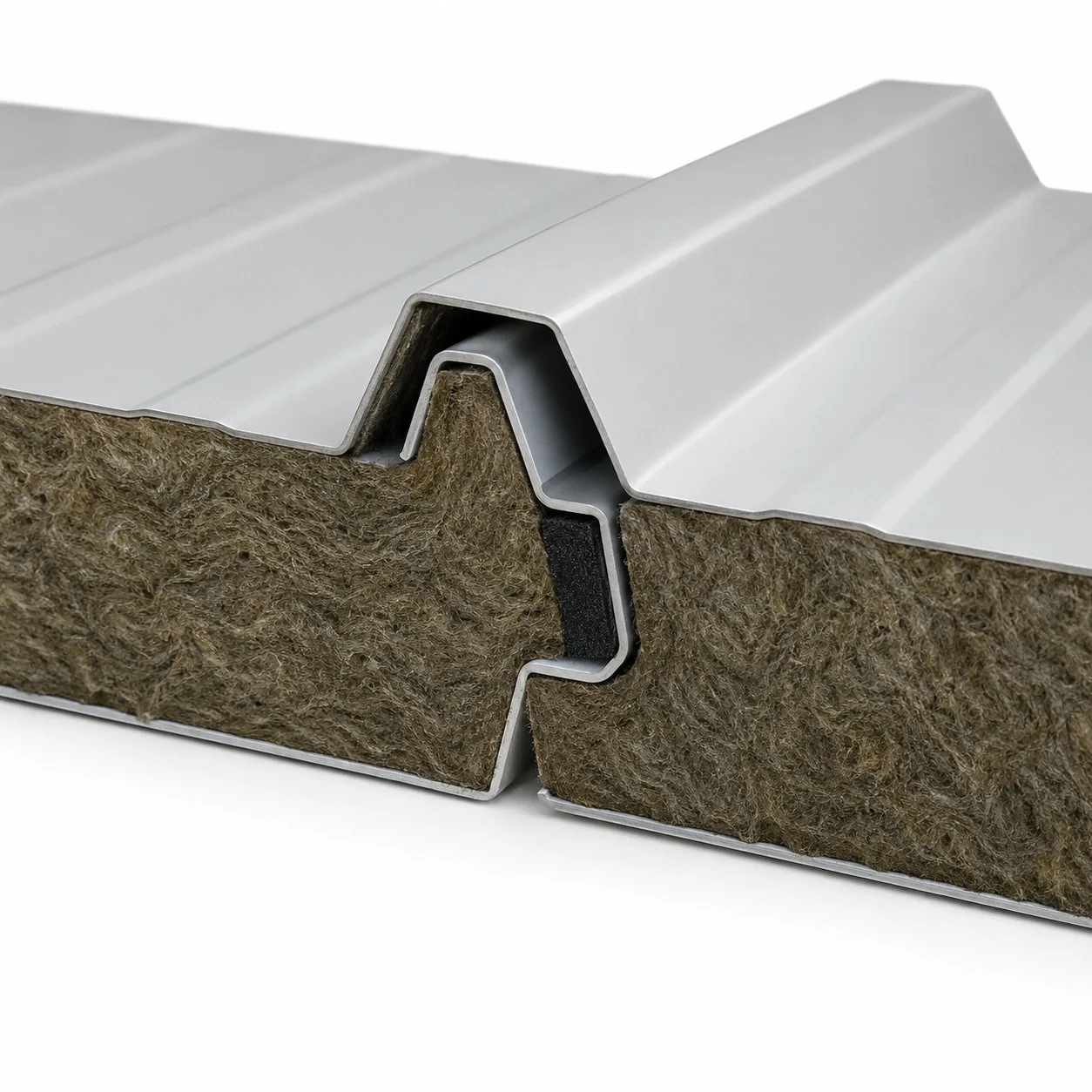
| Joint System | Side-lap overlap with pre-applied sealant strip |
| Fire Reaction | A1 or A2-s1, d0 (Euroclass per EN 13501-1) |
| External Fire Exposure | BROOF(t1) to BROOF(t4) per EN 13501-5 |
| Acoustic Performance | Rw up to 33 dB |
| Weight (approx.) | ~20–28 kg/m² (at 80 mm) |
| Melting Point | >1000°C |
| Min. Roof Pitch | 5° (recommended minimum) |
| Max. Purlin Span | Up to 3,000 mm (shorter spans than PUR/PIR due to weight) |
| Service Temperature | -40°C to +250°C |
| Standards | EN 14509, EN 13162, EN 13501-5, CE Marked, ISO 9001 |
U-Value by Panel Thickness
| SPECIFICATION | VALUE |
| 50 mm | U = 0.74 W/m²K |
| 60 mm | U = 0.62 W/m²K |
| 80 mm | U = 0.47 W/m²K |
| 100 mm | U = 0.38 W/m²K |
| 120 mm | U = 0.32 W/m²K |
| 150 mm | U = 0.26 W/m²K |
| 200 mm | U = 0.19 W/m²K |
Calculate: U-Value Calculator.
Acoustic Performance by Thickness
| SPECIFICATION | VALUE |
| 50 mm | Rw = 26 dB |
| 80 mm | Rw = 29 dB |
| 100 mm | Rw = 31 dB |
| 150 mm | Rw = 33 dB |
| 200 mm | Rw = 34 dB |
For comparison: a 100 mm PUR roof panel achieves approximately Rw = 22 dB. Rockwool provides 9 dB better sound reduction — perceived as roughly 50% quieter inside the building.
Why the Roof Is the Critical Fire Surface
Building codes and insurance standards focus disproportionately on roof fire performance for good reason:
- Largest surface area: The roof often exceeds the combined area of all walls. A roof fire spreads faster and wider than a wall fire.
- Structural vulnerability: Steel purlins and rafters lose 50% of their strength at ~550°C. A burning roof heats steelwork from above, risking rapid structural collapse.
- Fire service access: Firefighters cannot effectively fight a roof fire from ground level. A non-combustible roof contains fire below and prevents vertical escape.
- Adjacent property risk: Burning roof materials can become airborne, spreading fire to neighboring buildings. BROOF ratings address this external fire exposure risk.
External Fire Exposure Ratings (BROOF)
In addition to the EN 13501-1 reaction-to-fire classification (A1/A2), roof panels in many jurisdictions must also meet EN 13501-5 external fire exposure testing. This simulates fire landing on the roof from outside (e.g., from a neighboring building fire). Rockwool roof panels achieve:
| SPECIFICATION | VALUE |
| BROOF(t1) | Resists fire penetration + flame spread from external source — highest classification |
| BROOF(t2) | Resists fire penetration from external source |
| BROOF(t3) | Resists fire penetration under specific conditions |
| BROOF(t4) | Resists fire penetration under limited conditions |
Most building codes in European markets require at minimum BROOF(t2) for commercial and multi-story buildings. Rockwool panels readily achieve BROOF(t1) — the highest level of external fire resistance.
Acoustic Advantage on Roofs
Metal roofing without adequate acoustic treatment creates significant noise problems:
- Rain drumming: Heavy rainfall on a PUR-roofed building produces 55–65 dB inside. On a rockwool-roofed building: 40–50 dB — the difference between disruptive and acceptable.
- Hail impact: Rockwool’s dense fiber matrix absorbs hail impact energy, reducing both noise transmission and the risk of panel surface denting.
- Aircraft/traffic: For buildings under flight paths or near highways, rockwool’s broadband absorption reduces low-frequency rumble that foam-core panels transmit freely.
- Industrial noise: Interior machinery noise radiating upward is absorbed by rockwool before reflecting back down, improving workplace acoustic comfort.
For acoustic solutions: Acoustic Insulation Solutions. For fire solutions: Fire Resistance Solutions.
How does the rockwool roof panel compare?
| Feature | Rockwool | PIR | PUR | EPS |
| Thermal (λ) | 0.040 | 0.023 | 0.022 | 0.035 |
| Fire Class | A1 / A2 | B-s1, d0 | B-s2, d0 | E |
| BROOF Rating | t1 (highest) | t1–t3 | t1–t3 | Not rated |
| Acoustic (Rw) | 31–34 dB | ~22 dB | ~22 dB | ~20 dB |
| Weight | 20–28 kg/m² | 12–14 | 11–13 | 7–9 |
| Max Span | Shortest | Same as PUR | Longest | Shorter |
| Cost | $$$$ | $$$ | $$ | $ |
| Best For | Fire + acoustic | Fire zones | All-round | Budget |
Alternatives: PUR Roof · PIR Roof · EPS Roof
Decide: Panel Selector.
Certifications
- EN 14509: Self-supporting insulating panels.
- EN 13162: Thermal insulation — factory made mineral wool.
- EN 13501-1: Fire reaction — Euroclass A1 or A2-s1, d0.
- EN 13501-5: External fire exposure — BROOF(t1).
- EN ISO 717-1: Acoustic rating of sound insulation.
- CE Marking + ISO 9001
All certificates: Quality & Certificates.
Why are rockwool roof panels heavier than PUR/PIR?
Stone wool has a core density of 100–150 kg/m³ versus 38–45 kg/m³ for PUR/PIR. At 80 mm thickness, a rockwool roof panel weighs approximately 22 kg/m² compared to PUR’s 12 kg/m². This requires closer purlin spacing and potentially heavier structural steel. However, the fire and acoustic benefits justify this structural investment for projects where non-combustibility is required.
What is a BROOF rating and do I need one?
BROOF ratings (EN 13501-5) classify a roof’s resistance to external fire exposure — fire landing on the roof from outside, such as from a burning neighboring building. Many European building codes require BROOF(t2) or better for commercial, public, and multi-story buildings. If your building is near a property boundary or in an urban area, check local regulations. Rockwool panels achieve the highest level: BROOF(t1).
How does rockwool reduce rain noise?
Stone wool’s dense fiber matrix absorbs the kinetic energy of raindrops hitting the steel exterior surface, converting it to a small amount of heat through friction. This dramatically reduces the drumming noise that makes conventional metal roofing so loud during heavy rain. Occupants under a rockwool roof typically report interior rain noise levels 10–15 dB lower than under foam-core roofing.
Can rockwool roof panels span as far as PUR?
No. Due to higher weight, rockwool panels require closer purlin spacing than PUR or PIR at equivalent thickness. This means more purlins and slightly higher structural steel costs. The reduced span is the primary cost trade-off for rockwool’s fire and acoustic advantages. Consult our load-span tables for specific values.
Should I use rockwool on the roof and PIR/PUR on the walls?
Yes, this is a common and effective strategy. The roof gets the highest fire protection (A1/A2), while walls use PIR (B-s1) or PUR (B-s2) for better thermal performance at lower weight and cost. Both panel types are available from our production facility for coordinated supply.
Is rockwool affected by moisture on the roof?
Our rockwool panels use hydrophobic-treated stone wool that repels liquid water. However, if panel joints are compromised and water enters the core, rockwool can absorb moisture — unlike EPS which is inherently moisture-resistant. Proper installation with sealed joints, flashings, and minimum 5° roof pitch is essential. Panels must be stored dry on site before installation.
Do you export rockwool roof panels?
Yes. All five markets. Request a quote or visit Export Markets.