

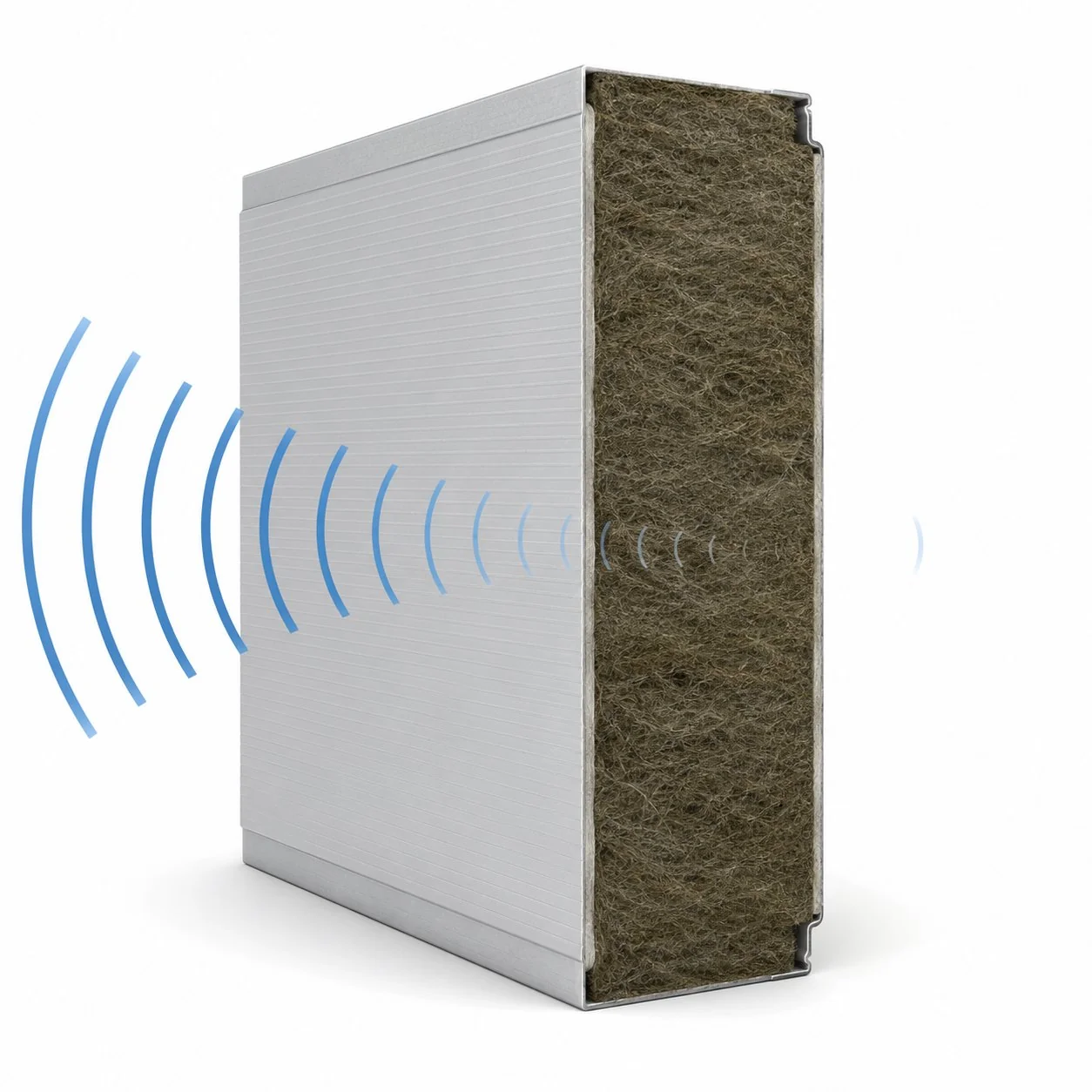
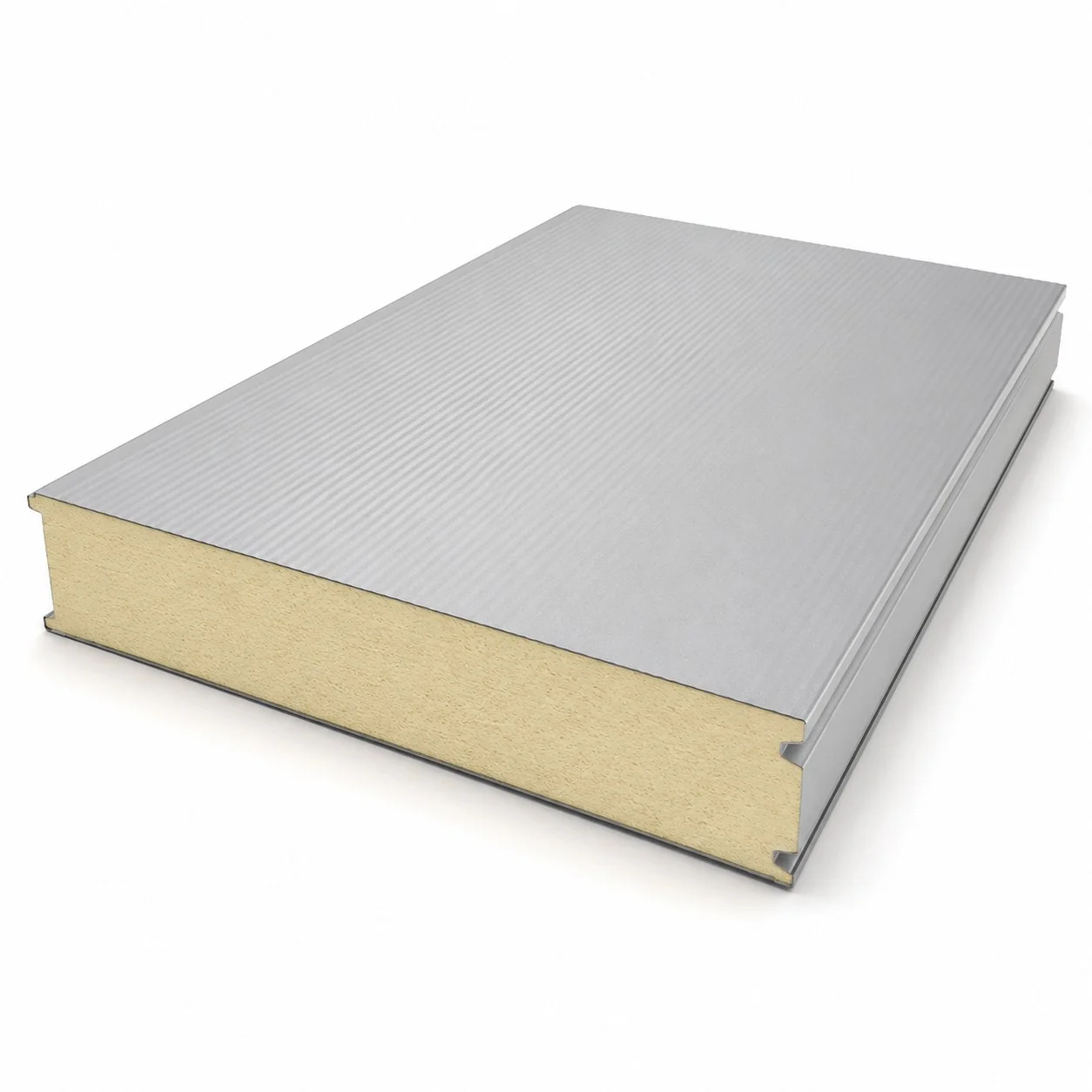
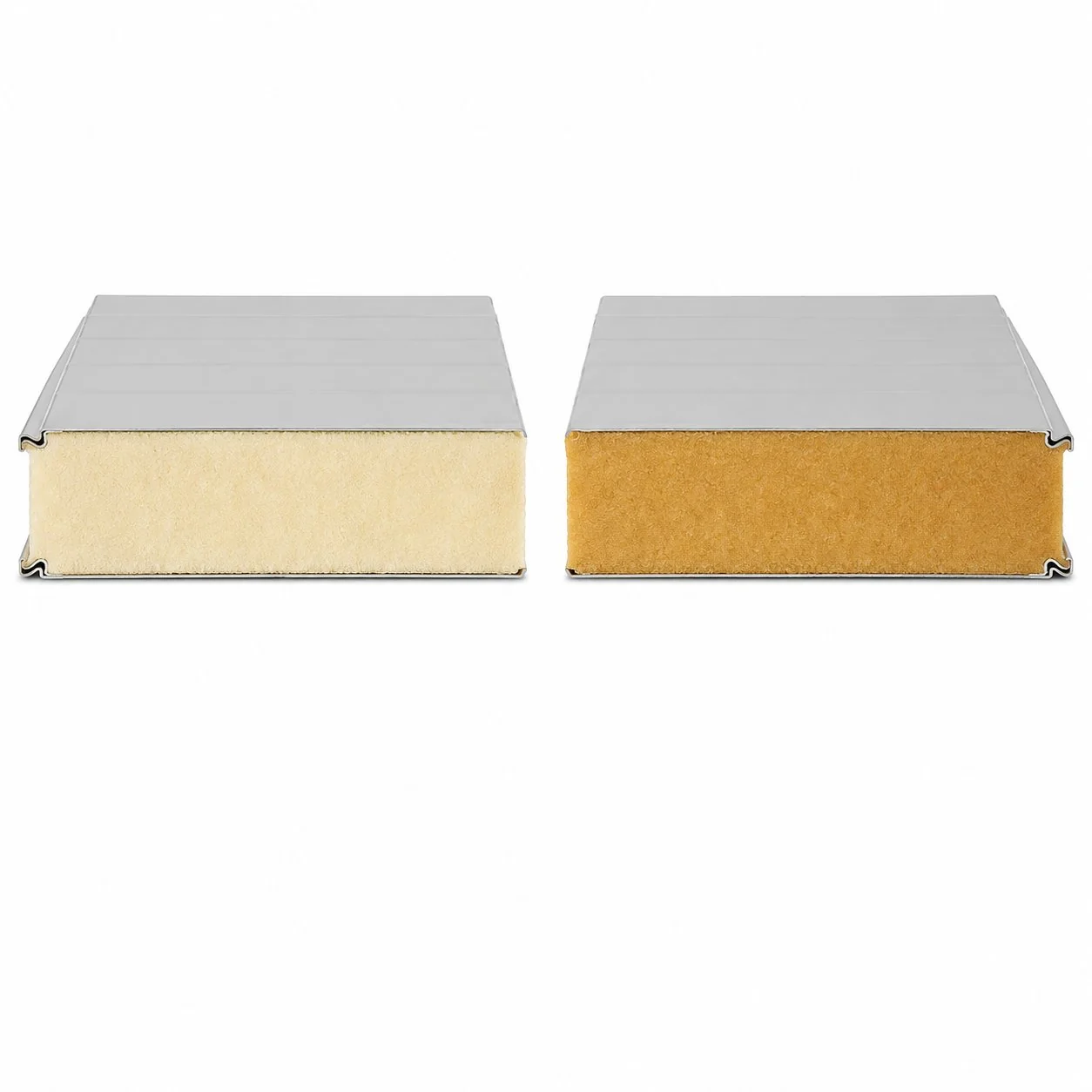
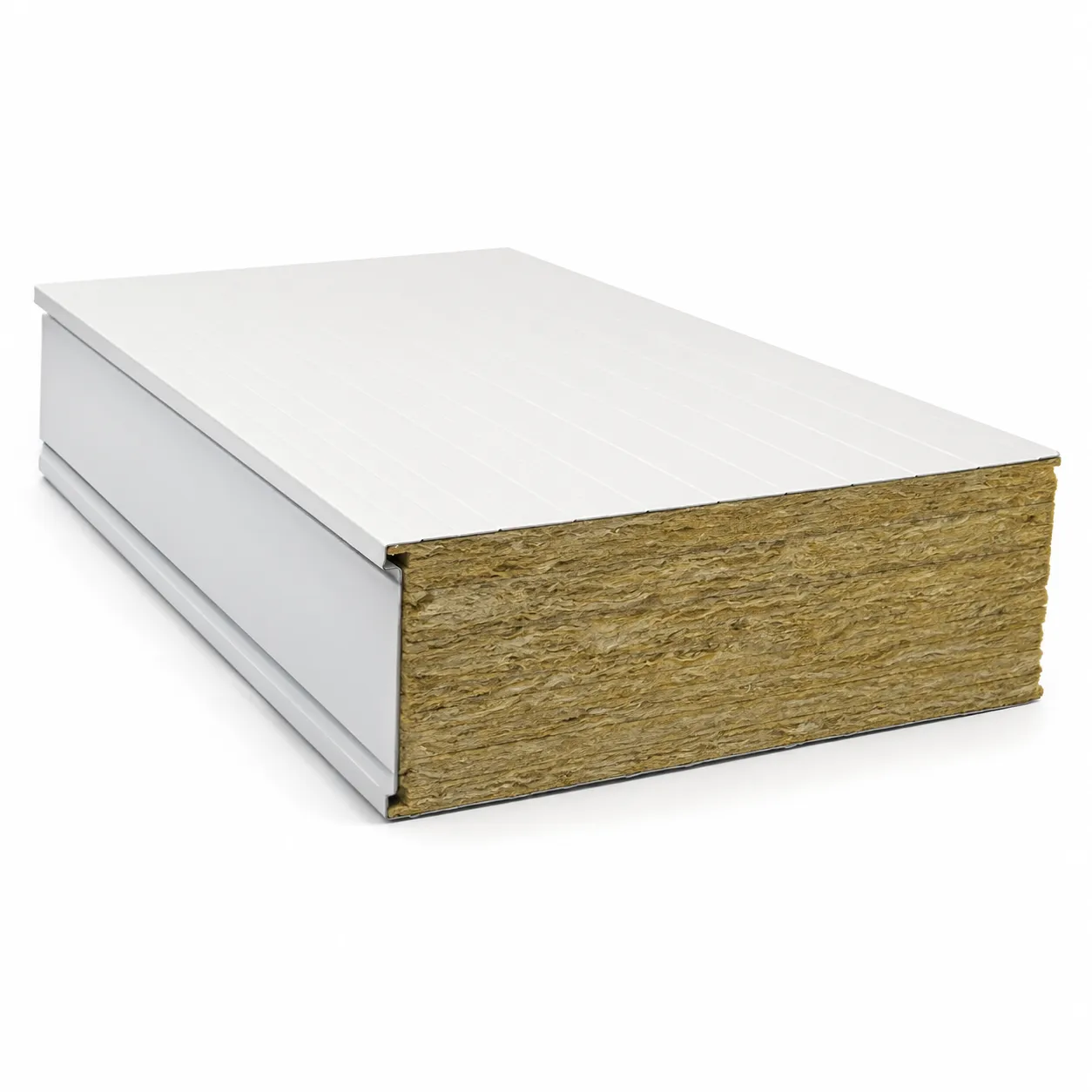
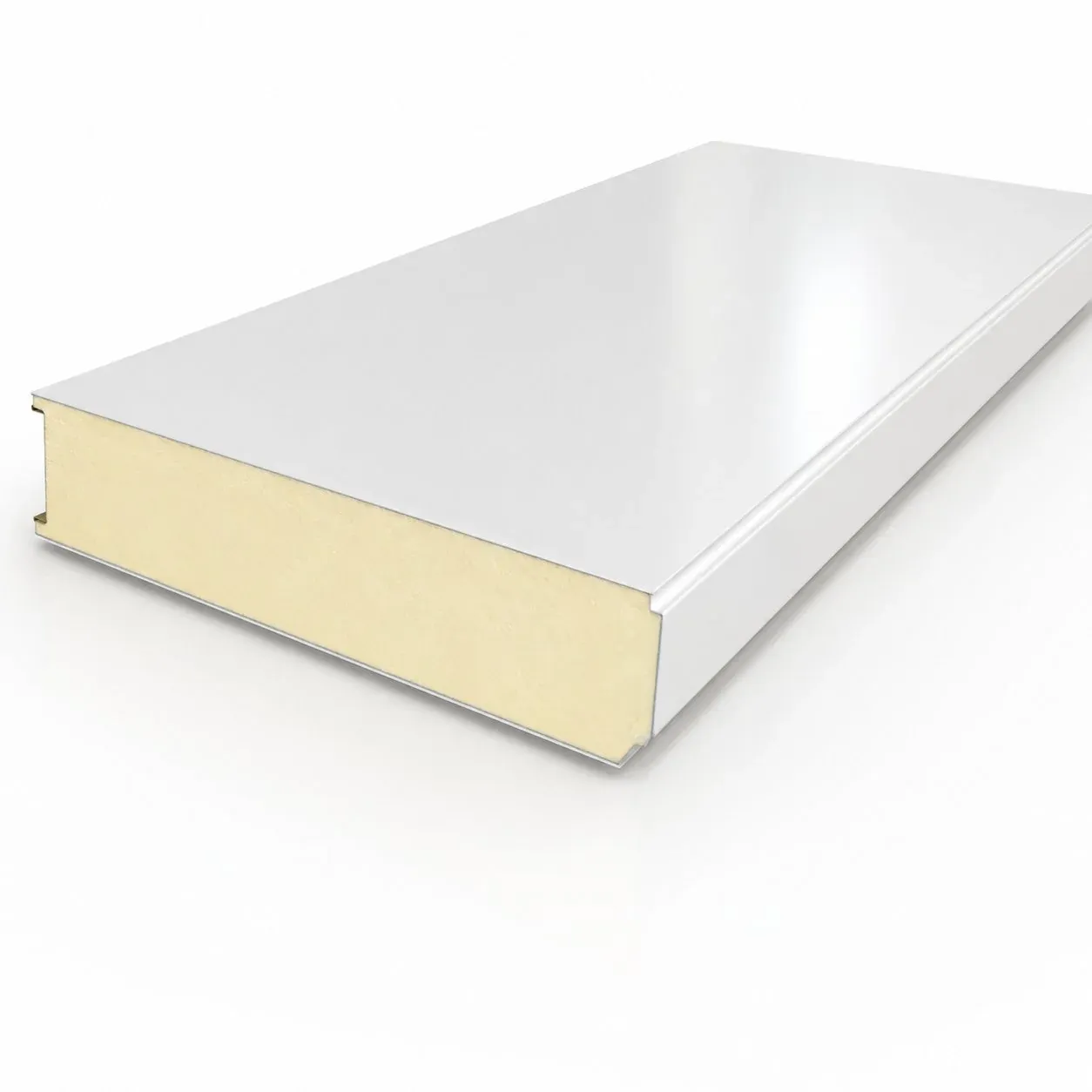
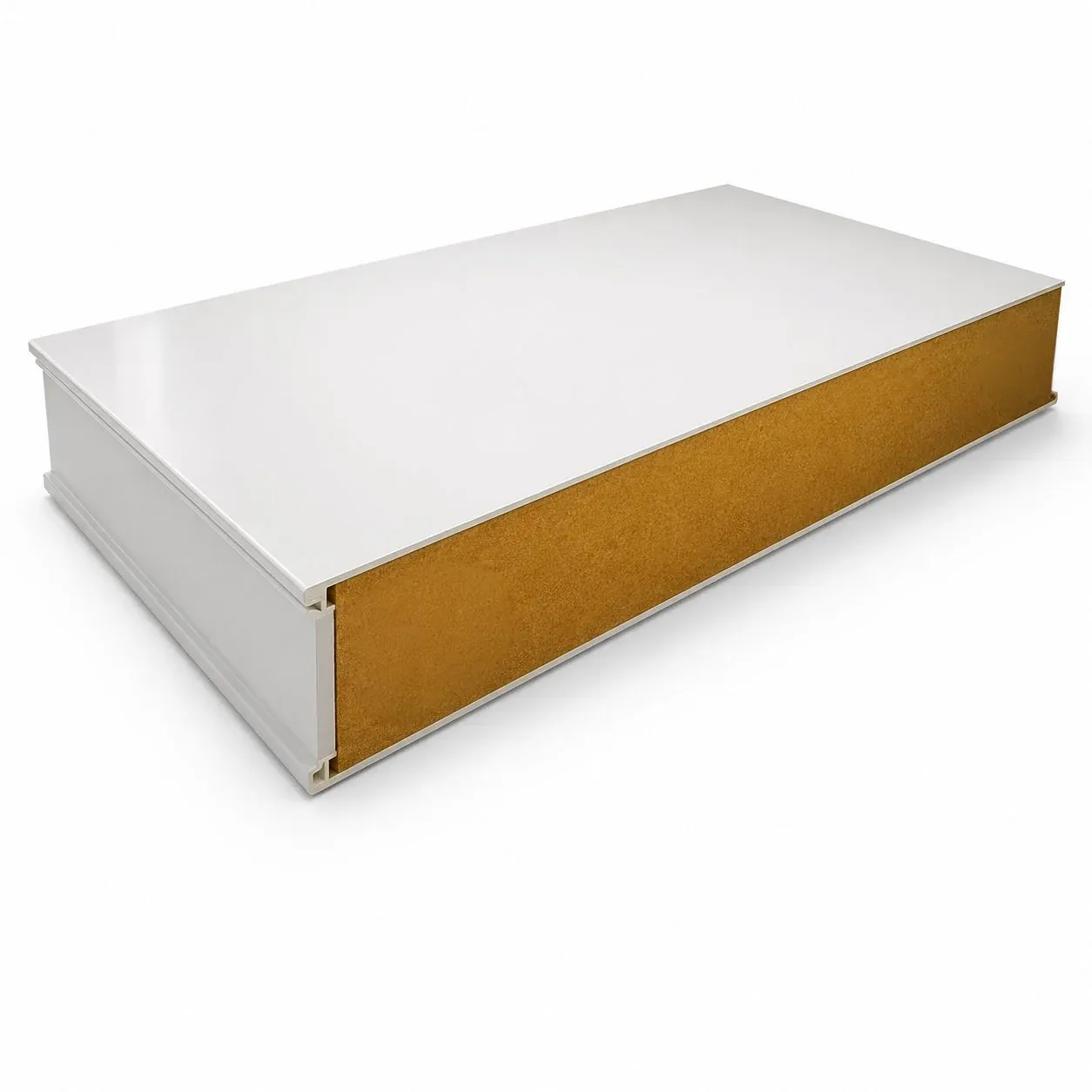
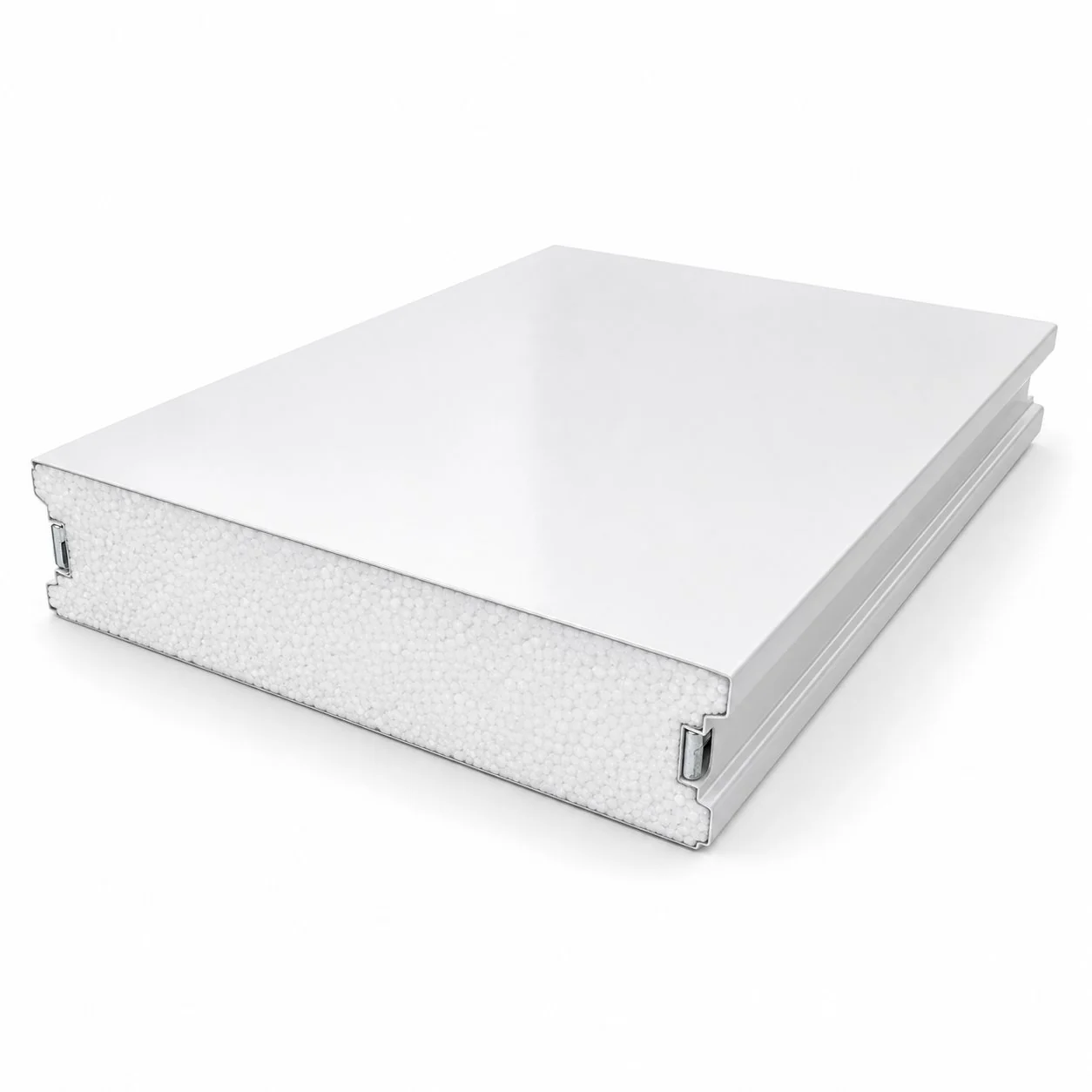
Fibercement Facade Panel
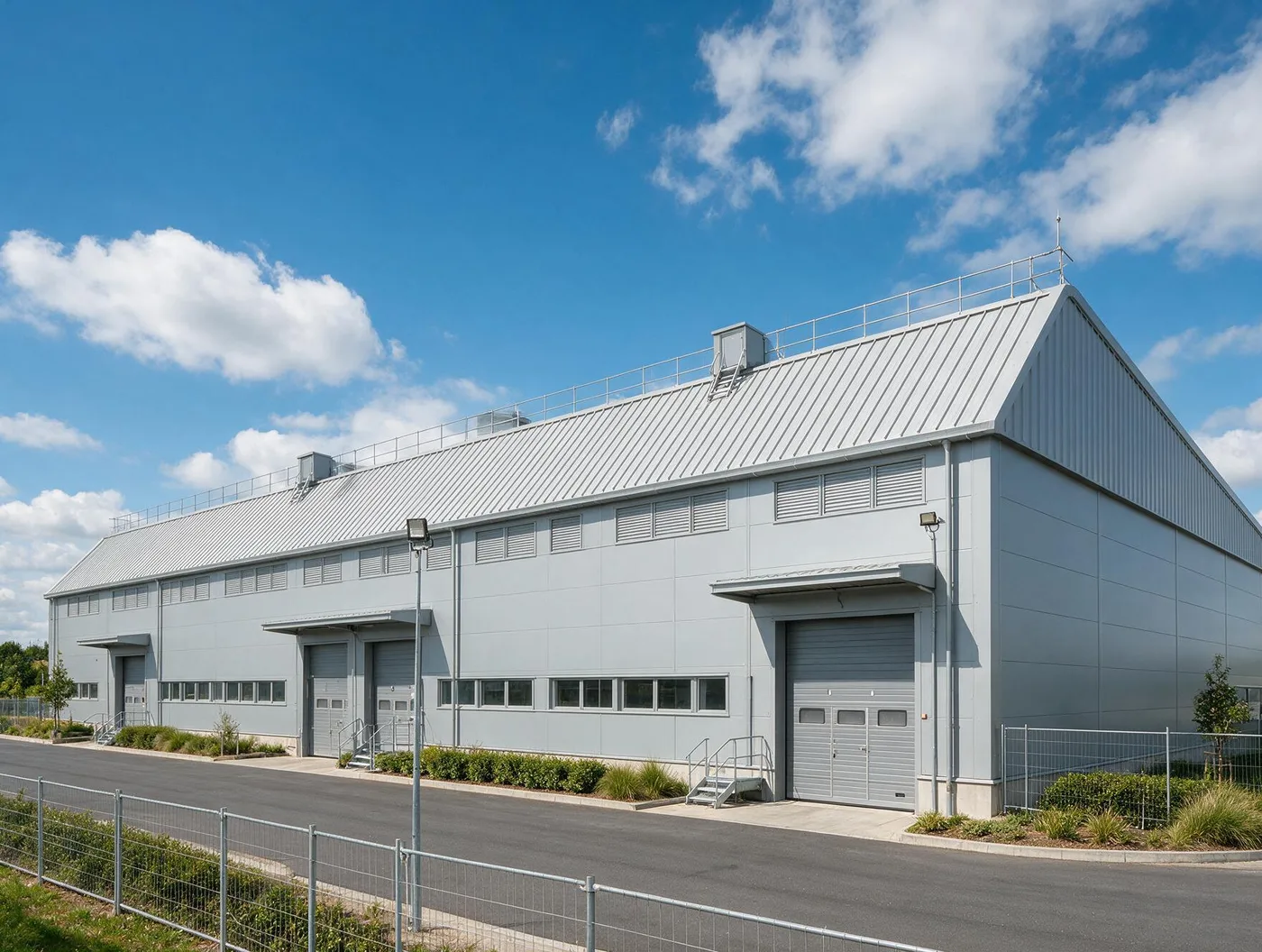
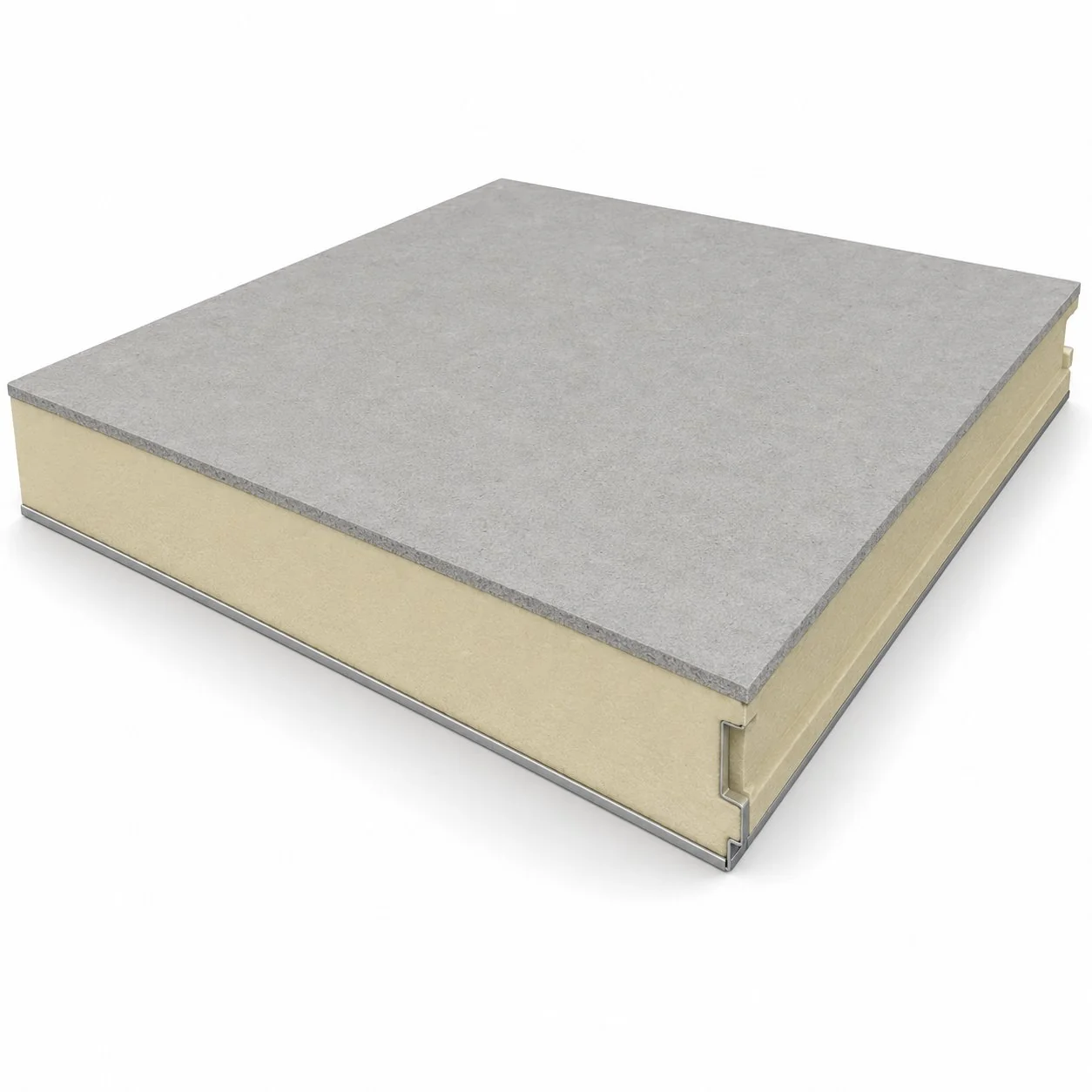
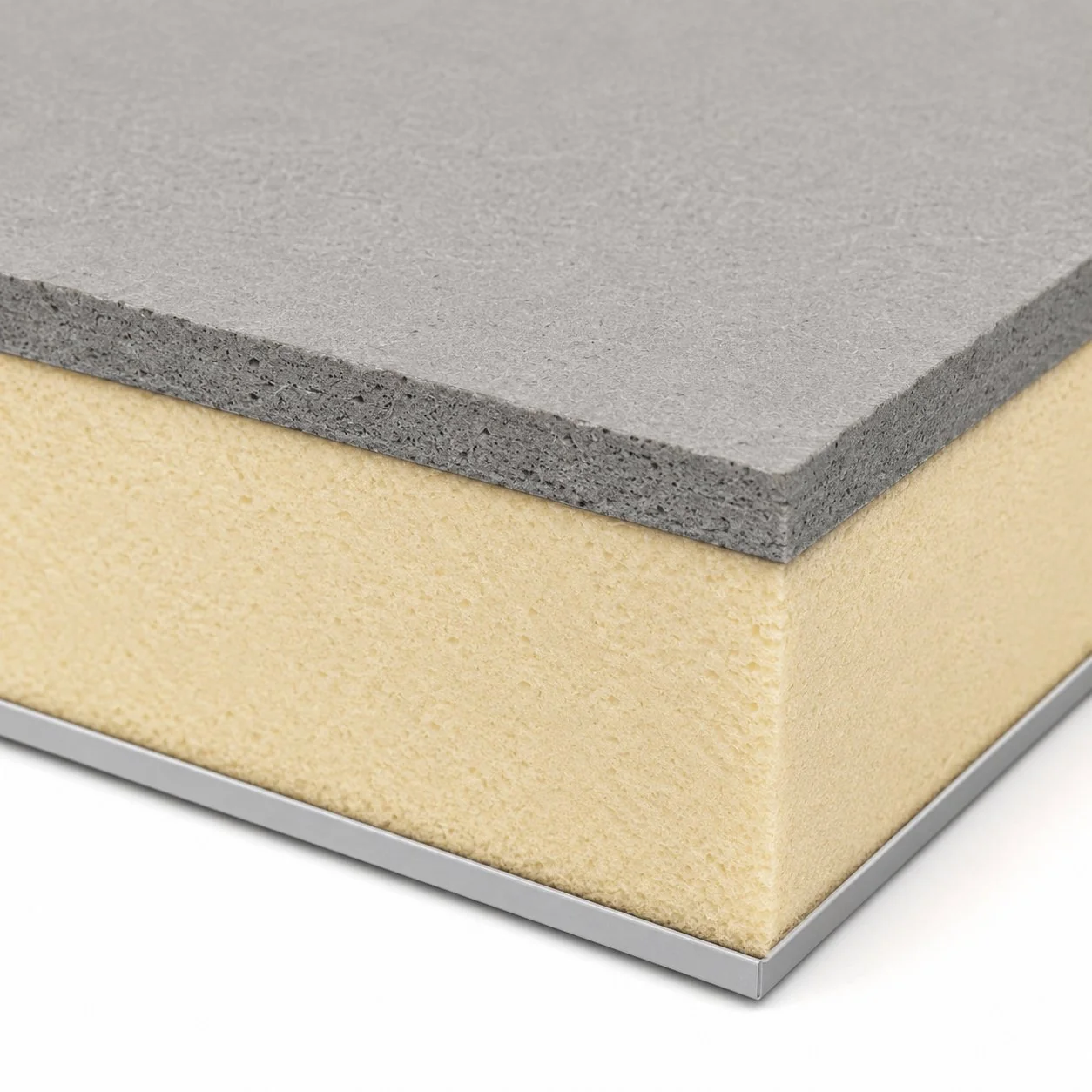
Architectural-grade fibercement facade panel combining a flat cement board surface with insulated sandwich panel performance. The premium choice when your building’s appearance matters as much as its thermal and fire performance.
- Exterior Surface: Flat fibercement board — smooth, modern, no metal sheen
- Fire Classification: A2-s1, d0 (Euroclass) — non-combustible
- Thermal Conductivity: 0.023 W/mK (PIR core)
- UV & Weather Resistance: Cement surface resists fading, chalking, and UV degradation
- Thickness Range: 60 – 200 mm (total panel)
- Standards: EN 14509, CE Marked
Looking for metal-faced panels? See PUR, PIR, or rockwool facade panels. Not sure? Panel Selector.
Where Architecture Meets Performance
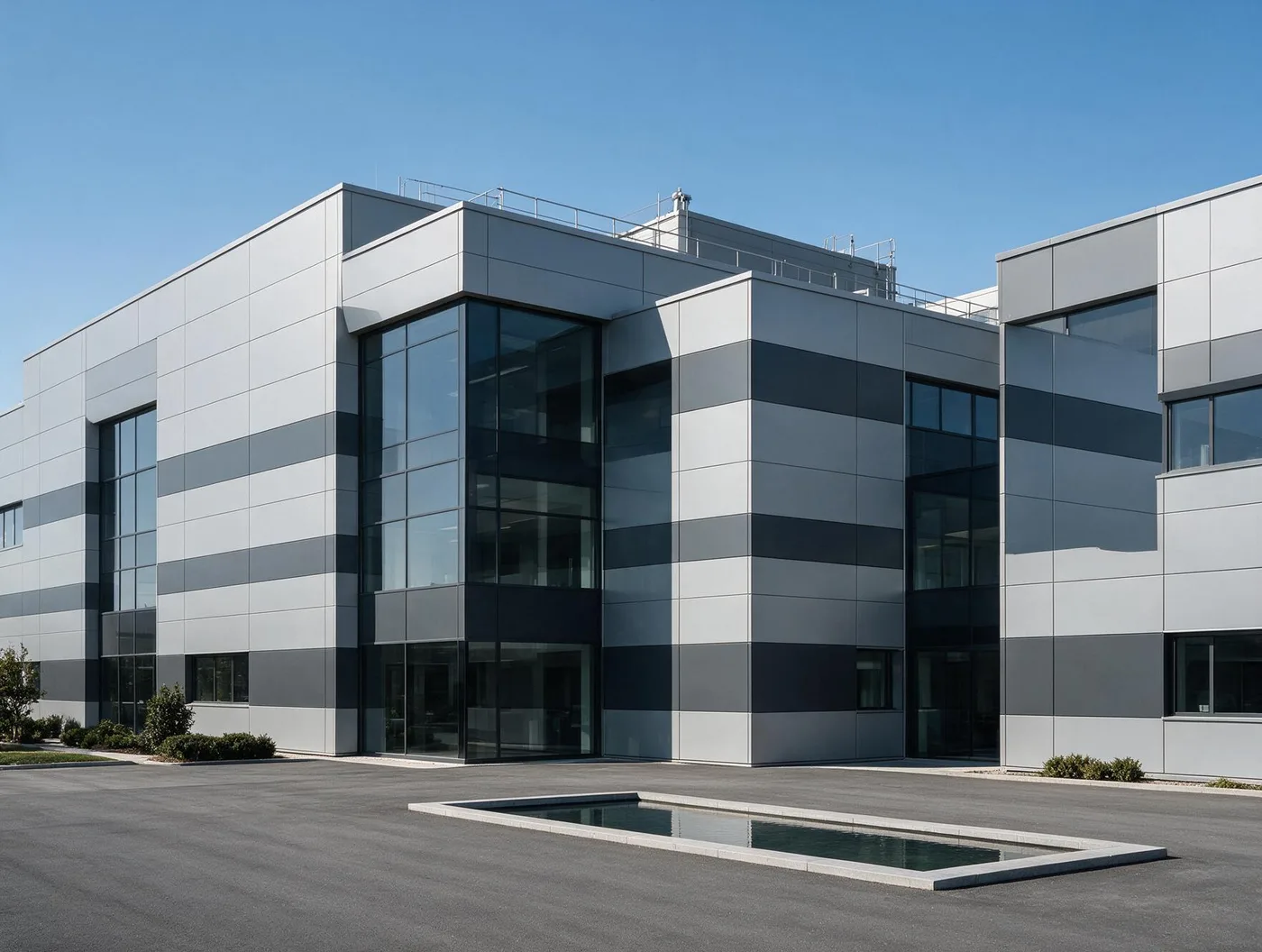
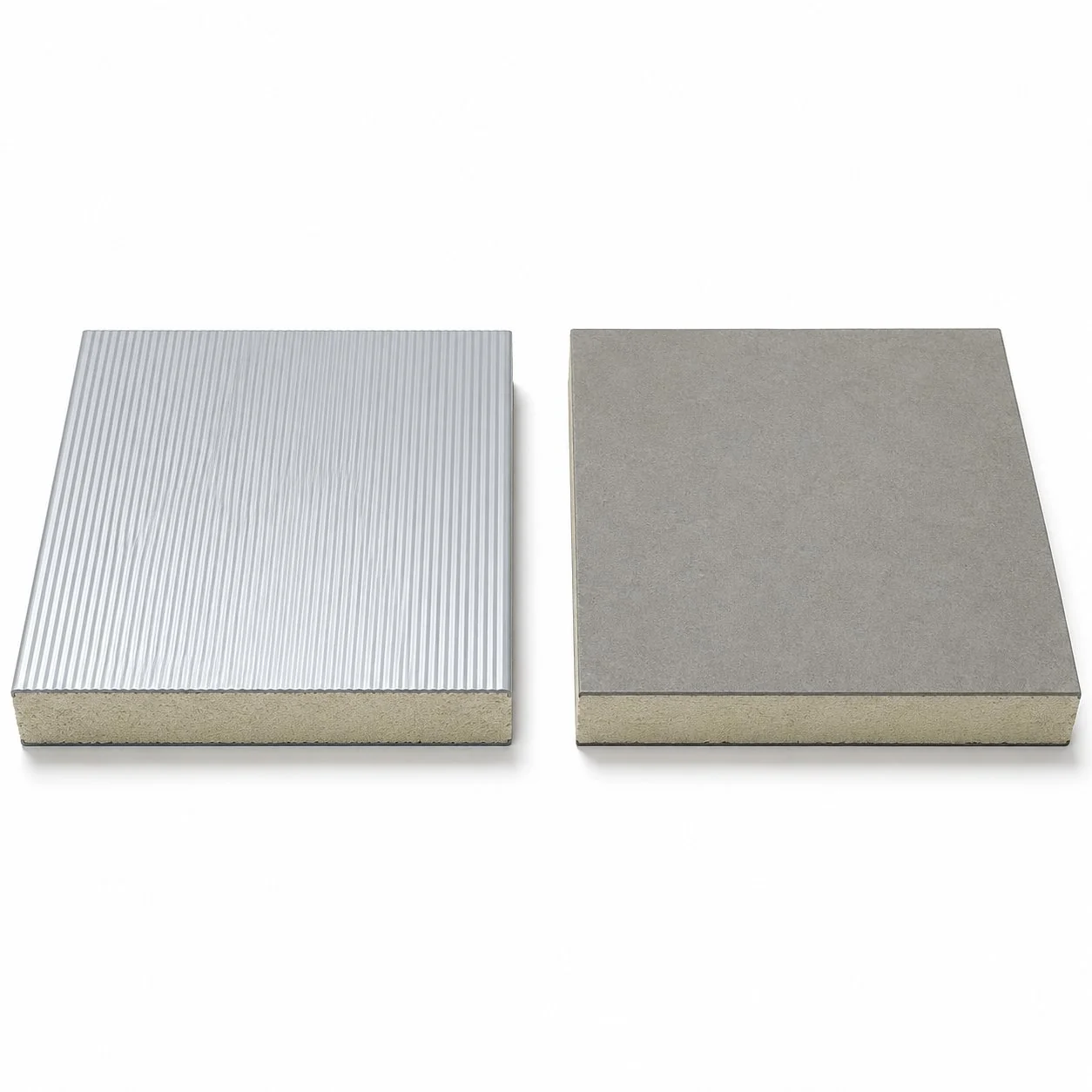
The fibercement facade panel is the only product in Real Panel’s range that replaces the exterior steel facing with a fiber-reinforced cement board. The result is a completely different aesthetic: a flat, matte, mineral-textured surface that looks and feels like contemporary architectural cladding — while delivering the same insulated sandwich panel performance underneath.
Traditional metal-faced sandwich panels, no matter how cleanly installed, always look like metal-faced sandwich panels. Fibercement panels break that visual limitation. They give architects and building designers a tool to create facades that belong on commercial high streets, urban mixed-use developments, and premium corporate campuses — projects where appearance directly impacts property value and tenant appeal.
Behind the cement board surface sits a rigid PIR (polyisocyanurate) insulation core, delivering excellent thermal performance (lambda 0.023 W/mK) and fire-enhanced properties. The combination of a non-combustible exterior surface and a fire-retardant PIR core achieves Euroclass A2-s1, d0 — the same fire classification as full rockwool panels, but with significantly better thermal efficiency.
Key Benefits
- Architectural Aesthetics: Flat, matte, mineral-textured surface. No metallic sheen, no micro-rib lines, no industrial appearance. Looks like premium architectural cladding, performs like an insulated sandwich panel.
- A2 Fire Rating: The non-combustible fibercement exterior combined with PIR core achieves Euroclass A2-s1, d0 — meeting strict fire regulations without the weight penalty of full rockwool panels.
- Superior Weathering: Fibercement is inherently resistant to UV radiation, moisture, freeze-thaw cycles, and salt spray. Unlike painted steel, cement board surfaces do not fade, chalk, or peel over time.
- Excellent Thermal Insulation: PIR core delivers lambda 0.023 W/mK — matching our standard PIR facade panels. Thinner overall profiles than rockwool for equivalent U-values.
- Low Maintenance: No repainting required. The cement surface is self-finished and maintains its appearance for 25+ years with minimal intervention. Rain naturally cleans the matte surface.
- Color Through-Body: Premium fibercement boards are available with through-body coloring, meaning scratches and edge cuts do not reveal a different substrate color. Surface-painted options also available in the full RAL range.
Produced at our manufacturing facility in Turkey and available for export to all five markets.
Ideal Applications
Fibercement facade panels excel in projects where visual quality is a primary design criterion:
- Commercial Buildings — office headquarters, retail flagship stores, corporate campuses
- Mixed-use urban developments — ground-floor retail with upper-floor residential or office
- Education and healthcare — schools, universities, hospitals, clinics where non-combustible + architectural finish is required
- Public buildings — government offices, cultural centers, libraries, sports facilities
- Hygienic Environments — food production facades where cement surface resists mold and bacteria better than painted steel
- Renovation and refurbishment — over-cladding existing buildings to achieve a modern look + improved insulation
- Property-boundary walls and fire barriers — A2 rating satisfies most boundary fire regulations
Panel Specifications
| SPECIFICATION | VALUE |
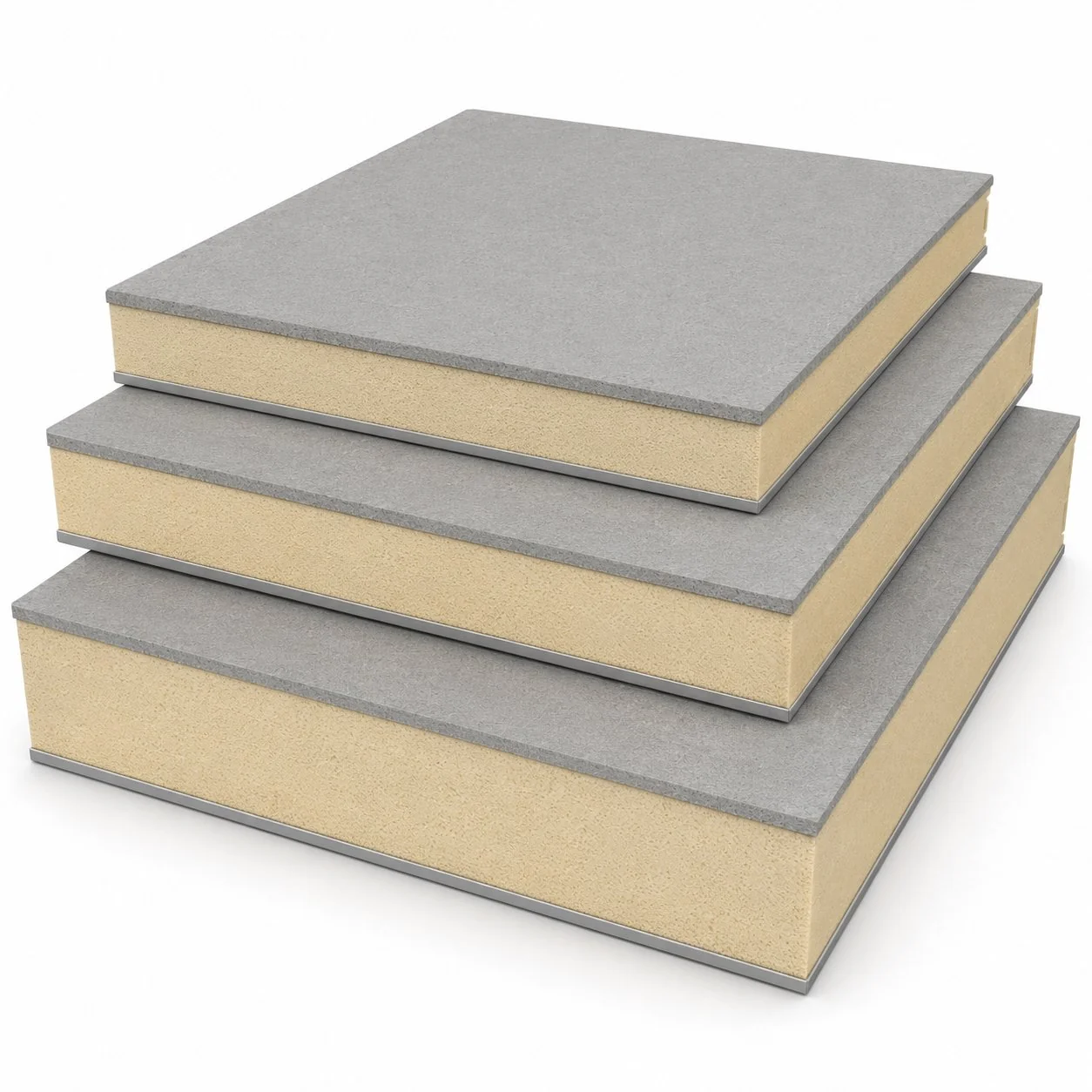
| Panel Structure | Fibercement board (exterior) + PIR foam core + steel sheet (interior) |
| Exterior Surface | Fiber-reinforced cement board, 6–8 mm thickness |
| Core Material | Rigid polyisocyanurate foam (PIR), CFC/HCFC-free |
| Core Density | 40–45 kg/m³ |
| Interior Facing | Pre-painted galvanized steel (PPGI), 0.4–0.5 mm |
| Thermal Conductivity (λ) | 0.023 W/mK (PIR core) |
| Total Panel Thickness | 60 / 80 / 100 / 120 / 150 / 200 mm |
| Effective Width | 1000 mm (standard) |
| Maximum Length | Up to 6,000 mm |
| Fire Reaction | A2-s1, d0 (Euroclass per EN 13501-1) |
| Smoke Classification | s1 — very low smoke production |
| Weight (approx.) | ~18–22 kg/m² (at 100 mm) |
| UV Resistance | Excellent — no fading, chalking, or degradation |
| Moisture Resistance | High — cement board does not swell or deform |
| Frost Resistance | Rated for 150+ freeze-thaw cycles |
| Surface Finish | Smooth matte / Textured / Through-body color / RAL painted |
| Joint System | Concealed fix with dedicated fibercement brackets |
| Standards | EN 14509, EN 12467 (fibercement), CE Marked, ISO 9001 |
U-Value by Panel Thickness
| SPECIFICATION | VALUE |
| 60 mm | U = 0.40 W/m²K |
| 80 mm | U = 0.30 W/m²K |
| 100 mm | U = 0.24 W/m²K |
| 120 mm | U = 0.20 W/m²K |
| 150 mm | U = 0.16 W/m²K |
| 200 mm | U = 0.12 W/m²K |
For project-specific calculations: U-Value Calculator.
Fibercement Surface Options
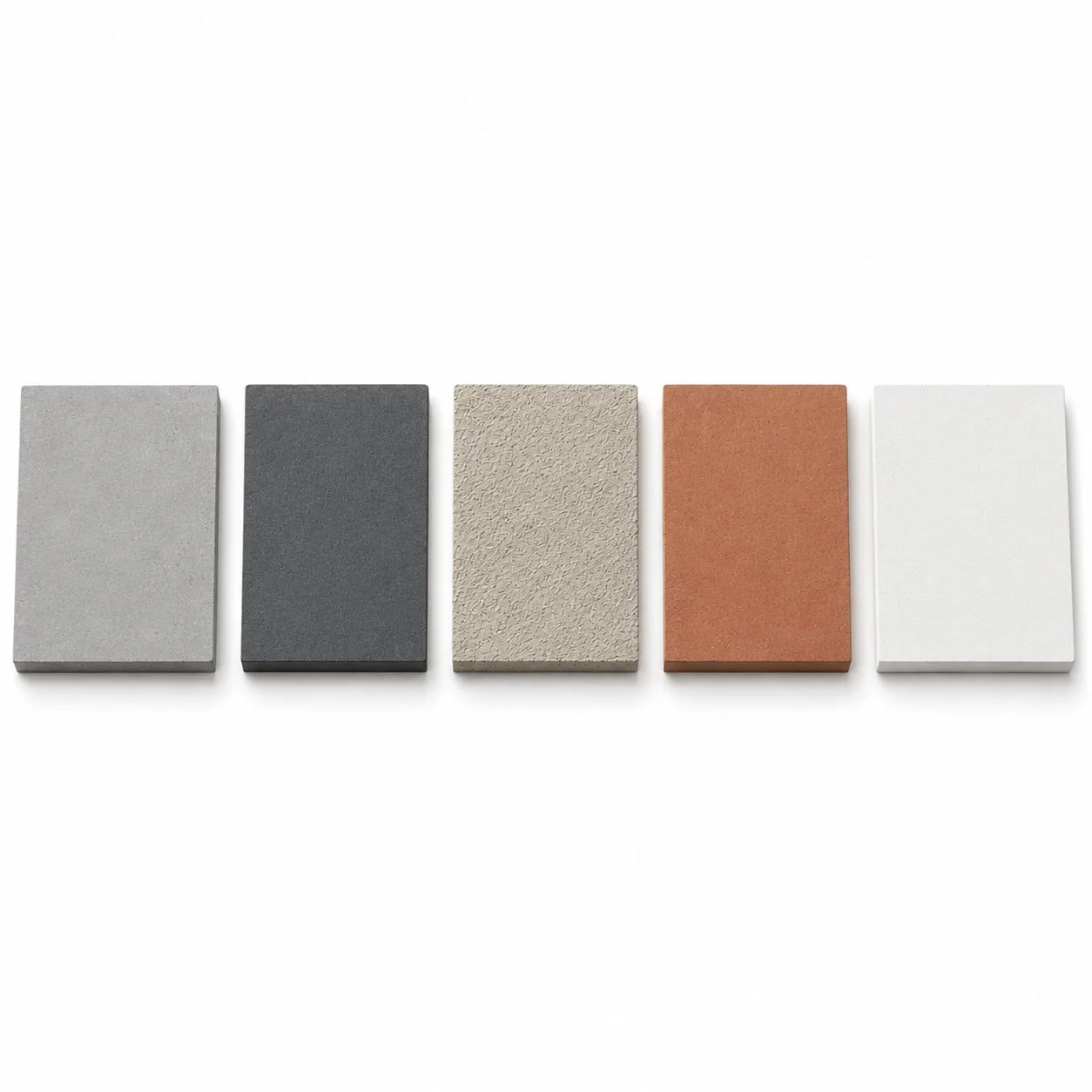
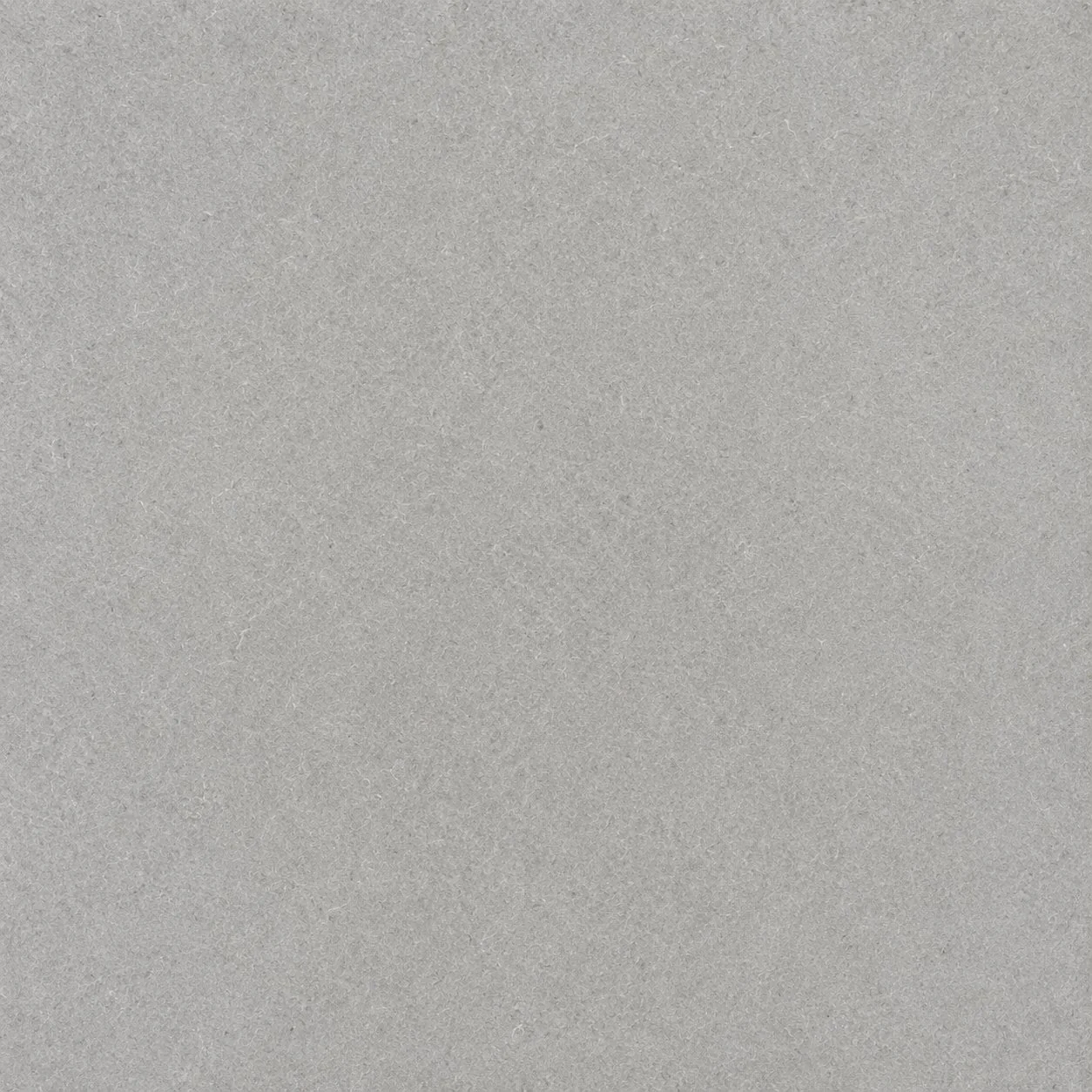
- Smooth Matte: Clean, uniform matte finish. The most popular option for modern architectural facades.
- Fine Textured: Subtle sand-like texture that adds visual depth while maintaining a refined appearance.
- Through-Body Color: Pigment mixed into the cement board during manufacturing. Scratches and cuts remain the same color. Available in select earth tones and grays.
- RAL Painted: Full RAL color range applied as a factory-applied coating on the cement board surface. Wider color selection than through-body options.
Design Freedom with Panel Performance
Fibercement facade panels bridge the gap between architectural cladding systems and industrial sandwich panels. They give designers the visual vocabulary of high-end facade materials — smooth mineral surfaces, matte finishes, subtle earth tones — without sacrificing the speed, thermal performance, and fire safety of sandwich panel construction.
Architectural Advantages vs Metal-Faced Panels
| SPECIFICATION | VALUE |
| Surface Appearance | Flat, matte, mineral — no metallic sheen or industrial look |
| Color Aging | No fading, no chalking. UV-stable for 25+ years |
| Scratch Visibility | Through-body color: scratches invisible. RAL: minor touch-up |
| Rain Staining | Matte surface sheds water evenly, no streak marks |
| Oil-Canning | Zero risk — cement board is rigid and dimensionally stable |
| Aesthetic Versatility | Smooth, textured, colored — multiple surface finishes available |
| Perceived Value | Premium architectural appearance increases property value and tenant appeal |
Design Considerations
- Panel Length: Maximum 6,000 mm (shorter than metal-faced panels). Plan joint positions as deliberate design elements rather than trying to minimize them.
- Weight: Fibercement panels are heavier than PUR/PIR metal-faced equivalents (~18–22 kg/m² vs 10–13 kg/m²). Structural design must account for this.
- Handling: Cement board surfaces require careful handling to avoid edge chipping during transport and installation. Factory-packaged with edge protection.
- Cutting: On-site cutting requires diamond-blade tools and dust extraction. Factory pre-cutting to project dimensions is recommended.
- Color Matching: Through-body colors are batch-produced. Order all panels for a single facade from the same batch to ensure consistent color.
Need design support? Contact our technical team via the Contact page or download specification guides from Technical Support.
How does fibercement compare to other facade panels?
| Feature | Fibercement | Rockwool | PIR | PUR | EPS |
| Surface | Cement matte | Steel | Steel | Steel | Steel |
| Fire Class | A2-s1, d0 | A1 / A2 | B-s1, d0 | B-s2, d0 | E |
| Thermal (λ) | 0.023 | 0.040 | 0.023 | 0.022 | 0.035 |
| UV Aging | Excellent | N/A (steel) | N/A (steel) | N/A (steel) | N/A (steel) |
| Aesthetics | Premium | Industrial | Industrial | Industrial | Industrial |
| Cost | $$$$+ | $$$$ | $$$ | $$ | $ |
| Best For | Architectural | Fire/acoustic | Fire zones | All-round | Budget |
Certifications
- EN 14509: Self-supporting double skin metal faced insulating panels.
- EN 12467: Fibre-cement flat sheets — product specification and test methods.
- CE Marking: Full compliance for European markets.
- EN 13501-1: Fire reaction — Euroclass A2-s1, d0.
- ISO 9001: Manufacturing quality management.
All certificates: Quality & Certificates.
What is a fibercement facade panel?
A fibercement facade panel is an insulated sandwich panel where the exterior steel facing is replaced with a fiber-reinforced cement board. The interior facing remains steel. Between them sits a PIR insulation core. The result is a panel that looks like architectural cement cladding but installs with the speed and thermal performance of a sandwich panel.
How does fibercement compare to standard metal-faced panels?
Visually, fibercement panels look completely different — flat, matte, mineral-textured instead of metallic and ribbed. Technically, they offer the same PIR-core thermal performance (lambda 0.023 W/mK), improved fire rating (A2 vs B), and superior UV/weather aging. The trade-offs are higher cost, shorter maximum length (6m vs 16m), and heavier weight.
Is fibercement non-combustible?
The fibercement board surface is non-combustible (A1 rated on its own). When combined with a PIR core and steel interior face, the complete panel achieves Euroclass A2-s1, d0 — very limited combustibility with very low smoke. This satisfies most building codes that require non-combustible or limited-combustibility cladding.
Will the surface color fade over time?
No. Fibercement boards are inherently UV-stable. Through-body colored panels maintain their color indefinitely because the pigment runs through the entire board thickness. RAL-painted fibercement surfaces resist fading far better than painted steel, with no chalking or peeling observed over 25+ year lifespans.
Can fibercement panels be cut on site?
Yes, but diamond-blade cutting tools and dust extraction are required (cement dust is hazardous). We recommend specifying factory-cut panels to project dimensions wherever possible to minimize on-site cutting, reduce waste, and ensure clean edges.
What is the maximum panel length?
Fibercement facade panels can be manufactured up to 6,000 mm in length. This is shorter than metal-faced panels (up to 16,000 mm) due to the rigidity characteristics of the cement board. For larger facades, plan panel joints as architectural features.
Are fibercement panels available for export?
Yes. We export to Romania, Bulgaria, Georgia, Macedonia, and Kosovo. Request a quote or check Export Markets.