

Sandwich Panel FAQ
This sandwich panel FAQ answers the common questions on cores, U-values, fire performance, installation, ordering and export — with links to the tools and documents that go deeper.
No questions match that search. Try a different word, browse the topics above, or ask the technical desk.
01 Panels & materials
What is an insulated sandwich panel?
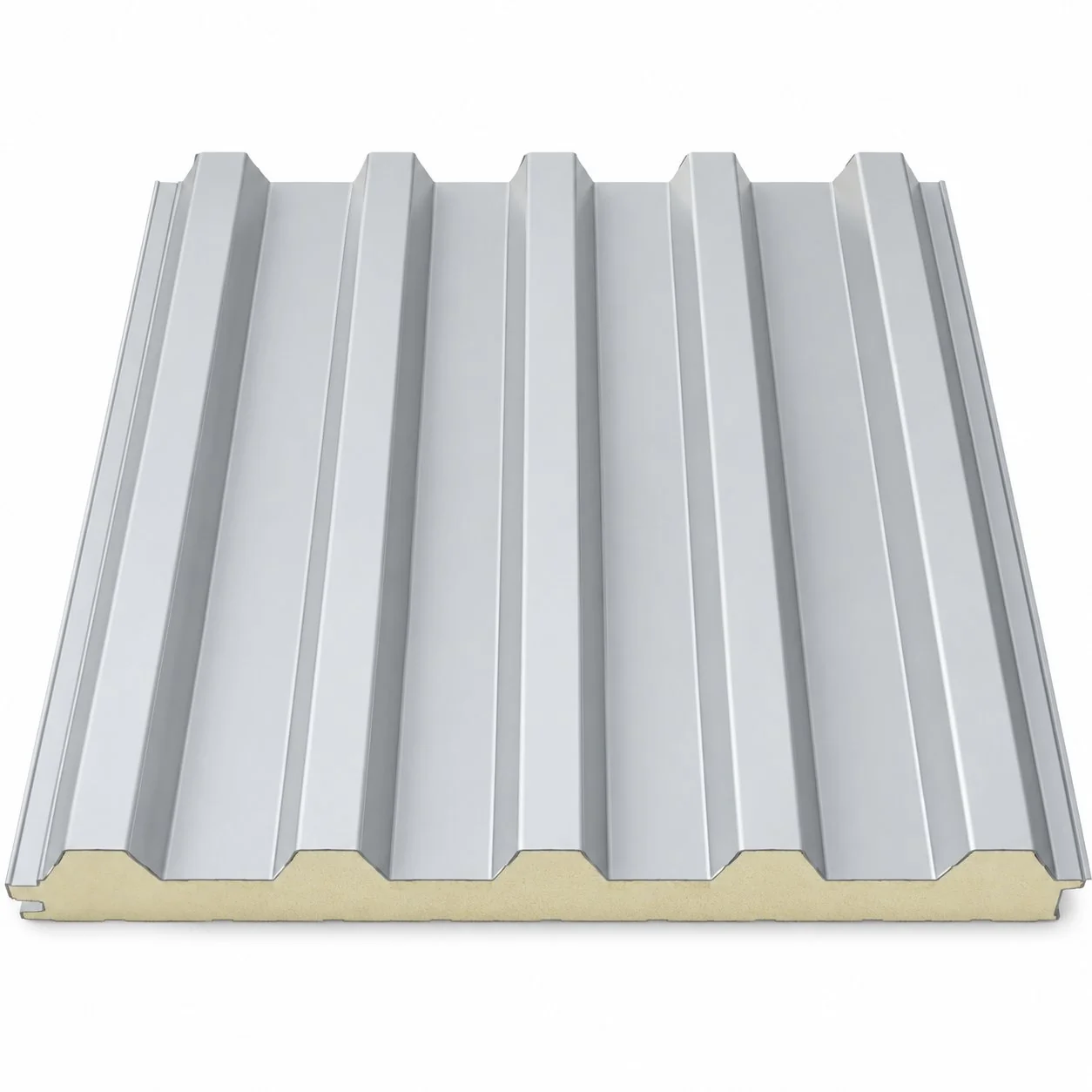
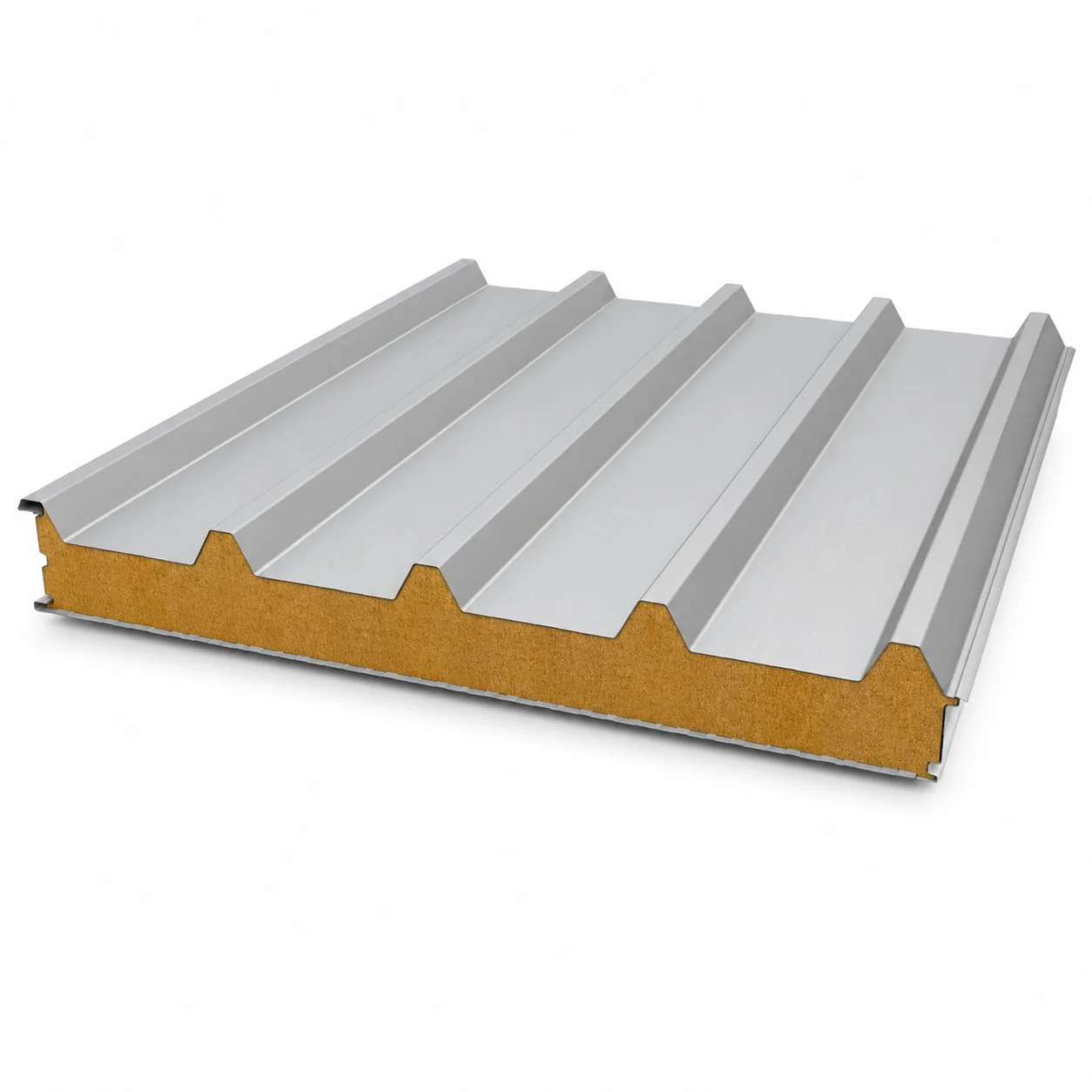
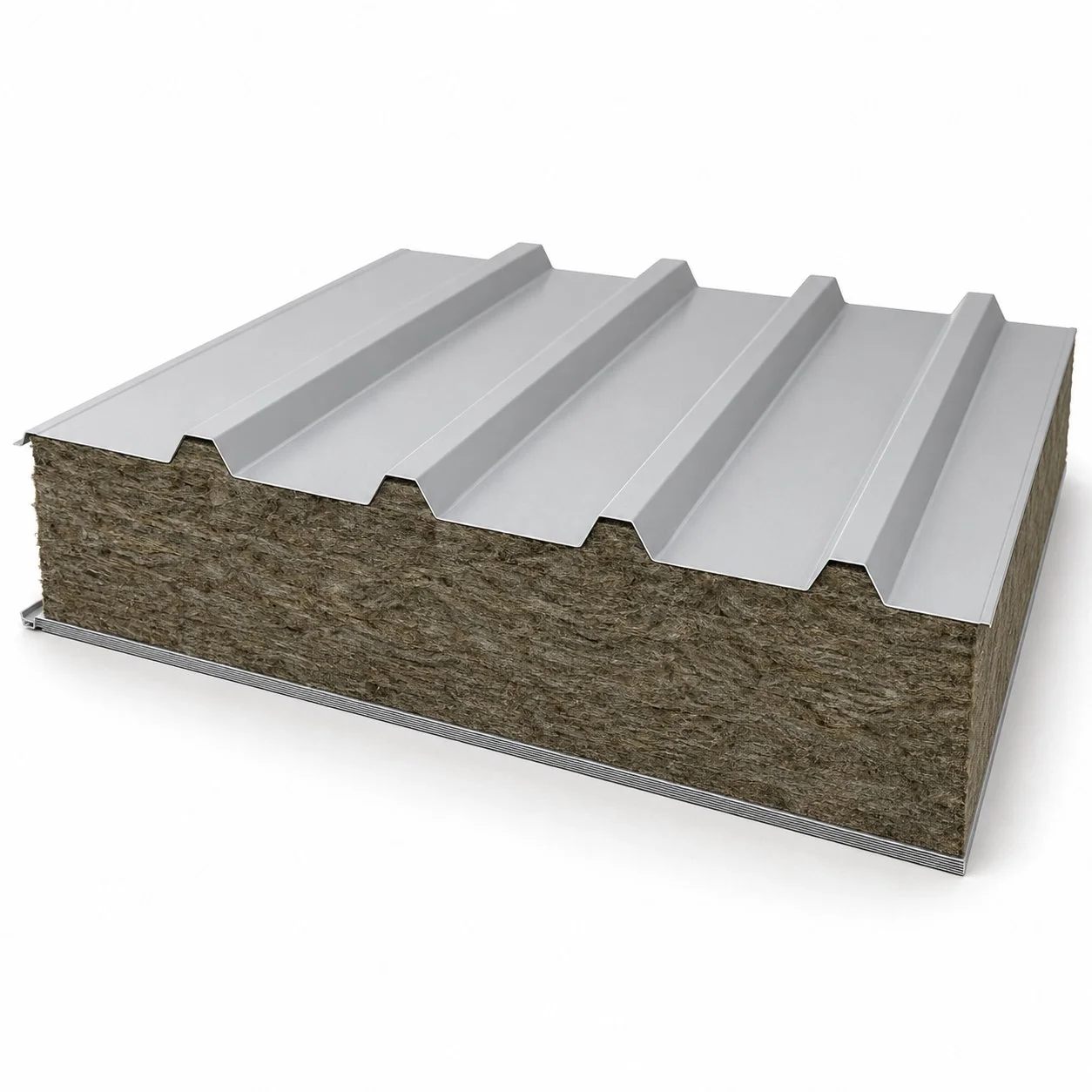
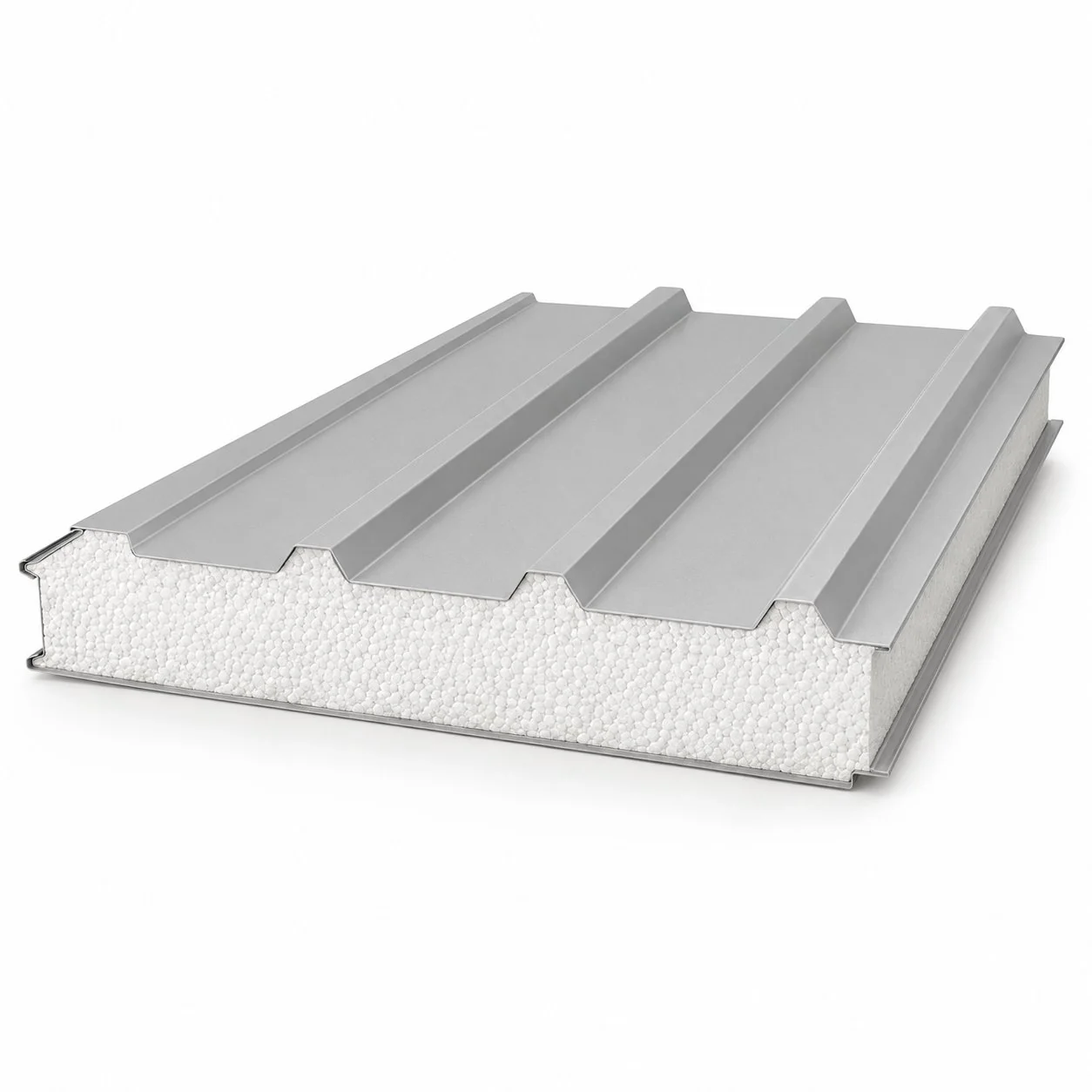
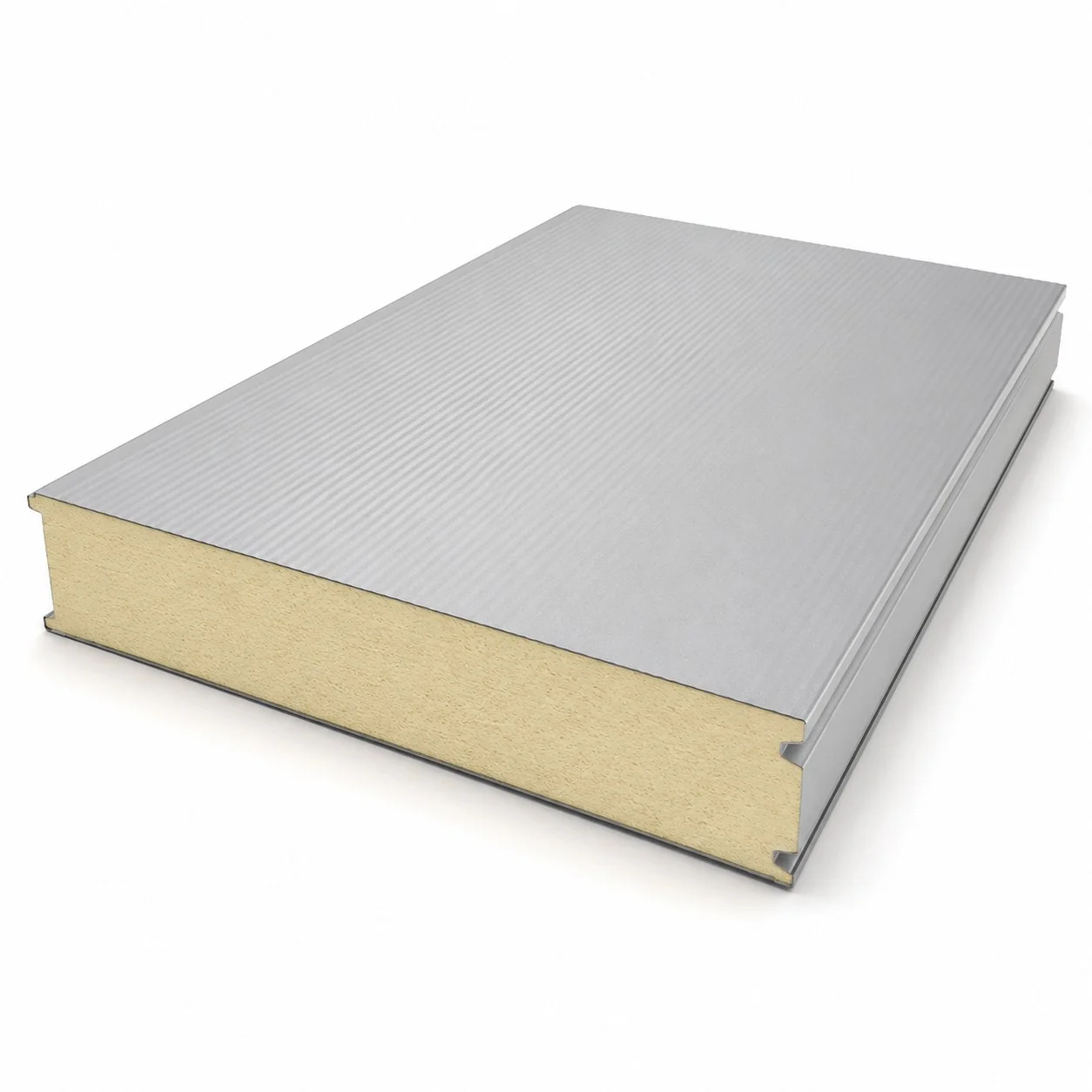
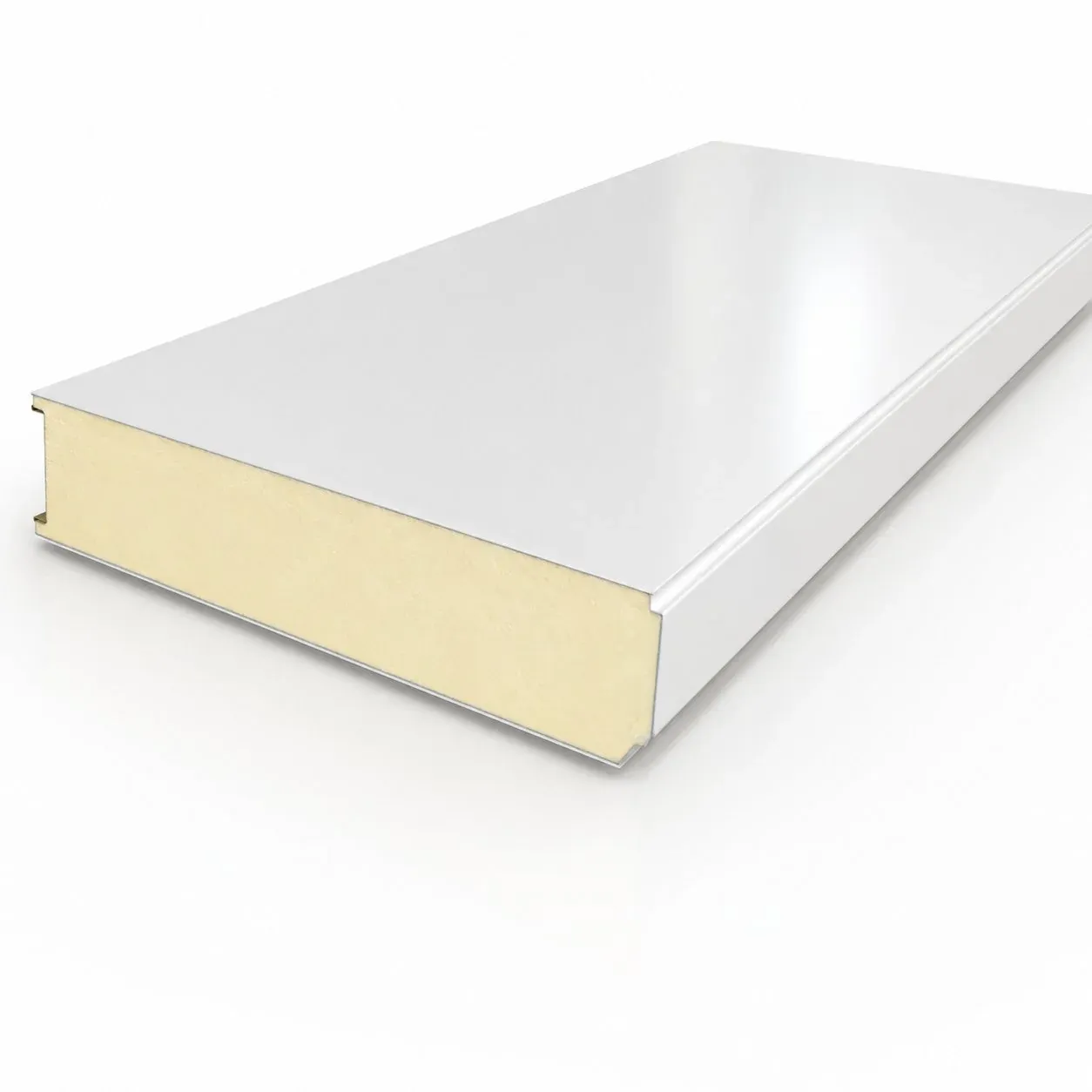
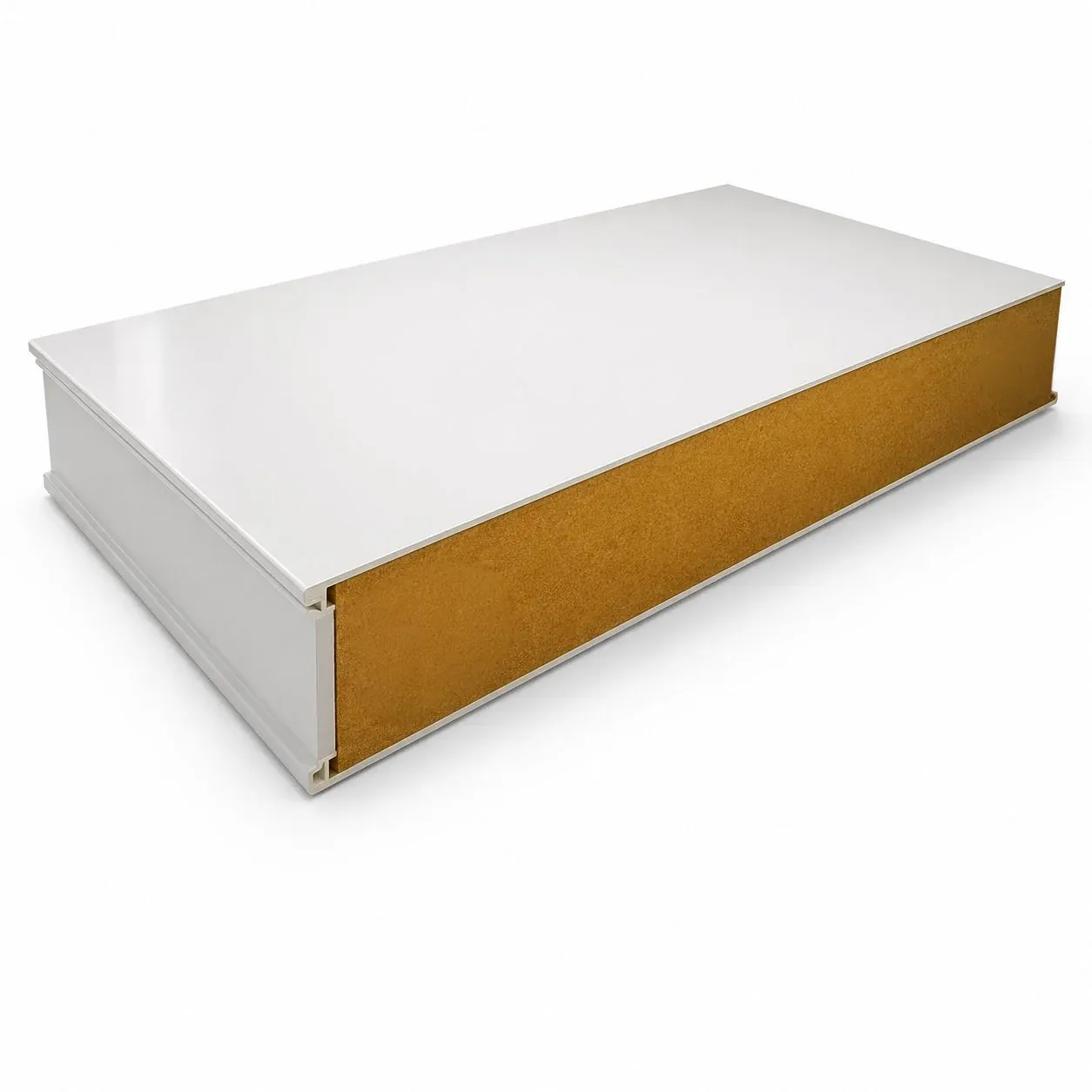
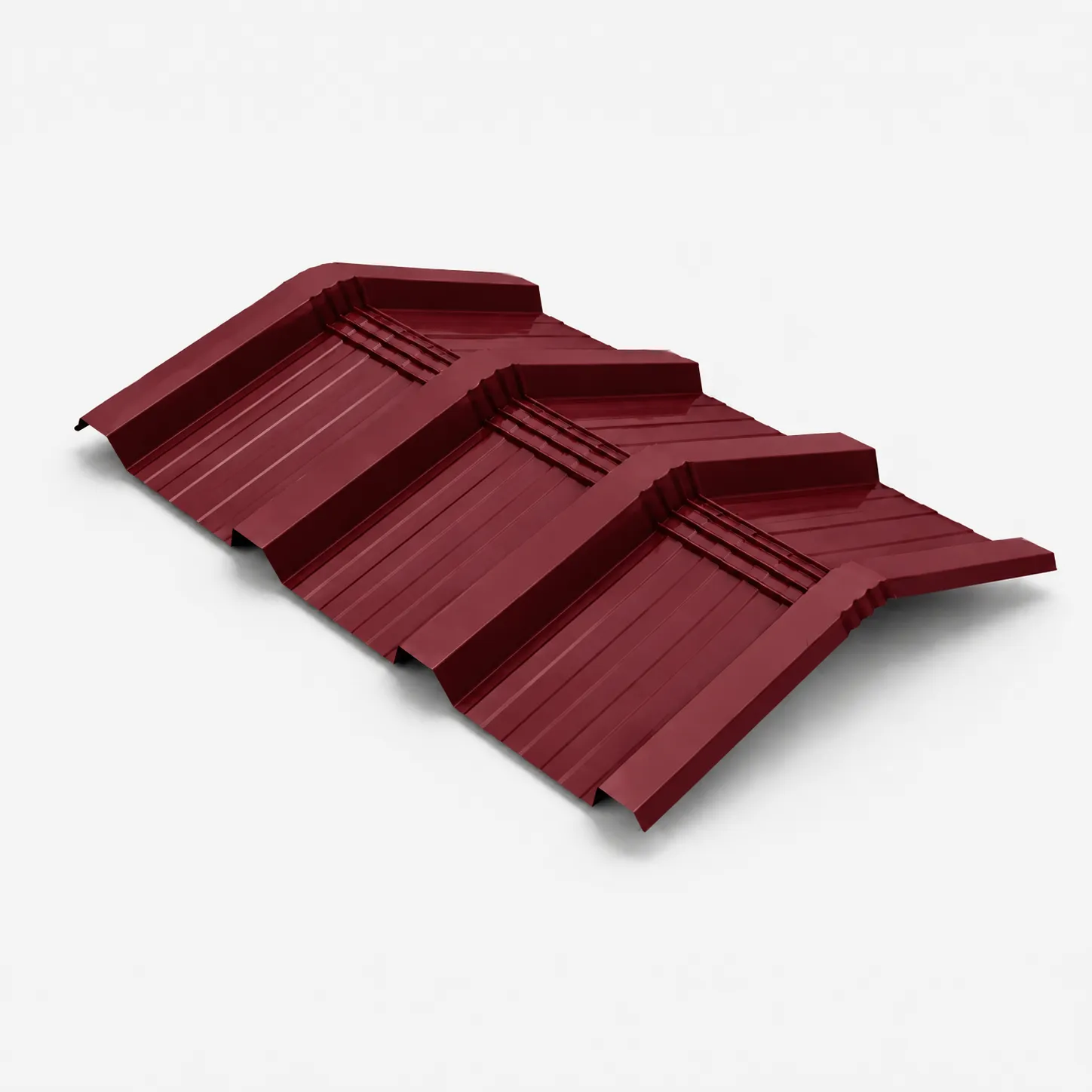
It's a cladding element made of two profiled steel facings bonded to an insulating core. The facings carry load and weather resistance; the core delivers the thermal insulation. The result is a lightweight, fast-to-install panel for walls, roofs and cold rooms.
What are the steel facings made of, and what finishes are available?
The facings are coated steel sheet, profiled for stiffness and weather performance. A range of protective coatings and surface finishes is available depending on the environment and appearance required. The exact coating and coating thickness for a product are stated on its datasheet.
What colours can panels be supplied in?
Panels are produced in a range of standard colours, with other shades available on request. For the current colour options and any minimums, ask the sales desk.
Are panels made to order, or are there standard products?
Both. There are standard product families across facade, roof and cold-room systems, and panels are typically produced to your required length. Standard thicknesses and modules are on the datasheet; non-standard requirements can be discussed with the desk.
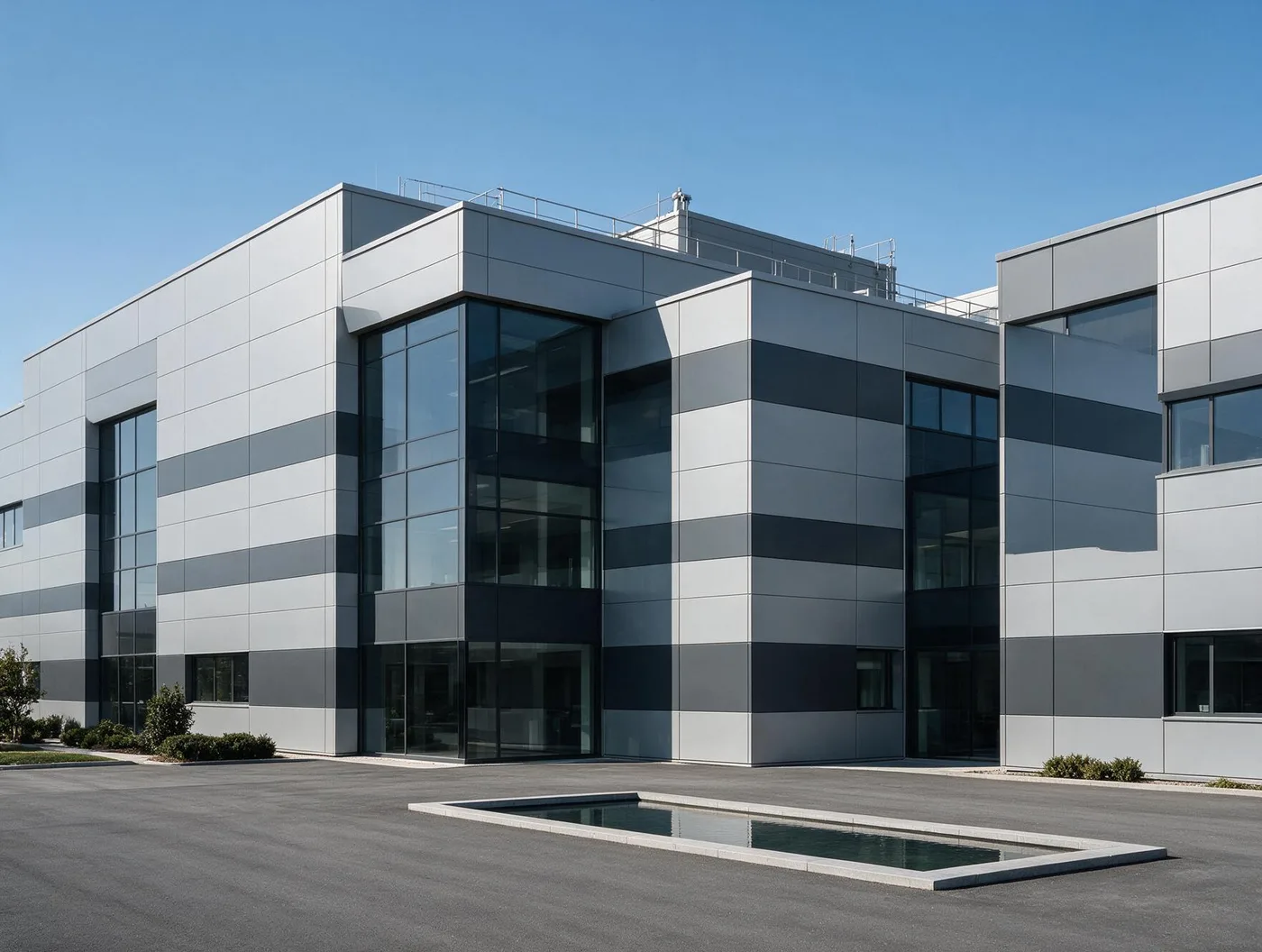
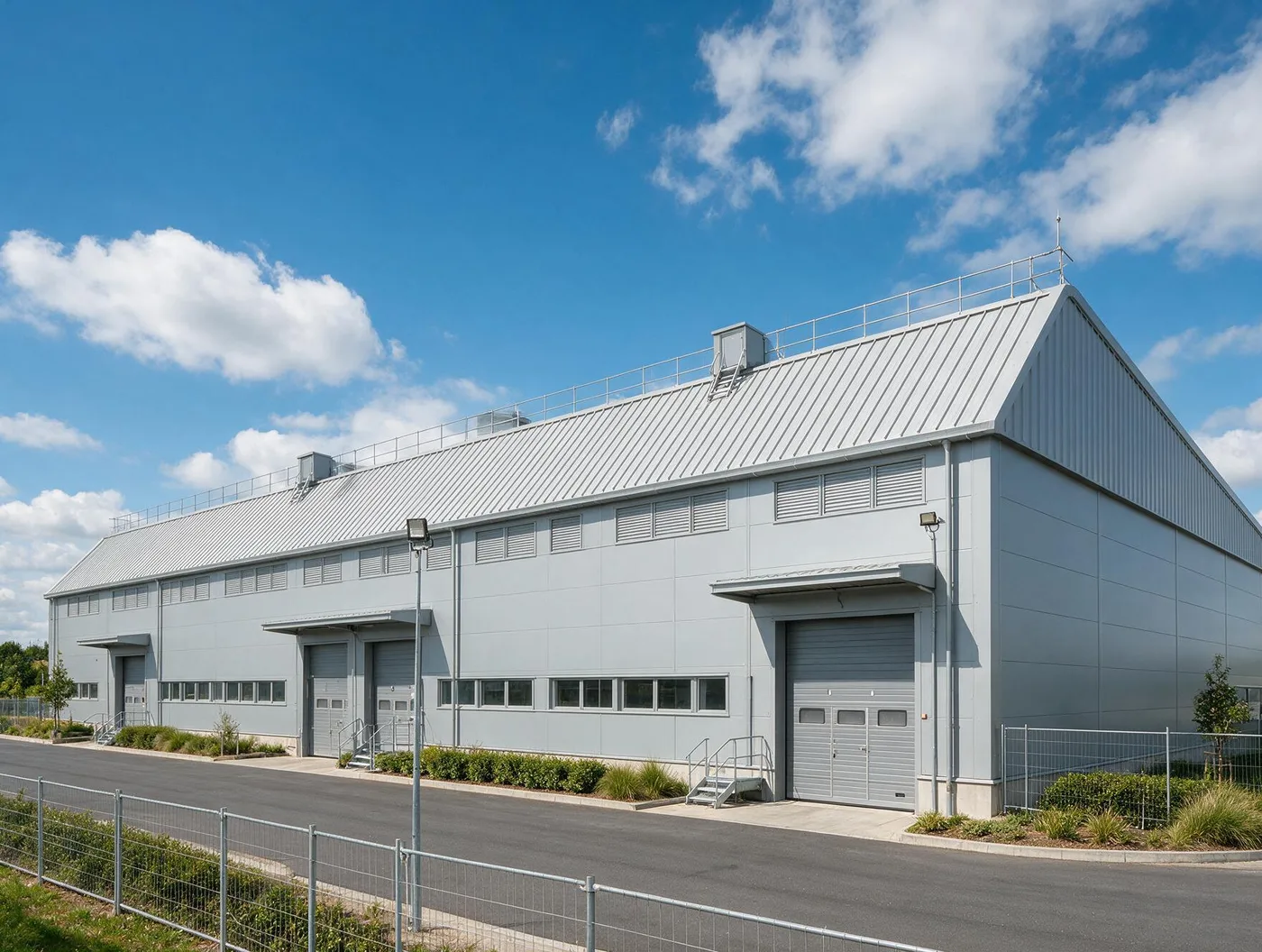
What's the difference between facade, roof and cold-room panels?
02 Insulation cores
Which insulation cores does Real Panel offer?
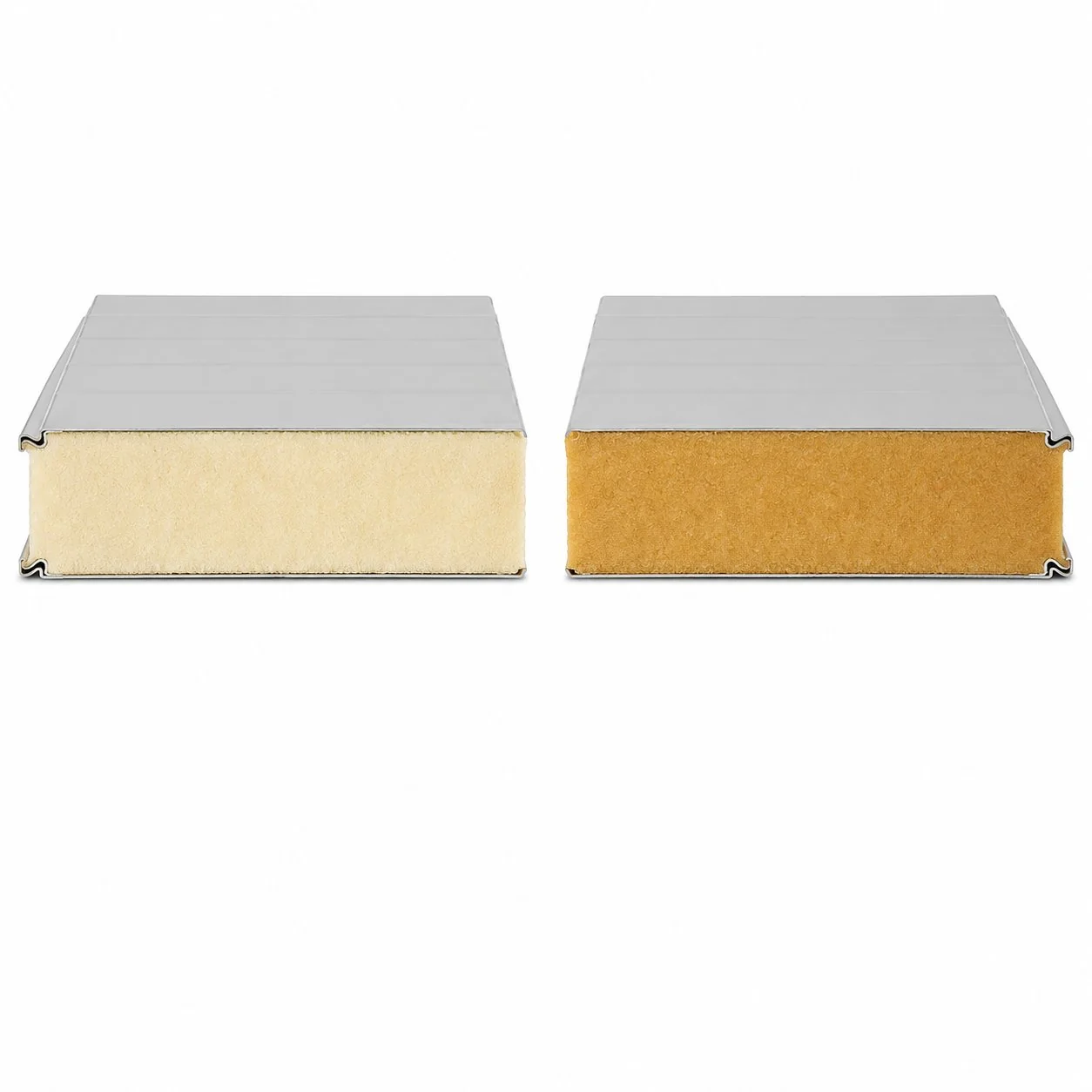
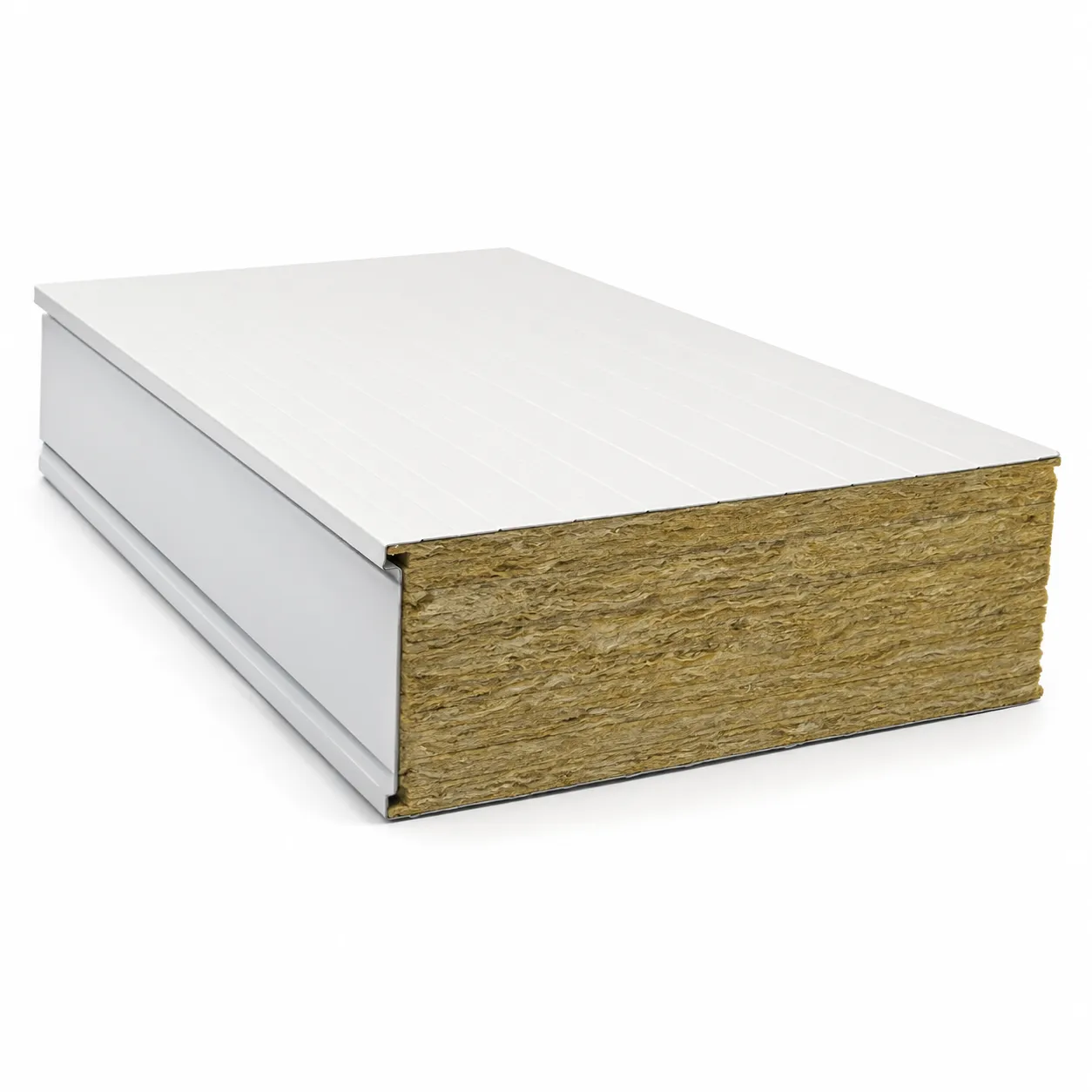
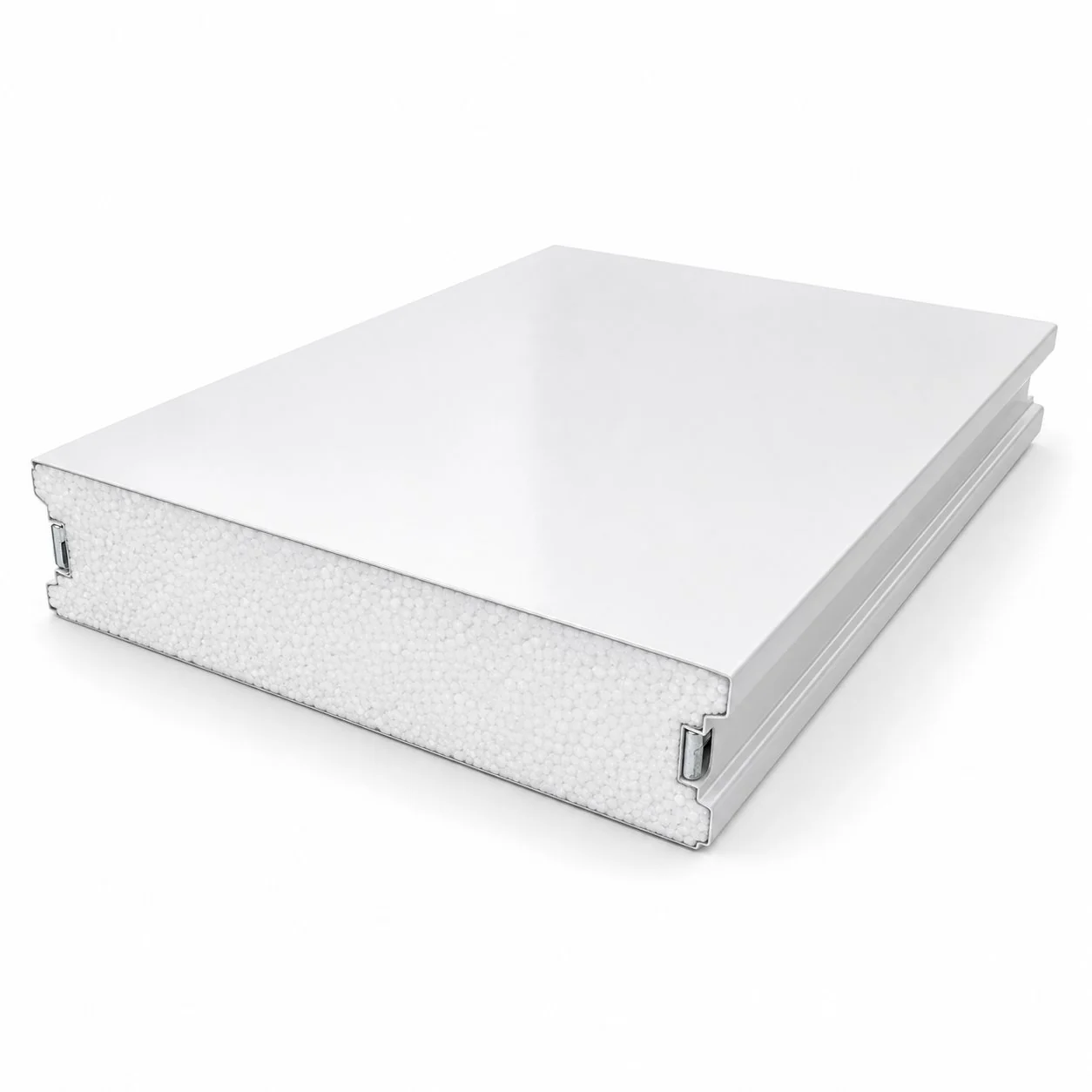
Five: PIR and PUR (the polyurethane family) for high thermal efficiency, EPS for cost-driven projects, Rockwool (mineral wool) for fire and acoustic performance, and Fibercement facings for rugged facades. Not every core is offered in every system — the Panel Selector shows what fits your application.
What's the difference between PIR and PUR?
Both are closed-cell polyurethane cores with very low thermal conductivity, so they insulate well at low weight. PIR is formulated for improved reaction to fire compared with standard PUR, which is why it's often chosen where fire behaviour matters but a mineral-wool core isn't required.
When should I choose EPS?
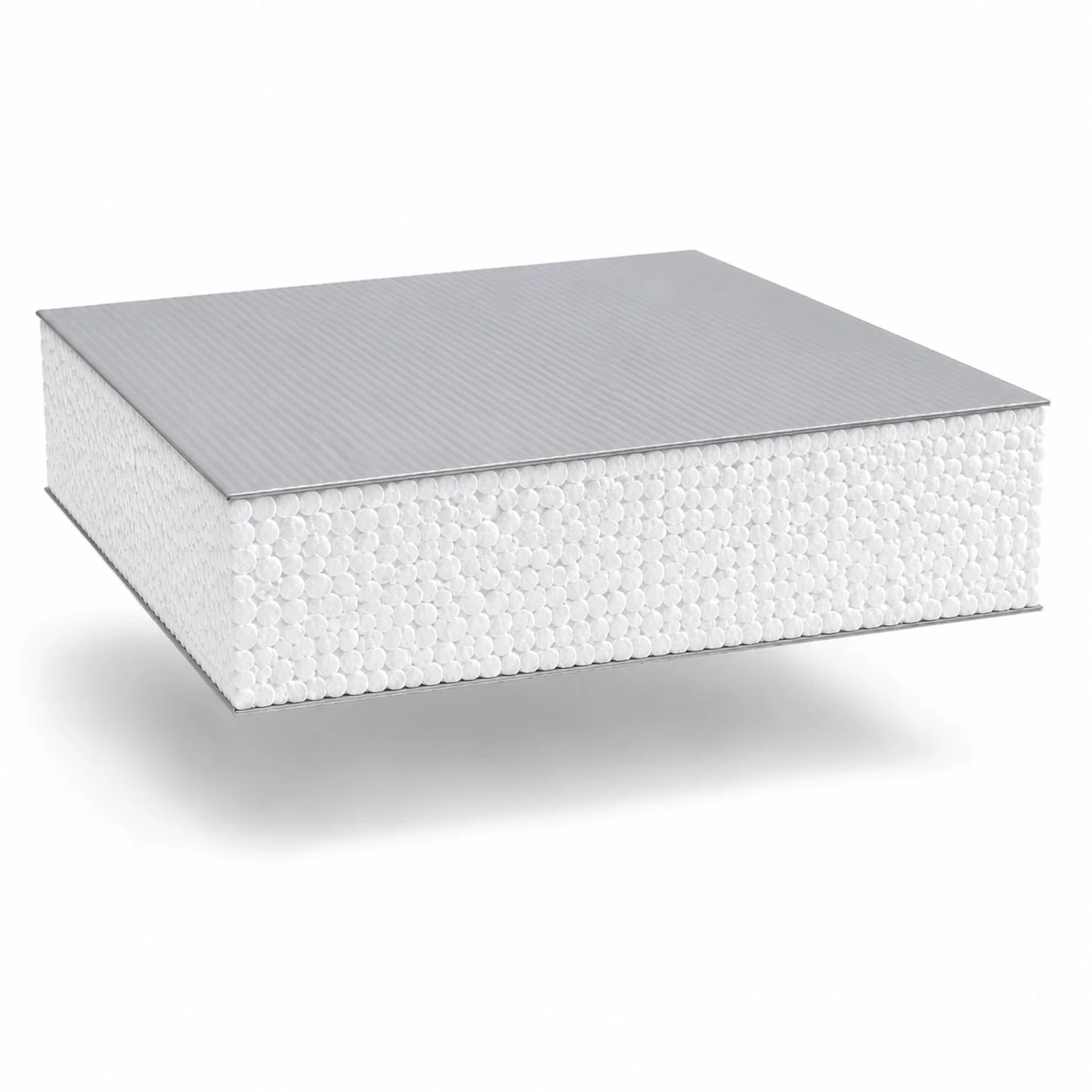
EPS is the most economical core and gives dependable insulation, making it a sensible choice for budget-driven projects where the highest thermal efficiency or top fire performance isn't the deciding factor.
When should I choose Rockwool (mineral wool)?
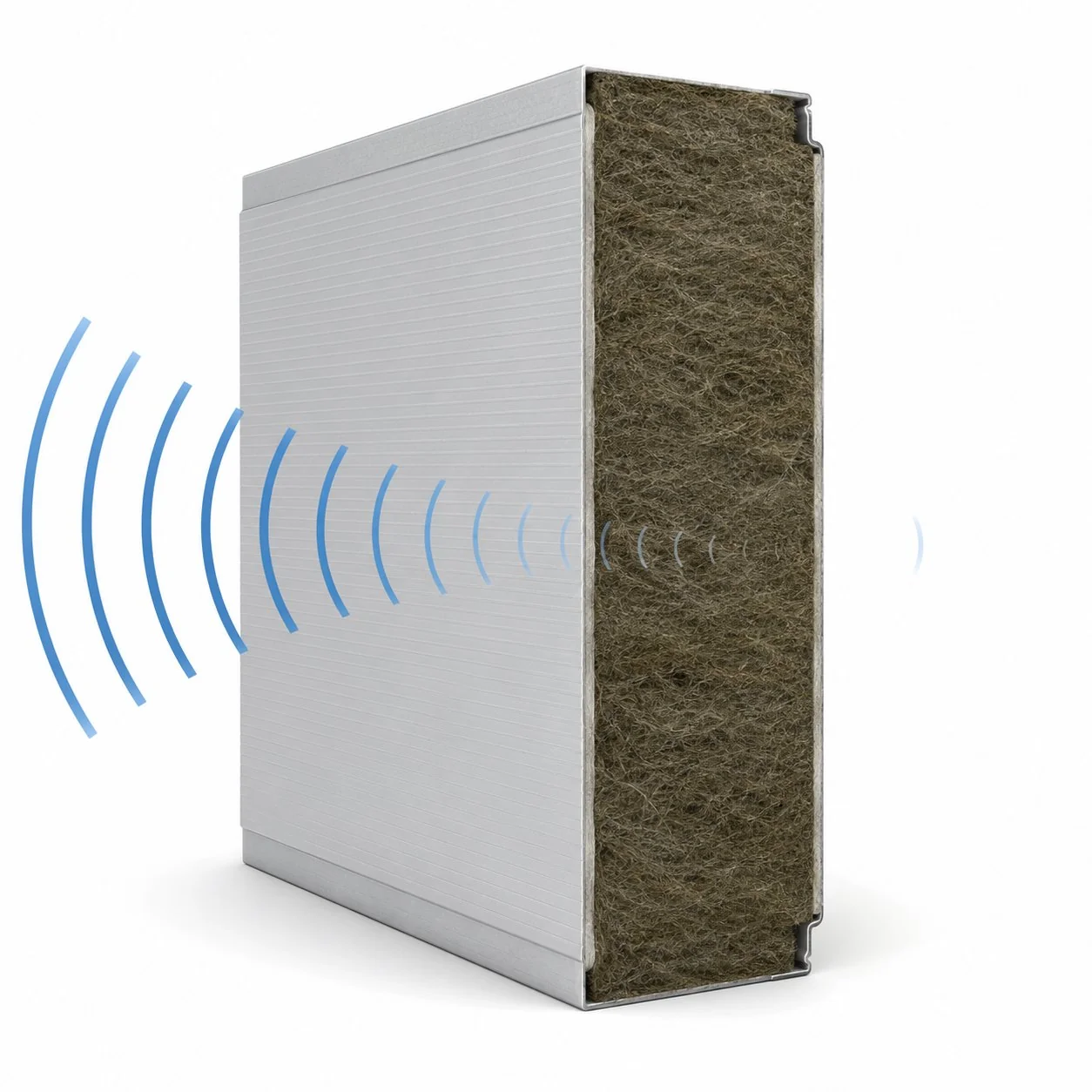
Choose Rockwool when fire performance or acoustic comfort lead the specification: it's non-combustible (Euroclass A2) and its density adds useful sound reduction. It is heavier and has a higher conductivity than PIR/PUR, so a given U-value needs a thicker panel.
What is a Fibercement panel, and where is it used?
Fibercement gives a rugged, weather- and impact-resistant, non-combustible facing, used on facades where durability and appearance matter. It is offered on facade systems.
Which core gives the best insulation for the thickness?
PIR has the lowest typical thermal conductivity of the cores, so it reaches a target U-value with the thinnest build-up. PUR is very close; EPS and Rockwool need more thickness for the same U-value. Use the U-Value Calculator to compare.
How do I choose between the cores?
Weigh the application against your priority — thermal efficiency, fire, budget, acoustic comfort or hygiene. The Panel Selector turns that into a recommended core, and the technical desk can confirm it.
03 U-values & thermal performance
What is a U-value?
The U-value, or thermal transmittance (W/m²K), measures how much heat passes through the panel — the lower the number, the better the insulation. It depends mainly on the core's conductivity (λ) and the panel thickness.
How is the U-value of a panel calculated?
U is the inverse of the total thermal resistance: U = 1 / (Rsi + d/λ + Rse), where d is the core thickness in metres, λ the core conductivity, and Rsi/Rse the inside and outside surface resistances. The U-Value Calculator does this for you.
How do I reach a target U-value?
Two levers: use a lower-conductivity core (PIR/PUR) or increase the panel thickness. The calculator lets you try combinations until you hit the figure your project needs.
What does the λ (lambda) value mean?
λ (thermal conductivity, W/m·K) describes how readily a material conducts heat — a lower λ insulates better. It's a property of the core, and together with thickness it sets the panel's U-value.
What's the difference between U-value and R-value?
R-value is thermal resistance (m²K/W) — how much the build-up resists heat flow — and a higher R is better. U-value is its inverse (U = 1/R). Specifications usually quote U for panels; both are shown in the calculator.
Does a thicker panel always mean a lower U-value?
For the same core, yes — more thickness adds resistance and lowers the U-value. But a thinner panel with a better core can match a thicker panel with a weaker one, which is exactly the trade-off the calculator makes visible.
Do panel joints affect thermal performance?
Panel systems use interlocking, insulated joints to keep the line of insulation continuous, but any junction or fixing can introduce a small thermal bridge. For a whole-element figure, the declared U-value plus project detailing should be considered — the technical desk can advise.
04 Fire & safety
What fire performance do the panels have?
It depends on the core. Mineral-wool (Rockwool) panels are non-combustible (Euroclass A2); polyurethane and EPS cores carry a reaction-to-fire classification. The exact class for a product is stated on its datasheet and in the test reports.
What does Euroclass A2 / non-combustible mean?
Euroclass A2 is a reaction-to-fire rating for materials that make effectively no contribution to a fire — i.e. non-combustible. Rockwool-cored panels fall in this category, which is why they're specified where the highest fire performance is required.
What's the difference between reaction to fire and fire resistance (EI)?
Reaction to fire (the Euroclass A–F scale) describes how a material itself behaves in a fire. Fire resistance (e.g. EI ratings, in minutes) describes how long a built assembly contains fire and limits heat transfer. They're different tests — confirm both for your application with the technical desk.
Which core should I choose for a fire-rated wall?
For the best fire performance, a non-combustible Rockwool core is the usual choice on facade and roof systems. Where mineral wool isn't available (for example some cold-room systems), PIR offers the best reaction to fire among the foam cores.
Are the panels fire-tested and certified?
Yes — relevant certificates and test reports are available in the Quality section. For a specific fire test or classification, ask the technical desk.
Do the panels meet building-regulation fire requirements?
Fire requirements vary by country, building type and use. Real Panel can supply the classifications and test evidence so your designer can confirm compliance for the specific project; the technical desk will help identify the right panel and documents.
05 Acoustic & moisture
What acoustic performance do sandwich panels offer?
Sandwich panels provide a measure of airborne-sound reduction, with the best performance from denser mineral-wool cores. The declared acoustic value for a product is on its datasheet; the technical desk can advise where sound is a priority.
Which core is best for sound reduction?
Rockwool (mineral wool) — its mass and fibrous structure absorb and block airborne sound better than the lighter foam cores, which is why it's the acoustic choice on facade and roof systems.
Do sandwich panels help prevent condensation?
Continuous insulation keeps the warm-side surface above the dew point in normal use, which reduces the risk of surface condensation, and the sealed joints limit moist-air movement. Correct detailing and ventilation for the specific building remain important.
Are the panels air-tight?
The interlocking, gasketed joints are designed to limit air leakage, which supports both thermal performance and internal climate control — particularly important in cold rooms. Site workmanship and detailing affect the result.
Can panels be used in high-humidity environments?
Yes — closed-cell PIR/PUR cores resist moisture and, with the right facings and joint detailing, panels suit humid and washdown environments such as cold stores and food areas. Confirm the right specification with the desk.
06 Applications
What temperatures can cold-room panels handle?
Cold-room systems are used across chilled and frozen applications, including deep-freeze. The right core and thickness depend on the target internal temperature — send your conditions to the technical desk for a matched build-up.
Are the panels suitable for food and pharmaceutical environments?
Yes — smooth, cleanable facings and continuous, moisture-resistant insulation suit hygienic environments such as food processing, cold chain and pharmaceutical interiors. The technical desk can advise on facings and detailing.
Can the panels be used for agricultural buildings?
Yes — insulated panels are widely used for livestock housing, storage and agricultural processing, where insulation, durability and fast erection are valuable. Core choice depends on the priority for the building.
What roof pitch do roof panels need?
Roof panels are laid to a minimum fall so water drains and laps stay weather-tight; the minimum depends on the profile and detailing. Check the product datasheet or ask the technical desk for the figure that applies to your roof.
Are the panels suitable for industrial and commercial buildings?
Yes — sandwich panels are a standard envelope for industrial and commercial buildings, combining insulation, speed of construction and a finished surface in one element. The right system depends on span, appearance and performance needs.
07 Dimensions, handling & installation
What lengths can panels be produced in?
Panels are typically produced to the length your project needs, within the practical limits of manufacture and transport. The available range is on the datasheet; for long panels, discuss handling and delivery with the desk.
What is the panel module (cover width)?
Each system has a fixed module, or cover width, that sets how panels lap together. The exact module for a product is given on its datasheet.
How much do the panels weigh, and how are they handled?
Sandwich panels are light for their size, which is one of their advantages, though weight rises with thickness and with denser cores such as Rockwool. Per-panel weights are on the datasheet; the technical desk can advise on lifting and handling for large panels.
How are the panels fixed — visible or concealed fasteners?
It depends on the system: many facade panels are designed for concealed (secret-fix) fastening for a clean face, while roof panels are commonly through-fixed. The technical desk advises the right method and fixings per product.
Can panels be installed vertically and horizontally?
Facade panels can generally be laid vertically or horizontally depending on the look and detailing; roof panels follow the slope. The technical desk can confirm orientation and the matching trims for your design.
Can panels be cut or adjusted on site?
Panels can be cut and trimmed on site with appropriate tools and care to protect the facings and coating. Cold-cutting methods are preferred; follow the installation guidance and protect cut edges.
How should panels be stored on site before installation?
Store panels clear of the ground, supported and slightly inclined to shed water, protected from standing water, prolonged direct sun and site damage, and remove protective film within the recommended period. See the installation guidance for detail.
Do you provide installation guidance?
Yes — installation guidance is available in the installation guides, and the technical desk can advise on fixing, detailing and sequencing for your chosen system.
08 Durability, maintenance & warranty
How long do sandwich panels last?
With the right coating for the environment and correct installation, insulated panels give a long service life as a building envelope. Coating choice is the main driver of durability — the technical desk can match a finish to your exposure.
What maintenance do the panels need?
Maintenance is generally limited to periodic cleaning and inspection of joints, fixings and sealants, with more frequent attention in aggressive or coastal environments. Following a simple inspection routine helps preserve appearance and performance.
Are the panels suitable for coastal or corrosive environments?
Yes, with a coating specified for the exposure — corrosive, coastal or industrial atmospheres call for a more robust finish. Tell the desk the environment and it will recommend a suitable facing and coating.
Is there a warranty?
Warranty terms depend on the product, the coating and the application. Ask the sales desk for the warranty that applies to the panels and finish you're considering.
09 Ordering, delivery & export
How do I get a price?
Send your requirement through Request a Quote with the panel type, thickness and quantity — and the destination if you're abroad. For exports, the desk returns a delivered price, the documents and a realistic transit window, usually within one working day.
Is there a minimum order quantity?
Order minimums depend on the product and destination. The sales desk will confirm any minimum and the most efficient way to load your order when you send your requirement.
How long is the lead time?
Lead time depends on the product, quantity and current production schedule. Send your requirement to the desk and it will confirm a realistic production and delivery window for your order.
Which countries does Real Panel export to?
The core export markets are Romania, Bulgaria, Georgia, North Macedonia and Kosovo, reached by road from the Kocaeli facilities. See Export for each market's trade status and transit time.
How are customs and duties handled for exports?
One export desk handles the customs documents and routing. Depending on the destination, panels ship duty-free or duty-reduced under Türkiye's trade agreements — the detail is on Export Logistics.
What Incoterms do you work with?
Real Panel can quote on the Incoterms that suit your project, coordinating loads, documents and freight through a single point of contact. Discuss the right terms for your delivery with the export desk.
What documentation is provided with an order?
Orders are supported with the relevant product, quality and shipping documentation; for exports this includes the customs paperwork needed for the route. Ask the desk for the specific documents your project or destination requires.
10 Sustainability
Are sandwich panels recyclable?
The steel facings are recyclable, and insulated panels reduce a building's operational energy use over its life. For the sustainability profile of a specific product, ask the technical desk.
How do insulated panels contribute to energy efficiency?
By delivering continuous, high-performance insulation in a single element, panels lower heat loss and the energy needed to heat or cool a building — the lower the U-value, the smaller the demand. The calculator shows the effect of core and thickness.
Does Real Panel have a sustainability approach?
Real Panel's approach to quality and sustainability is set out in the Quality section. For environmental documentation on a specific product, contact the technical desk.
Didn't find your answer?
Send us the panel type, application and what you need to know — our technical desk replies with the specification, the documents and a price.