

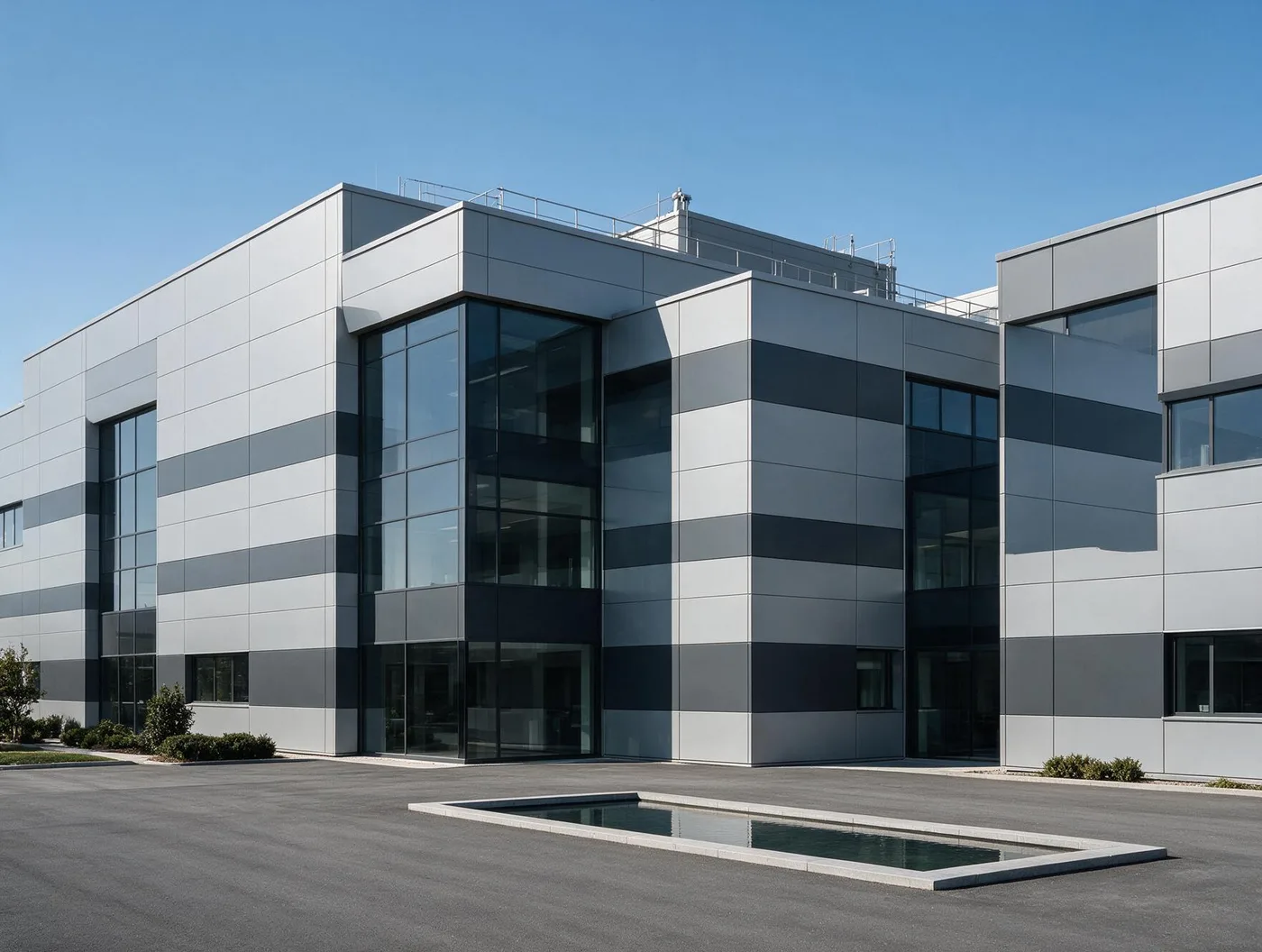
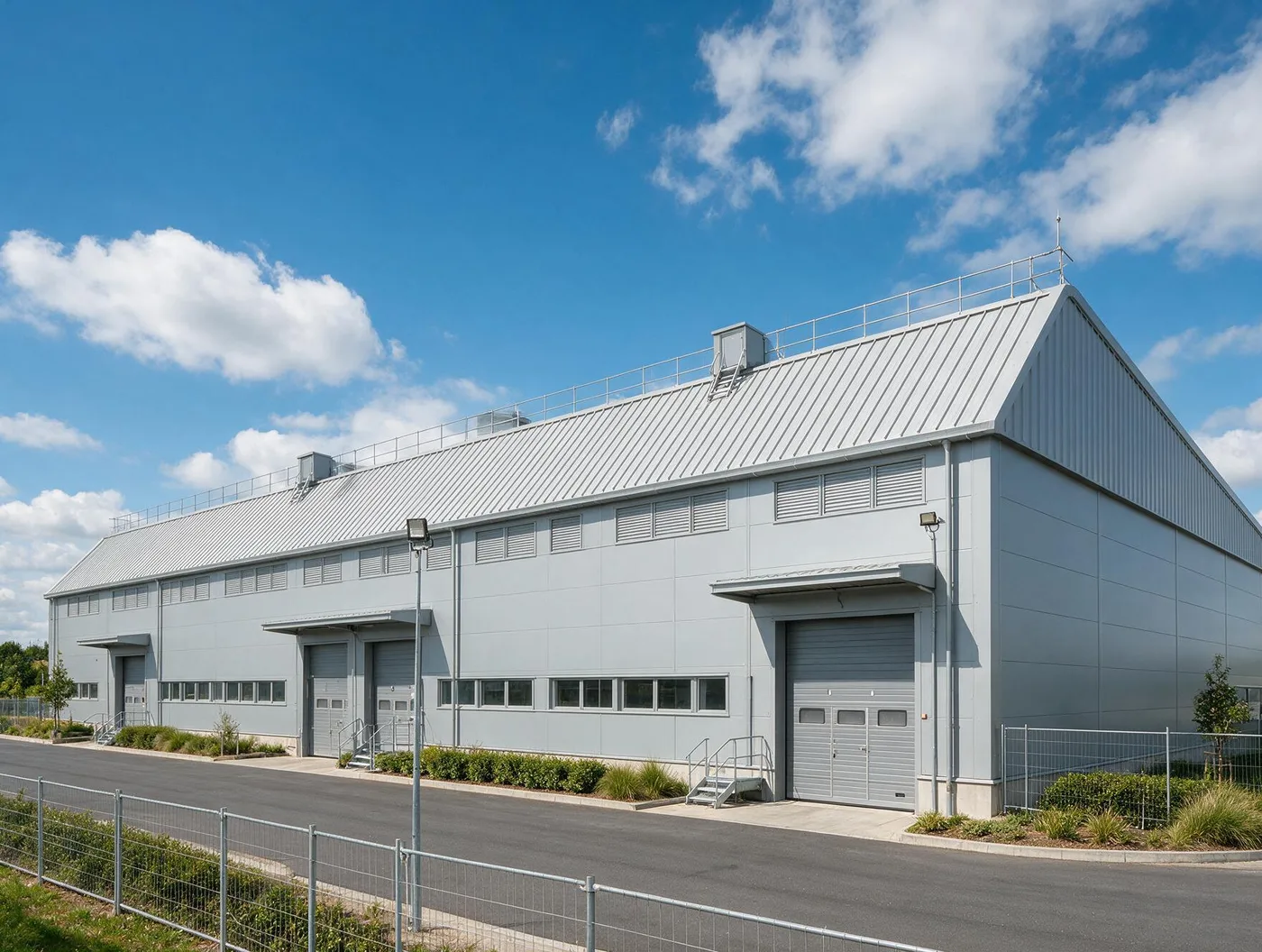
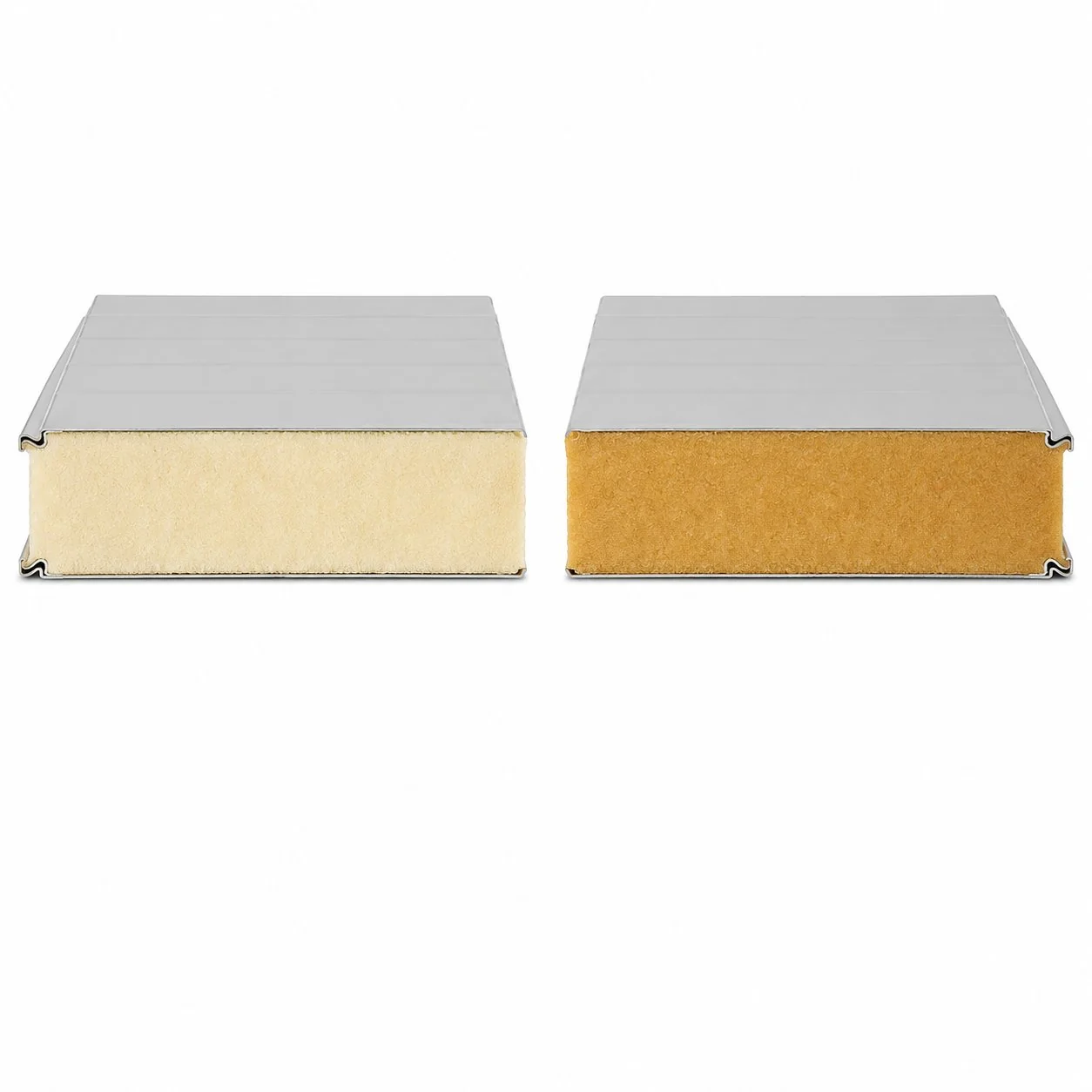
PIR Facade Panel
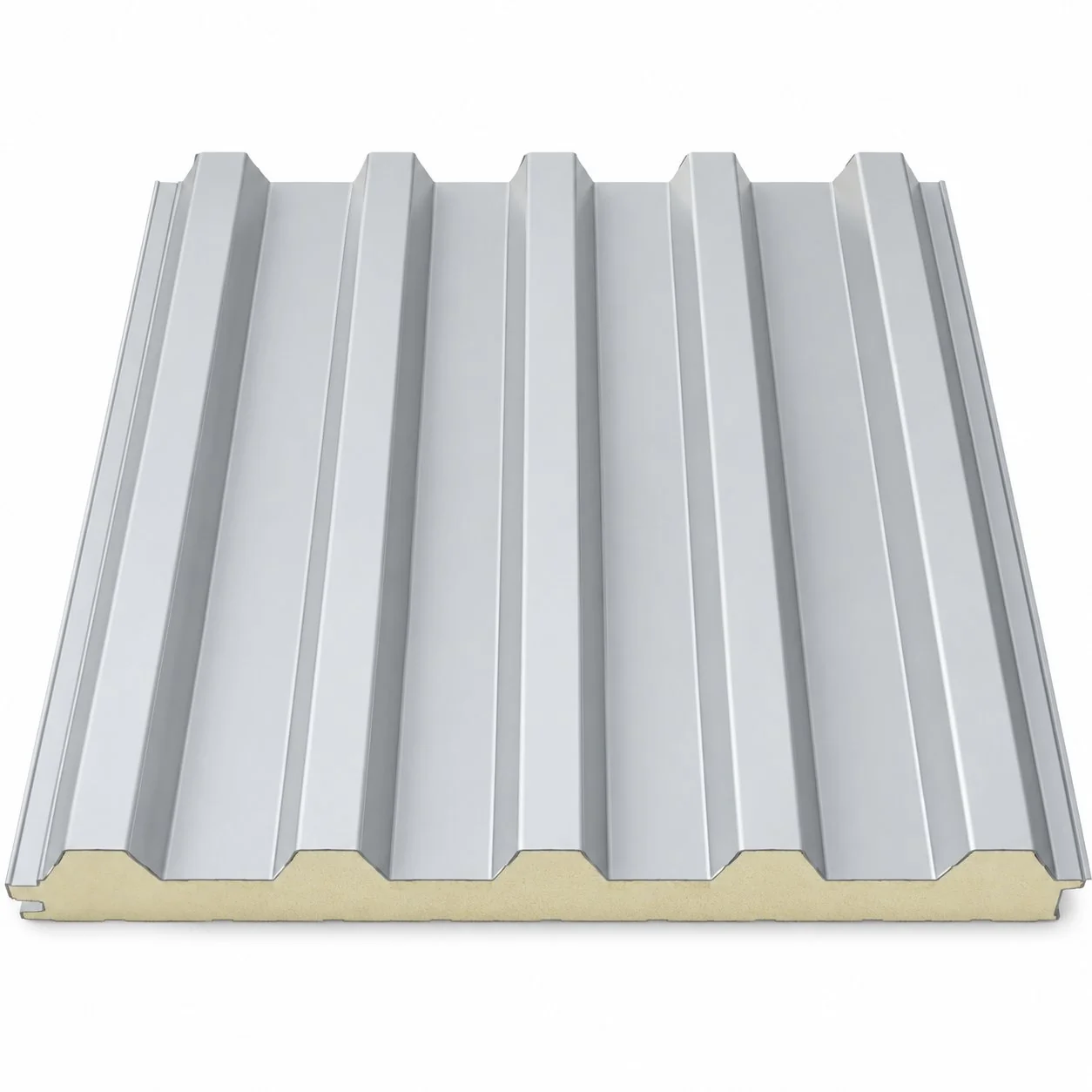
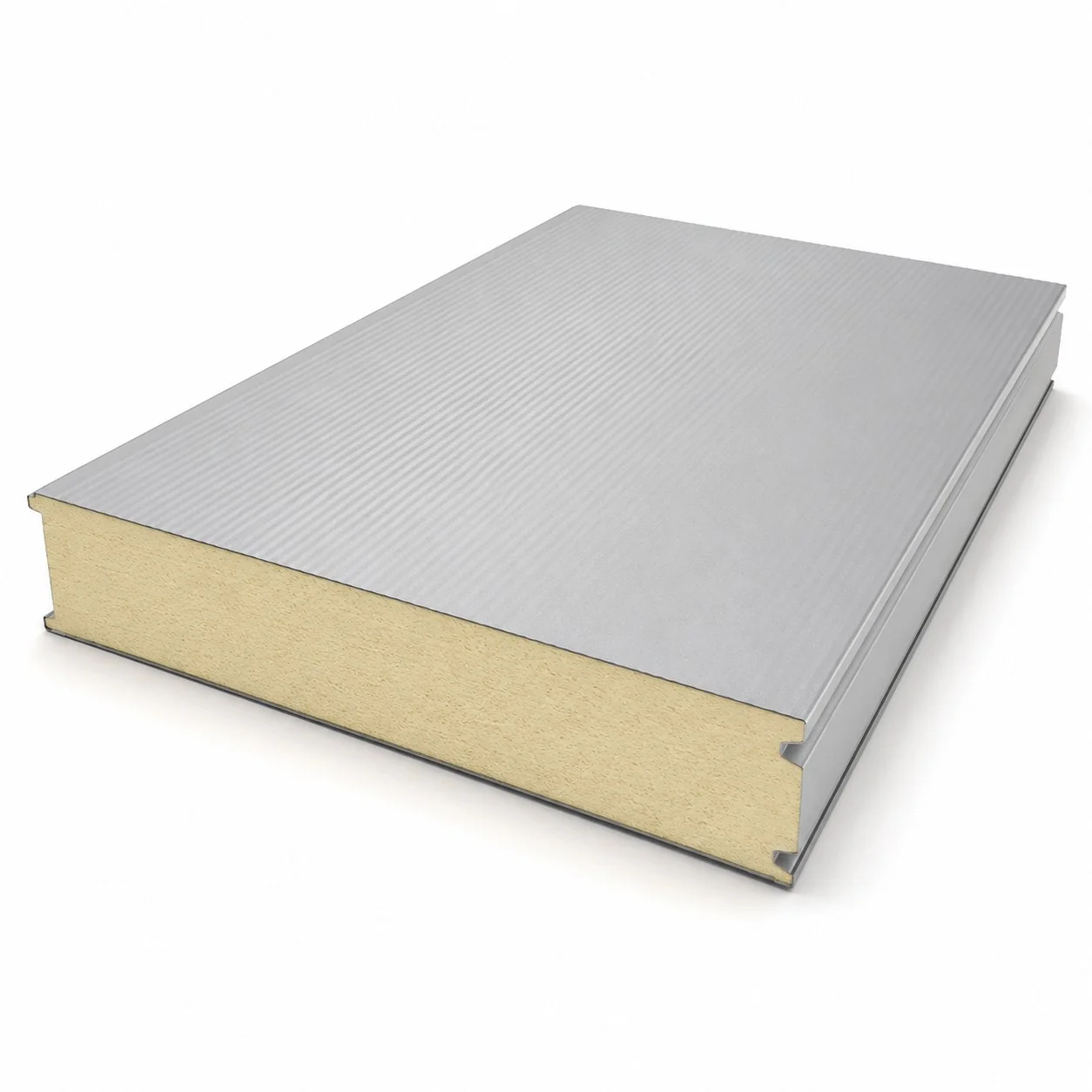
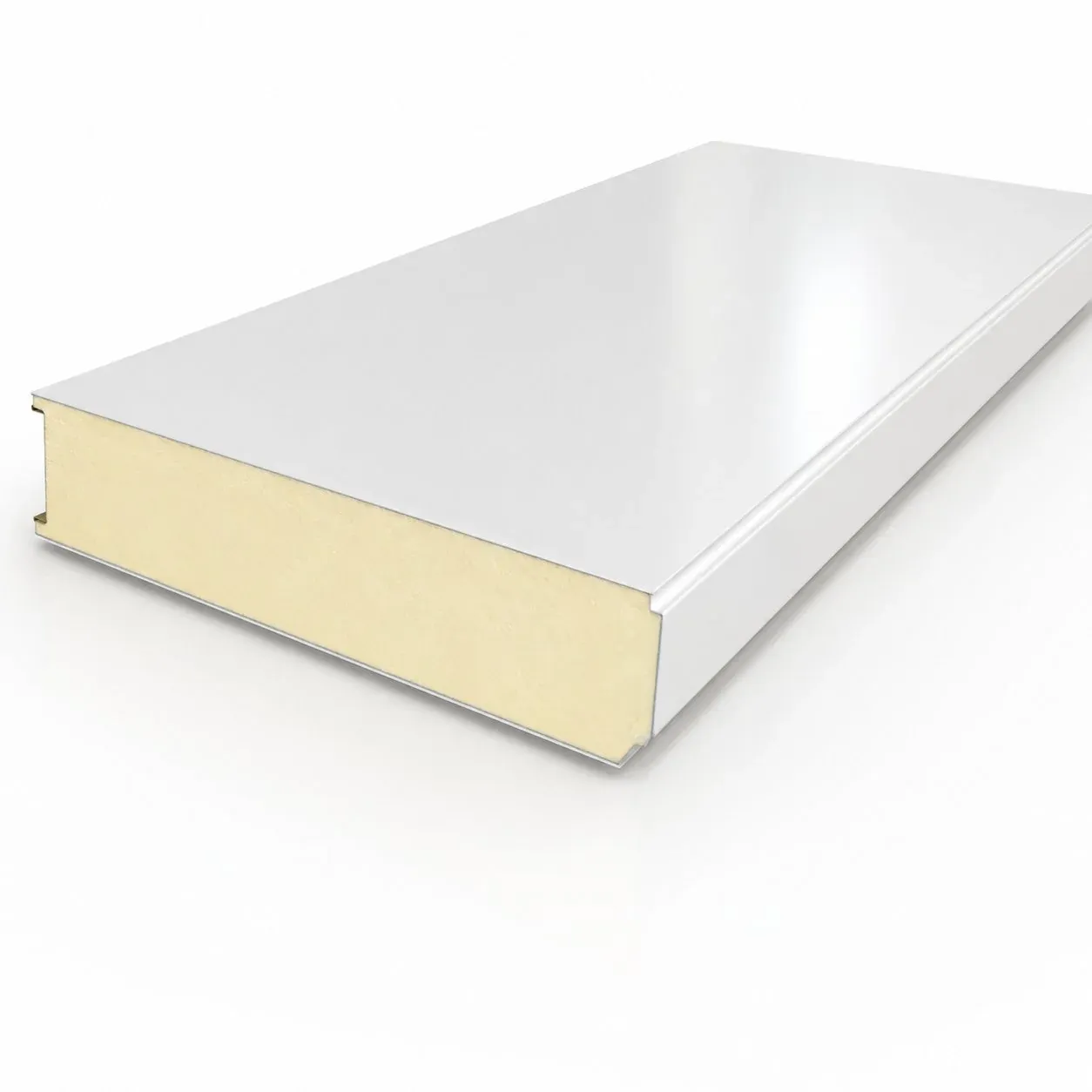
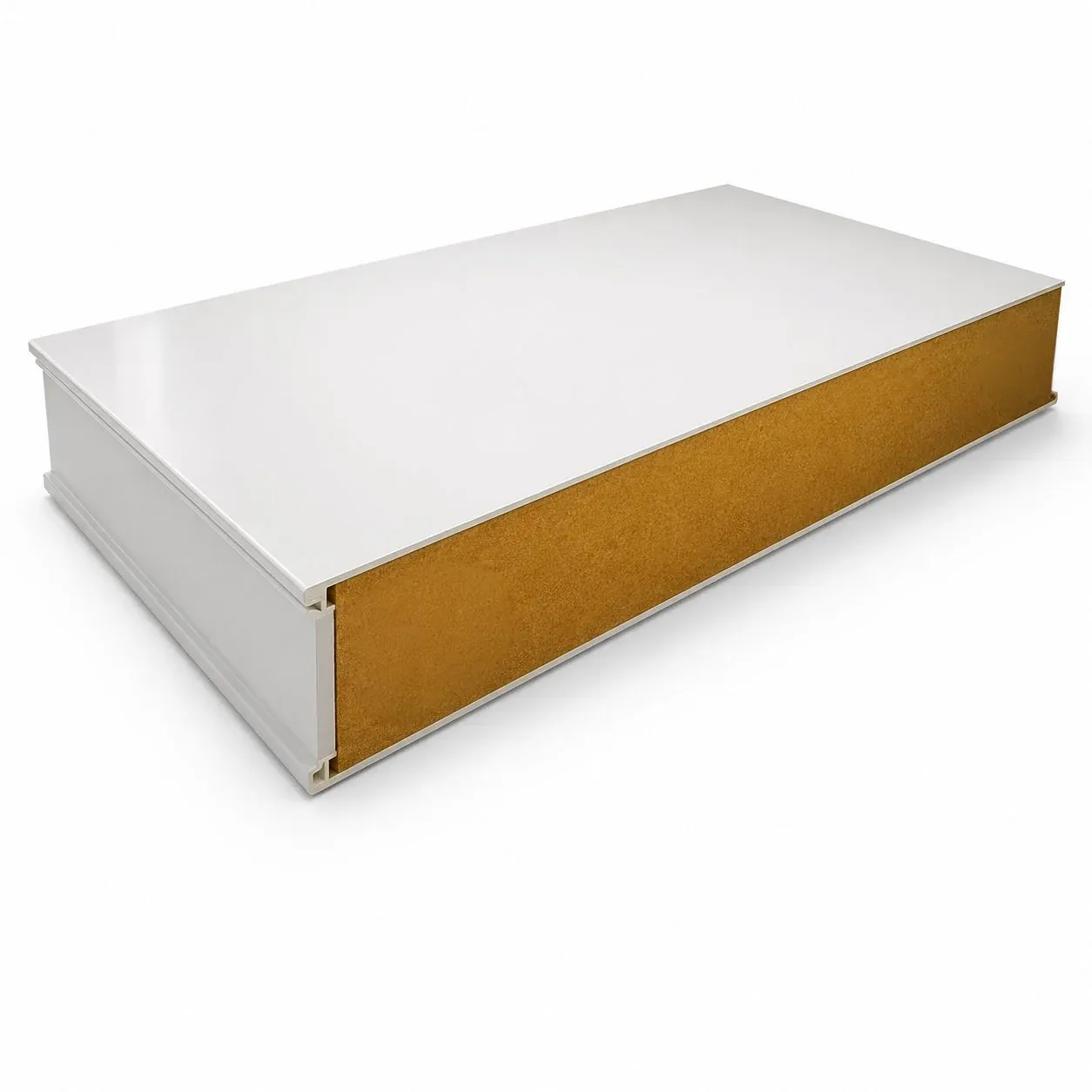
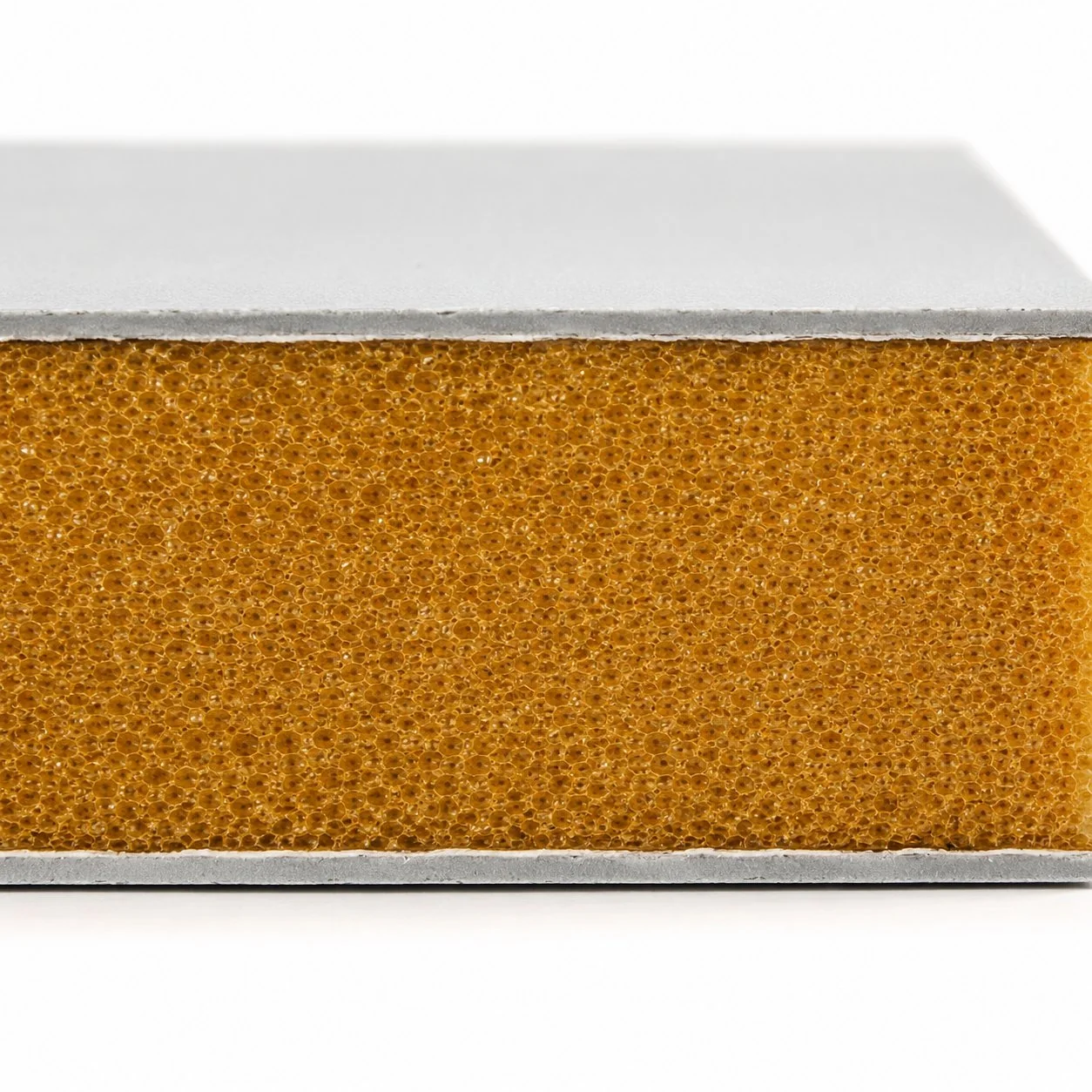
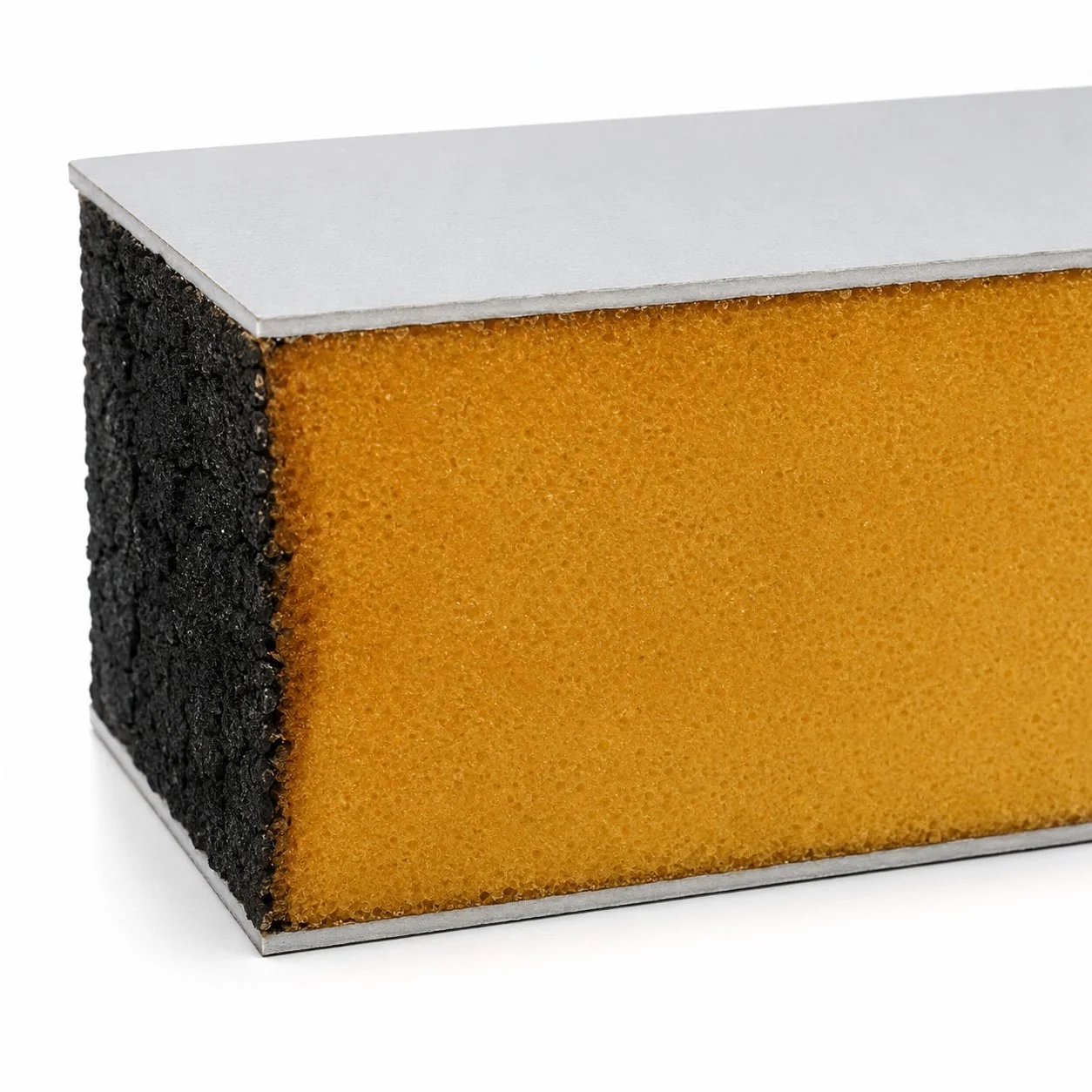
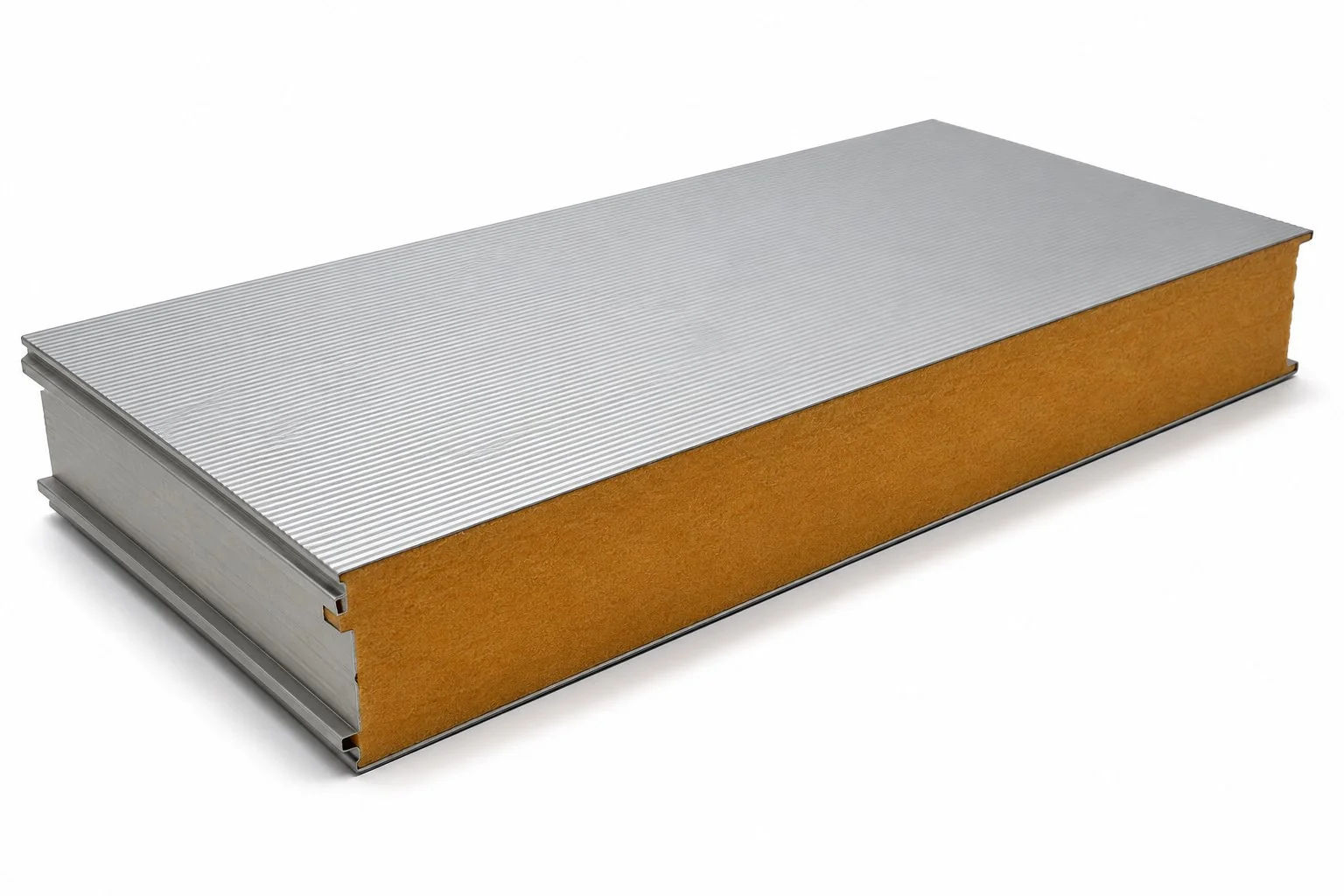
Fire-enhanced PIR facade panel with rigid polyisocyanurate core — delivering superior fire performance without sacrificing thermal efficiency. The smart upgrade for projects where fire safety regulations demand more than standard PUR.
- Thermal Conductivity: 0.023 W/mK — near-identical to PUR
- Fire Classification: B-s1, d0 (Euroclass) — upgraded from PUR’s B-s2
- Smoke Production: s1 = very low smoke — critical for occupant safety
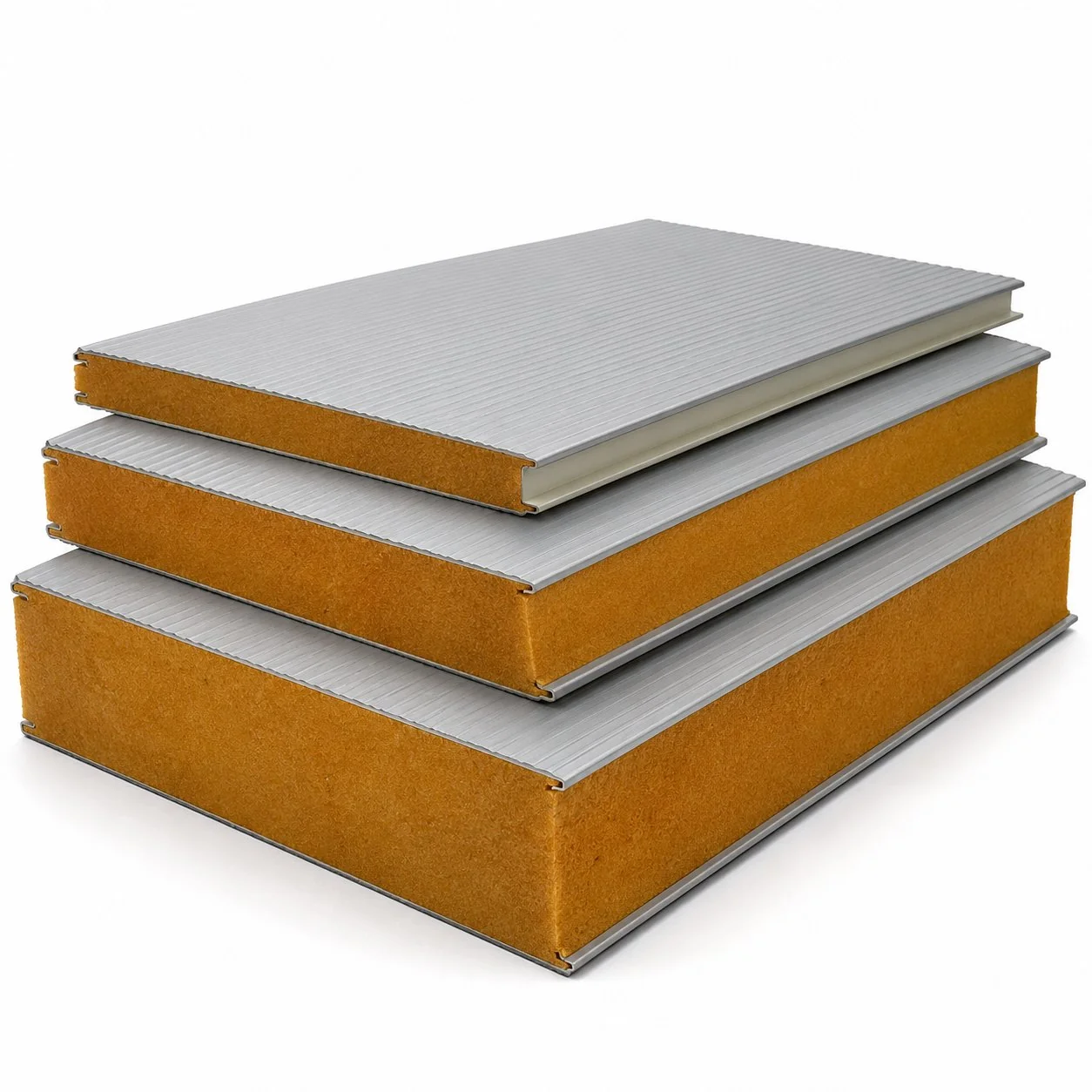
- Thickness Range: 30 – 200 mm
- Facings: Pre-painted galvanized steel (PPGI)
- Standards: EN 14509, CE Marked
What Makes PIR Different from PUR?
The PIR facade panel uses a polyisocyanurate foam core — a chemically enhanced version of polyurethane that offers significantly improved fire behavior. While standard PUR panels achieve Euroclass B-s2, d0, PIR panels reach B-s1, d0 — the key difference being the “s1” smoke classification, meaning very low smoke production during fire exposure.
This distinction matters enormously in real-world fire scenarios. Smoke inhalation is the leading cause of fire-related fatalities in buildings. By specifying PIR over PUR, you are actively choosing a material that produces significantly less smoke if the worst happens — giving building occupants more time to evacuate safely.
Beyond fire performance, PIR panels retain almost all the advantages of PUR: excellent thermal insulation (lambda 0.023 W/mK vs PUR’s 0.022), lightweight construction, fast installation, and the same range of surface profiles, colors, and joint systems.
Key Benefits
- Enhanced Fire Safety: Euroclass B-s1, d0 — one step above standard PUR. Meets stricter fire regulations for multi-story, public-access, and high-occupancy buildings.
- Very Low Smoke: s1 classification means minimal smoke production, improving evacuation safety and reducing smoke damage to property and equipment.
- Excellent Thermal Performance: Lambda 0.023 W/mK — only marginally higher than PUR, still far superior to EPS (0.035) and rockwool (0.040).
- Same Installation Speed: Identical joint systems, dimensions, and mounting methods as PUR panels. No additional training or tools required.
- Insurance Advantages: Many insurance providers offer reduced premiums for buildings clad with fire-enhanced PIR panels, especially in industrial and logistics sectors.
- Regulatory Compliance: Increasingly required by building codes in EU markets and Turkey for specific building categories. Future-proof your project against tightening fire regulations.
Real Panel manufactures PIR facade panels on the same automated continuous lines as our PUR range, at our production facility in Turkey. Available for domestic projects and export to Romania, Bulgaria, Georgia, Macedonia, and Kosovo.
When to Choose PIR Over PUR
PIR is the right choice when your project involves:
- Commercial buildings with public access — offices, shopping centers, showrooms
- Multi-story structures where fire compartmentation and evacuation routes are critical
- Food & pharma facilities — where insurance requirements dictate fire-enhanced materials
- Logistics centers and large-span warehouses storing high-value goods
- Projects in jurisdictions with strict fire codes requiring B-s1 or better classification
- Buildings adjacent to property boundaries where fire spread risk must be minimized
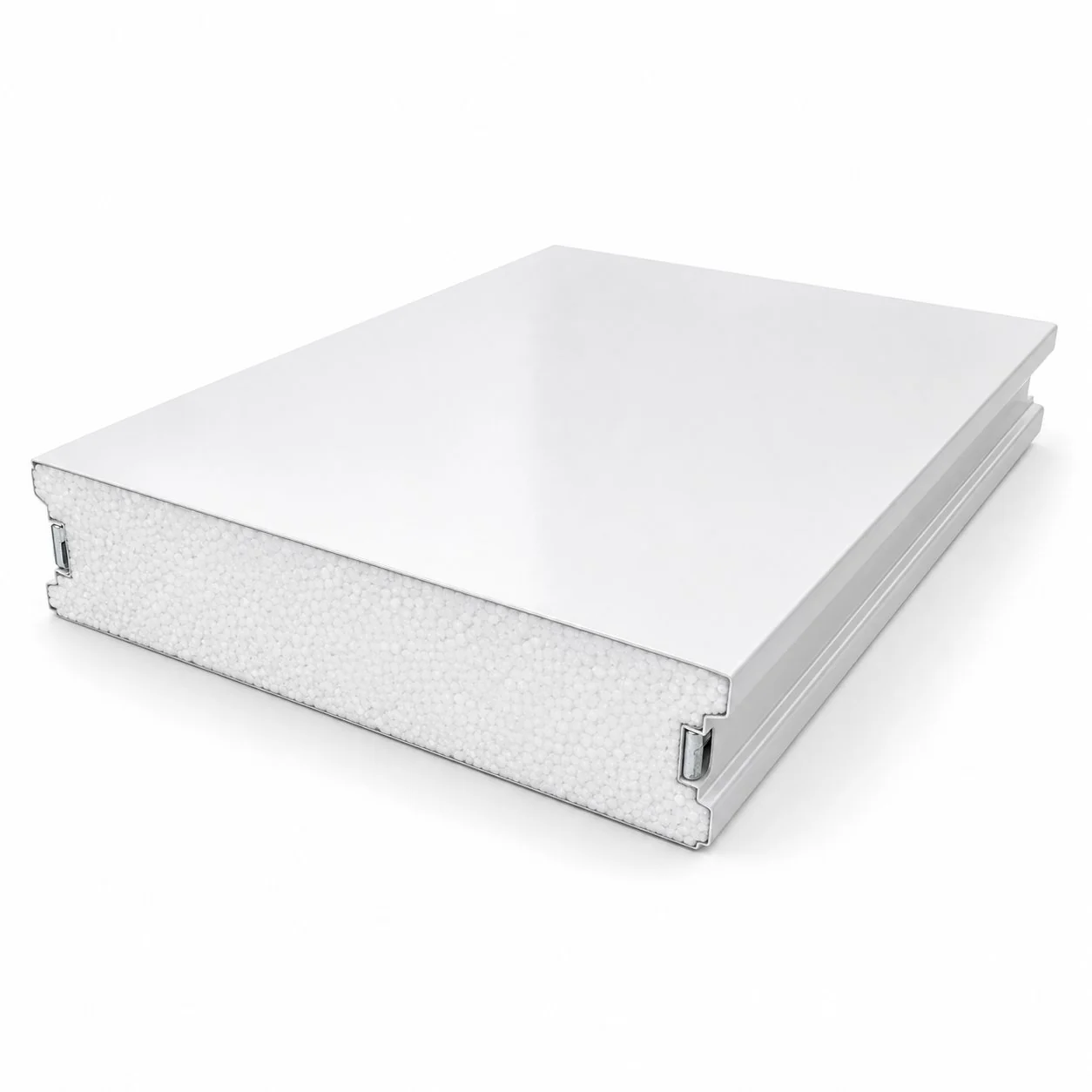
For standard industrial applications where B-s2 fire class is sufficient, our polyurethane facade panel offers the same thermal performance at a lower cost.
Panel Specifications
| SPECIFICATION | VALUE |
| Core Material | Rigid polyisocyanurate foam (PIR), CFC/HCFC-free |
| Core Density | 40–45 kg/m³ (standard) |
| Thermal Conductivity (λ) | 0.023 W/mK (declared value per EN 14509) |
| Panel Thickness | 30 / 40 / 50 / 60 / 80 / 100 / 120 / 150 / 200 mm |
| Effective Width | 1000 mm (standard) / 1200 mm (available) |
| Maximum Length | Up to 16,000 mm (project-specific) |
| External Facing | Pre-painted galvanized steel (PPGI), 0.4–0.7 mm |
| Internal Facing | Pre-painted galvanized steel (PPGI), 0.4–0.5 mm |
| Coating Options | Polyester (25 µm), PVDF (25 µm), Plastisol (200 µm) |
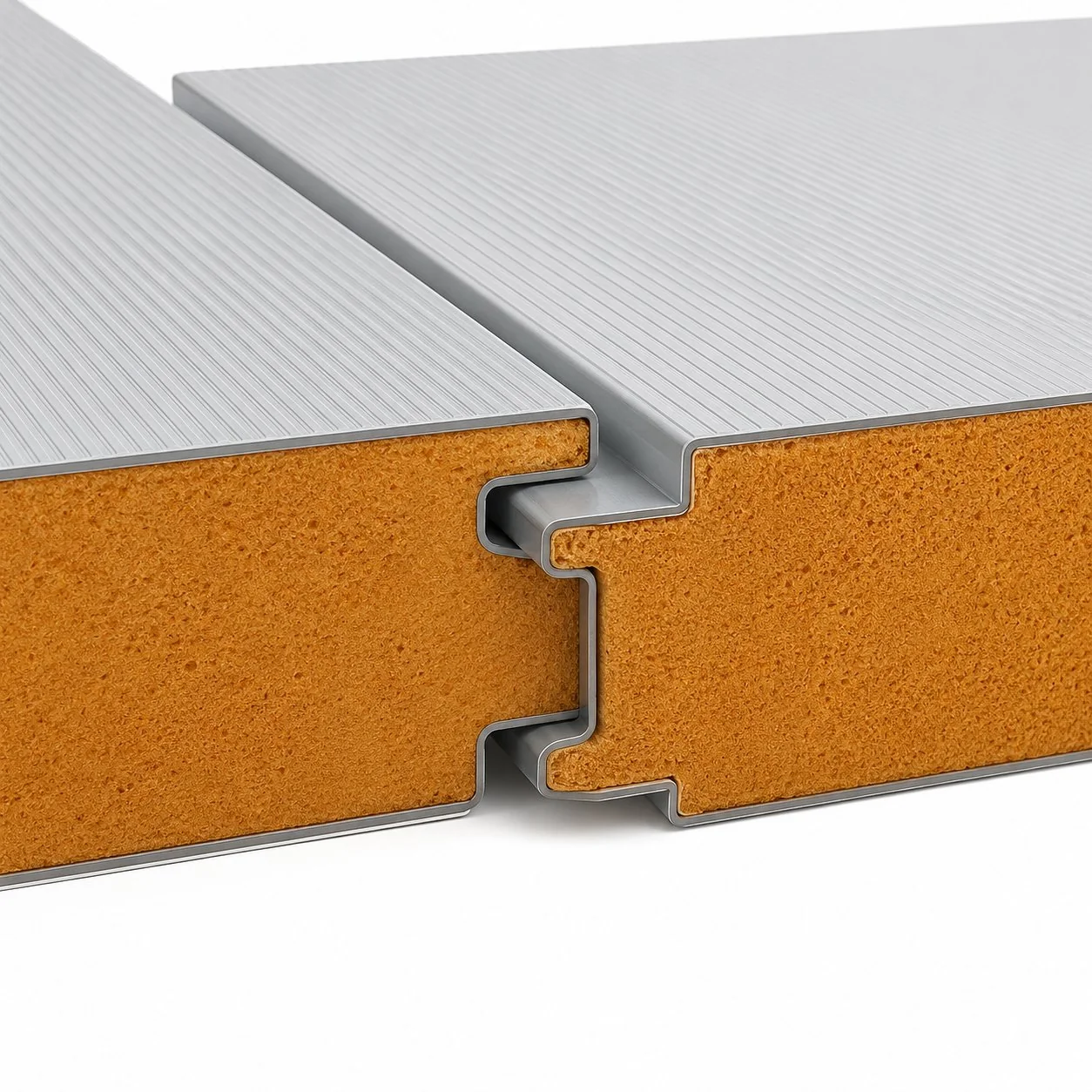
| Joint System | Tongue & groove (concealed fix) / Visible fix |
| Fire Reaction | B-s1, d0 (Euroclass per EN 13501-1) |
| Smoke Classification | s1 — very low smoke production |
| Weight (approx.) | ~11–13 kg/m² (at 50 mm) |
| Service Temperature | -40°C to +80°C (continuous) |
| Color Options | Full RAL color range |
| Standards | EN 14509, CE Marked, ISO 9001 |
U-Value by Panel Thickness
Lower U-value = better insulation. Values per EN ISO 6946:
| SPECIFICATION | VALUE |
| 30 mm | U = 0.72 W/m²K |
| 40 mm | U = 0.55 W/m²K |
| 50 mm | U = 0.44 W/m²K |
| 60 mm | U = 0.37 W/m²K |
| 80 mm | U = 0.28 W/m²K |
| 100 mm | U = 0.23 W/m²K |
| 120 mm | U = 0.19 W/m²K |
| 150 mm | U = 0.15 W/m²K |
| 200 mm | U = 0.11 W/m²K |
For project-specific calculations: U-Value Calculator.
Surface Profile Options
- Micro-Rib: Fine-ribbed, minimizes oil-canning. Standard choice.
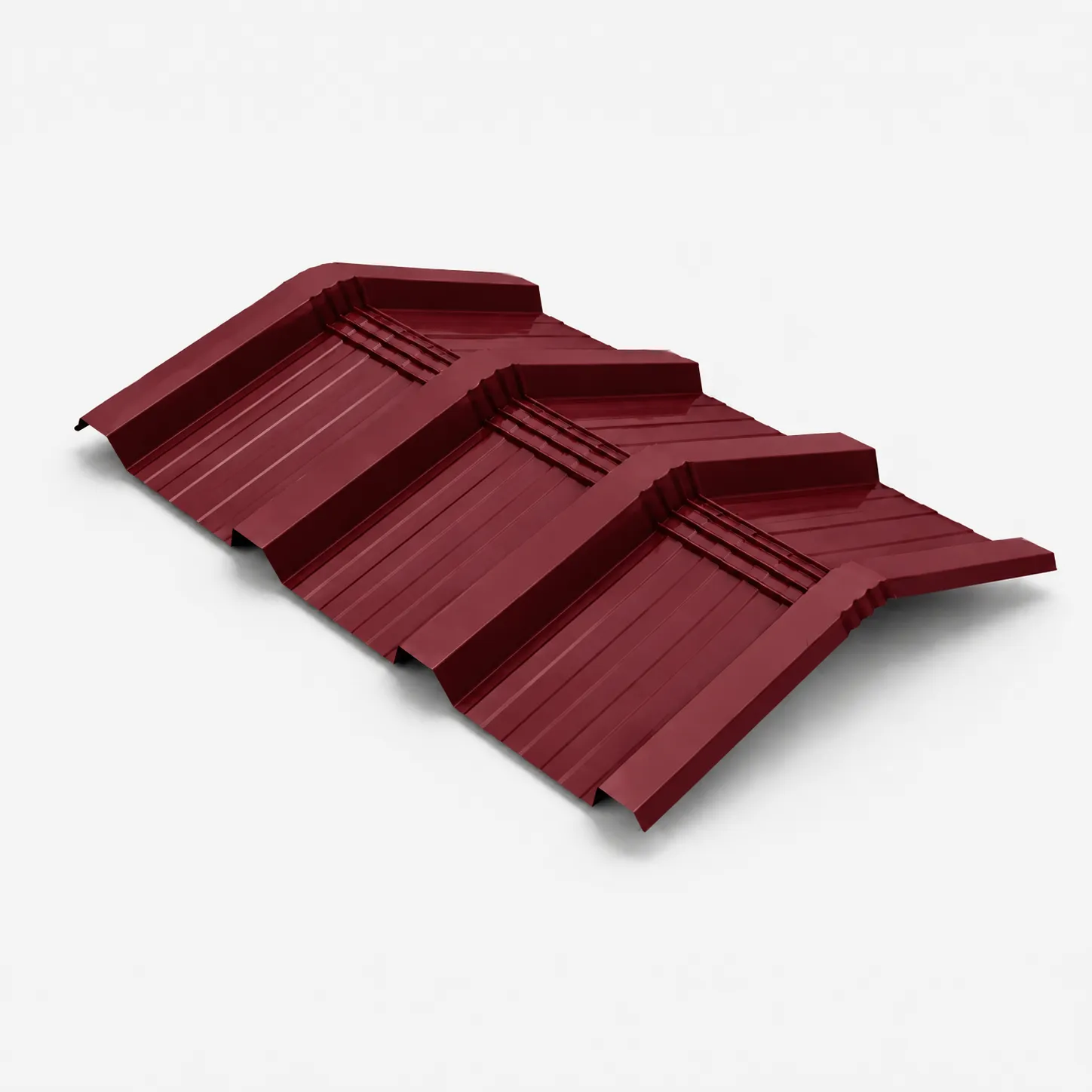
- Trapezoidal: Deep-ribbed for structural rigidity and bold aesthetics.
- Flat / Smooth: Contemporary look for commercial and retail facades.
- Liner: Internal face — micro-rib or flat in white/light gray.
Understanding Euroclass Fire Ratings
The European fire classification system (EN 13501-1) rates building products on three criteria. Understanding these distinctions is essential when specifying facade panels:
- Combustibility (A–F): Rates how a material contributes to fire. B = limited contribution. PIR and PUR both achieve Class B.
- Smoke Production (s1–s3): s1 = very low smoke | s2 = low smoke | s3 = high smoke. PIR achieves s1; PUR achieves s2. This is the key difference.
- Burning Droplets (d0–d2): d0 = no flaming droplets. Both PIR and PUR achieve d0.
Why s1 Matters
In a real fire scenario, visibility and breathable air are life-or-death factors. Panels classified s1 produce significantly less smoke than s2, which directly translates to:
- Longer safe evacuation times for building occupants
- Better visibility for emergency responders navigating the building
- Reduced smoke damage to equipment, inventory, and building systems
- Potential insurance premium reductions from fire underwriters
PIR vs PUR: Fire Classification Comparison
| SPECIFICATION | VALUE |
| Classification | PIR: B-s1, d0 | PUR: B-s2, d0 |
| Combustibility | Both: Class B (limited contribution) |
| Smoke Production | PIR: s1 (very low) | PUR: s2 (low) |
| Burning Droplets | Both: d0 (no flaming droplets) |
| Charring Behavior | PIR: self-charring layer limits fire spread |
| Insurance Impact | PIR: often qualifies for reduced premiums |
Need non-combustible performance (A1/A2)? Consider our rockwool facade panel. For more on fire safety solutions: Fire Resistance Solutions.
How does the PIR facade panel compare to alternatives?
| Feature | PIR | PUR | EPS | Rockwool |
| Thermal (λ) | 0.023 | 0.022 | 0.035 | 0.040 |
| Fire Class | B-s1, d0 | B-s2, d0 | E | A1 / A2 |
| Smoke Production | Very Low | Low | Moderate | None |
| Weight | Low | Low | Very Low | High |
| Cost | $$$ | $$ | $ | $$$$ |
| Best For | Fire-critical | All-round | Budget | Non-combustible |
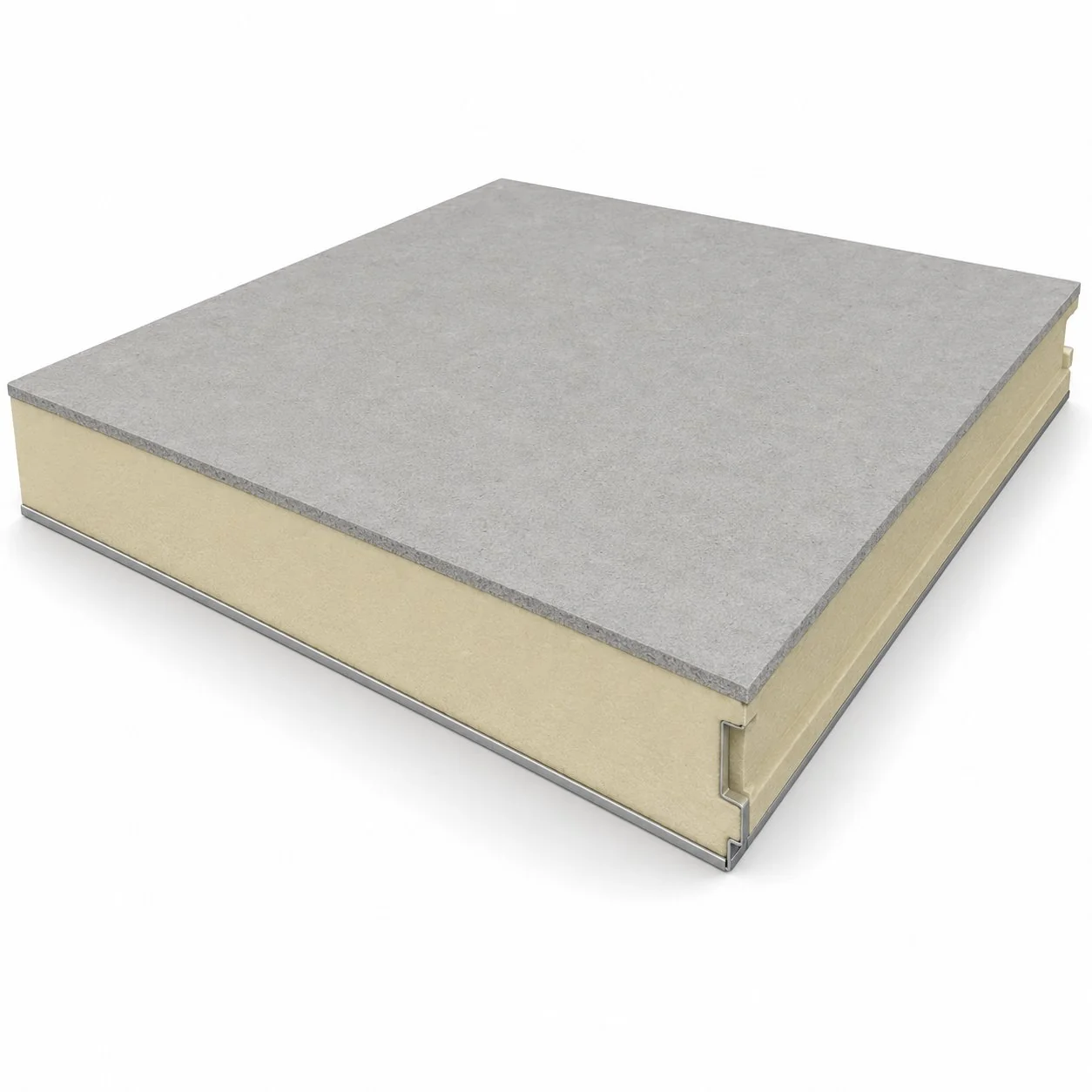
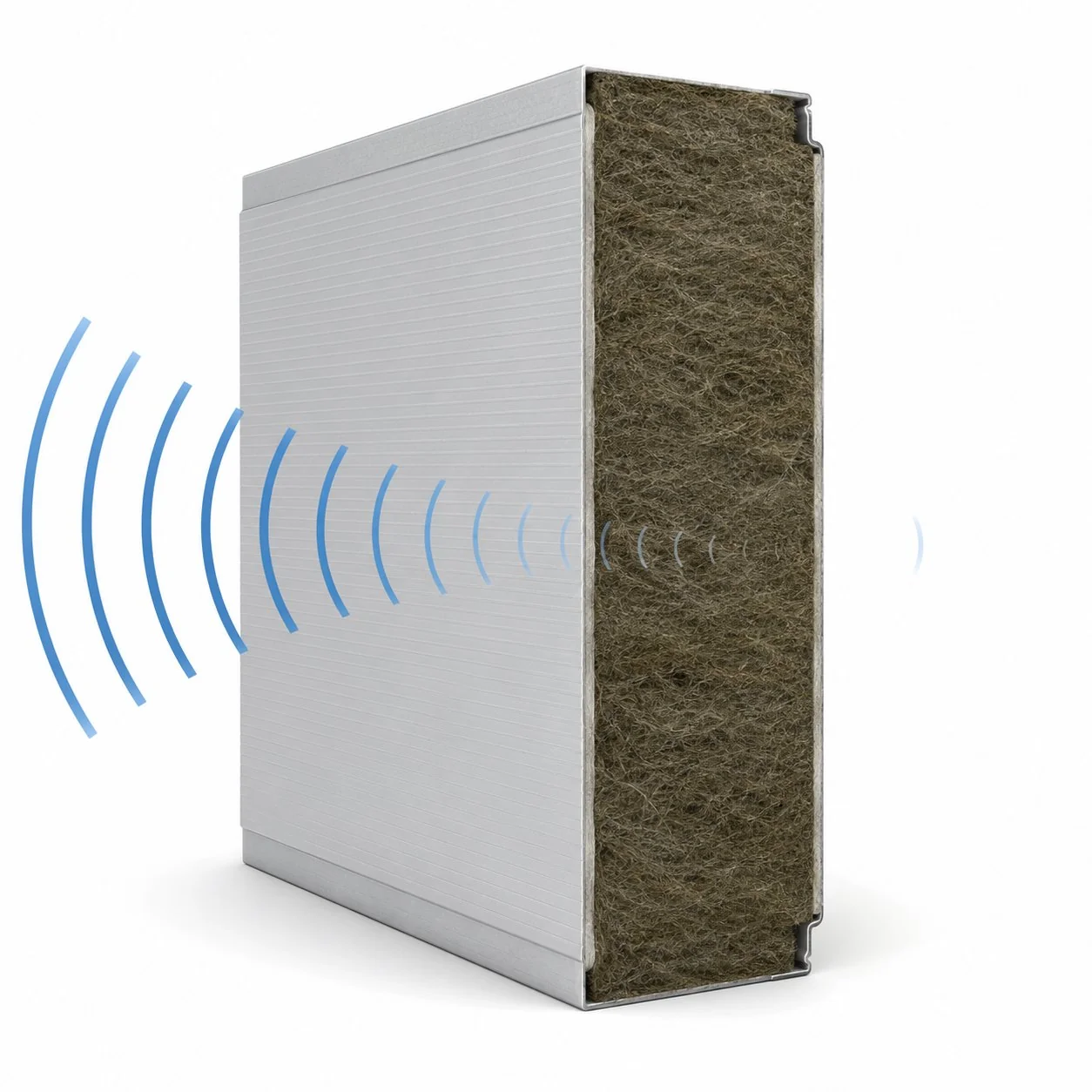
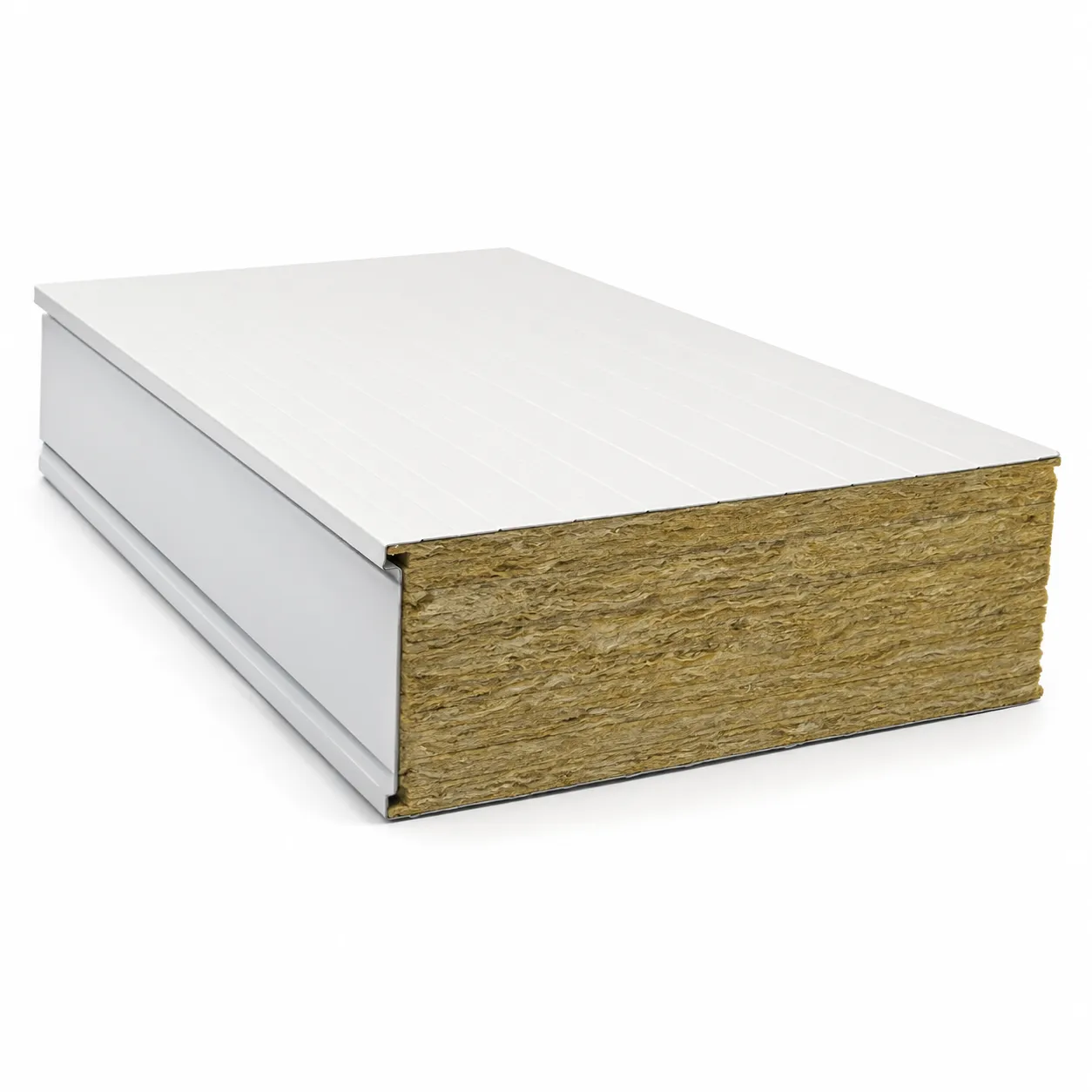
Explore alternatives: PUR Facade Panel · EPS Facade Panel · Rockwool Facade Panel · Fibercement Facade Panel
Not sure? Panel Selector helps you decide in seconds.
Certifications
- EN 14509: Mechanical, thermal, and dimensional compliance for self-supporting sandwich panels.
- CE Marking: Full compliance for European markets.
- EN 13501-1: Fire reaction — Euroclass B-s1, d0.
- EN ISO 11925-2: Ignitability under direct flame.
- ISO 9001: Manufacturing quality management.
All certificates: Quality & Certificates.
What is the difference between PIR and PUR facade panels?
Both use foam cores from the polyurethane family, but PIR (polyisocyanurate) is chemically modified to provide enhanced fire behavior. PIR achieves Euroclass B-s1, d0 with very low smoke production (s1), while PUR achieves B-s2, d0 with low smoke (s2). Thermally, PIR has a lambda of 0.023 W/mK versus PUR’s 0.022 — a negligible difference. PIR typically costs 10–15% more than PUR.
Is PIR a fire-proof material?
No insulation material used in sandwich panels is truly “fireproof.” PIR is classified as B-s1, d0, meaning it has limited combustibility with very low smoke production and no flaming droplets. For non-combustible requirements (A1/A2), rockwool panels are recommended. PIR offers the best balance between fire performance and thermal efficiency among foam-core panels.
When should I specify PIR instead of PUR?
Choose PIR when: (1) building regulations require B-s1 fire class, (2) insurance underwriters recommend or require fire-enhanced panels, (3) the building has high occupancy or public access, (4) the project is near a property boundary with fire spread concerns, or (5) you want to future-proof against tightening fire codes.
What thicknesses are available for PIR facade panels?
Real Panel PIR facade panels are available from 30 mm to 200 mm thickness (30, 40, 50, 60, 80, 100, 120, 150, 200 mm). The optimal thickness depends on your project’s U-value target and local energy regulations.
Are PIR panels more expensive than PUR?
Yes, PIR panels typically carry a 10–15% price premium over equivalent PUR panels due to the modified chemistry of the polyisocyanurate core. However, the fire safety benefits, potential insurance savings, and regulatory compliance advantages often outweigh the additional cost — especially for commercial and public-access buildings.
Can PIR and PUR panels be used on the same building?
Yes. It is common practice to use PIR panels in fire-critical zones (e.g., near boundaries, escape routes, high-occupancy areas) and PUR panels in less critical areas, optimizing cost while meeting fire regulations.
Do you ship PIR panels to my country?
We export to Romania, Bulgaria, Georgia, Macedonia, and Kosovo. Request a quote or check our Export Markets.