

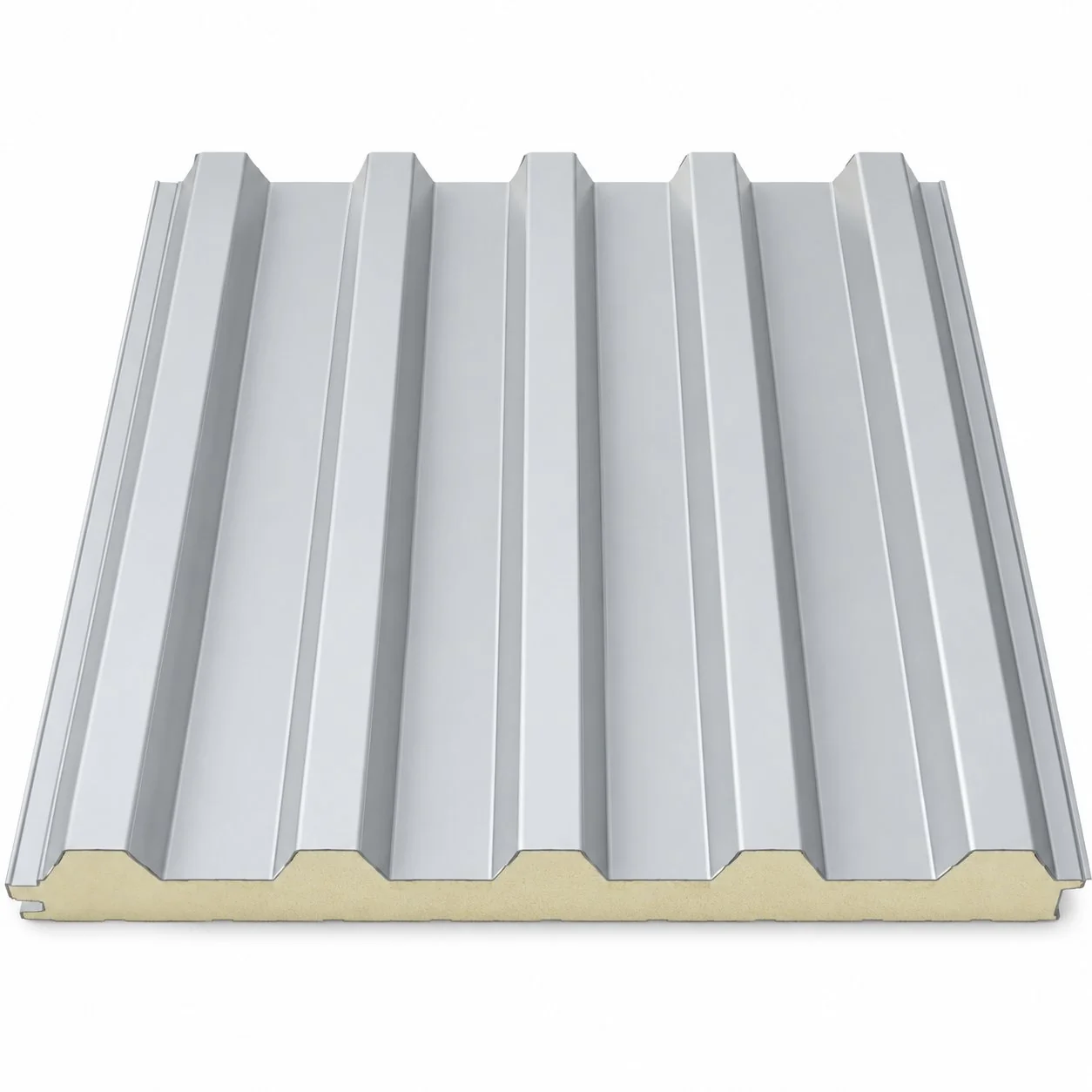
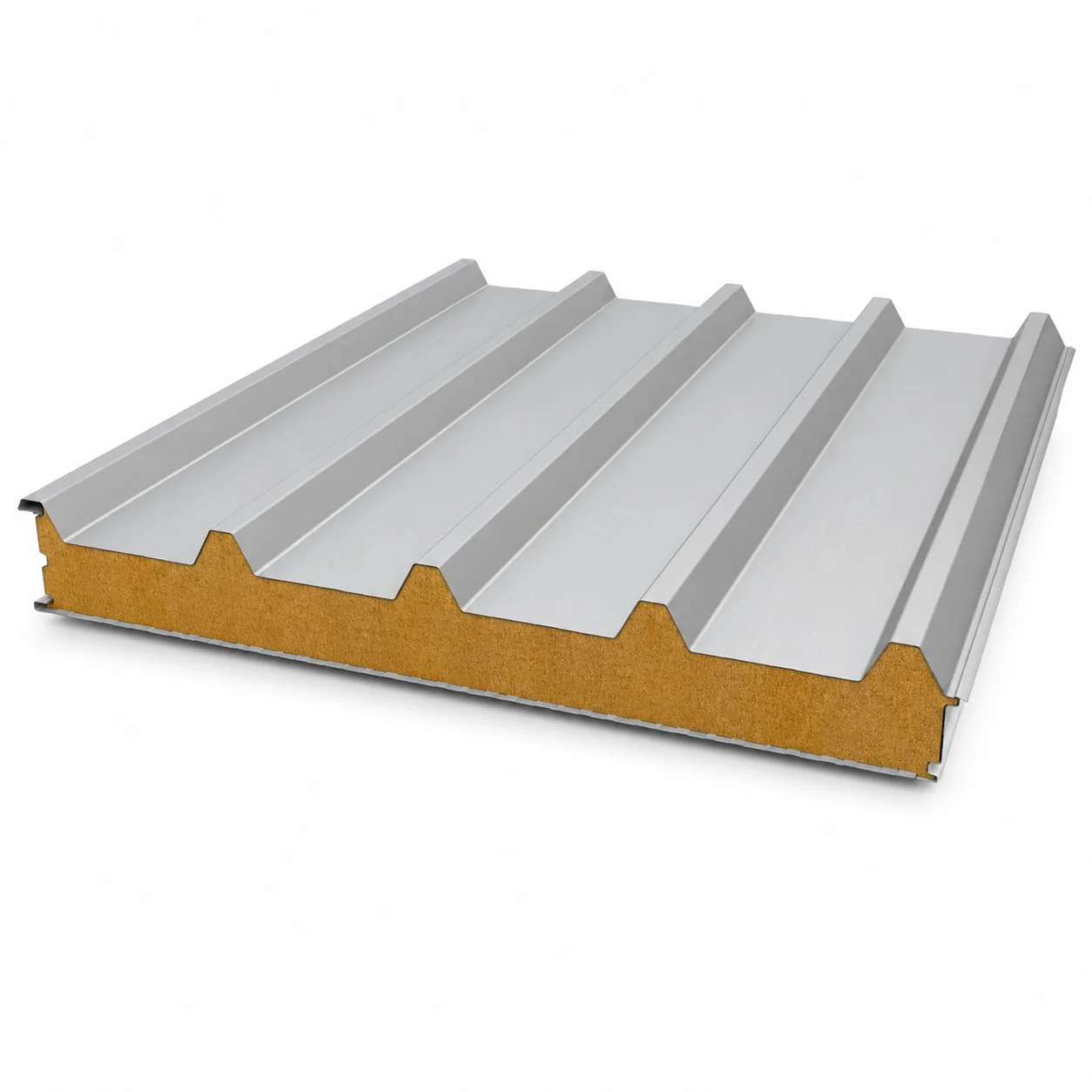
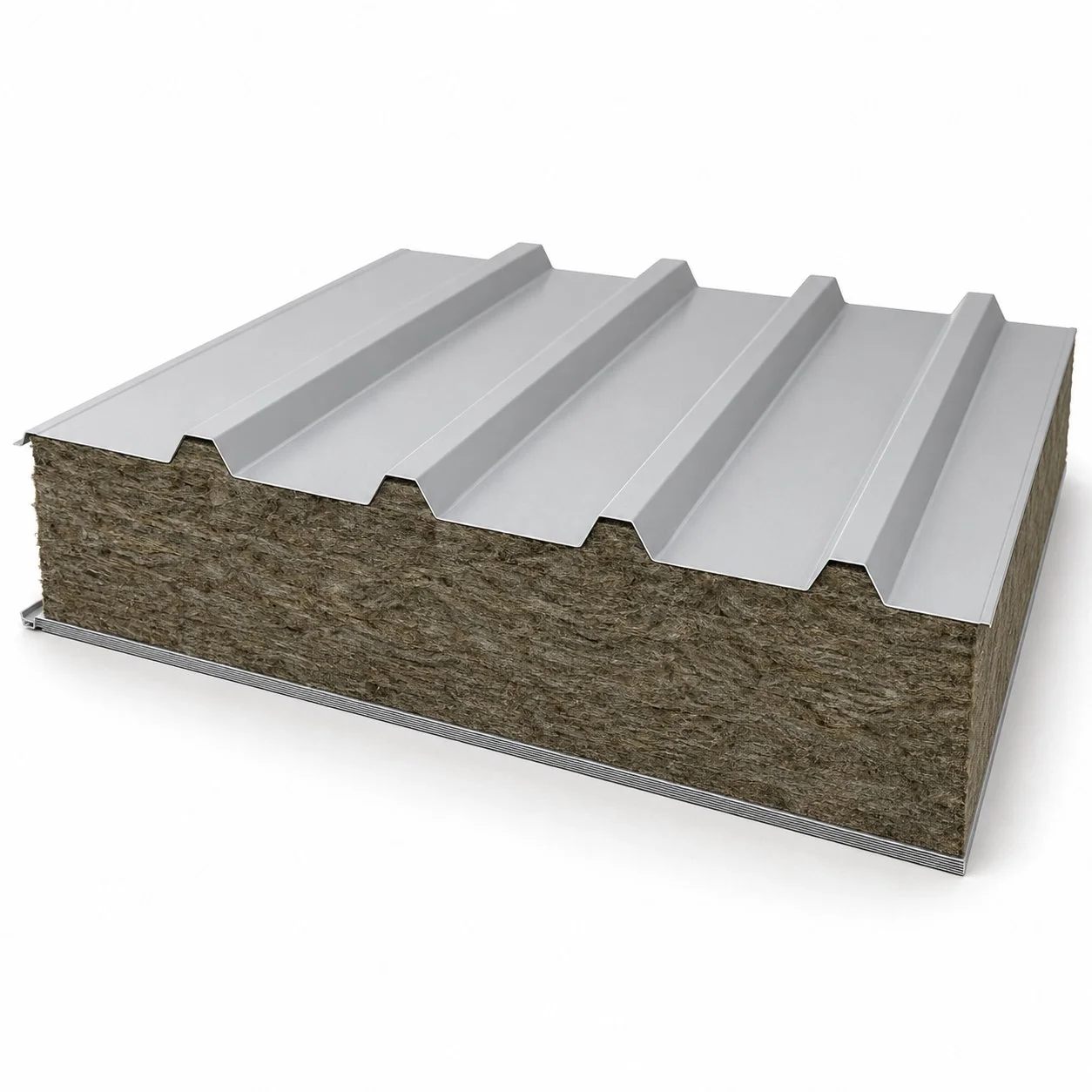
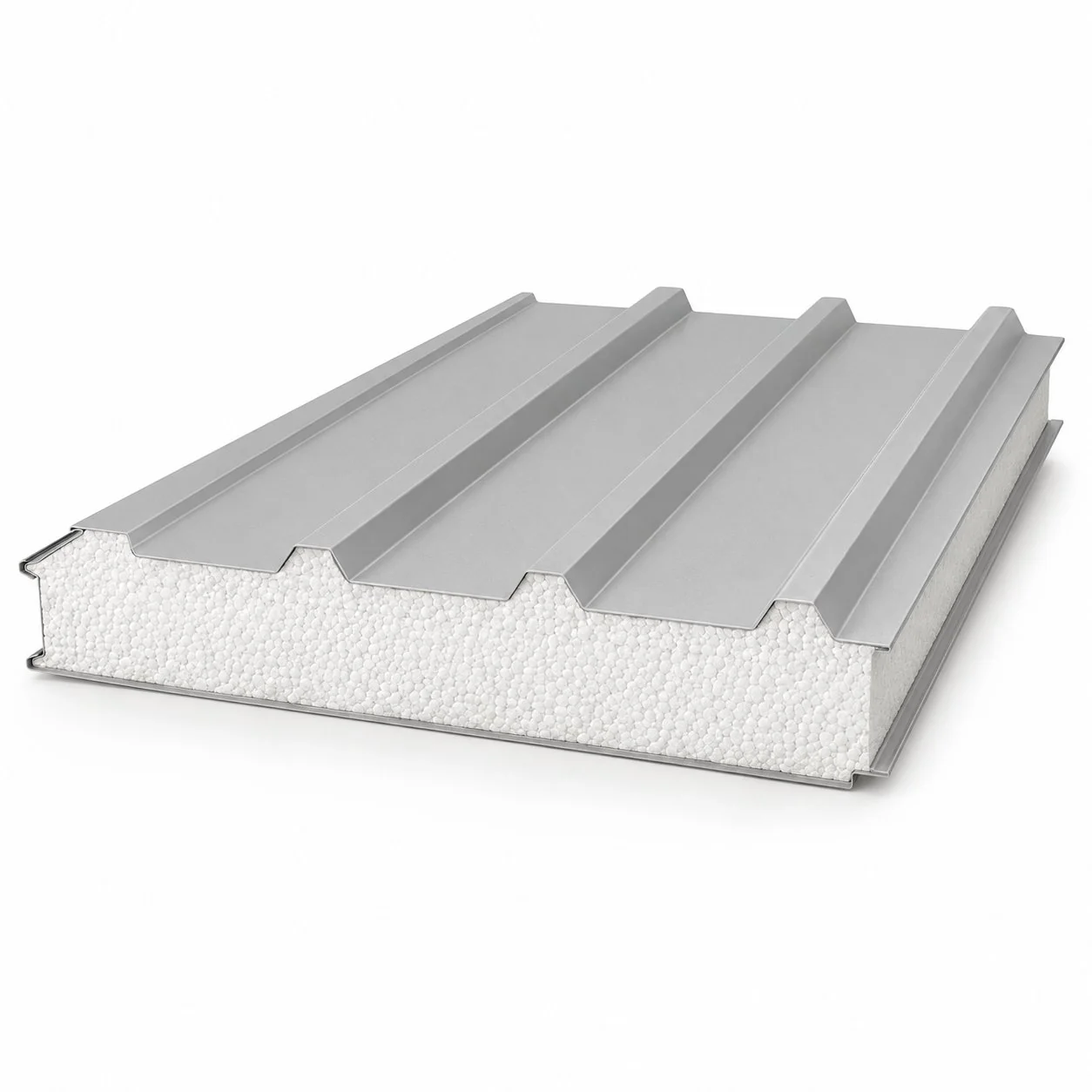
Sandwich panel cost per square meter is the question every developer, contractor, and building owner asks before starting a project. The answer is never a single number — sandwich panel cost per square meter depends on the core material, panel thickness, surface finish, order volume, and several other factors that can shift the price by 40-60% in either direction. This guide breaks down all seven pricing factors so you can budget accurately and make cost-effective specifications.
Understanding sandwich panel cost per square meter also means understanding value. The cheapest panel is rarely the most cost-effective over a building’s 25-30 year lifecycle. A slightly more expensive panel that delivers better insulation, fire performance, or durability can save multiples of its additional cost through lower energy bills, reduced insurance premiums, and zero maintenance. This guide covers both: what you will pay, and what you will get for your money.
On this page:
- Why sandwich panel cost per m² varies so much
- 7 factors that determine sandwich panel cost per m²
- Cost comparison table by panel type
- Cost by building application
- Panel cost vs total building cost — perspective
- How to reduce sandwich panel cost without sacrificing quality
- Lifecycle cost — why the cheapest panel is not always the best value
- How to get an accurate quote
- Frequently asked questions
Why sandwich panel cost per m² varies so much
If you search online for sandwich panel cost per square meter, you will find wildly different numbers — from €15 to €80+ per m². This range is not because manufacturers are inconsistent. It is because ‘sandwich panel’ covers an enormous range of products. Comparing an 40 mm EPS basic wall panel to a 200 mm stainless-steel-faced PUR cold room panel is like comparing a compact car to an SUV — both are vehicles, but they serve completely different purposes at completely different price points. According to general construction cost data from European construction industry reports, building envelope costs typically represent 15-25% of total building investment.
To get a meaningful sandwich panel cost per square meter, you need to specify exactly what you need. The seven factors below determine where your project falls in the price range.
7 factors that determine sandwich panel cost per m²
1. Core material — the biggest cost driver
The insulation core material is the single largest factor in sandwich panel cost per square meter. In our core material comparison guide, we detail the performance differences. Here is the cost dimension:
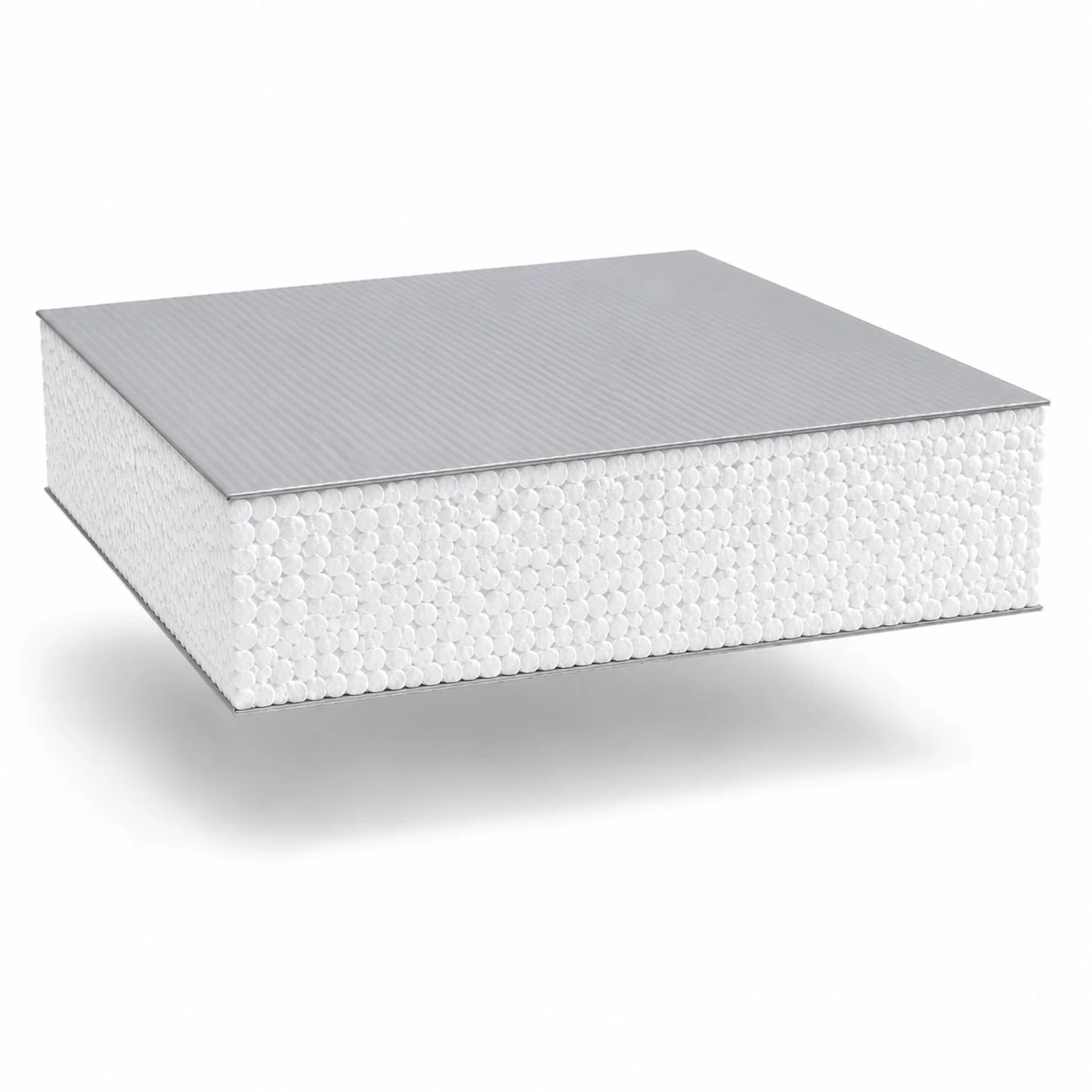
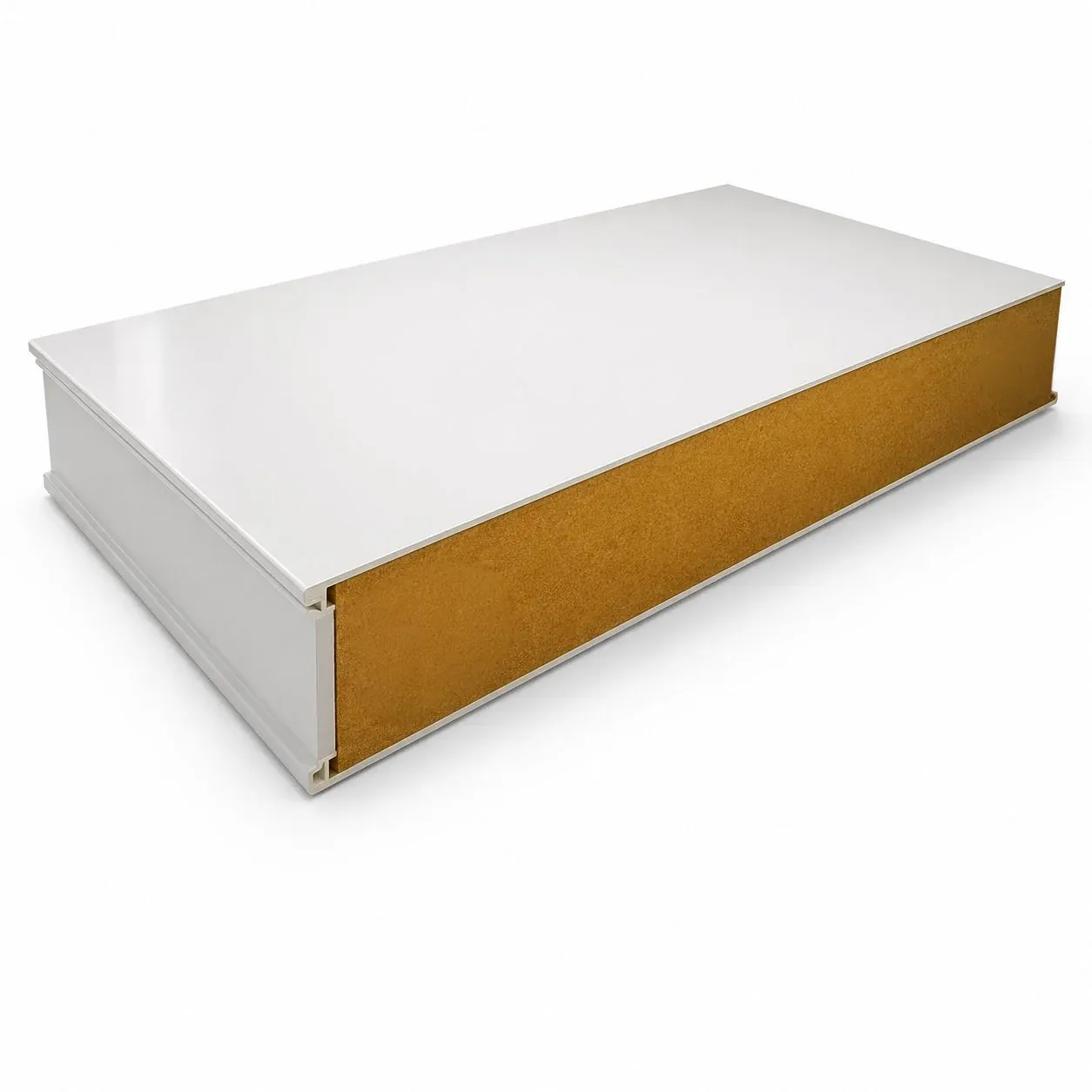
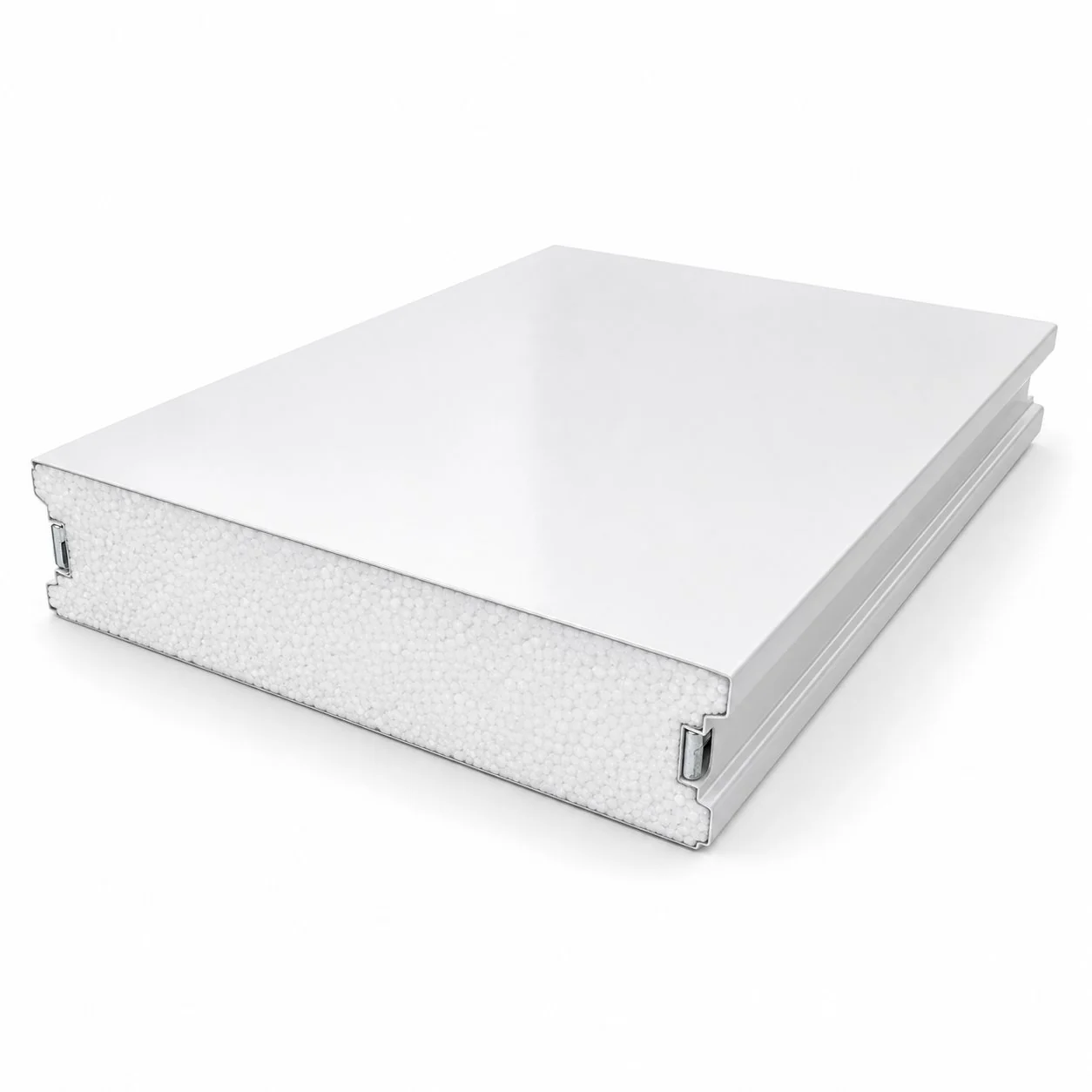
- EPS: Lowest material cost. Budget-friendly for basic insulation. However, requires thicker panels for equivalent thermal performance, which partially offsets the lower core cost with more steel.
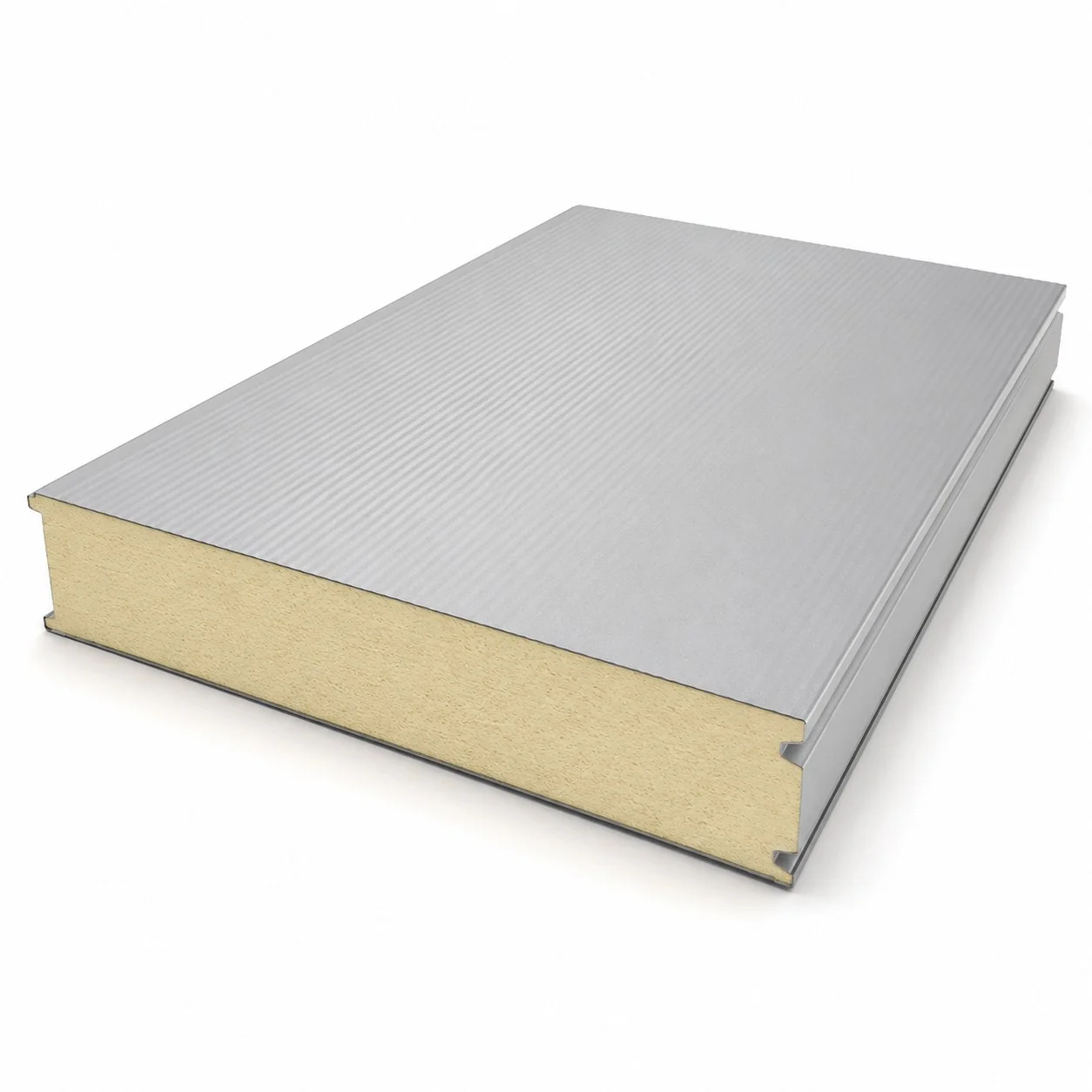
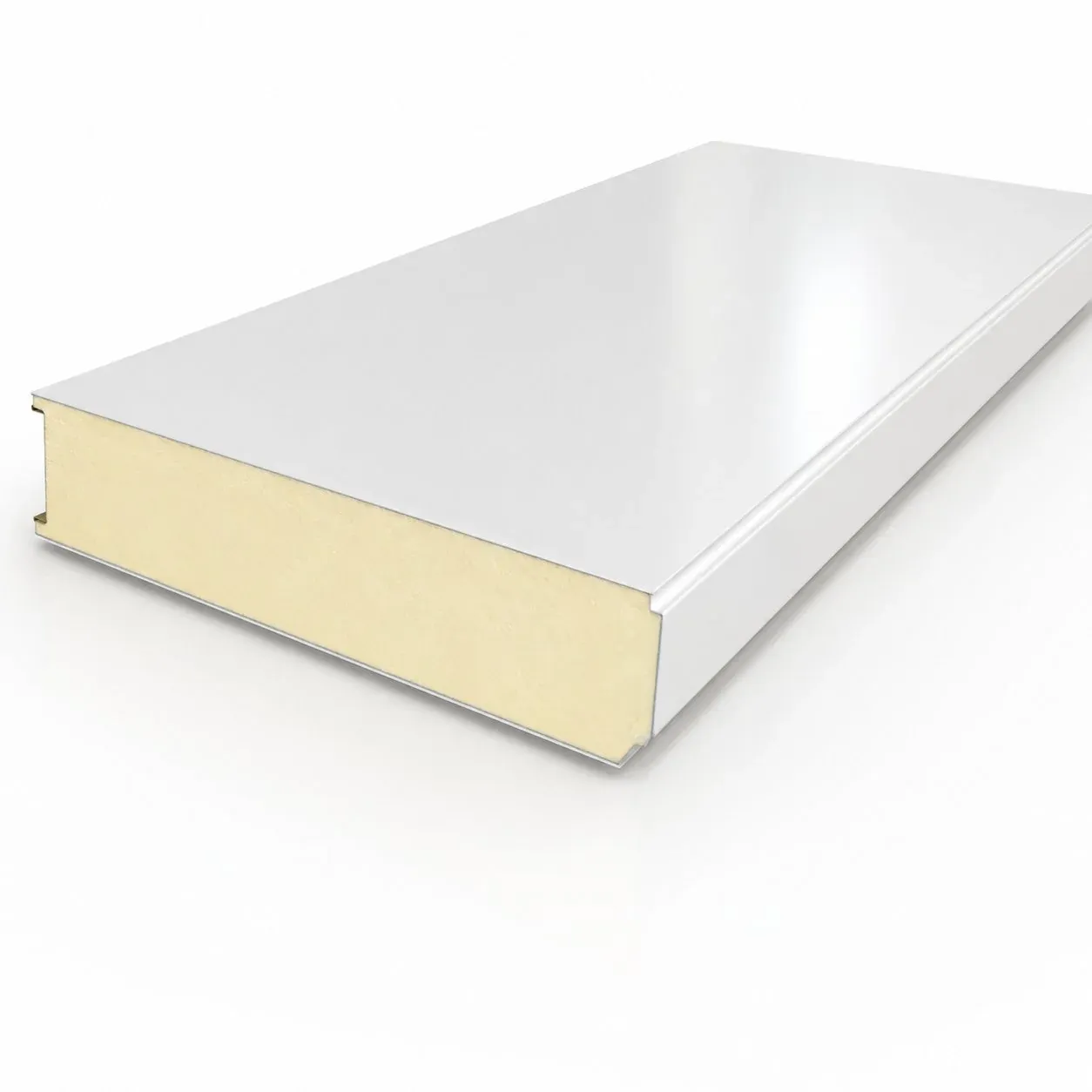
- PUR: Moderate cost. Best value per unit of thermal performance — thinnest panels for any U-value target means less steel, less transport volume, less structural load.
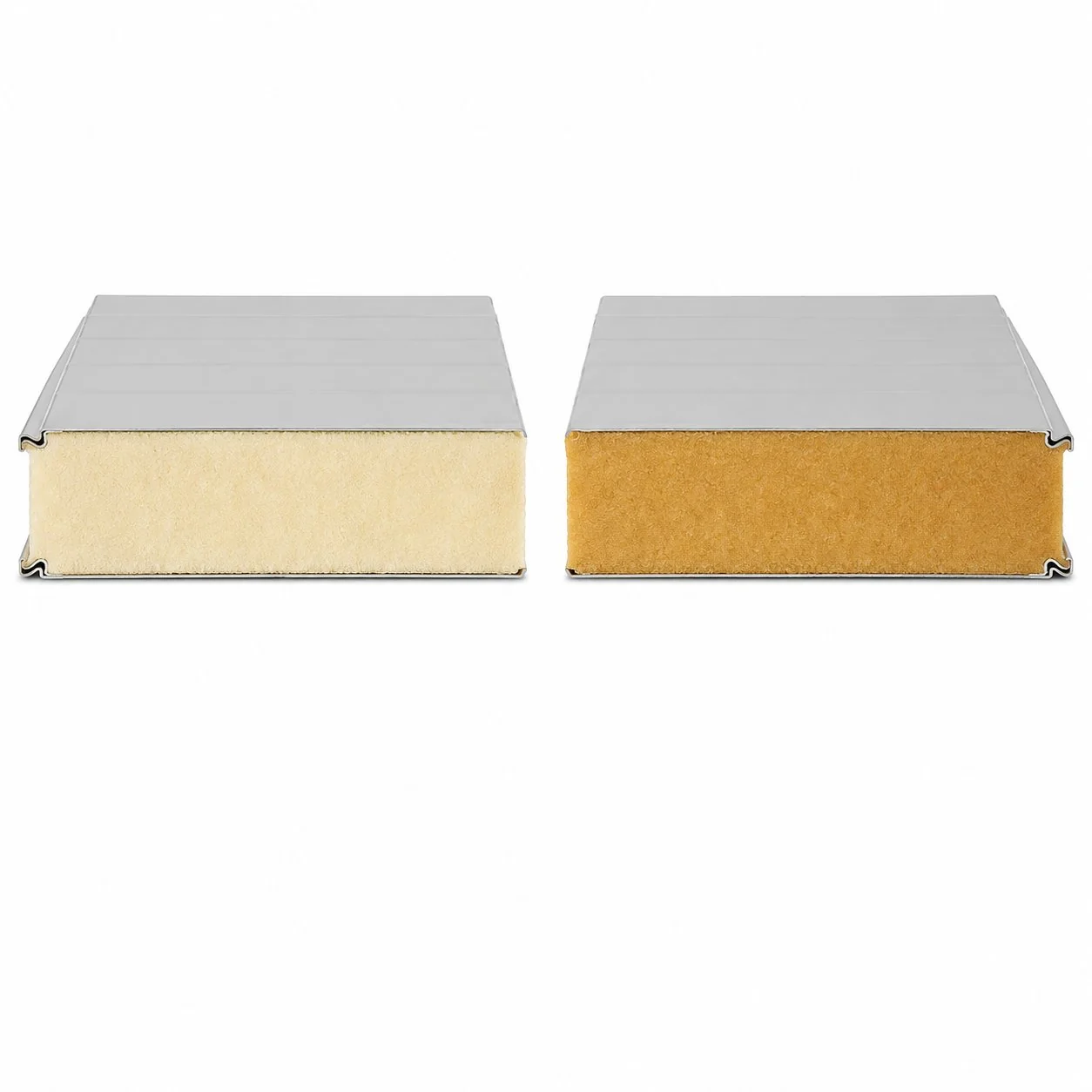
- PIR: 10-15% premium over PUR for fire-enhanced performance (B-s1 vs B-s2). The fire upgrade that often pays for itself through lower insurance.
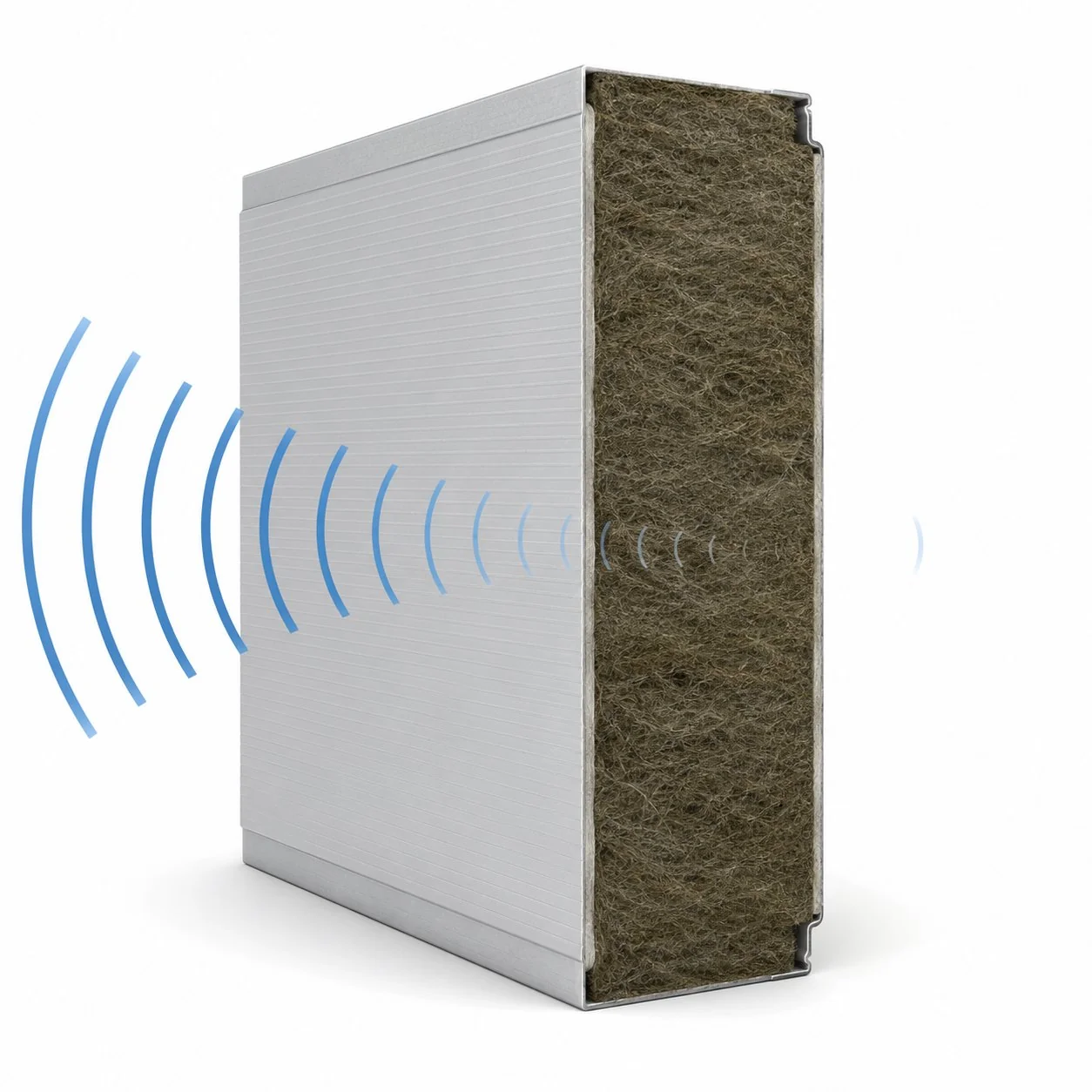
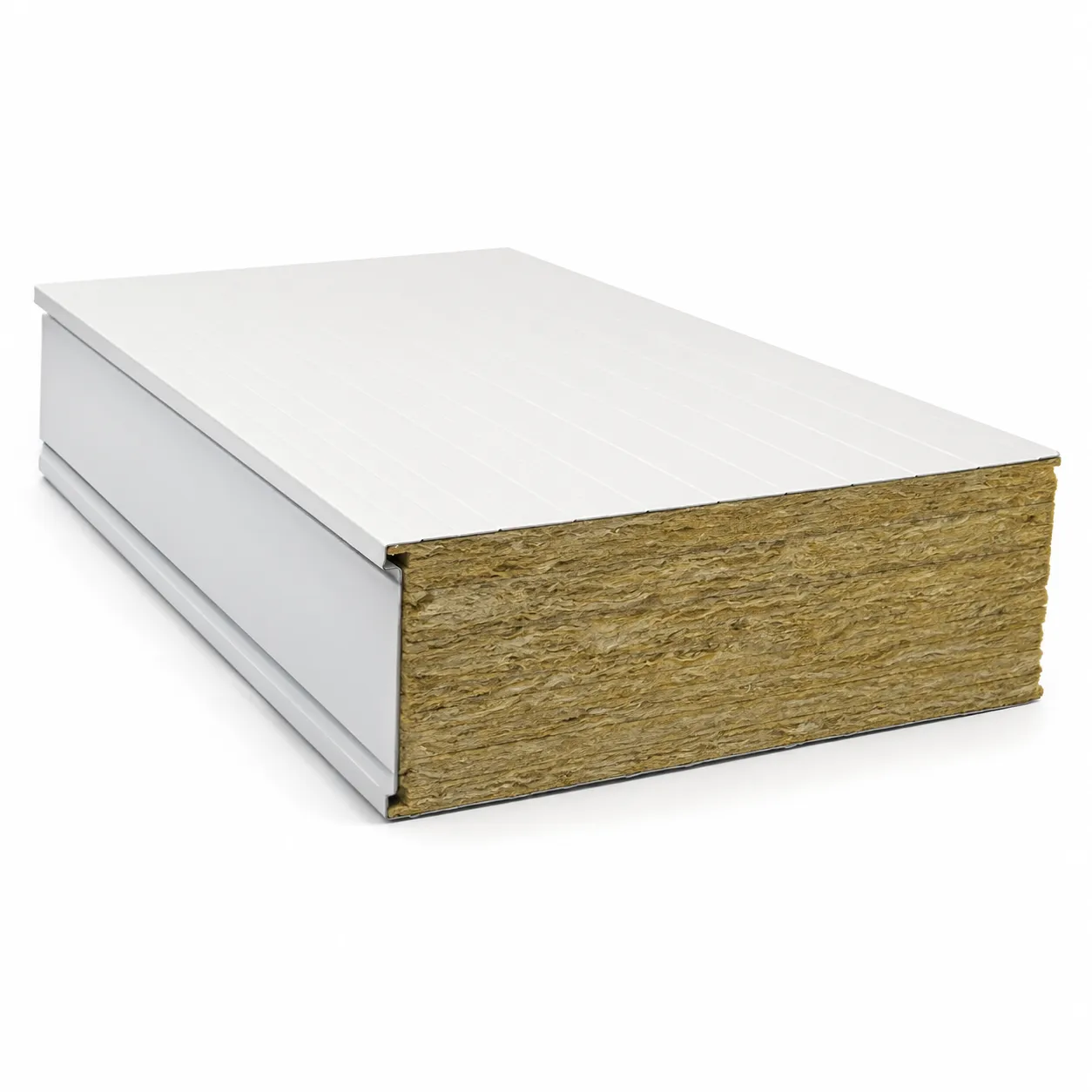
- Rockwool: 30-50% premium over PUR at equivalent thermal thickness. Justified when A-class fire or acoustic performance is mandatory. Heaviest panels mean higher transport cost per m².
2. Panel thickness — more insulation = higher cost
Every additional 20 mm of thickness adds approximately 8-15% to sandwich panel cost per square meter, depending on core material. A 100 mm PUR panel costs significantly more than a 60 mm PUR panel. Specifying the right thickness — enough to meet your energy code but not more — is essential for cost optimization. Over-specifying thickness wastes money; under-specifying fails code compliance. Calculate your exact thermal requirement: U-Value Calculator.
3. Steel facing thickness — 0.4 mm vs 0.5 mm vs 0.6 mm
Sandwich panel steel facings typically range from 0.4 mm to 0.6 mm. Thicker steel improves span capability, impact resistance, and flatness — but adds 5-12% to sandwich panel cost per square meter per step up. Standard 0.5 mm/0.4 mm (outer/inner) suits most applications. Commercial facades requiring maximum flatness may justify 0.6 mm outer facing.
4. Surface finish & coating
The steel coating system significantly impacts sandwich panel cost per square meter:
- Standard polyester (25µm): Base cost. Suitable for most industrial and commercial applications. 15-20 year coating life.
- PVDF (25µm): 10-20% premium. Superior UV and color retention for premium commercial facades. 25-30 year coating life.
- Plastisol (200µm): 15-25% premium. Impact and chemical resistance for food processing and livestock buildings.
- Stainless steel AISI 304: 100-150% premium over standard polyester. For food processing, pharma, and chemical-resistant environments.
- Stainless steel AISI 316: 150-200% premium. Pharmaceutical, fish processing, high-salt, and aggressive chemical environments.
5. Panel profile — flat vs micro-rib vs trapezoidal
Profile type affects both sandwich panel cost per square meter and application:
- Micro-rib: Standard industrial facade profile. Baseline cost. Hides minor surface imperfections.
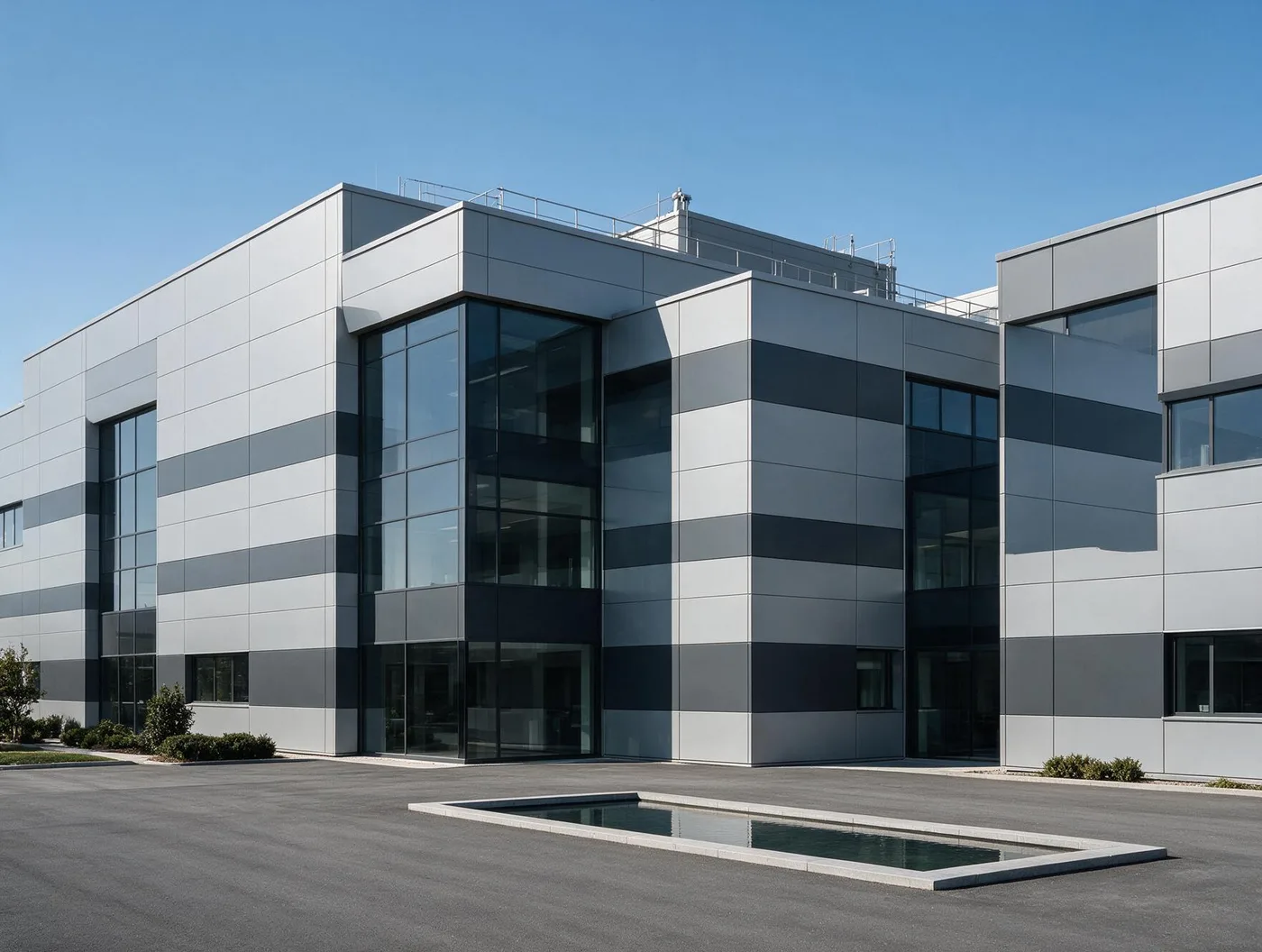
- Flat/smooth: 5-10% premium. Commercial-grade appearance. Requires thicker steel (0.5-0.6 mm) to maintain flatness.
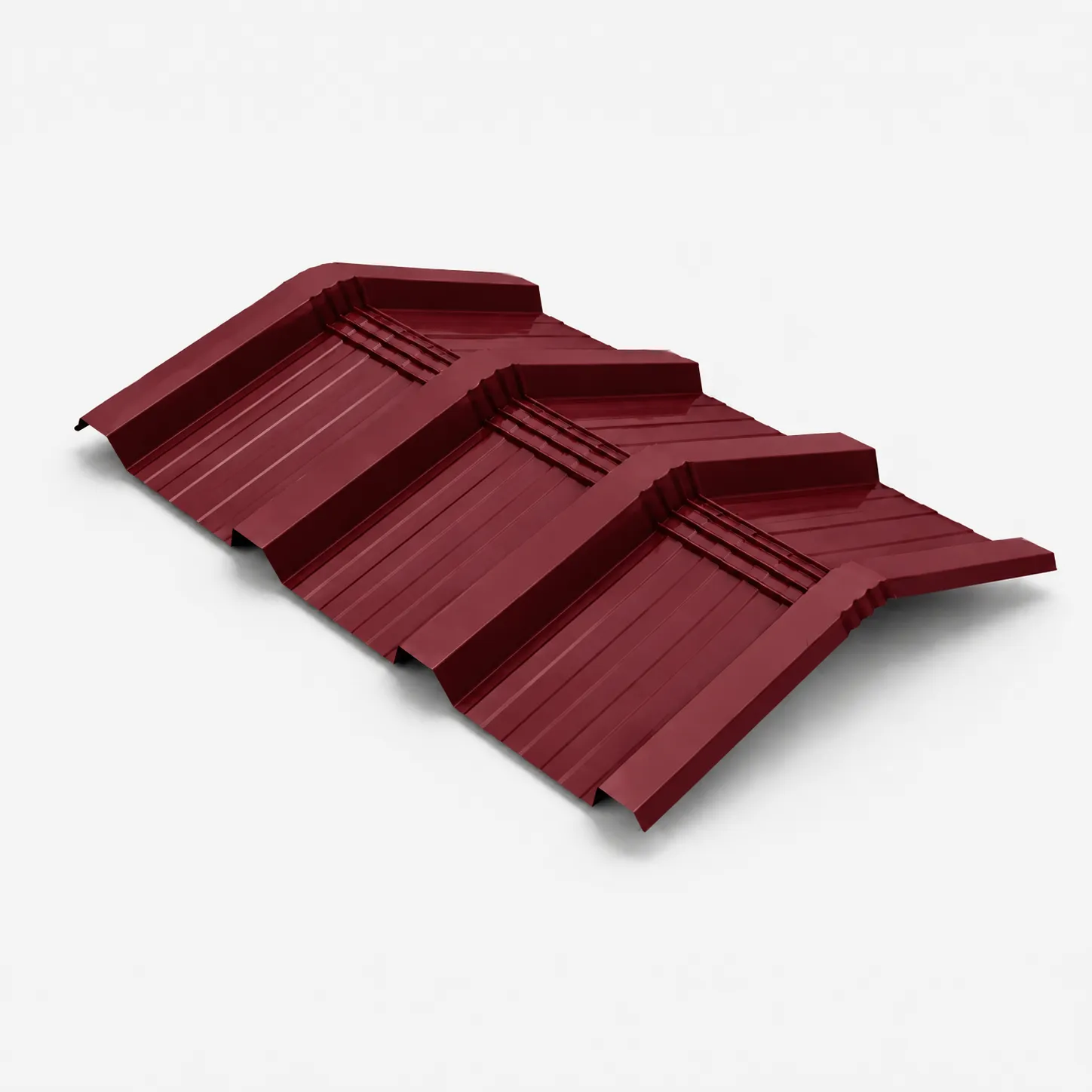
- Trapezoidal: Roof-specific profile. Comparable cost to micro-rib but provides structural spanning capability for roof applications.
6. Panel type — facade vs roof vs cold room
Different panel types have different manufacturing complexity:
- Facade panels: Standard continuous-line manufacturing. Baseline sandwich panel cost per square meter.
- Roof panels: Trapezoidal profiling adds moderate complexity. Similar to facade cost.
- Cold room panels: Cam-lock mechanism, precision cutting, EPDM gaskets add 20-40% over standard facade panels at equivalent thickness. The airtight joint system is the premium.
7. Order volume & logistics
Sandwich panel cost per square meter decreases with larger order volumes:
- Small orders (<500 m²): Higher per-m² cost due to production setup, cutting waste, and transport inefficiency.
- Medium orders (500-5,000 m²): Standard pricing. Production runs are efficient at this scale.
- Large orders (5,000+ m²): Volume discounts become significant — 5-15% reduction possible through optimized production scheduling and full-truck transport.
- Export logistics: International delivery adds transport cost that varies by destination. Bulgaria (5-7 days) is closest; Kosovo (8-12 days) requires the longest route.
Cost comparison table by panel type
The following sandwich panel cost per square meter ranges are indicative current market guidance for standard specifications. Actual project prices depend on the seven factors above. Contact Real Panel for project-specific pricing.
| Panel type | 60mm | 80mm | 100mm | 150mm |
|---|---|---|---|---|
| PUR Facade (polyester) | €€ | €€ | €€€ | €€€€ |
| PIR Facade (polyester) | €€+ | €€€ | €€€ | €€€€+ |
| EPS Facade (polyester) | € | €€ | €€ | €€€ |
| Rockwool Facade | €€€ | €€€ | €€€€ | €€€€€ |
| Fibercement Facade | €€€€ | €€€€ | €€€€+ | — |
| PUR Roof (trapezoidal) | €€ | €€ | €€€ | €€€€ |
| PUR Cold Room (cam-lock) | — | €€€ | €€€€ | €€€€€ |
| SS AISI 304 Cold Room | — | €€€€€ | €€€€€+ | €€€€€€ |
€ = Budget | €€ = Standard | €€€ = Mid-Range | €€€€ = Premium | €€€€€ = Specialist
Important: We deliberately do not publish exact EUR/m² figures in this guide because raw material prices (steel, chemicals, energy) fluctuate quarterly. Published prices become outdated and misleading. The relative positioning (€ to €€€€€) is stable and reliable for budgeting purposes. For current project-specific sandwich panel cost per square meter: Request a Quote.
Cost by building application
Typical sandwich panel cost per square meter ranges by building type, including standard specifications:
| Application | Typical panel spec | Cost tier |
|---|---|---|
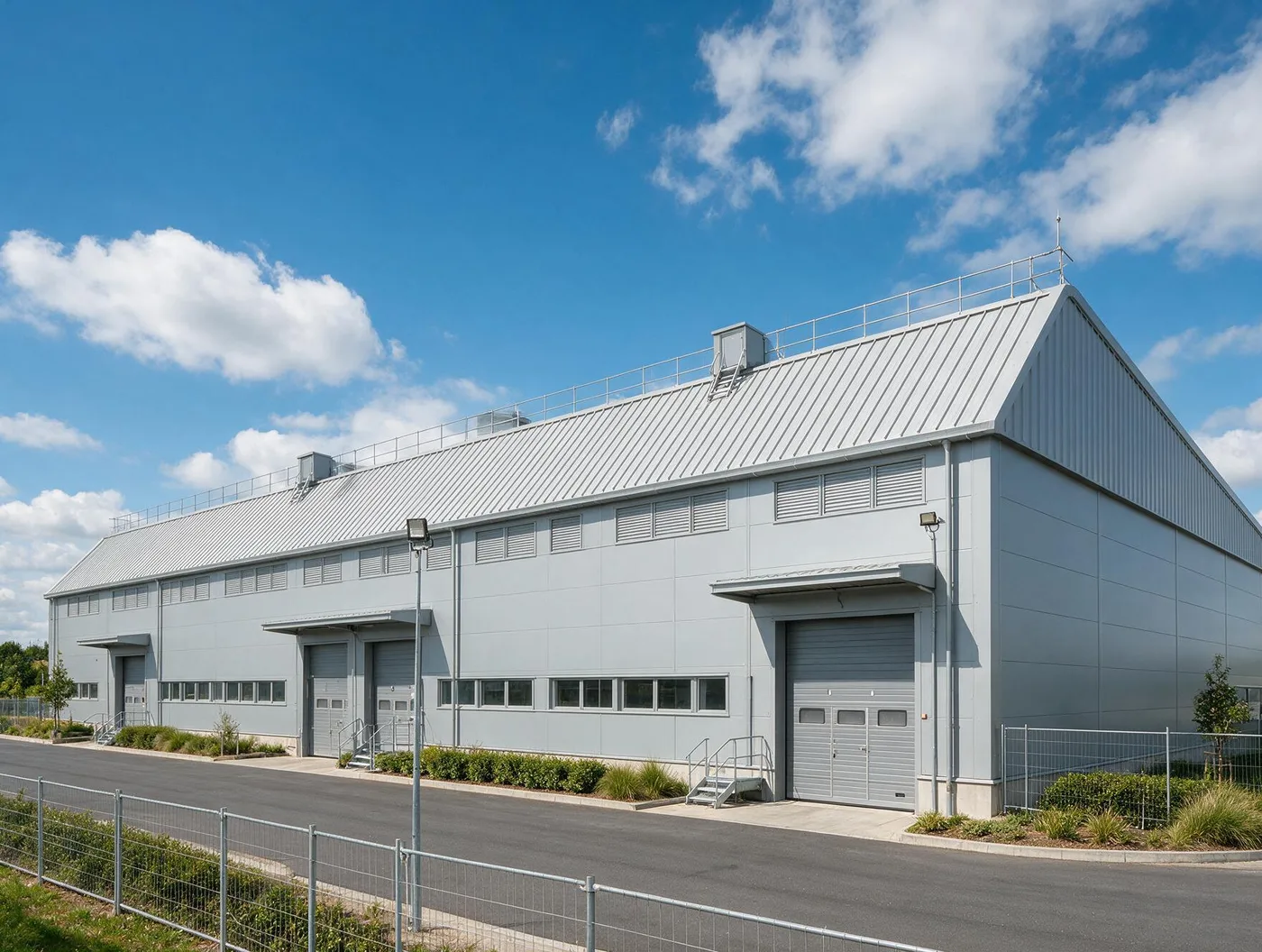
| Basic warehouse | EPS 50-60mm facade + EPS 60mm roof | € — Budget |
| Standard factory | PUR 60-80mm facade + PUR 80mm roof | €€ — Standard |
| Commercial office | PIR 80-100mm flat + PIR 80mm roof | €€€ — Mid-range |
| Cold storage (+5°C) | PUR 80mm cold room + PUR 80mm building | €€€ — Mid-range |
| Deep freeze (-25°C) | PUR 180mm cold room + PUR 100mm building | €€€€ — Premium |
| Food processing | PUR/SS 304 100mm + coved profiles | €€€€€ — Specialist |
| Pharma clean room | PIR/SS 316 flush-joint + sealed penetrations | €€€€€€ — Specialist+ |
Explore solutions by sector: Industrial · Commercial · Cold Storage · Food & Pharma · Logistics · Agriculture.
Panel cost vs total building cost — perspective
Sandwich panel cost per square meter matters — but in the context of total building cost, it matters less than you might think:
- Panel cladding: Typically represents 15-25% of total building construction cost.
- Steel structure: 25-35% of total cost — often a bigger budget item than panels.
- Foundations: 10-20% depending on ground conditions.
- MEP (mechanical, electrical, plumbing): 15-25% depending on building complexity.
- Finishes & fit-out: 10-20% for commercial buildings.
This means a 10% saving on sandwich panel cost per square meter reduces TOTAL building cost by only 1.5-2.5%. But a poor panel specification that requires retrofitting, repainting, or re-insulation within 10 years can cost 30-50% of the original panel budget. Specifying correctly the first time is far more valuable than finding the lowest initial panel price.
How to reduce sandwich panel cost without sacrificing quality
Smart specification reduces sandwich panel cost per square meter without compromising building performance:
- Optimize thickness: Use the U-Value Calculator to specify exactly what the energy code requires — not more, not less.
- Choose PUR over EPS: Counter-intuitive but PUR’s thinner panels often cost LESS than EPS at the same U-value when you factor in less steel, less transport, and less structural load.
- Use hybrid specifications: Rockwool only where A-class is mandated, PIR on public facades, PUR on service elevations. Our technical team designs optimized mixed specs.
- Coordinate panel dimensions: Standard widths (1000-1150 mm) and factory-cut lengths reduce waste. Non-standard sizes add cutting waste and cost.
- Order complete packages: Panels + accessories (flashings, fasteners, sealants) from one supplier eliminates markup from multiple intermediaries.
- Plan lead time: Rush orders cost more. Standard lead times (2-4 weeks production + delivery) get standard pricing.
- Consolidate volume: If you have multiple projects, consolidate orders for volume pricing. Even phased deliveries can work from a single production run.
Lifecycle cost — why the cheapest panel is not always the best value
The true sandwich panel cost per square meter includes not just the purchase price but the total cost of ownership over the building’s lifecycle. According to building performance data available from RICS (Royal Institution of Chartered Surveyors), building envelope lifecycle cost analysis should consider:
- Energy cost: A 20 mm thickness upgrade (e.g., 60→80 mm PUR) adds ~10-15% to panel cost but reduces annual heating energy by ~25-35%. Over 25 years, energy savings far exceed the extra panel cost.
- Maintenance: Sandwich panels require zero repainting for 25-30 years. Traditional masonry + render needs repainting every 8-12 years at €5-15/m² each time.
- Insurance: Upgrading from PUR to PIR can reduce annual property insurance by 5-15%. Over 25 years, this often covers the entire PIR premium.
- Durability: Pre-painted galvanized steel facings resist corrosion, UV, and impact for 25-30+ years. No panel replacement, no patchwork, no degradation.
- Speed: Sandwich panels install 3-5x faster than masonry. Reduced construction time = earlier building occupancy = earlier revenue.
When lifecycle cost is considered, sandwich panel cost per square meter almost always favors mid-range PUR or PIR over budget EPS — and strongly favors panels over traditional masonry/render construction.
How to get an accurate quote
Online searches for sandwich panel cost per square meter will give you ranges. For your actual project price, you need a project-specific quote based on:
- Panel type and core material (PUR, PIR, EPS, rockwool)
- Thickness (determined by your thermal/energy code requirement)
- Surface finish (polyester, PVDF, plastisol, stainless steel)
- Quantity in m² (total facade + roof + cold room area)
- Delivery destination (Turkey domestic or export — Romania, Bulgaria, Georgia, Macedonia, Kosovo)
- Timeline (standard lead time or urgent)
Request your project-specific quote: Quote Request Form. We respond within 24 hours with detailed pricing per panel type, accessory costs, and delivery pricing.
Or start with panel selection: Panel Selector gives you an instant recommendation, then request pricing for that specification.
Frequently asked questions
How much does a sandwich panel cost per m² today?
Sandwich panel cost per square meter today ranges from budget EPS panels at the entry level to specialist stainless steel pharmaceutical panels at the premium end. The price depends on core material, thickness, surface finish, and volume. PUR panels with standard polyester coating in 60-80 mm thickness are the most commonly specified mid-range option. For current pricing: Request a Quote.
Which sandwich panel core is most cost-effective?
PUR (polyurethane) offers the best overall value in most sandwich panel cost per square meter analyses. Although EPS has a lower material cost, PUR achieves the same U-value at 50% less thickness — meaning less steel, less transport weight, and less structural load. Over the building lifecycle, PUR’s superior thermal performance delivers energy savings that further improve its cost-effectiveness. See our core comparison guide.
Is it cheaper to use sandwich panels or traditional masonry?
Sandwich panels have higher material cost per m² than concrete block, but total installed cost is often lower because panels eliminate plastering, rendering, painting, separate insulation, and vapor barriers — and install 3-5x faster, reducing labor cost. Over 25 years, panels require zero maintenance while masonry needs repainting every 8-12 years. Lifecycle cost analysis consistently favors sandwich panels for industrial, commercial, and agricultural buildings.
How can I reduce sandwich panel cost without compromising quality?
Optimize panel thickness with our U-Value Calculator (don’t over-specify), use hybrid core specifications (rockwool only where mandated, PUR elsewhere), order standard panel widths to reduce waste, consolidate volume across projects, and plan with standard lead times to avoid rush premiums.
Do you provide export pricing for sandwich panels?
Yes. We export to Romania, Bulgaria, Georgia, North Macedonia, and Kosovo with transparent pricing that includes panel cost + delivery. Export logistics details and quote requests welcome.