

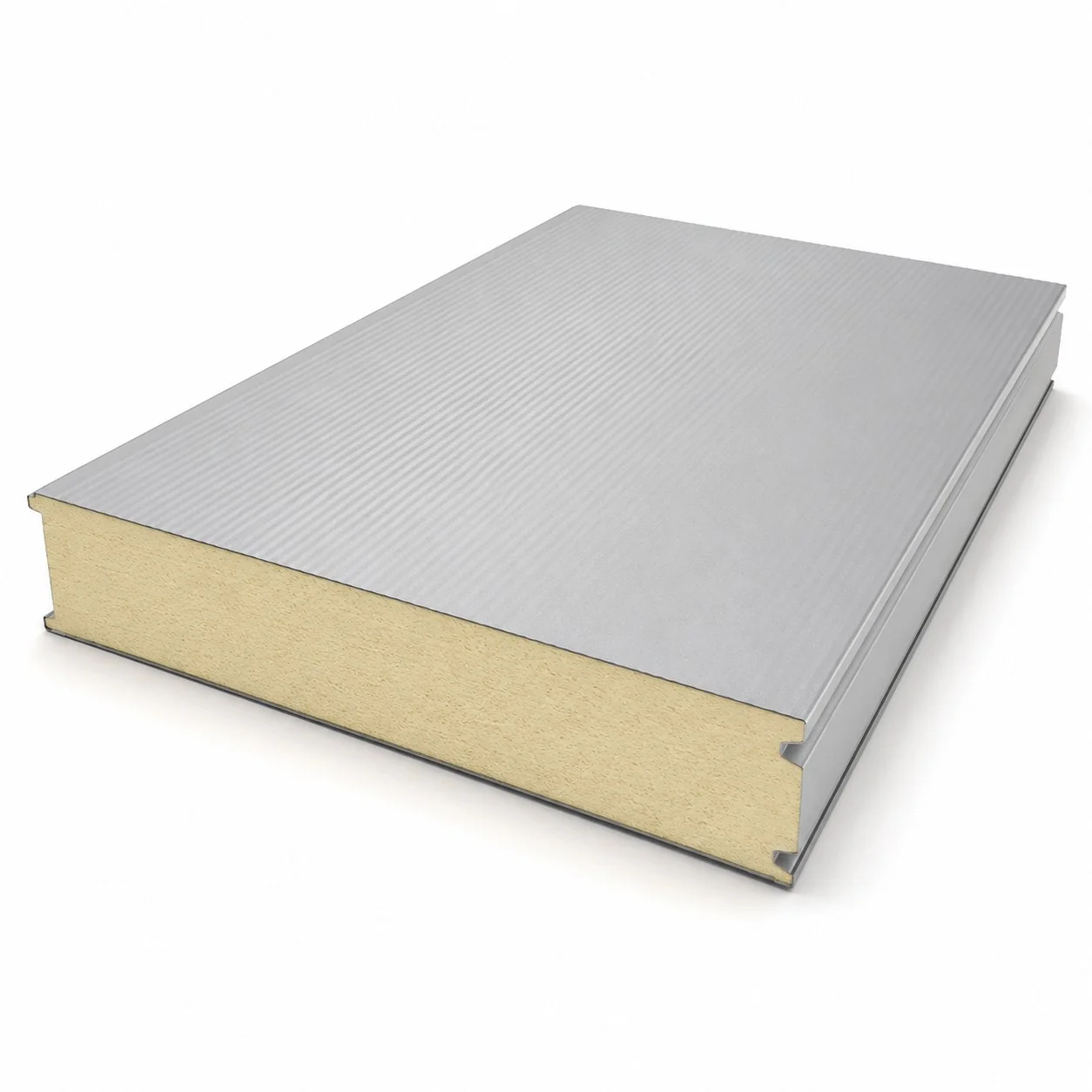
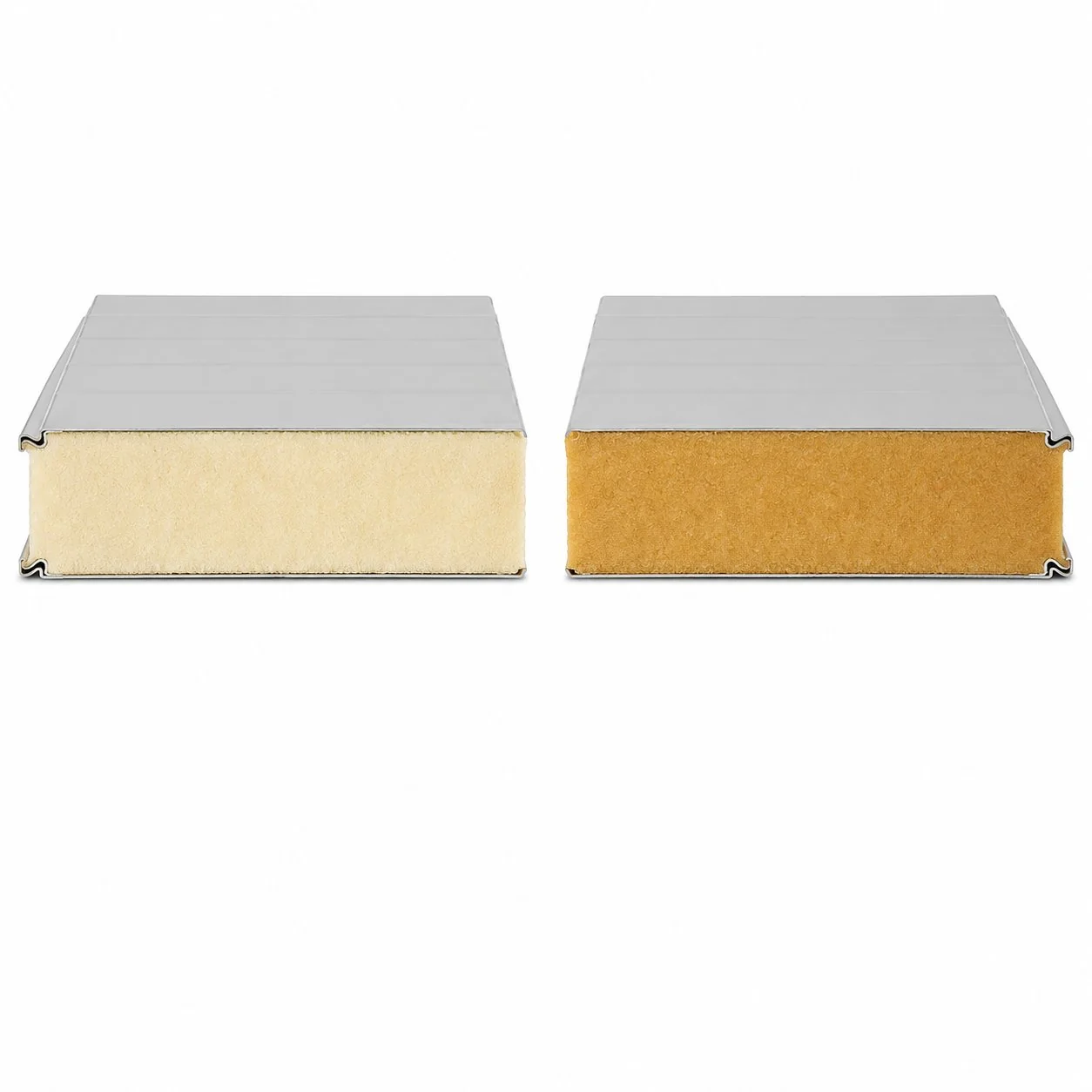
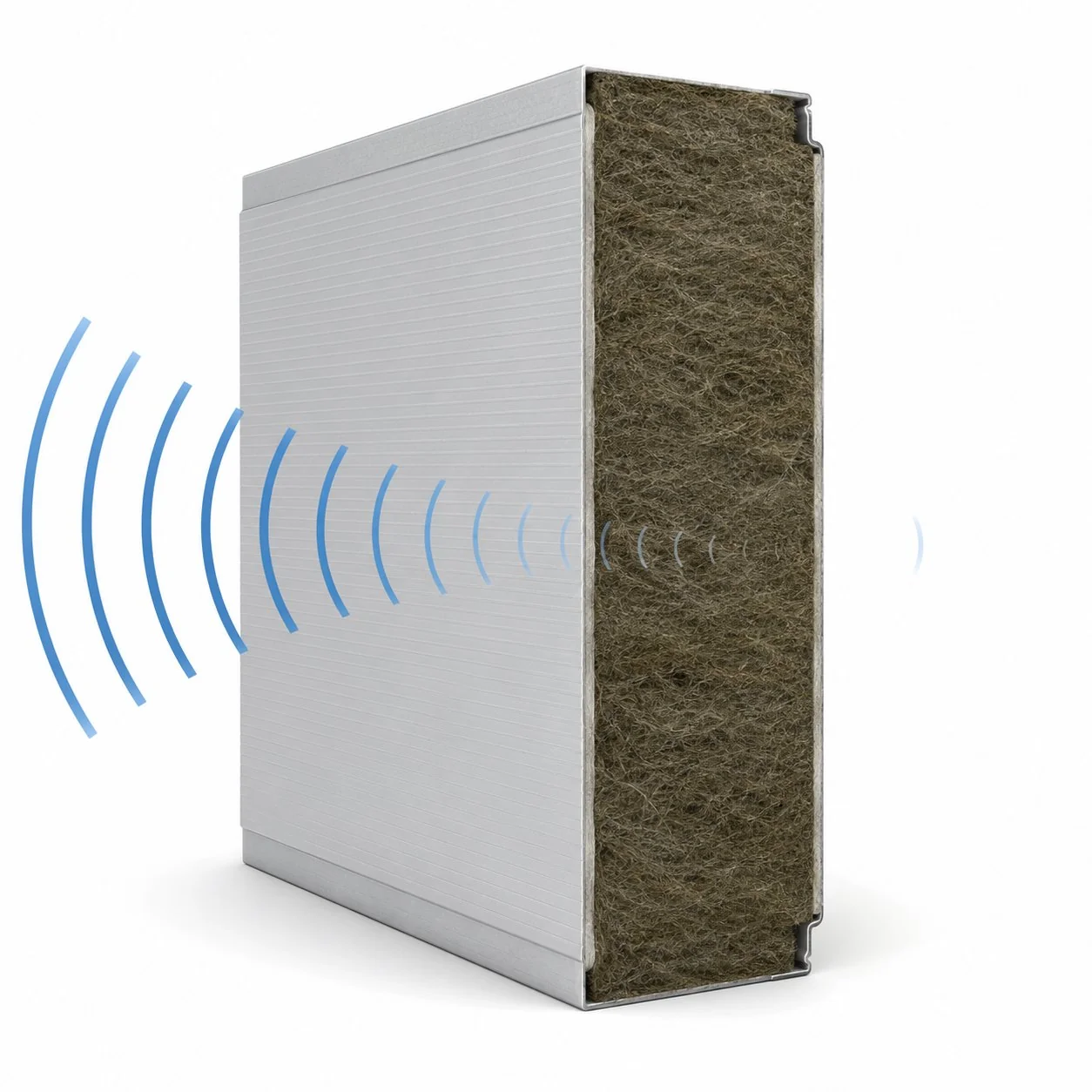
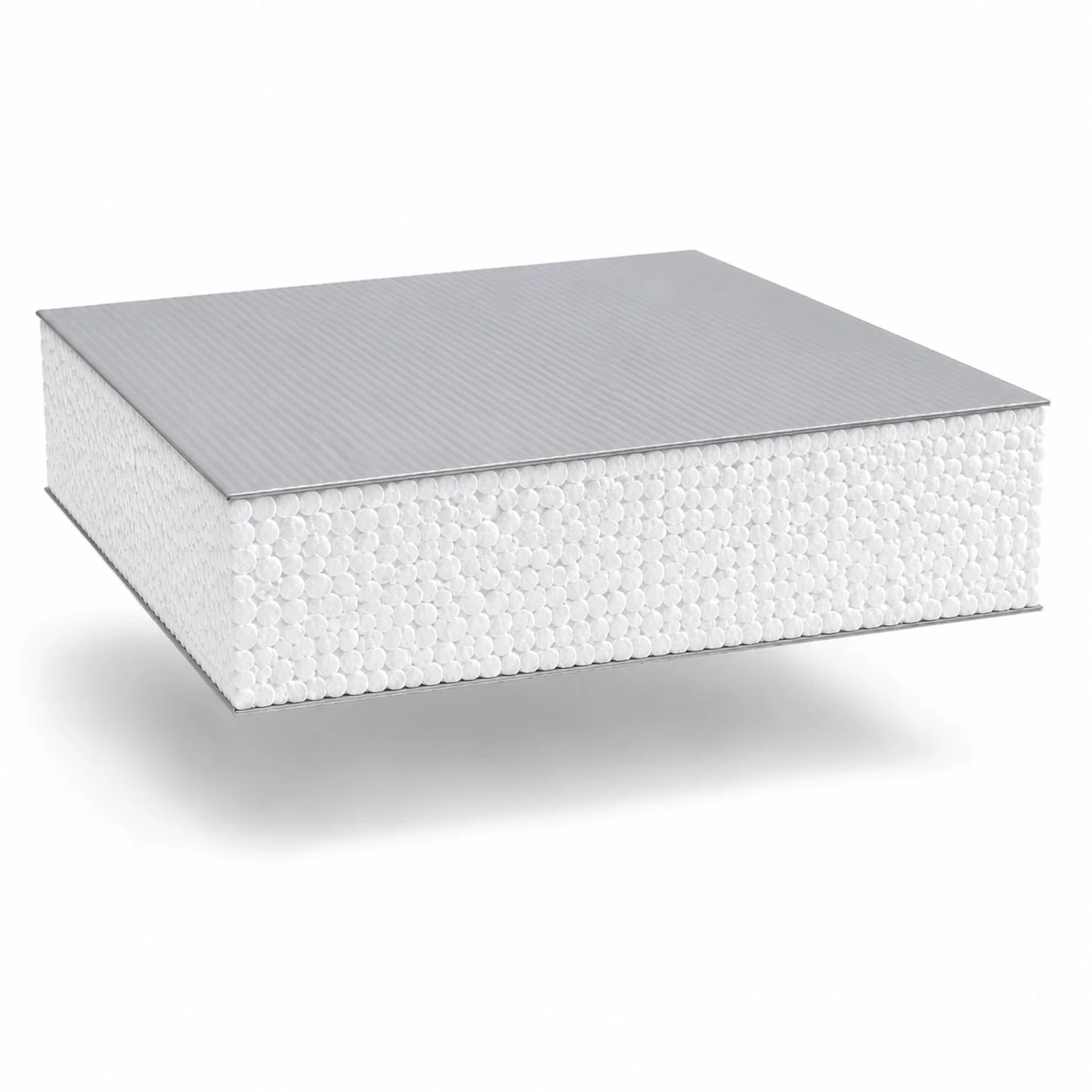
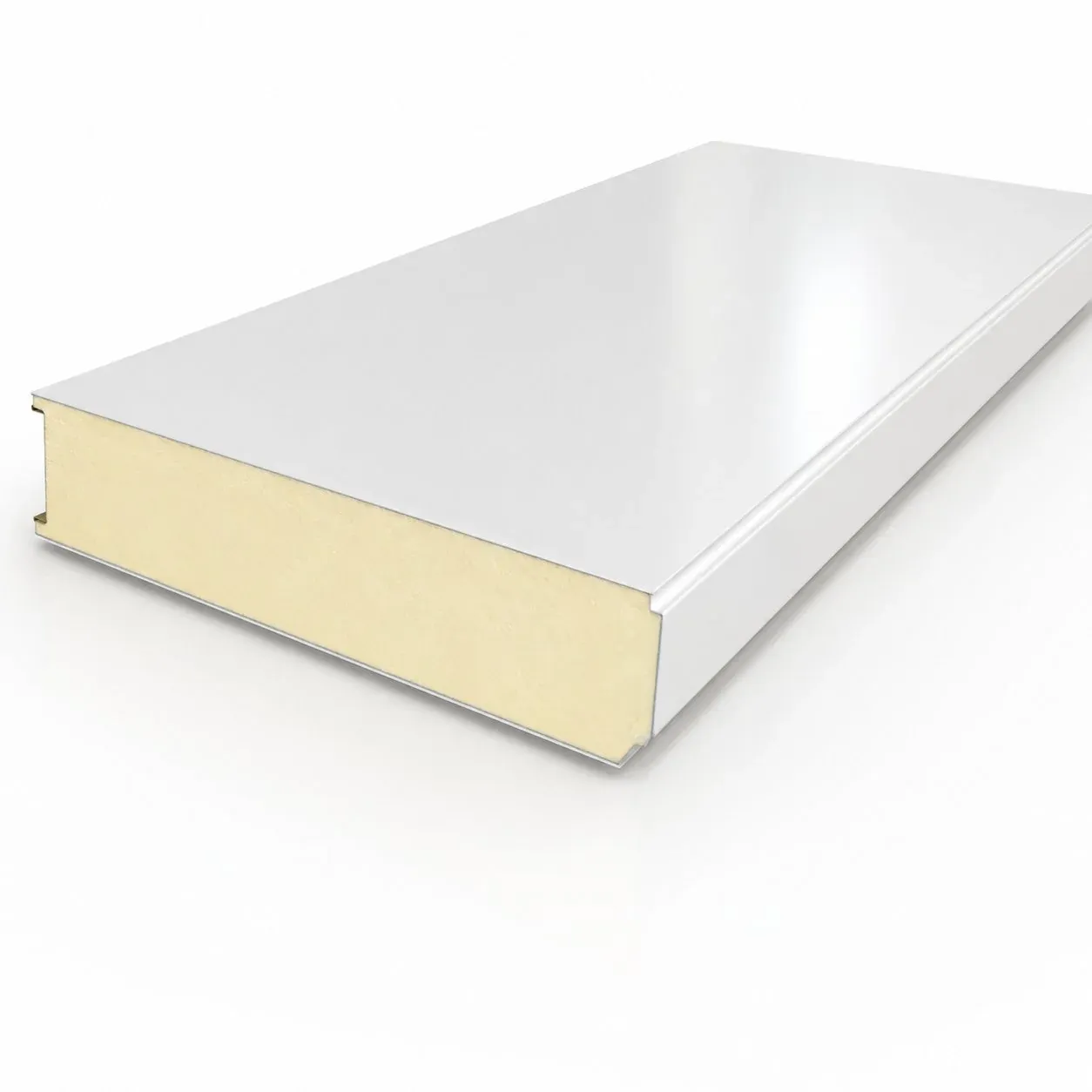
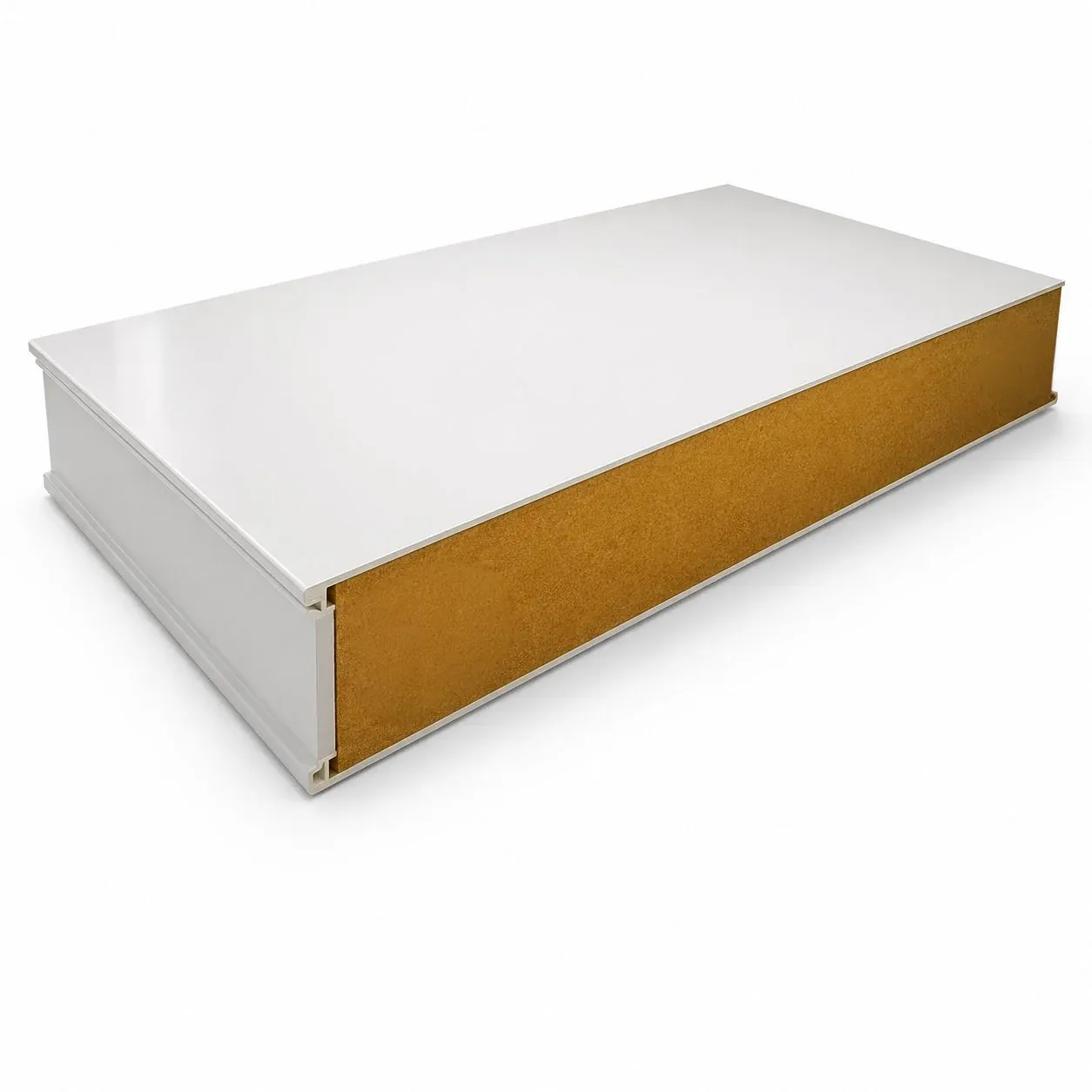
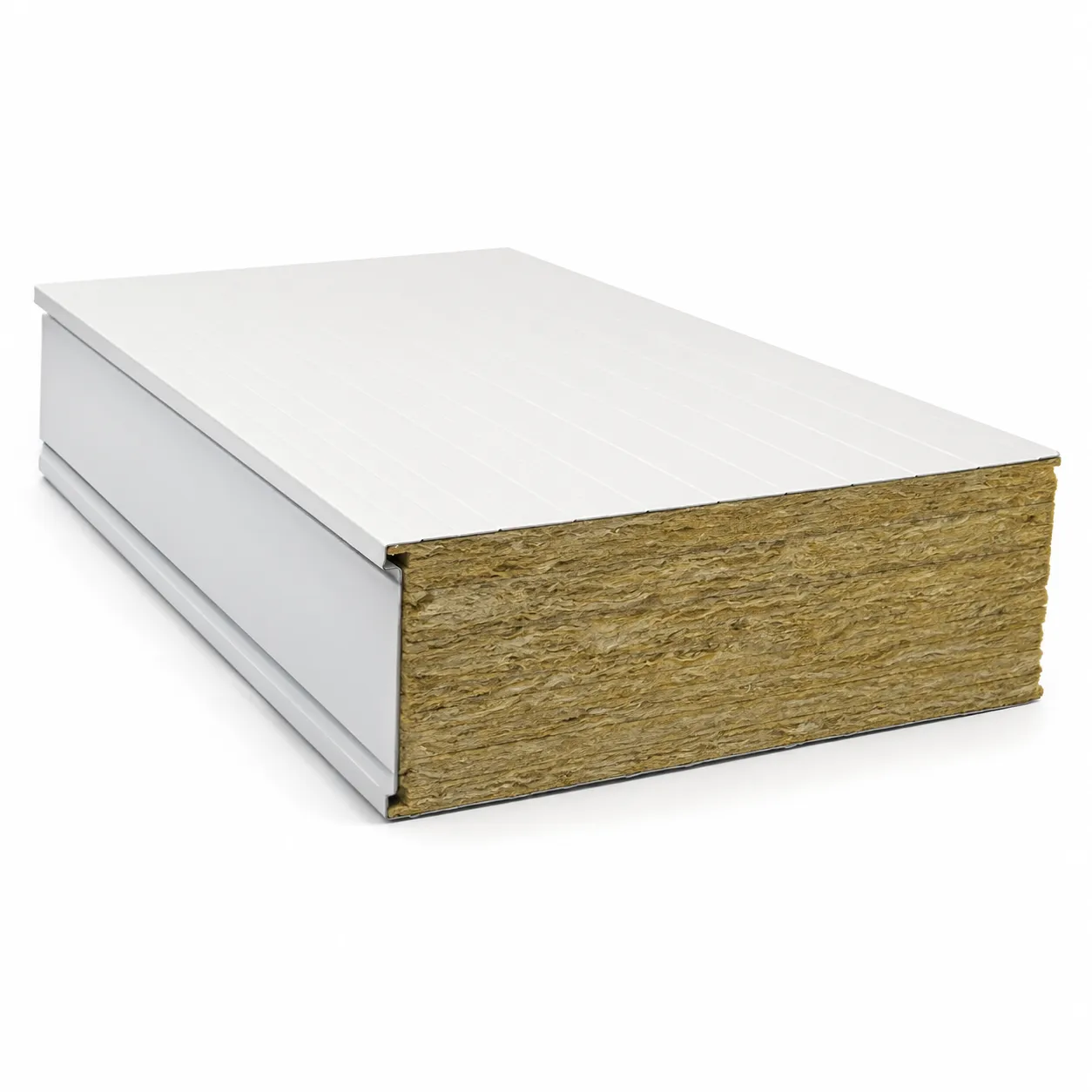
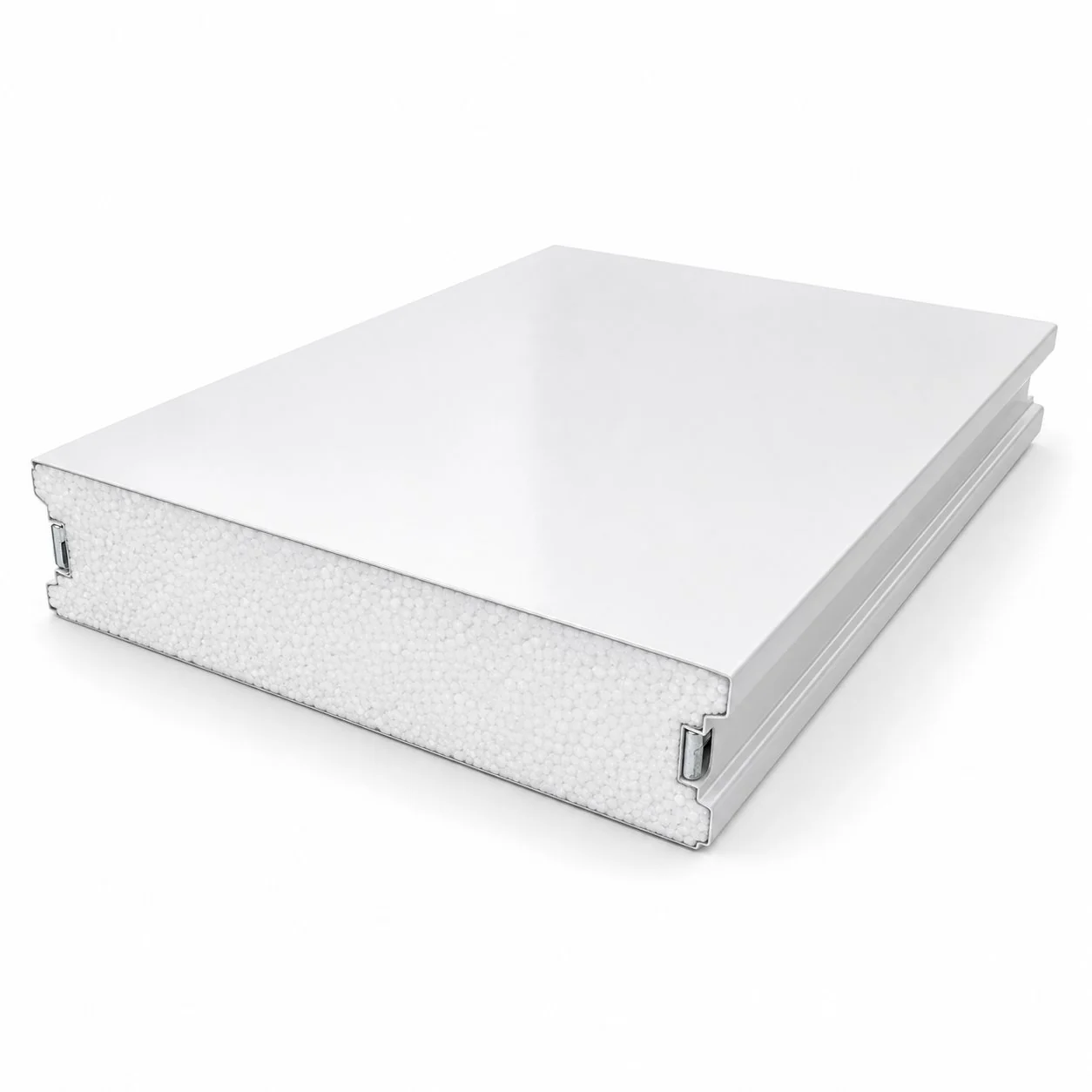
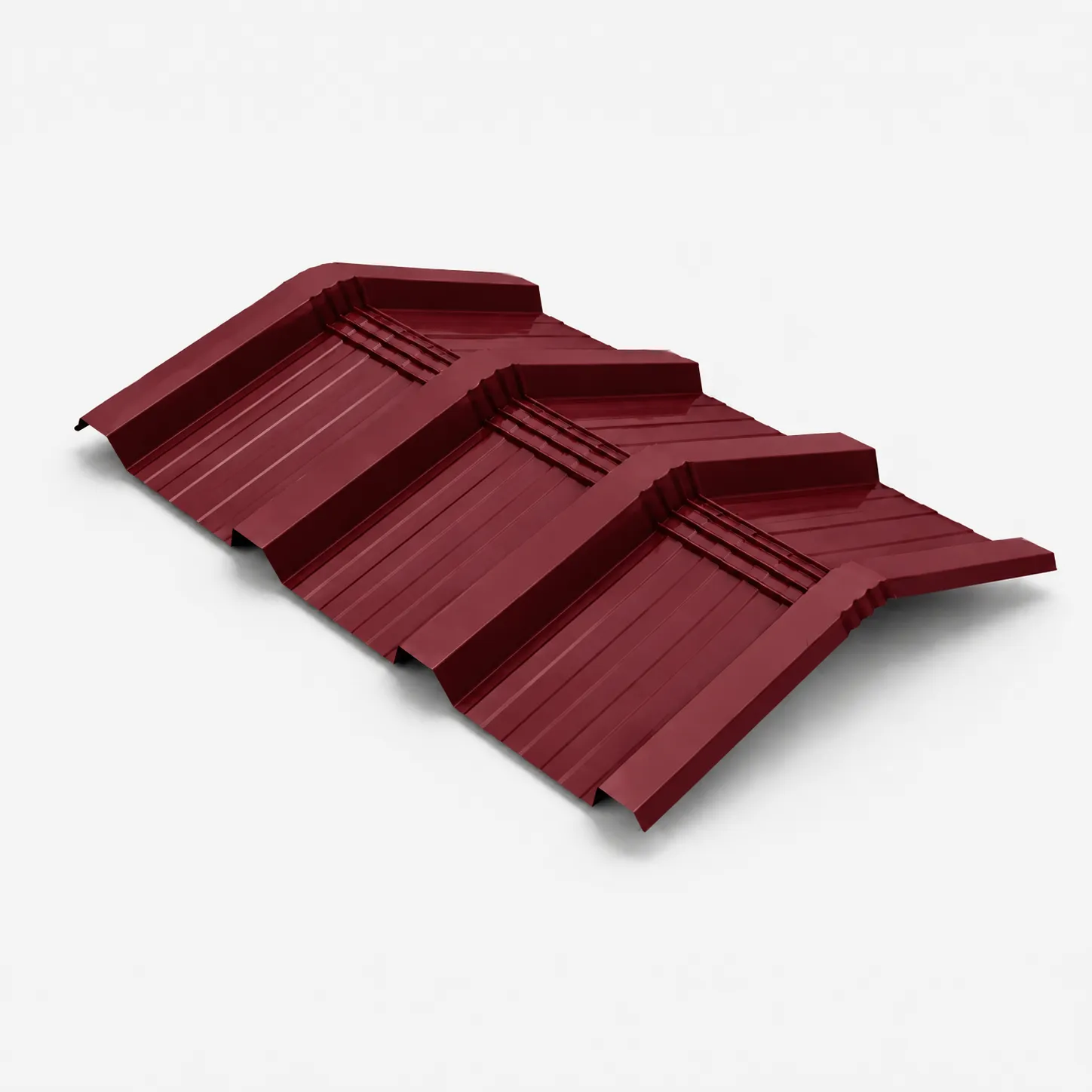

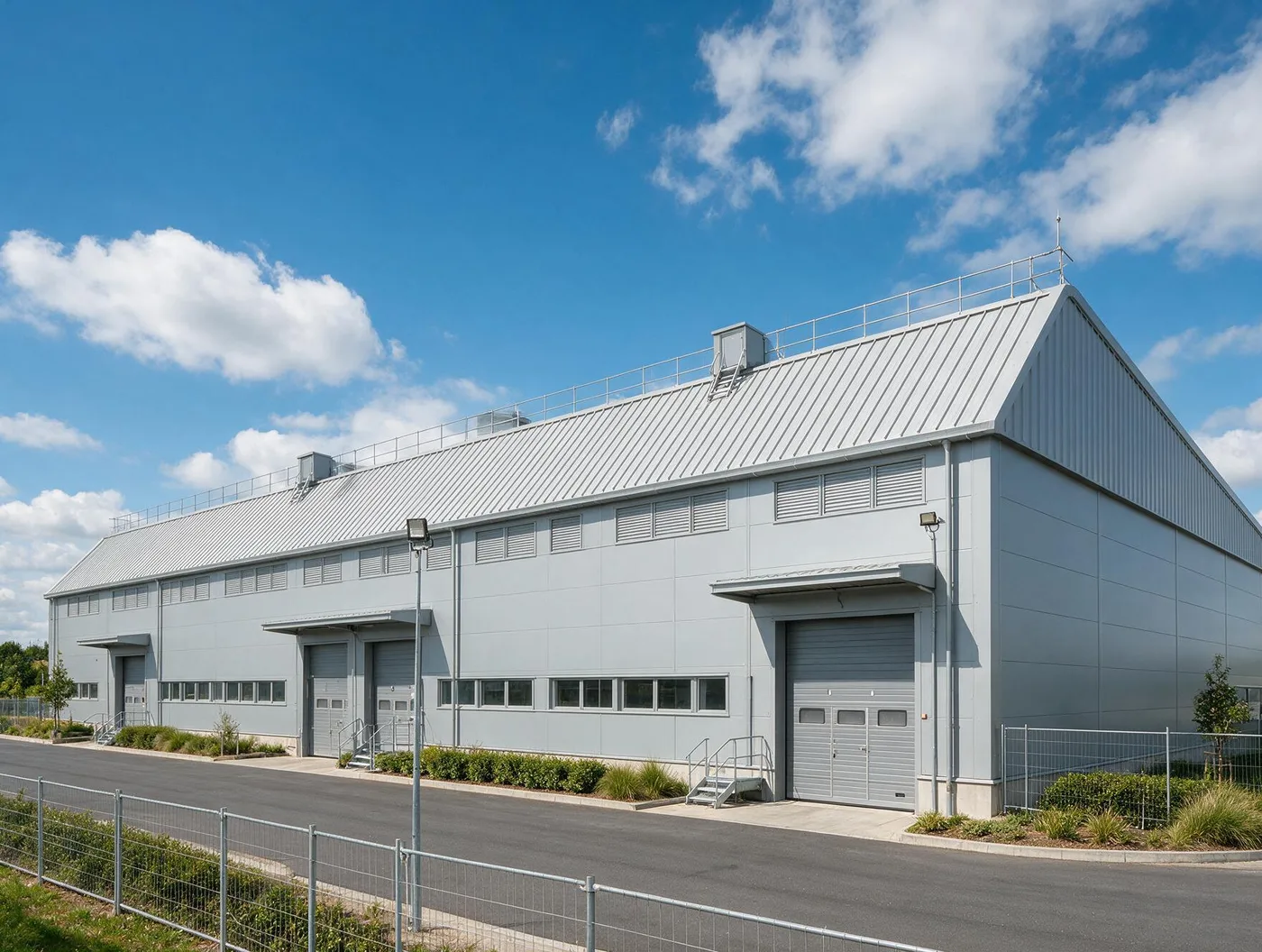
One panel, held to twelve European & ISO standards.
Every Real Panel product is engineered, tested and documented against a complete set of harmonized standards — from the steel coil to the CE mark. Here is the full reference, explained.
Complete Standards Reference
The sandwich panel manufacturing standards that govern Real Panel production. Each is explained in the sections below.
| Standard | Title | What it governs |
|---|---|---|
| EN 14509 | Self-supporting insulated panels | The core product standard — performance, testing, CE marking |
| EN 13501-1 | Fire classification | Reaction-to-fire testing and Euroclass classification |
| EN 13823 | SBI fire test method | Single Burning Item test procedure for fire classification |
| EN ISO 11925-2 | Small flame ignitability | Ignitability test supporting fire classification |
| EN 12667 | Thermal conductivity | Lambda (λ) measurement methodology |
| EN 826 | Compressive strength | Core compression resistance testing |
| EN 12086 | Water vapor permeability | Vapor diffusion resistance measurement |
| EN 10346 | Steel substrate | Hot-dip galvanized steel for cold forming |
| EN 10169 | Organic coated steel | Pre-painted steel (polyester, PVDF, plastisol) |
| ISO 9001 | Quality management | Quality management system requirements |
| EU CPR 305/2011 | Construction Products Reg. | CE marking and Declaration of Performance obligations |
| REACH · EC 1907/2006 | Chemical safety | Chemical component safety and documentation (MSDS) |
Product Standards
The core standard
EN 14509 is the single most important of all sandwich panel manufacturing standards. Published by CEN, it defines every requirement for self-supporting double-skin metal-faced insulating panels:
- Thermal performance. Declared lambda values must be verified by EN 12667 testing and maintained throughout service life.
- Mechanical performance. Compressive, shear, flexural and adhesion strength must be declared and batch-tested.
- Dimensional tolerances. Thickness ±1 mm; width and length within specified limits; squareness controlled.
- Durability. Aging resistance, temperature cycling and moisture behavior assessed.
- CE marking. A harmonized standard under the EU CPR — compliance enables CE marking, the legal market-access requirement for construction products in Europe.
EN 14509 compliance is verified through our test reports and documented in the Declaration of Performance (DoP) accompanying every CE-marked panel. Downloadable CE documentation is on our certificates page.

Construction Products Regulation
The CPR is the EU legal framework that makes these standards enforceable. It requires manufacturers to test products to harmonized standards (EN 14509), issue Declarations of Performance, and apply CE marking. Without CPR compliance, panels cannot legally be placed on the EU market — and cannot be used for building-permit applications in EU member states or candidate countries.
Material Standards
Steel substrate
The steel that forms the structural facings must comply with EN 10346, governing continuously hot-dip coated steel flat products for cold forming:
- Steel grade. Mechanical properties (yield, tensile) appropriate for profile forming.
- Zinc coating. Minimum coating weight (typically Z275 = 275 g/m²) for corrosion protection beneath the paint.
- Surface quality. Finish suitable for organic-coating adhesion.
- Dimensional tolerances. Strip thickness, width and flatness within specified limits.

Organic coated steel
The coating system on the steel facing must comply with EN 10169, covering pre-painted sheet and strip for building applications — polyester, PVDF, plastisol and other organic coatings. It specifies coating thickness, adhesion, flexibility, corrosion and UV resistance, and color consistency. Every coil carries EN 10169 certification from the coil-coating supplier.
Chemical components (EC 1907/2006)
The chemical components in PUR and PIR foam systems (polyol and isocyanate) are subject to REACH — the EU framework for chemical safety. Our suppliers provide full REACH documentation and Material Safety Data Sheets (MSDS) for all foam components, available for project-specific environmental and safety assessments.
Testing Standards
These standards define not just what performance to achieve, but how to measure it.
| Standard | Test name | What it measures |
|---|---|---|
| EN 12667 | Thermal conductivity | Lambda (λ) — heat transfer through the core |
| EN 826 | Compressive strength | Load-bearing perpendicular to panel faces |
| EN 14509 · Annex A | Adhesion / peel | Core-to-facing bond strength |
| EN 14509 | Shear strength | Core resistance to sliding under bending load |
| EN 14509 | Flexural strength | Panel bending resistance under uniform load |
| EN 12086 | Vapor permeability | Water-vapor diffusion resistance factor (μ) |
Detailed test explanations and results: Test Reports. Performance values derived from these tests: Performance Data.
Quality System Standards
Quality management system
ISO 9001 is the overarching management standard that structures how we apply every other standard. It requires documented procedures for each quality-critical process, systematic internal auditing, management review, corrective-action protocols and continuous improvement. Our quality policy details how ISO 9001 is implemented across our six quality principles.
ISO 9001 certification is independently audited annually. Current certificate: Certificates page.
Fire Testing Standards
Fire classification involves multiple test methods that feed into one Euroclass result.
Single Burning Item (SBI)
The primary fire test. A full-size panel corner is exposed to a controlled fire source; heat-release rate, smoke-production rate and flame spread are measured over 20 minutes. This determines the main Euroclass (A2, B, C, D) and smoke sub-class (s1, s2, s3).
Small flame ignitability
A small flame is applied to the panel edge and surface for 15 or 30 seconds. The flame-spread distance determines pass/fail for E-class and supports higher classifications.
Fire classification
The classification standard that translates SBI and small-flame results into the Euroclass system (A1 through F, with s and d sub-classes).
Fire test results for all products: Test Reports. Fire specification guidance: Fire Resistance Solutions.
Export Market Acceptance
Every standard above is a harmonized European standard — accepted across the EU and in countries aligning with EU norms.
| Market | Standards accepted | Notes |
|---|---|---|
| Türkiye | EN 14509, EN 13501-1, ISO 9001 | Yapı Malzemeleri Yönetmeliği + TSE alignment |
| Romania | Full EN harmonized suite | EU member — CE mandatory, direct acceptance |
| Bulgaria | Full EN harmonized suite | EU member — CE mandatory, direct acceptance |
| Georgia | EN standards accepted | Evolving standards, CE increasingly specified |
| North Macedonia | EN standards accepted | EU candidate — harmonization in progress |
| Kosovo | EN standards accepted | EU alignment ongoing, CE-marked products preferred |
Our export logistics team ensures every shipment carries the correct documentation package for the destination. See our export markets for details.
Frequently Asked Questions
What is the main manufacturing standard for sandwich panels?
EN 14509 is the primary sandwich panel manufacturing standard. It defines all performance requirements, testing methods, CE-marking obligations and quality-control procedures for self-supporting insulated panels. Real Panel manufactures all products in full compliance with EN 14509, verified through accredited testing and documented in CE certificates.
Are Real Panel standards accepted in Romania and Bulgaria?
Yes. Romania and Bulgaria are EU member states where CE marking per harmonized European standards is legally mandatory for construction products. All standards we follow (EN 14509, EN 13501-1, EN 10346, EN 10169) are directly accepted, and our certificates are formatted for direct building-permit submission in both markets.
What steel standards do Real Panel products comply with?
Our steel facings comply with EN 10346 (hot-dip galvanized substrate) and EN 10169 (organic coated / pre-painted steel). These govern steel grade, zinc coating weight, paint-system specification and dimensional tolerances. Steel mill certificates are available per project on request.
How does ISO 9001 relate to manufacturing standards?
ISO 9001 is the management framework that ensures all product-specific standards (EN 14509, EN 13501-1, etc.) are consistently applied. It structures the quality system — documented procedures, internal audits, corrective actions and continuous improvement — so compliance is systematic rather than ad-hoc. Our quality policy details this integration.
Do manufacturing standards differ between countries?
The product standards (EN 14509, EN 13501-1) are harmonized across Europe — identical in every EU and associated country. National differences exist in the building codes that reference these standards (for example Romania's Normativ C107 for thermal, Bulgaria's Ordinance 7 for fire). Our technical team provides market-specific compliance guidance — contact us.
Need the standards documentation for a permit?
Tell us your market and product. We'll send the EN 14509 Declaration of Performance, CE and ISO 9001 documentation — formatted for your building authority or engineer.