

Sustainability measured in decades, not slogans.
Real Panel's environmental impact spans the full lifecycle — from steel coil to demolition. The biggest gain isn't in the factory; it's the energy a well-insulated building saves every year it stands.
6 Dimensions of Sandwich Panel Sustainability
Sandwich panel sustainability encompasses the entire product lifecycle — from raw-material sourcing through manufacturing, building operation, and end-of-life recycling. Six dimensions, explained below.
Operational Energy Savings
The most significant contribution isn't what happens in the factory — it's what happens in the building for 30+ years.
A properly insulated sandwich panel building consumes dramatically less heating and cooling energy than an uninsulated or poorly insulated structure. This operational energy saving over the building's lifecycle dwarfs the embodied energy used to manufacture the panels. Consider the numbers:
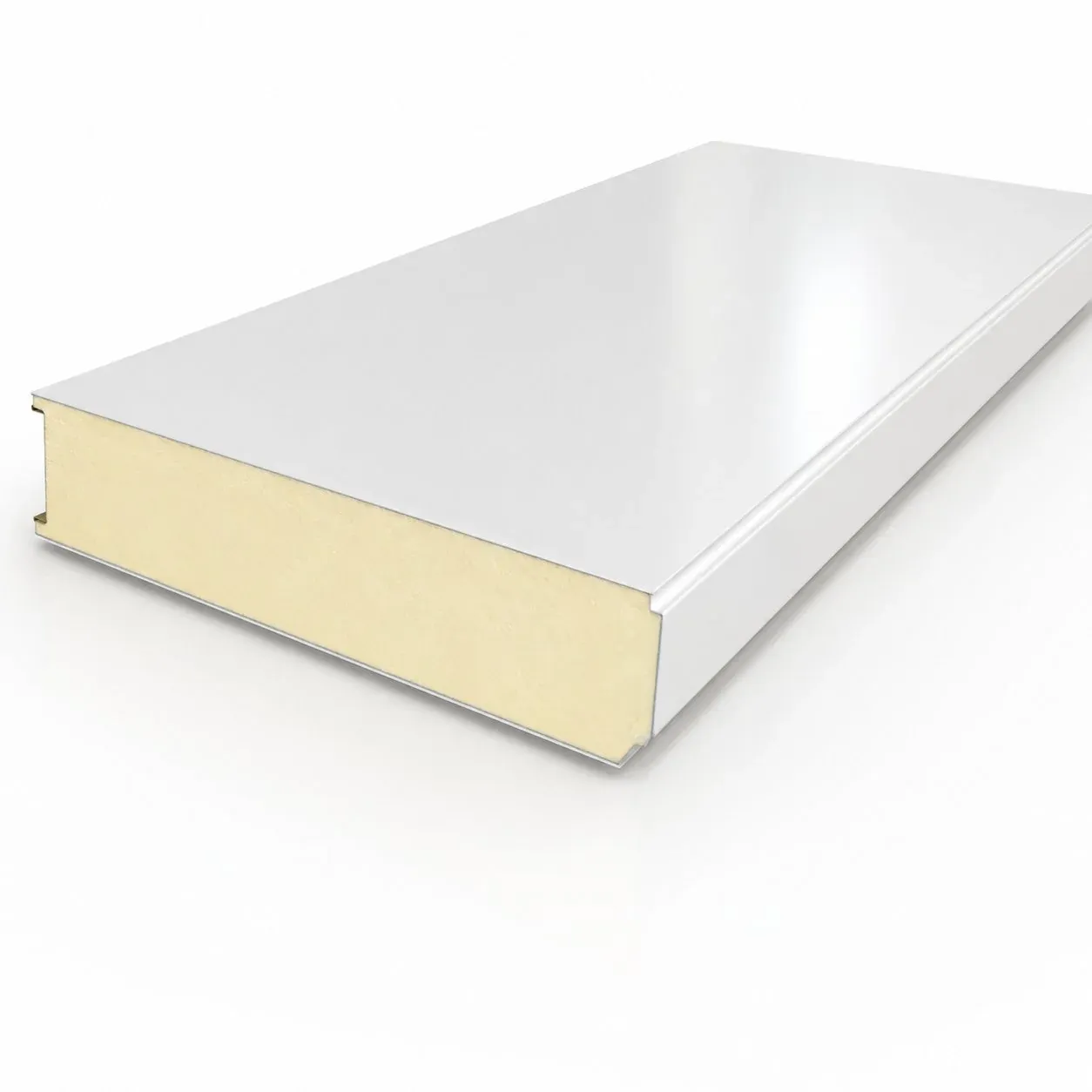
- ~40–60% heating energy saved. A 5,000 m² industrial building insulated with 80 mm PUR panels (U = 0.27) versus single-skin metal cladding.
- Hundreds of tons of CO₂ avoided. Over 30 years — far exceeding the carbon footprint of manufacturing the panels.
- Every millimetre compounds. Additional insulation pays back across the entire building lifecycle. Our U-value calculator finds the optimal thickness for code compliance and sustainability targets.
For energy-focused solutions: Thermal Insulation Solutions. Compare core materials: Core Comparison Guide.

Recyclable Materials — Steel & Mineral Wool
Sandwich panel sustainability benefits from the recyclability of its primary materials.
Steel facings — infinitely recyclable
The steel facings on every panel are 100% recyclable. Steel is the most recycled material on Earth — according to the World Steel Association, over 85% of steel is recovered at end of life. When a panel building is demolished after 30+ years, the steel facings enter the scrap stream and are remelted into new steel with no loss of quality. This infinite recyclability makes steel one of the most sustainable structural materials available.

Rockwool core — recyclable mineral fibre
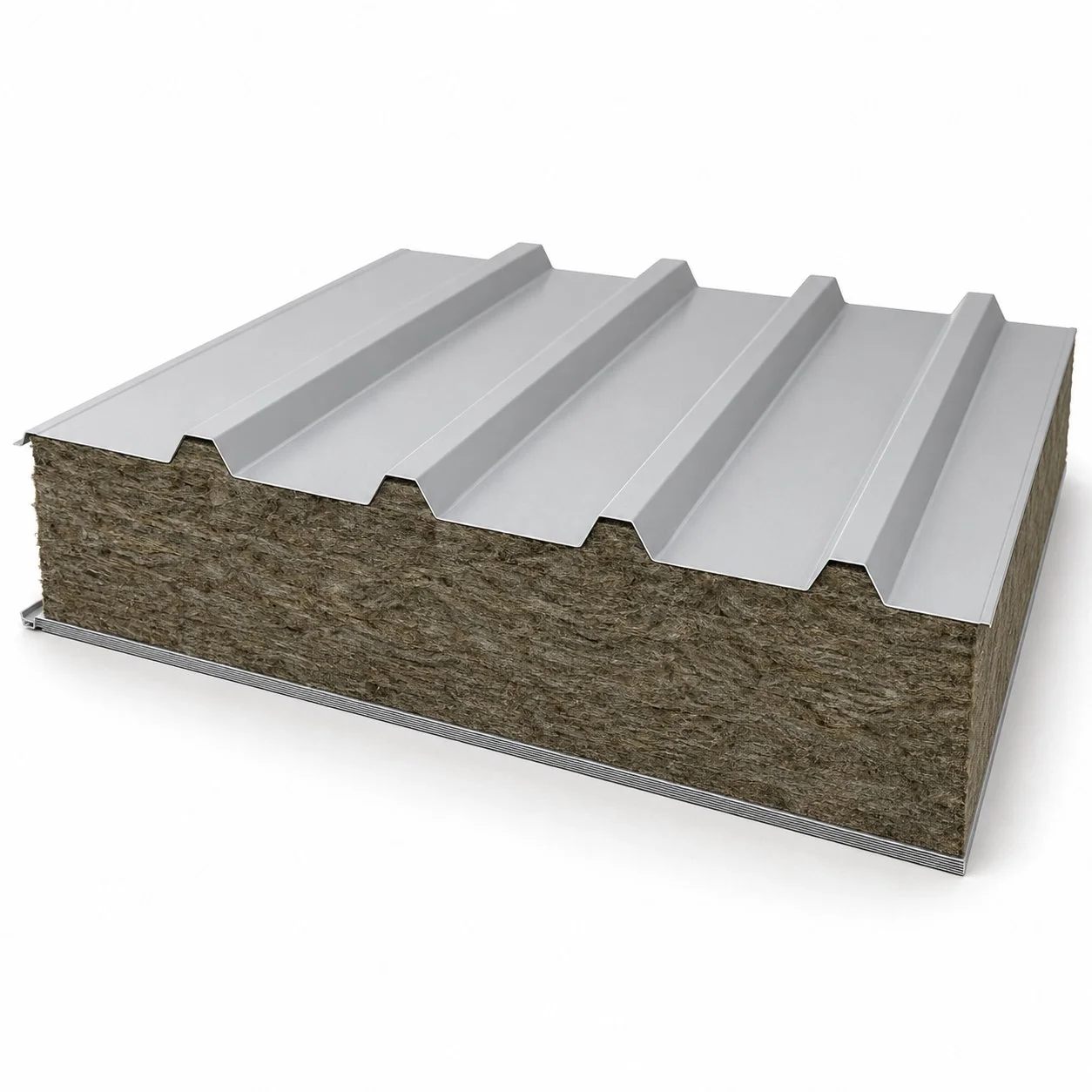
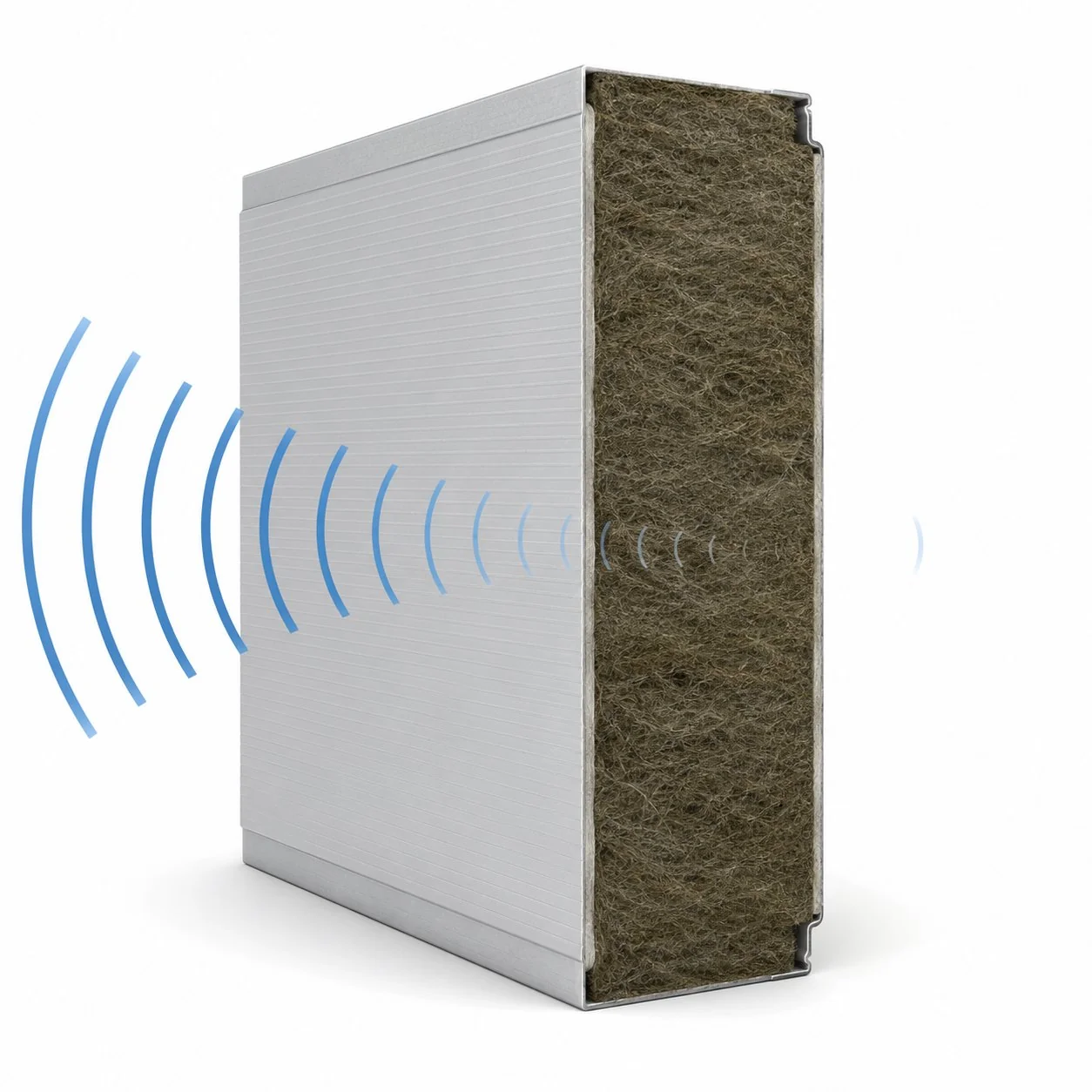
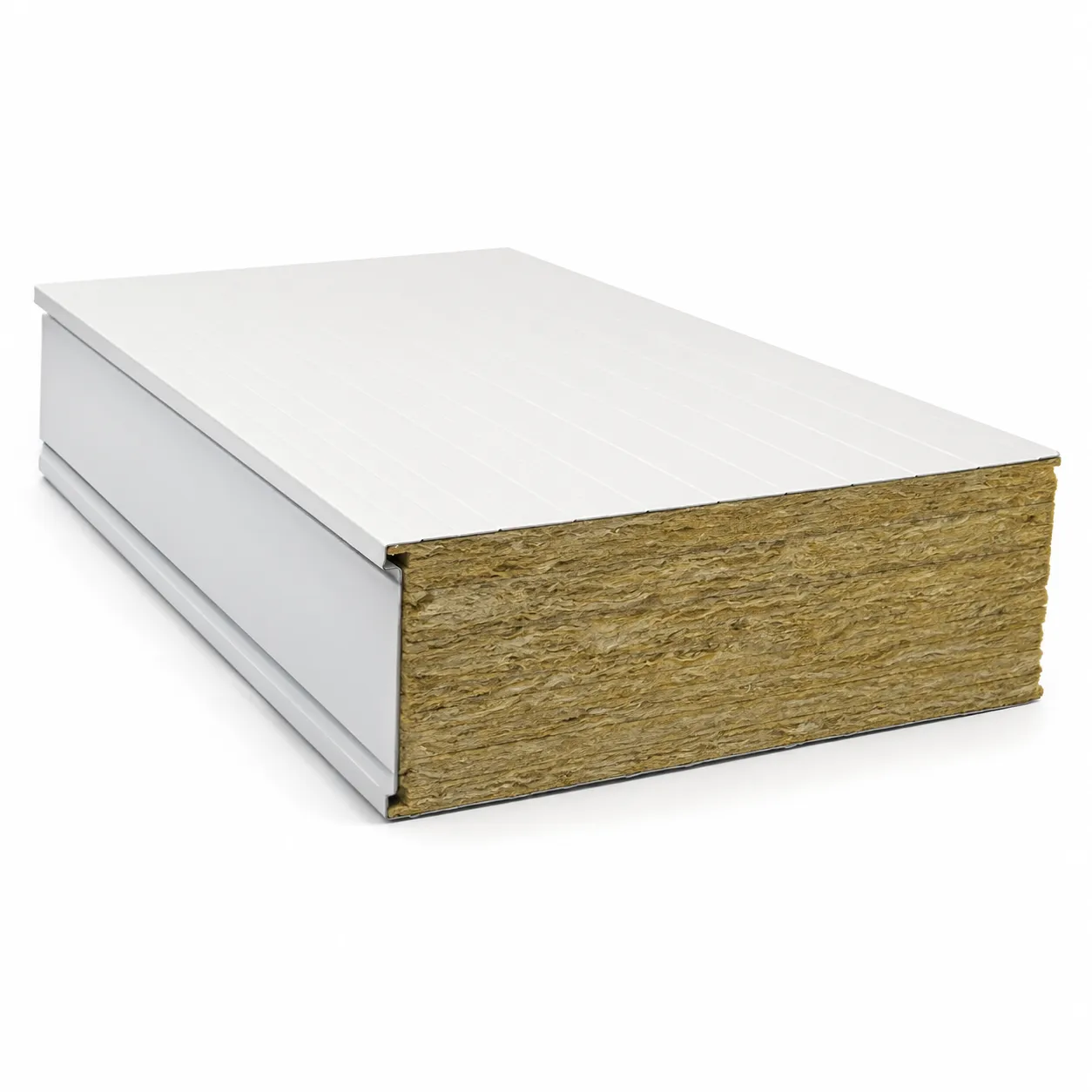
Rockwool (stone wool) panels use a mineral-fibre core made from natural basalt rock. Stone wool is recyclable — it can be reprocessed into new rockwool or used as aggregate. Our rockwool facade panels and rockwool roof panels offer the highest sustainability credentials for core recyclability.
PUR / PIR / EPS cores — developing pathways
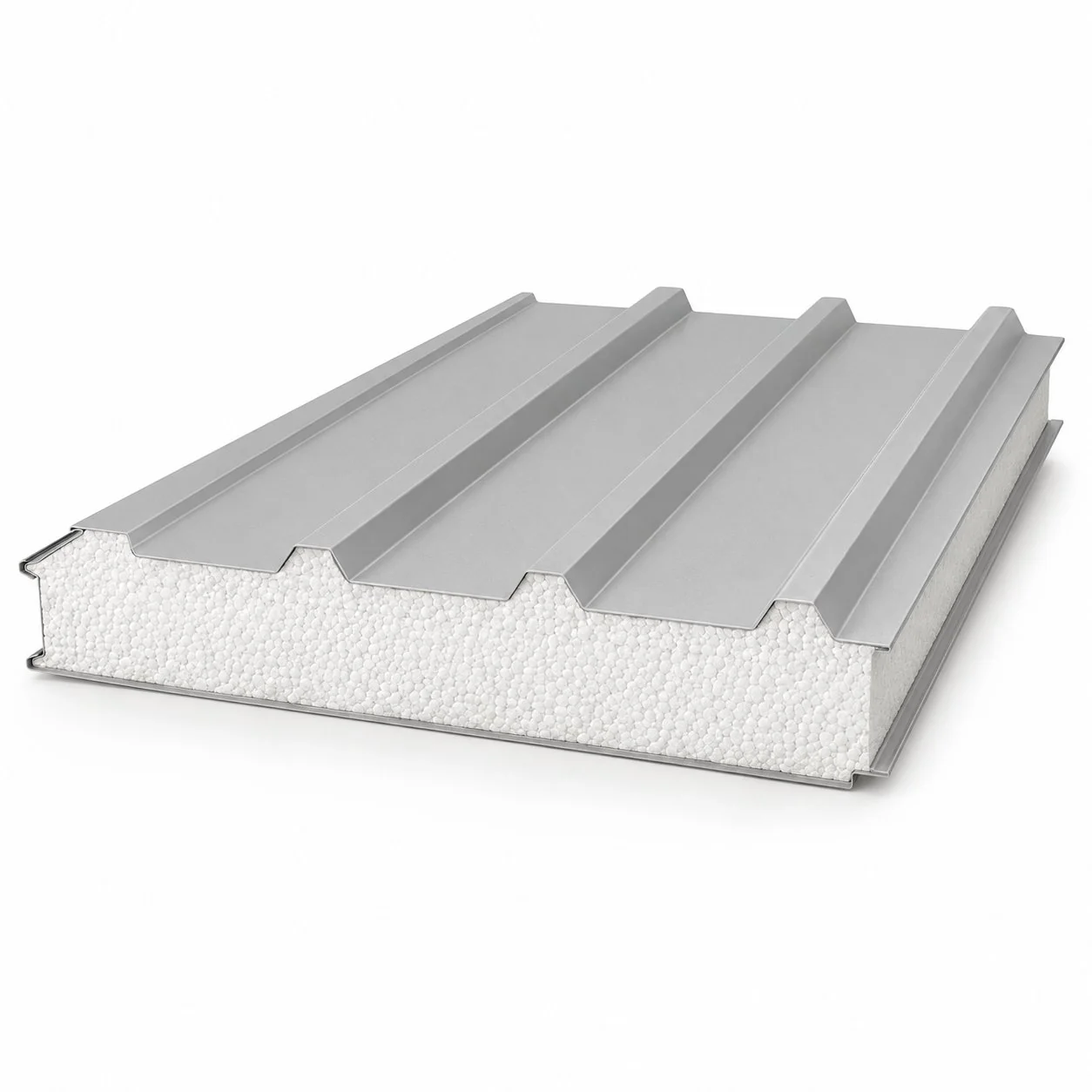
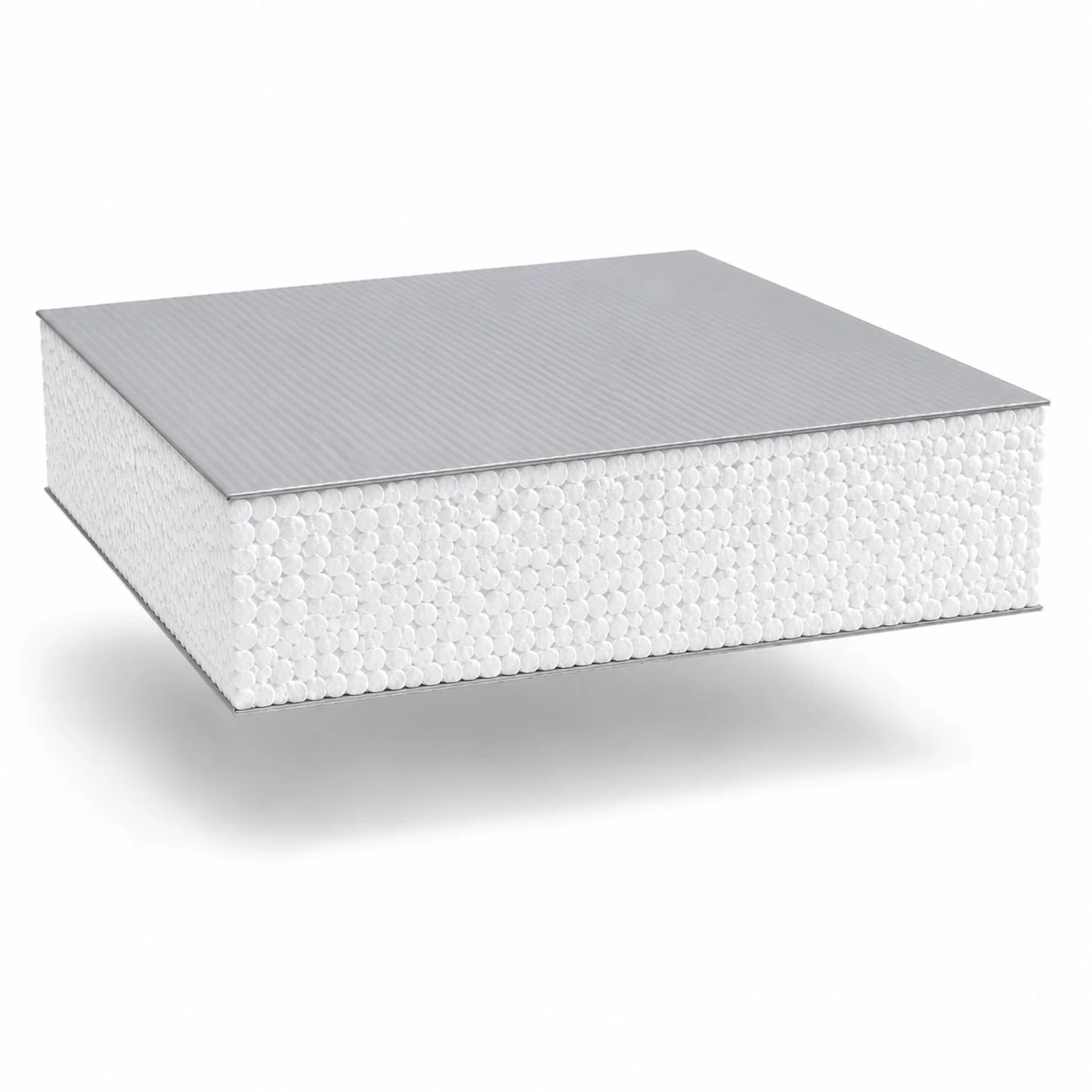
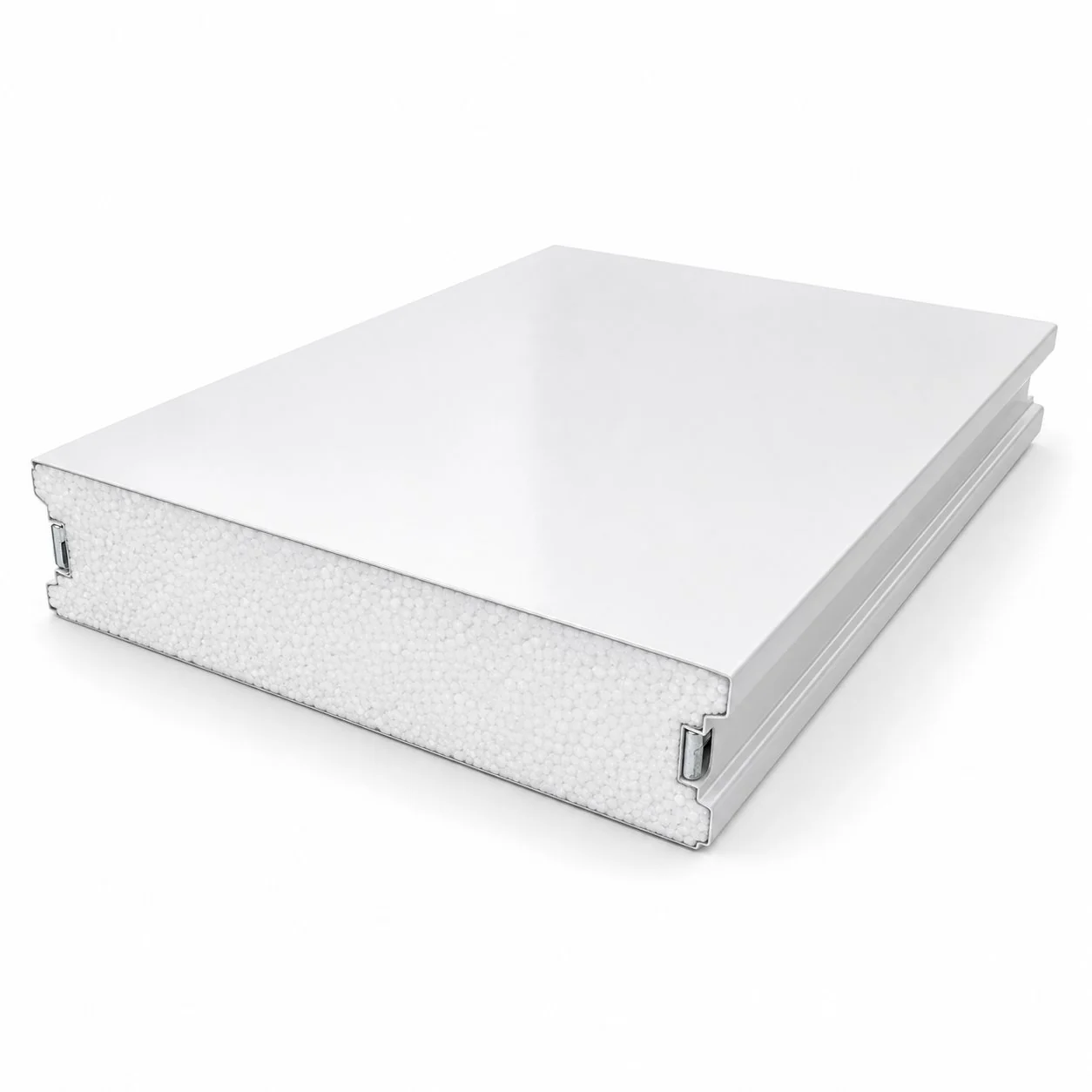
Foam cores present greater recycling challenges than steel or rockwool, but technologies are advancing. EPS can be mechanically recycled into new EPS; PUR/PIR chemical recycling (glycolysis, hydrolysis) is developing as an industrial process. In the meantime, the 30+ year service life of foam-core panels keeps the material in productive use for decades before end-of-life disposal becomes relevant.
Long Service Life — 30+ Years
One of the most overlooked aspects of sustainability is longevity. A panel that performs for 30+ years without replacement avoids the environmental cost of:
- Replacement materials. No new panels, no new raw materials, no production energy for replacements.
- Demolition waste. No removal of failed cladding, no landfill from degraded materials.
- Construction disruption. No scaffolding, crew mobilisation or transport for replacement cladding.
- Repainting. Pre-painted steel facings hold colour and protection for 25–30 years — eliminating the paint, solvents, scaffolding and waste of periodic repainting that rendered or painted buildings require.
Our quality policy and manufacturing standards are designed to deliver this long service life. Quality manufacturing today = sustainability for decades.
Minimal Construction Waste
Sandwich panel sustainability extends to the construction process itself.
- Factory precision. Panels are made to exact project dimensions; cut-to-length production minimises on-site waste — typically 2–5% versus 10–15% for masonry and render.
- No wet trades. No concrete, mortar, plaster, render or paint — eliminating the waste, water and drying energy of wet construction.
- Clean site. Only minor cutting offcuts (recyclable steel) and packaging. No rubble, plaster dust or cement bags.
- Recyclable packaging. Timber bearers, steel strapping and polyethylene wrapping all go through standard construction-waste streams.
Fast, clean installation also means less vehicle traffic, less equipment run-time and shorter construction duration. Learn more: Installation Guide.

Efficient Manufacturing
Our facility runs a continuous production line optimised for resource efficiency.
- Energy management. Continuous production is inherently more efficient than batch — no repeated startup energy, no idle heating between batches, no thermal cycling of equipment.
- Material optimisation. Computer-controlled chemical injection minimises foam over-use; coil utilisation is improved by scheduling similar panel widths to cut coil-change waste.
- Chemical management. PUR/PIR components are metered precisely — over-injection wastes expensive chemicals and adds weight; automated systems prevent both.
- Scrap management. Production edge-trim (steel) is collected and recycled; off-specification panels are root-caused and materials recovered where possible.
See how our factory operates: Manufacturing Facilities.
Enabling Green Building Certification
Sandwich panel sustainability contributes to the major green-building schemes.
| Scheme | How sandwich panels contribute |
|---|---|
| LEED | Energy-performance credits (insulation), recycled content (steel), regional materials, construction-waste management |
| BREEAM | Energy reduction, responsible sourcing (steel recyclability), waste management, thermal comfort |
| DGNB | Lifecycle assessment, operational energy, material recyclability, construction-process efficiency |
| EU EPBD | Direct contribution through envelope U-value — panels help achieve Nearly Zero-Energy Building (NZEB) targets |
| Türkiye · TS 825 / BEP | TS 825 thermal compliance and Energy Performance Certificate (BEP) contribution through the insulated envelope |
For buildings targeting certification, our technical team provides material data — recycled-content documentation, EPD data where available, and thermal-performance calculations — to support credit applications. Contact us for sustainability documentation.
Our Environmental Commitments
Real Panel is committed to continuous, measurable improvement across our operations.
- Energy reduction. Ongoing investment in line efficiency — curing-oven performance, compressed-air consumption, and insulation at our own facility.
- Waste minimisation. Production-waste monitoring with year-on-year reduction targets. Steel scrap recycling rate: 100%. Foam-waste recovery programs in development.
- Supply chain. Preference for steel suppliers with documented environmental management systems; chemical suppliers required to provide REACH compliance and environmental data.
- Product development. Research into lower-GWP blowing agents for PUR/PIR, increased recycled content in steel facings, and improved end-of-life recyclability for foam cores.
- Transparency. We report honestly on both our strengths (energy savings, steel recyclability, long life) and our challenges (foam-core recycling). Greenwashing serves no one.
Sustainability is a journey. We commit to measurable progress — not aspirational statements without substance.
Sandwich Panels vs Traditional Construction
The environmental advantage is systemic — it spans the whole construction and operational lifecycle, not a single metric.
| Factor | Sandwich panels | Masonry + render |
|---|---|---|
| Construction waste | 2–5% (factory-cut) | 10–15% (site-cut, wet waste) |
| Construction water | Zero (dry installation) | Significant (mortar, plaster, curing) |
| Repainting cycle | None for 25–30 years | Every 8–12 years |
| Service life | 30+ years (no degradation) | 15–25 years before major maintenance |
| Steel recyclability | 100% at end of life | Rebar recyclable, masonry to landfill |
| Construction speed | 3–5× faster | Baseline |
| Insulation continuity | 100% (no thermal bridges) | 70–85% (bridges at studs, joints) |
| On-site energy use | Minimal (electric tools only) | Significant (mixers, heating, drying) |
Frequently Asked Questions
Are sandwich panels sustainable building materials?
Yes. Sustainability stems from multiple factors: operational energy savings that cut building CO₂ emissions for 30+ years, 100% recyclable steel facings, minimal construction waste, no wet trades, and a long service life that eliminates replacement cycles. The lifecycle benefit of insulated panels significantly outweighs their manufacturing footprint.
Can sandwich panels be recycled at end of life?
Steel facings are 100% recyclable — steel is the most recycled material globally. Rockwool cores are recyclable into new mineral wool. PUR/PIR/EPS foam recycling is developing but not yet widespread at industrial scale. With a 30+ year service life, end-of-life recycling is a long-term consideration, not an immediate one. See our core comparison for material-specific details.
How much energy do sandwich panels save over their lifetime?
A typical industrial building insulated with 80 mm PUR panels saves 40–60% of annual heating energy versus uninsulated metal cladding. Over 30 years the cumulative saving is enormous — far exceeding the energy used to make the panels. Use our U-value calculator to estimate savings for your project and climate zone.
Do sandwich panels contribute to LEED or BREEAM certification?
Yes — through energy-performance credits (insulation reduces operational energy), recycled content (steel), construction-waste management (minimal waste) and regional material sourcing. Our technical team provides material-data documentation to support certification credit applications.
What is Real Panel doing to improve sustainability?
Our commitments include production-energy reduction, waste minimisation with year-on-year targets, supply-chain environmental requirements, research into lower-impact foam blowing agents, and honest reporting on both strengths and challenges. See the Environmental Commitments section above, and our quality policy, which integrates sustainability into continuous-improvement objectives.
Specifying for energy code or green certification?
Tell us your project and target. We'll provide thermal calculations, recycled-content data and the documentation your certification or permit needs.