

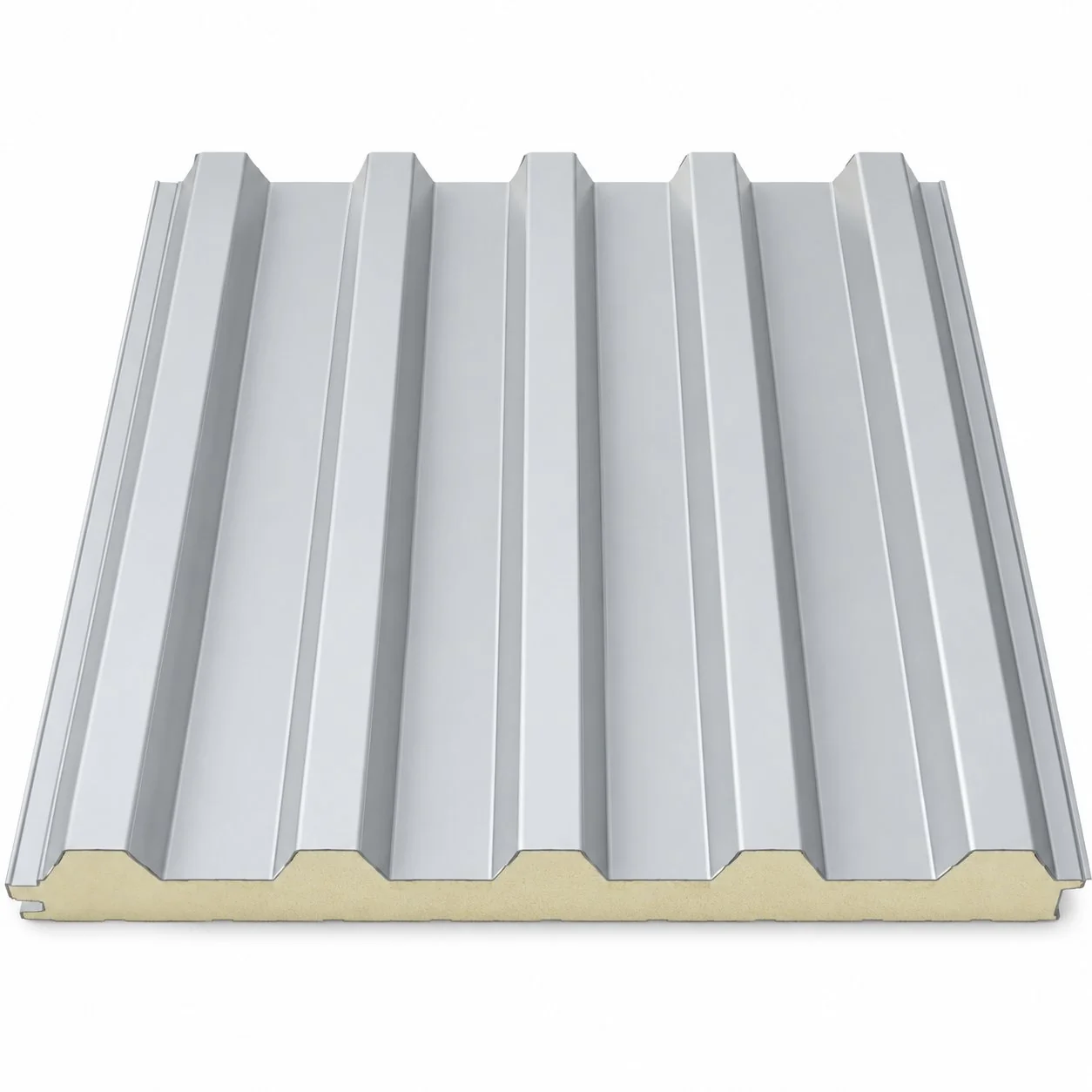
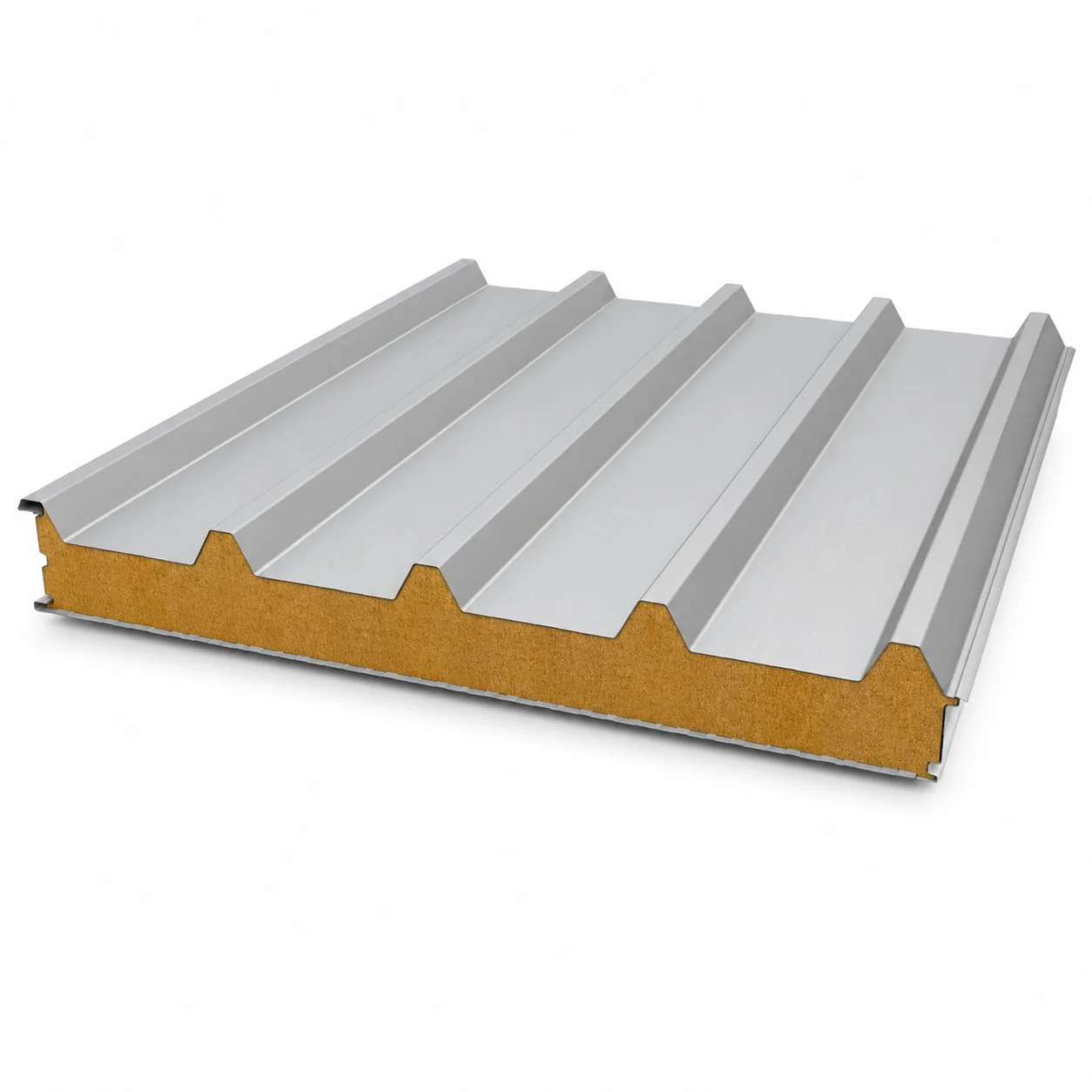
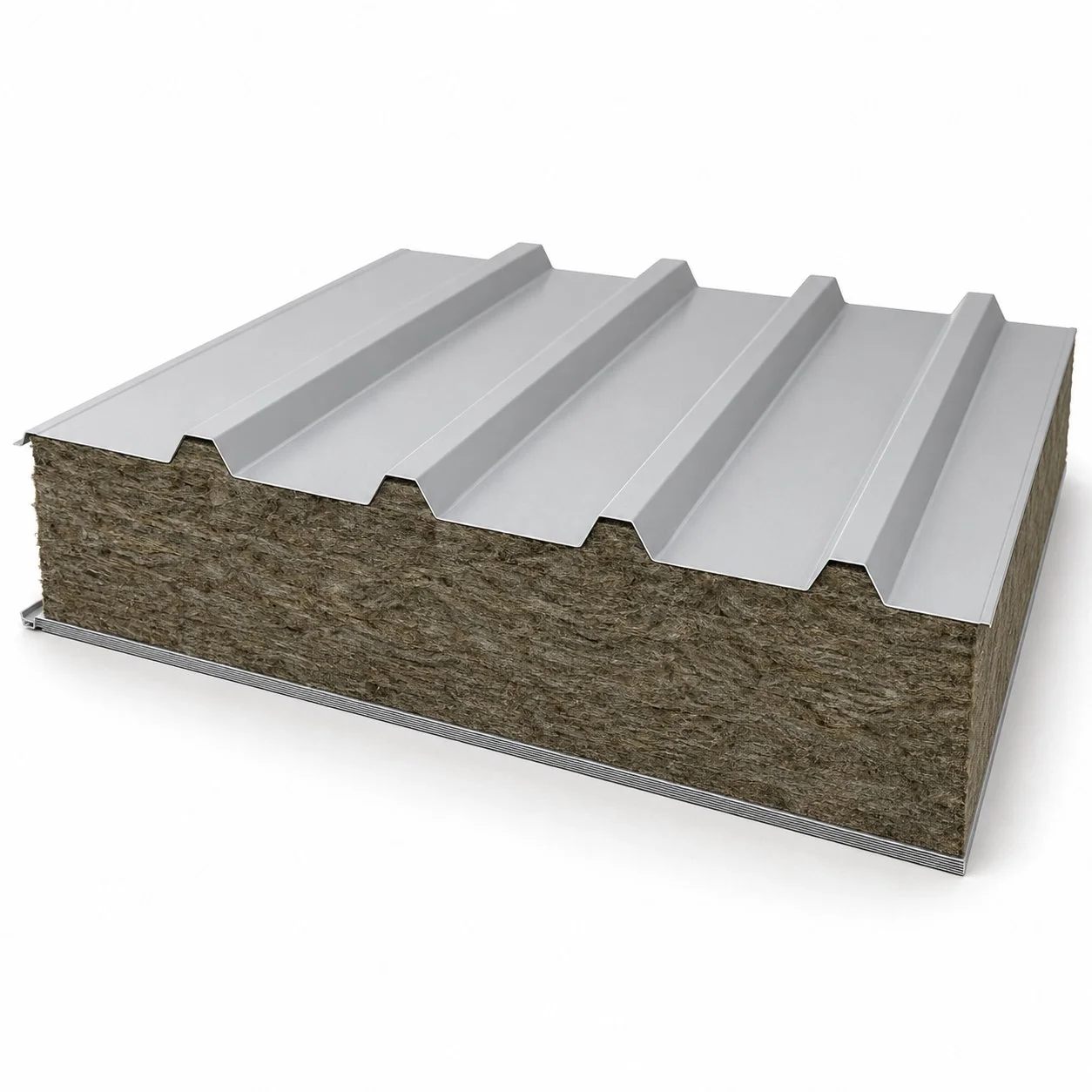
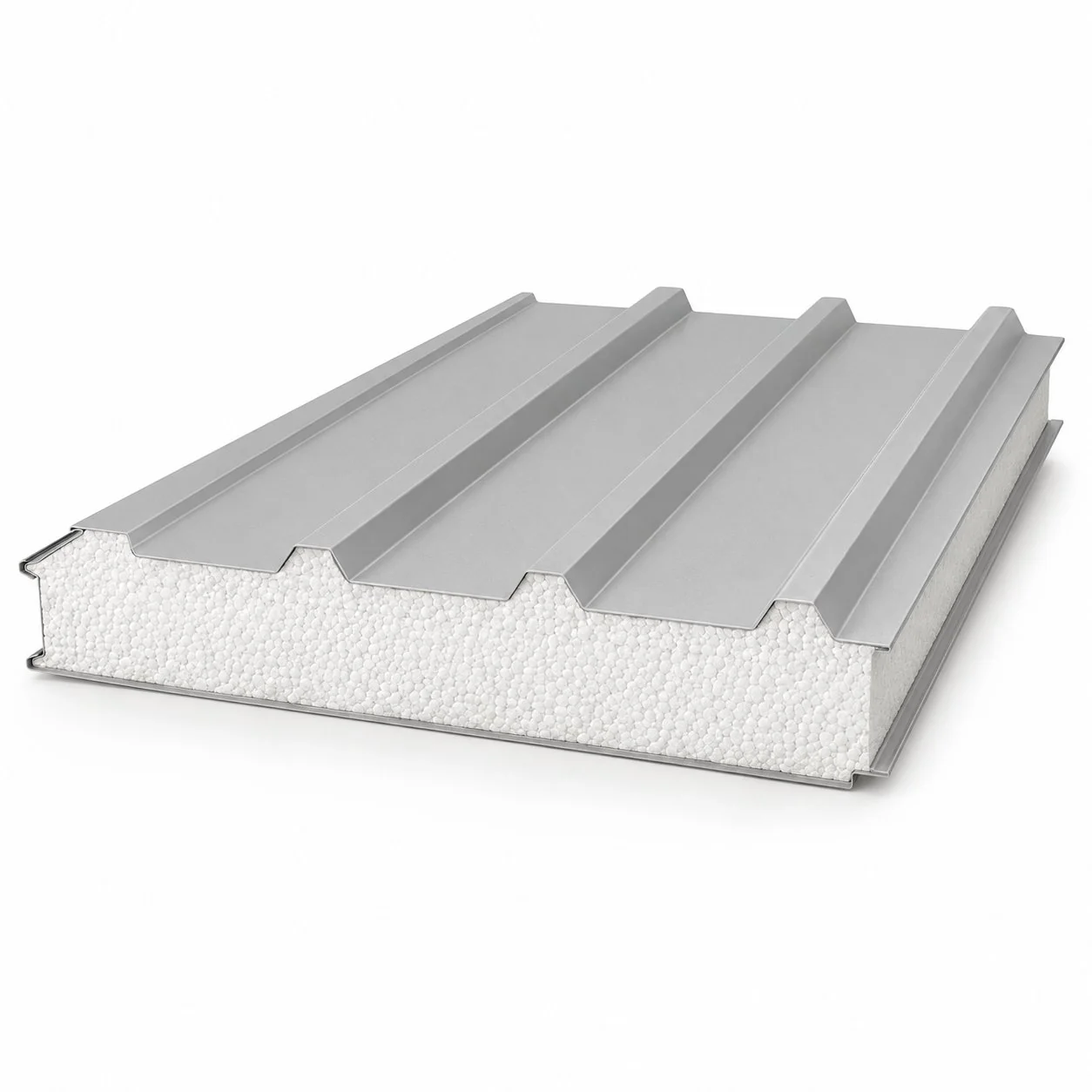
Sandwich Panel Thermal Insulation Solutions
Sandwich panel thermal insulation is the most effective method for creating energy-efficient building envelopes in industrial, commercial, agricultural, and cold storage construction. With core materials ranging from lambda 0.022 W/mK (PUR) to 0.040 W/mK (rockwool), Real Panel provides sandwich panel thermal insulation solutions that meet every energy code, climate zone, and budget requirement across Turkey, Romania, Bulgaria, Georgia, Macedonia, and Kosovo.Thermal insulation is not just about comfort — it is about operating cost. A building's heating and cooling energy consumption is directly proportional to the thermal transmittance (U-value) of its envelope. Every millimeter of insulation improvement compounds into measurable energy savings over the 25–30 year building lifecycle. Sandwich panel thermal insulation delivers this efficiency in a single factory-manufactured component that combines structure, weather protection, and insulation.
Meeting Romania's Thermal Regulations with Optimized Panel Insulation
Romania’s Normativ C107 thermal performance standard sets rigorous U-value requirements that vary across the country’s four climate zones — from milder Black Sea conditions to harsh Carpathian winters. Sandwich panel thermal insulation from Real Panel meets and exceeds C107 requirements in all Romanian climate zones. PUR panels at 80–100 mm typically satisfy the strictest thermal codes, while EPS at 100–120 mm provides a budget-compliant alternative.
Romania’s EU Energy Performance of Buildings Directive (EPBD) obligations mean energy code enforcement is tightening. Developers specifying sandwich panel thermal insulation with documented EN 14509 U-values streamline energy certification and building permit processes, avoiding the delays that incomplete thermal documentation causes.
- Climate: 4 zones — continental with cold winters (-15 to -25°C design temp)
- Typical wall: PUR 80 mm (U=0.27) or EPS 120 mm (U=0.28)
- Regulation: Normativ C107, EPBD compliance
- Delivery: 7–10 days
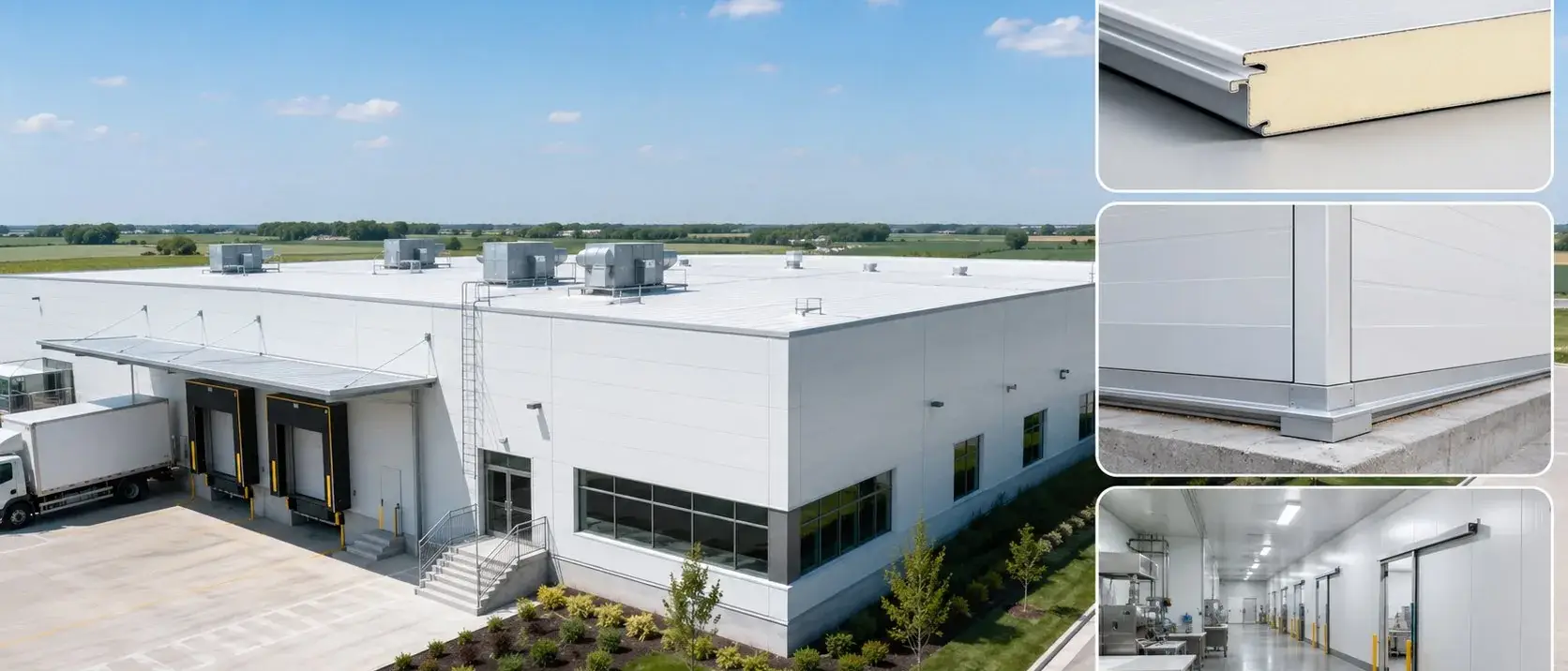
Energy-Efficient Panel Solutions for Bulgaria's Climate Zones
Bulgaria’s energy efficiency regulations follow EU directives with national implementation through building energy performance standards. The country’s diverse climate — from Black Sea Mediterranean to continental interior — requires sandwich panel thermal insulation solutions optimized for each region. Bulgaria’s energy code enforcement is strengthening as EPBD requirements take effect, making properly specified panel insulation increasingly important for building permits.
As our closest market, Bulgarian projects receive sandwich panel thermal insulation within 5–7 days, enabling responsive specification adjustments when thermal requirements are refined during the design process.
- Climate: Mediterranean coast to continental interior (-15 to -20°C design temp)
- Typical wall: PUR 60–80 mm (coastal) / PUR 80–100 mm (interior)
- Regulation: EU EPBD implementation, national energy standards
- Delivery: 5–7 days direct
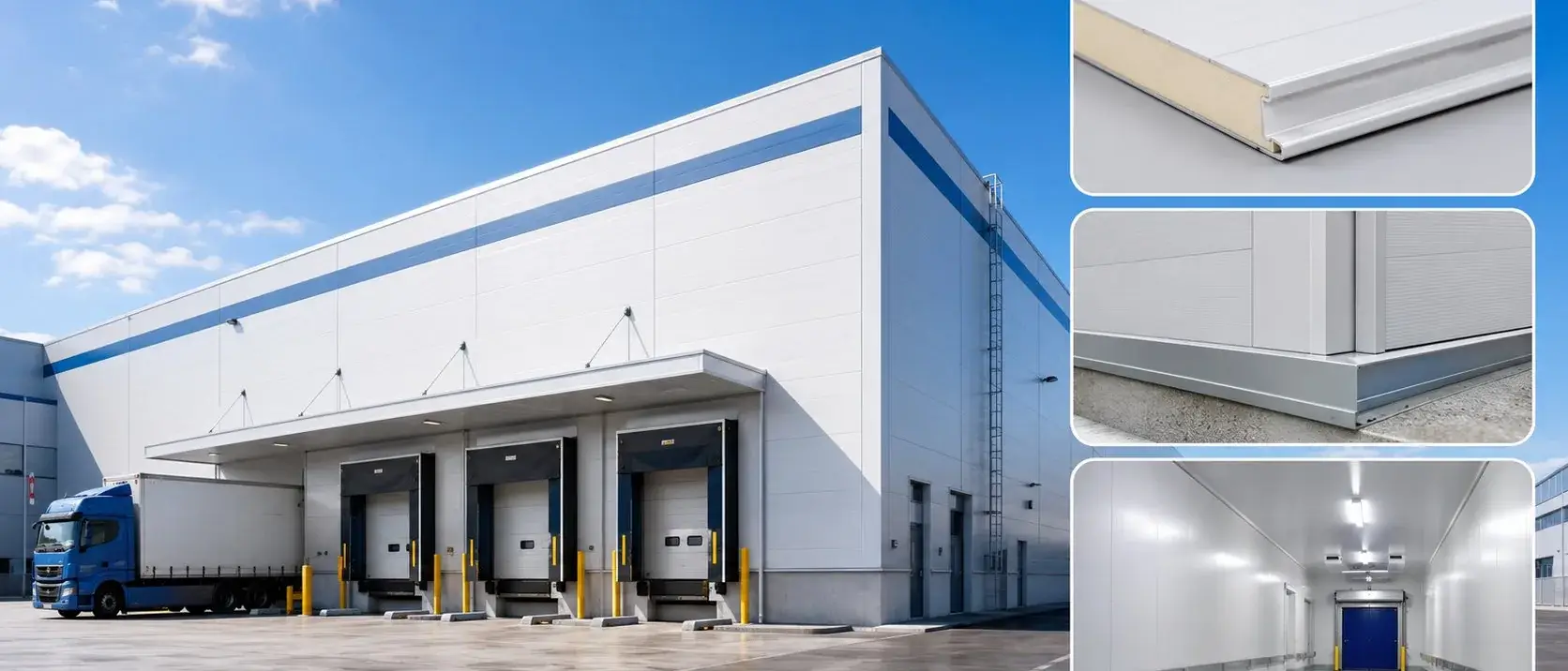
Thermal Solutions for Georgia's Diverse Climate
Georgia’s climate ranges from subtropical (Batumi, 3°C winter average) to continental (Tbilisi, -2°C winter average) to alpine (mountain regions, -15°C+). This diversity demands flexible sandwich panel thermal insulation solutions — lighter insulation for coastal projects, heavier for inland and highland buildings. As Georgia aligns construction standards with European norms, specifying CE-marked panels with documented thermal values positions projects for future compliance requirements.
- Climate: Subtropical coast to continental interior to alpine
- Typical wall: PUR 50–60 mm (coast) / PUR 80 mm (Tbilisi) / PUR 100 mm (mountains)
- Regulation: Evolving toward EU alignment
- Delivery: 10–14 days
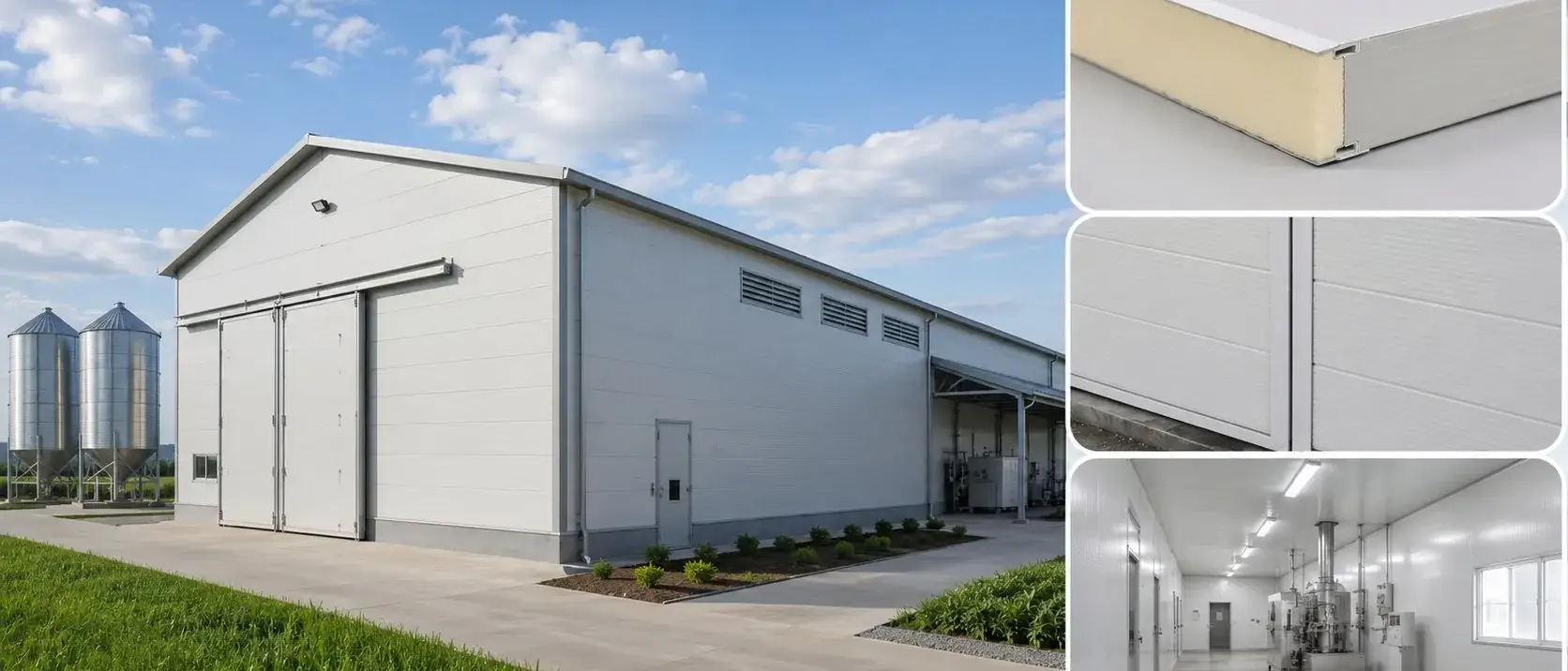
EU-Aligned Thermal Insulation for North Macedonia
North Macedonia’s continental climate with cold winters (-15°C design temperature in Skopje) and hot summers demands effective sandwich panel thermal insulation for year-round energy efficiency. As the country progresses toward EU accession, building energy standards are harmonizing with European EPBD requirements. Developers and contractors specifying EN 14509-certified sandwich panel thermal insulation demonstrate compliance readiness that facilitates building permits and positions projects for future regulatory standards.
- Climate: Continental with cold winters (-15 to -20°C design temp)
- Typical wall: PUR 60–80 mm
- Regulation: EU harmonization in progress
- Delivery: 7–10 days
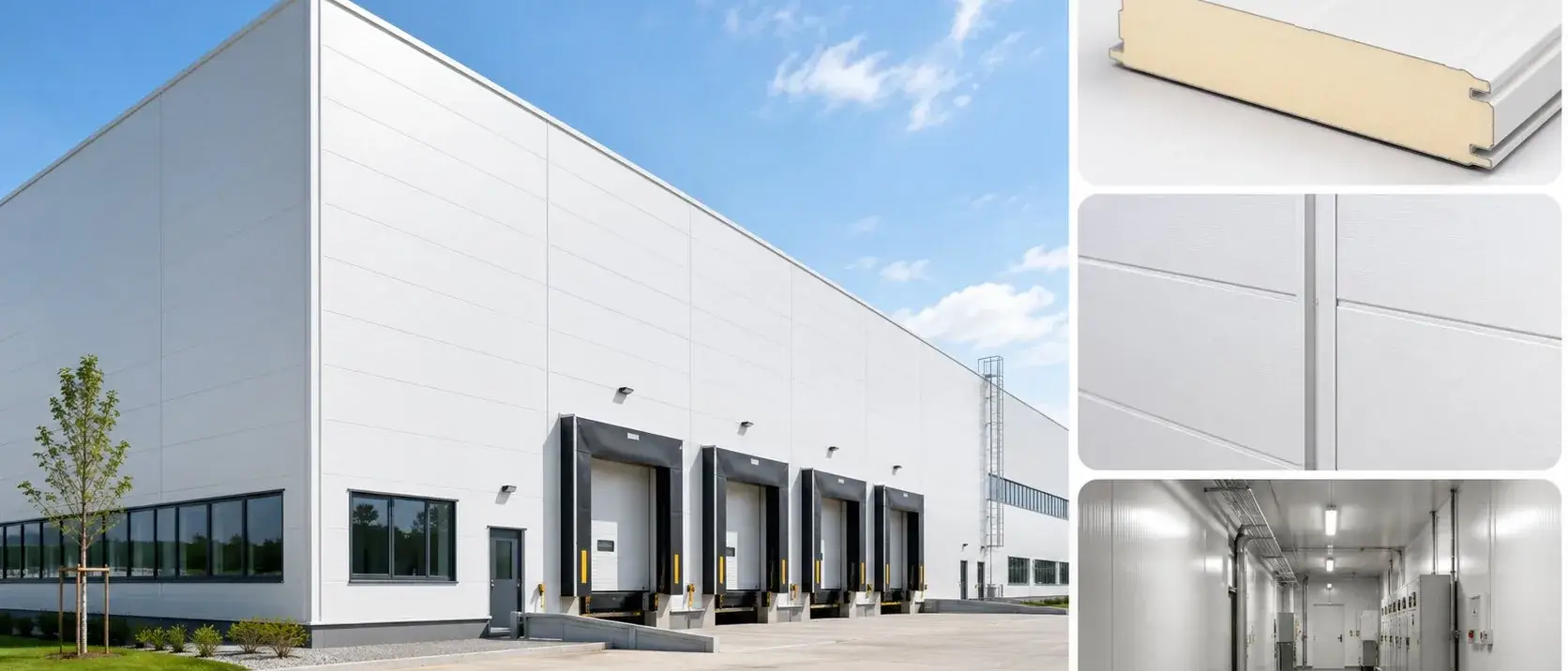
Building Energy-Efficient Infrastructure in Kosovo
Kosovo’s building sector is developing energy efficiency standards as part of broader modernization. Continental climate conditions (cold winters, hot summers) make sandwich panel thermal insulation essential for comfortable, cost-efficient buildings. International development programs supporting Kosovo’s construction sector increasingly specify insulated panel systems as the standard for new commercial, industrial, and agricultural buildings — creating growing demand for sandwich panel thermal insulation solutions that meet European quality expectations.
- Climate: Continental (-15°C design temp)
- Typical wall: PUR 60–80 mm / EPS 80–100 mm for budget projects
- Regulation: Developing, EU alignment planned
- Delivery: 8–12 days
Why Sandwich Panel Thermal Insulation? 5 Key Advantages
Sandwich panel thermal insulation outperforms traditional insulation methods (cavity wall, batt insulation, external render systems) in virtually every measurable category. The European standard EN 14509 defines the manufacturing and performance requirements for insulated panels that deliver consistent, factory-certified thermal performance — eliminating the installation quality variability that plagues site-applied insulation methods.
- Highest Thermal Performance Per Millimeter
Sandwich panel thermal insulation with PUR core achieves lambda 0.022 W/mK — the best commercially available insulation performance per unit thickness. A 100 mm PUR sandwich panel achieves U = 0.22 W/m²K, which would require 160+ mm of EPS or 180+ mm of rockwool. Thinner panels mean less material cost, less structural load, and more interior space. Learn more about thermal conductivity principles.
- Continuous Insulation — Zero Thermal Bridging
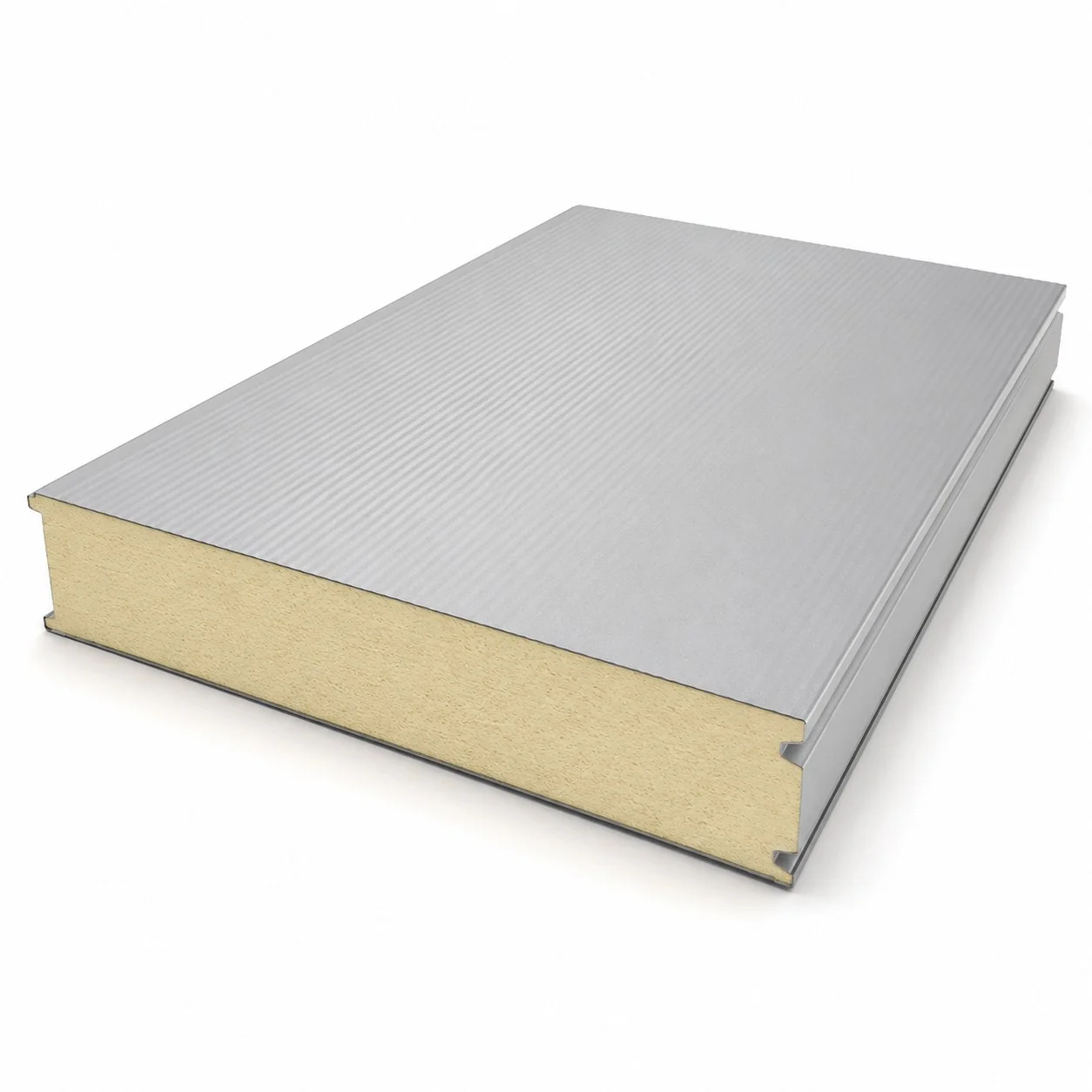
Unlike framed construction where studs, purlins, and connections create thermal bridges, sandwich panel thermal insulation provides a continuous, unbroken insulation layer across the entire building surface. No cold spots, no condensation risk at structural connections, no energy leakage through framing members. The foam core bonds directly to both steel facings, creating a monolithic thermal barrier.
- Factory-Certified Performance
Site-applied insulation depends on installation workmanship — gaps, compression, and misalignment reduce real-world performance by 10–30% below laboratory values. Sandwich panel thermal insulation is manufactured under factory-controlled conditions with consistent core density, uniform thickness, and complete facing adhesion. The declared lambda value is the delivered lambda value — every panel, every time.
- Dual Function — Insulation + Structure
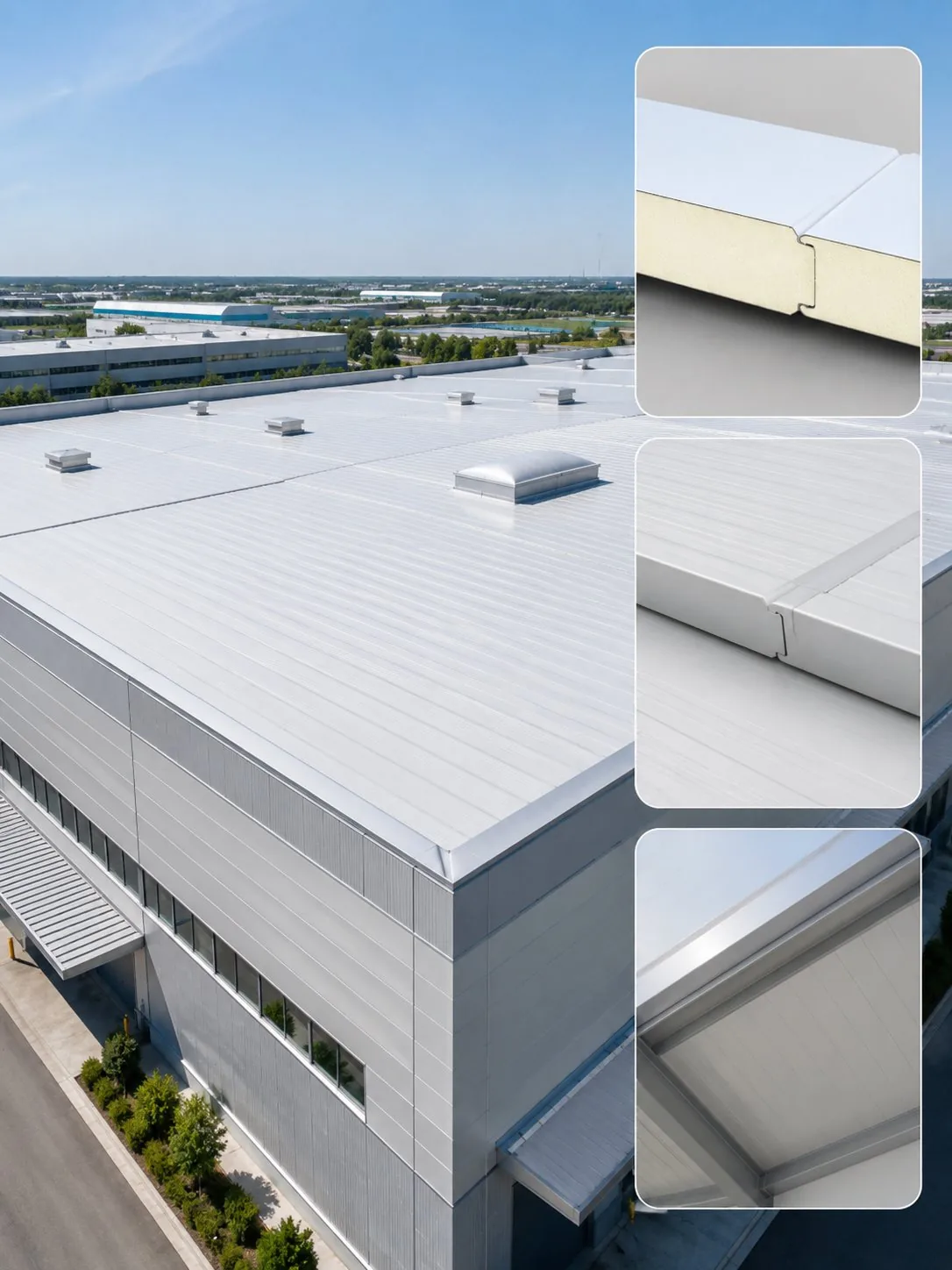
Sandwich panel thermal insulation is not just an insulation product — it is a structural cladding component. The composite panel (steel-foam-steel) acts as a self-supporting element that spans between purlins, resists wind loads, and provides weather protection — all while insulating. This eliminates the need for separate cladding, insulation, and vapor barrier layers. One product does the work of three. Visit our product range to explore panel options.
- Measurable Energy Savings
Sandwich panel thermal insulation delivers quantifiable energy cost reductions from day one. For a typical 5,000 m² industrial building in a continental climate, upgrading from 50 mm PUR (U=0.43) to 80 mm PUR (U=0.27) reduces annual heating energy by approximately 35%. Over a 25-year building lifecycle, this single specification decision saves thousands in energy costs — far exceeding the modest additional panel investment.
Understanding Lambda — Core Material Comparison
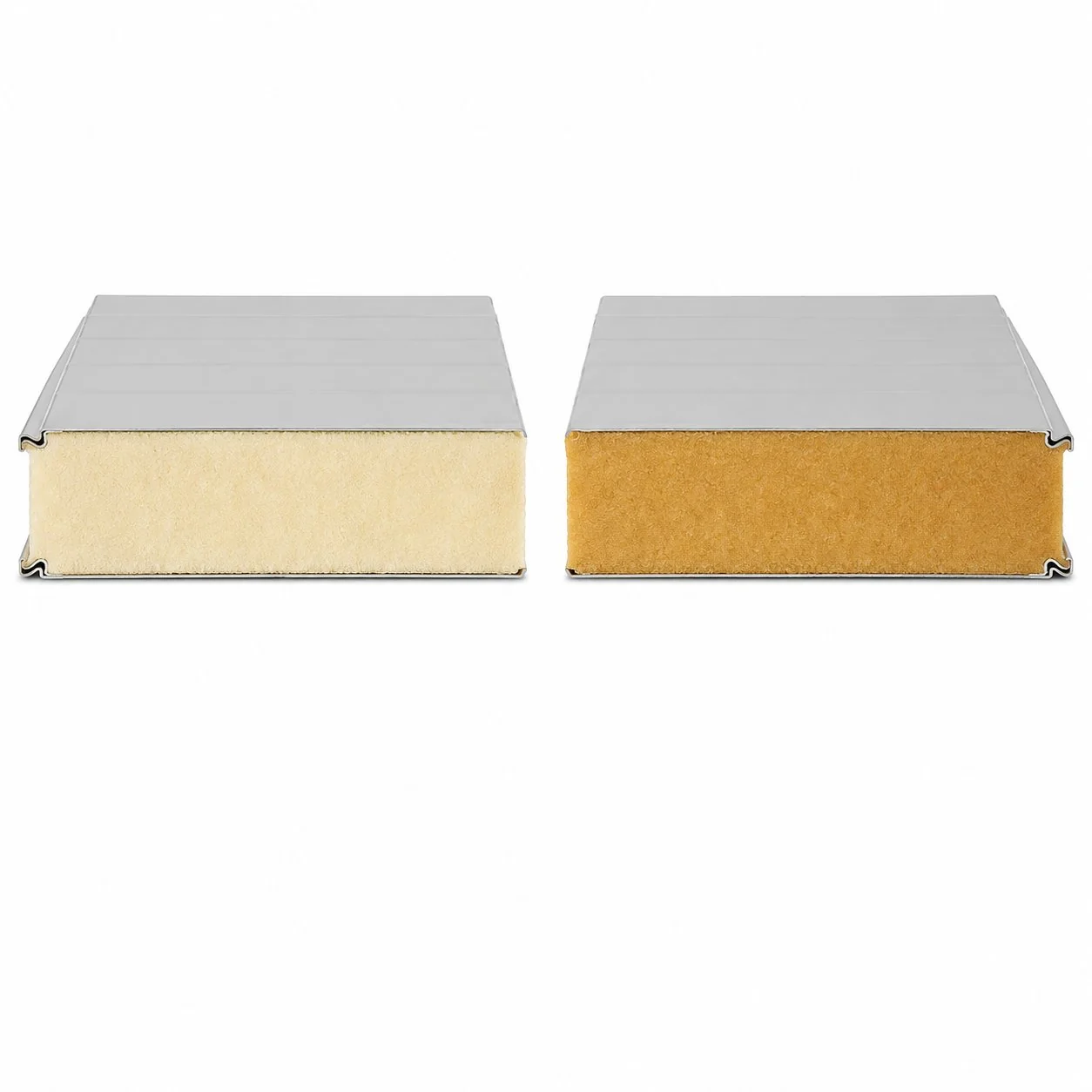
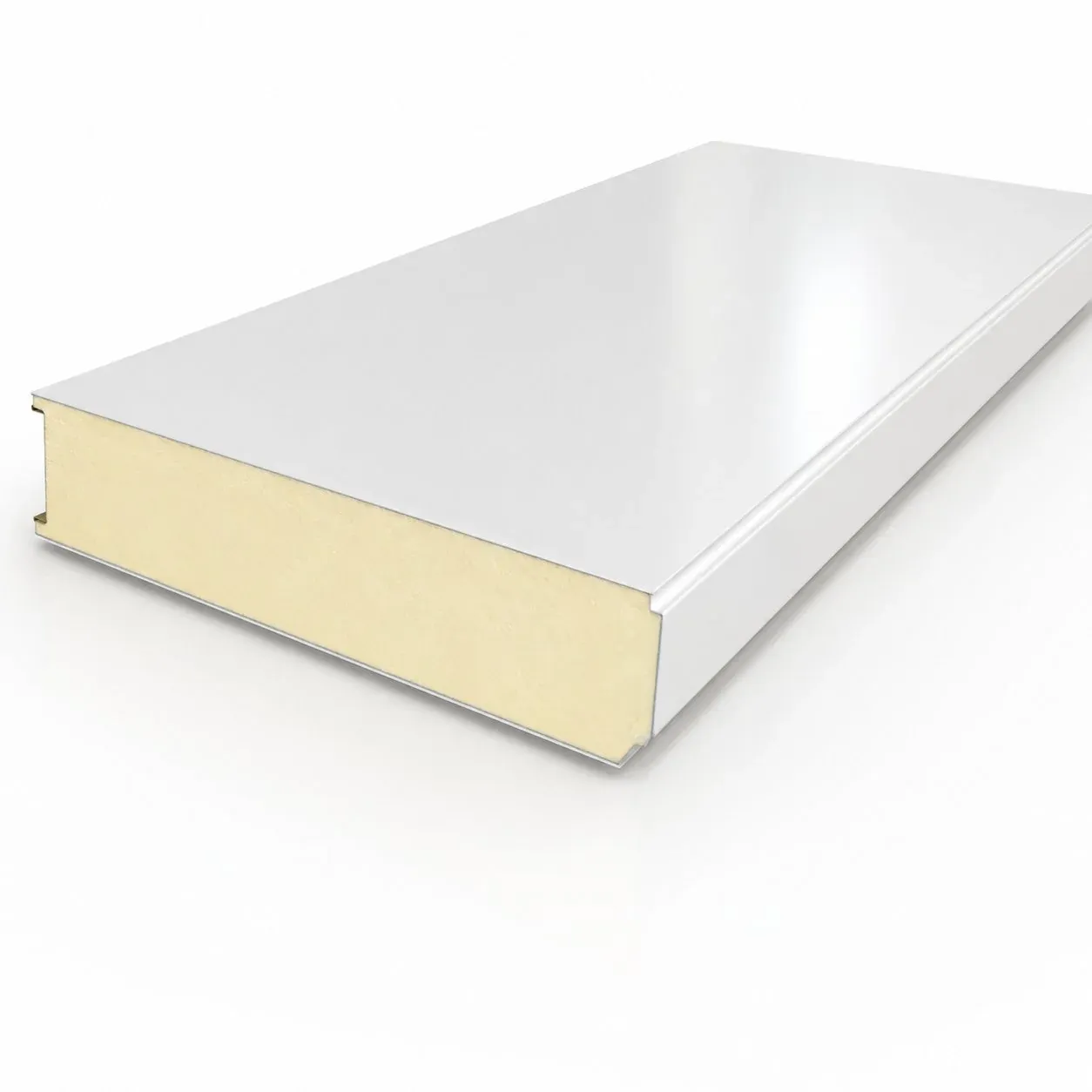
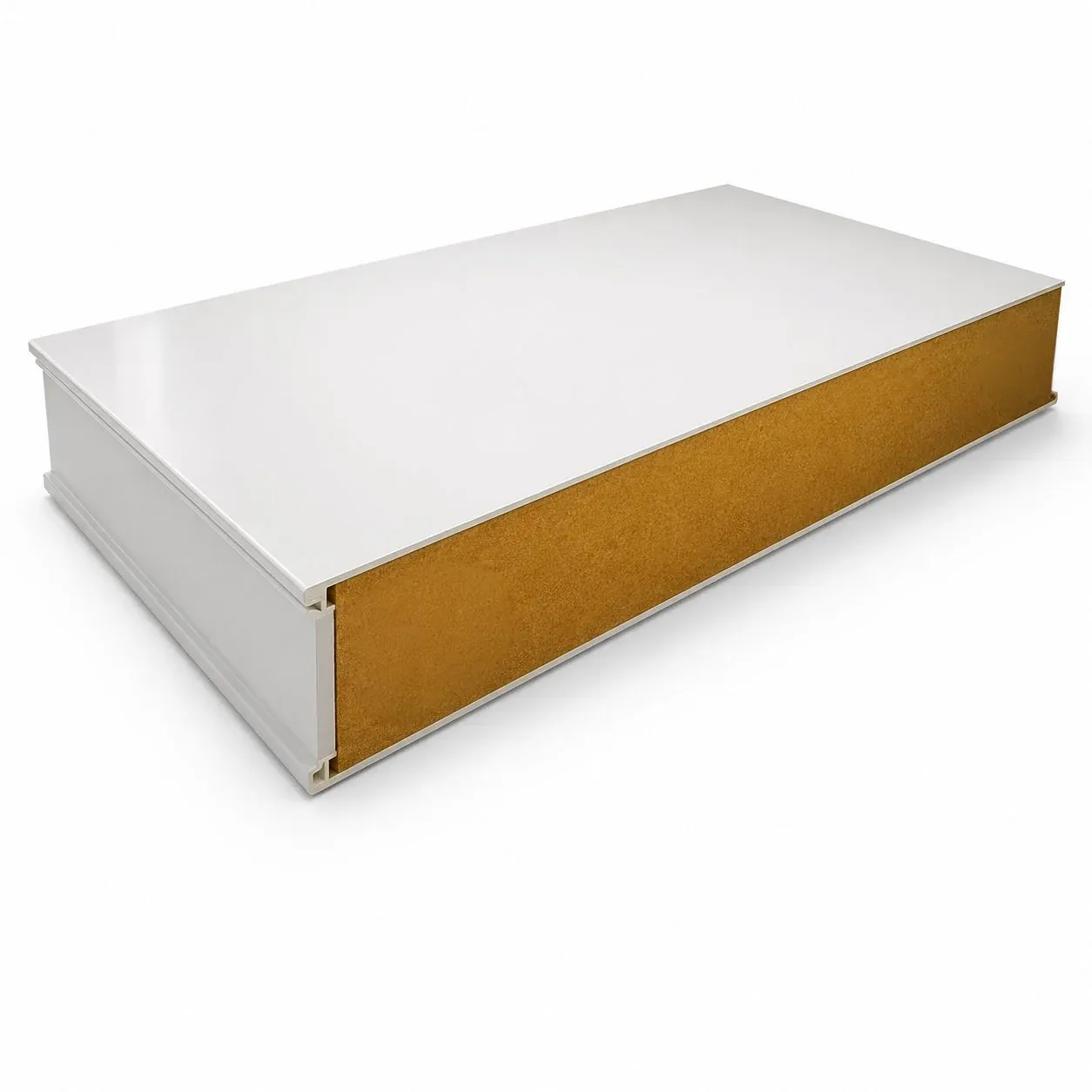
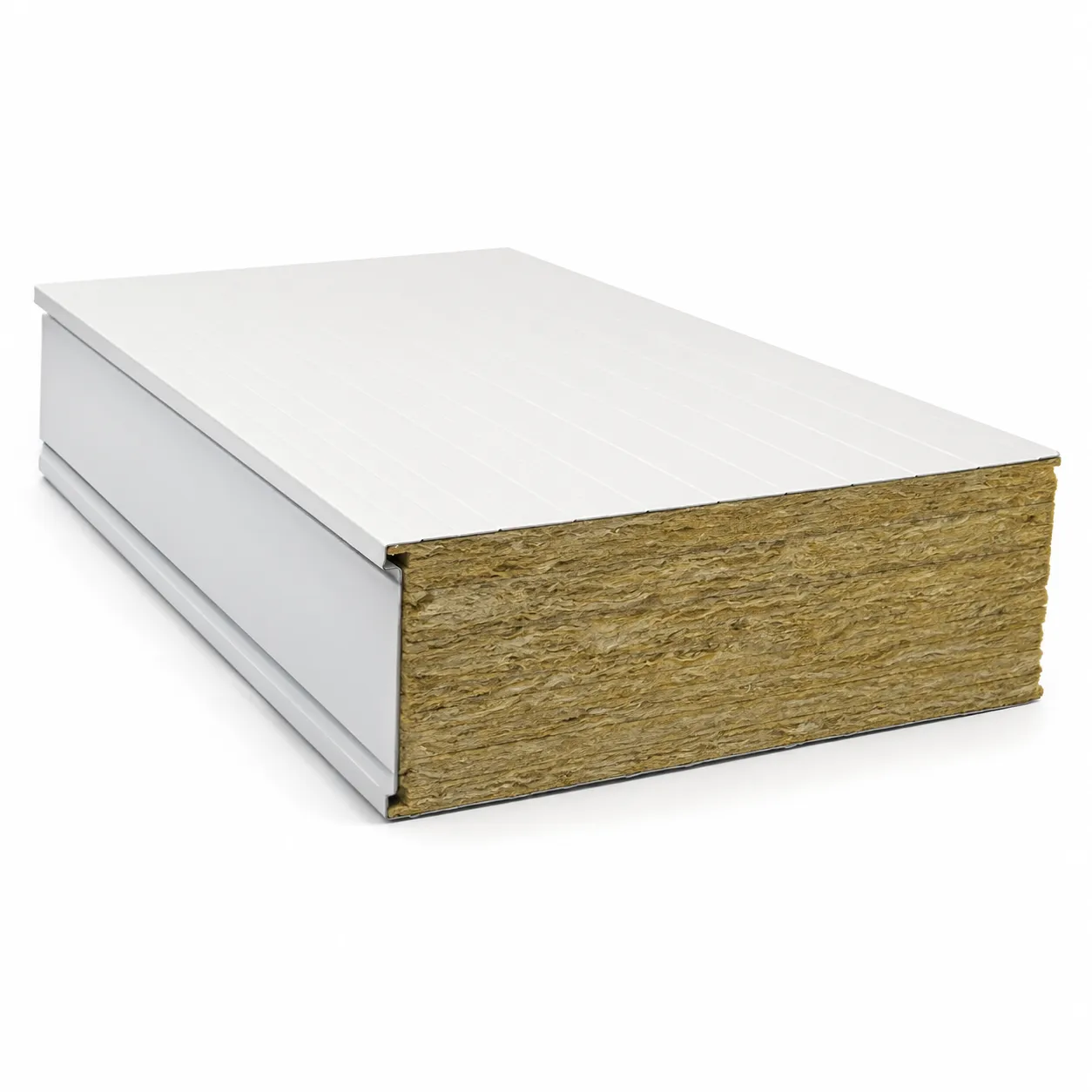
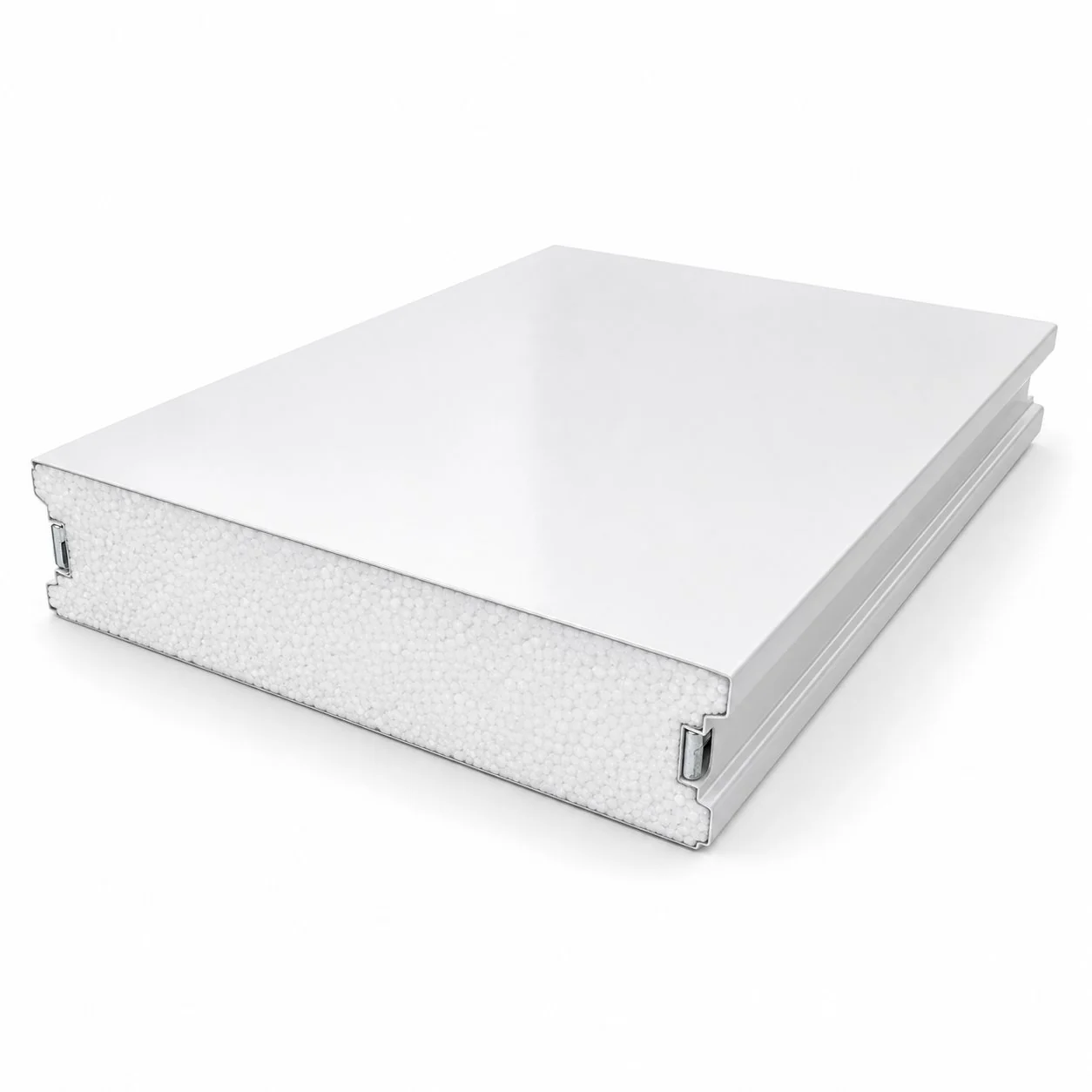
Lambda (λ) is the thermal conductivity of the insulation core, measured in W/mK. Lower lambda = better insulation per millimeter. Sandwich panel thermal insulation performance varies by core material:
| Core Material | Lambda | 80mm U-val | 100mm U-val | Fire Class | Best For |
| PUR | 0.022 | 0.27 | 0.22 | B-s2 | All-round best |
| PIR | 0.023 | 0.28 | 0.23 | B-s1 | Fire+thermal |
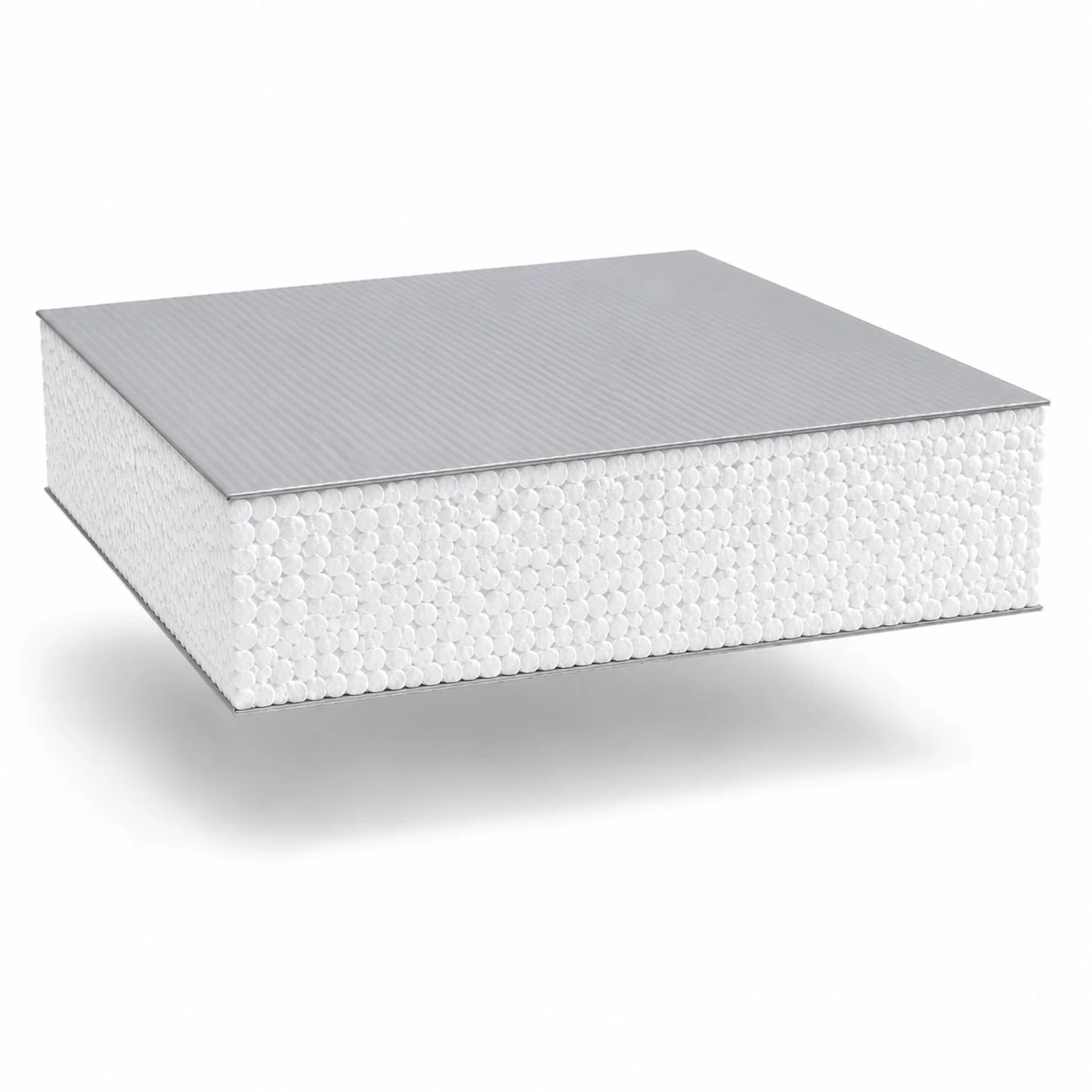
| EPS | 0.035 | 0.42 | 0.34 | E | Budget |
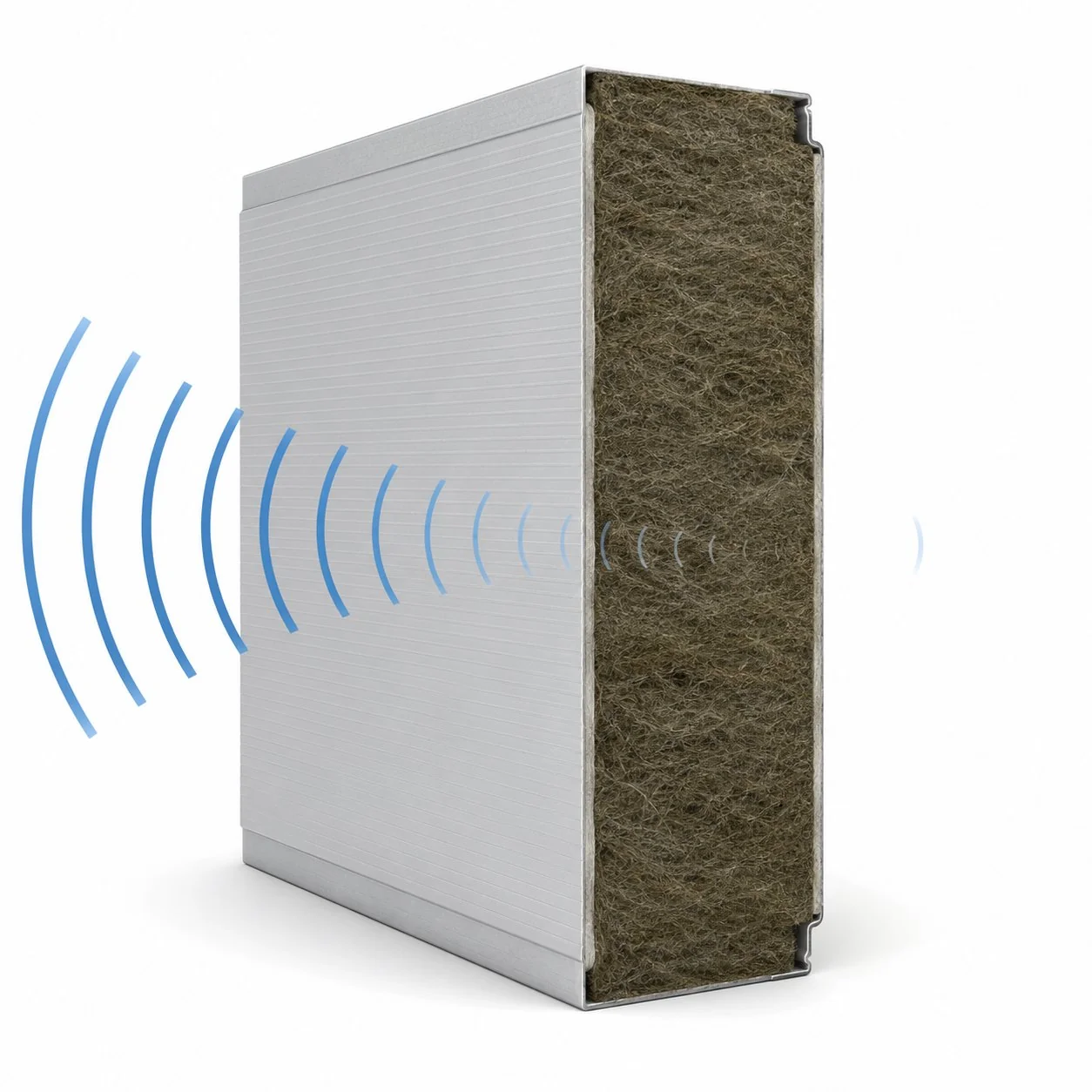
| Rockwool | 0.040 | 0.47 | 0.38 | A1/A2 | Fire+acoustic |
PUR delivers the best sandwich panel thermal insulation per millimeter. PIR is nearly identical thermally but adds fire performance. EPS is the budget option requiring thicker panels. Rockwool trades thermal efficiency for non-combustibility and acoustic performance. Compare all: Panel Selector.
Thickness Equivalence for U = 0.28 W/m²K
To achieve the same thermal performance (U = 0.28), each core material requires:
- PUR: 80 mm — thinnest, lightest, most cost-effective sandwich panel thermal insulation
- PIR: 82 mm — nearly identical to PUR, with enhanced fire rating
- EPS: 120 mm — 50% thicker than PUR, but lower material cost partially offsets
- Rockwool: 140 mm — thickest and heaviest, but non-combustible and acoustic
U-Value Optimization by Building Type
Different building types have different sandwich panel thermal insulation requirements. Here are recommended U-value targets and panel specifications:
| Building Type | Target U-value | PUR Thickness | EPS Thickness |
| Industrial (standard) | 0.35–0.45 | 50–60 mm | 80–100 mm |
| Industrial (energy-efficient) | 0.25–0.30 | 80–100 mm | 120–150 mm |
| Commercial / Office | 0.20–0.28 | 80–120 mm | 150–200 mm |
| Cold Storage (+5°C) | 0.27–0.34 | 80–100 mm | 100–120 mm |
| Cold Storage (-25°C) | 0.13–0.17 | 150–200 mm | N/A (too thick) |
| Agricultural (livestock) | 0.30–0.42 | 50–80 mm | 80–120 mm |
| Agricultural (crop store) | 0.35–0.50 | 40–60 mm | 60–80 mm |
Calculate your exact requirement: U-Value Calculator.
Energy Code Compliance Across Export Markets
Sandwich panel thermal insulation must meet national energy efficiency regulations in each country we serve. Building energy codes set maximum U-values for walls and roofs:
| Country | Regulation | Wall U-max | Roof U-max |
| Turkey | TS 825 / BEP | 0.40–0.60* | 0.30–0.40* |
| Romania | Normativ C107 | 0.35–0.56* | 0.20–0.35* |
| Bulgaria | Ordinance 7 (energy) | 0.28–0.35 | 0.25–0.30 |
| Georgia | Evolving standards | EU alignment ongoing | EU alignment ongoing |
| N. Macedonia | EU harmonization | 0.35 (target) | 0.25 (target) |
| Kosovo | Developing standards | EU alignment planned | EU alignment planned |
* Values vary by climate zone within the country. Our technical team provides project-specific guidance for sandwich panel thermal insulation compliance in each market.
For all markets, our CE-marked panels with declared thermal values per EN 14509 provide the documentation required for building permit applications and energy performance certification.
Choosing the Right Panel for Thermal Performance
Selecting sandwich panel thermal insulation involves balancing four factors:
- Thermal target: What U-value does your building code or energy strategy require?
- Fire requirement: Does the building need B-class or A-class fire rating? If yes, PUR/PIR or rockwool.
- Budget: EPS delivers the lowest panel cost; PUR delivers the lowest lifecycle cost (thinner panel + lower energy bills).
- Space: Where interior space is valuable (commercial, cold storage), thinner PUR panels preserve floor area.
Our product range covers every combination: PUR facade · PIR facade · EPS facade · Rockwool facade · Fibercement facade. Same for roof panels and cold room panels.
Not sure which? Use our interactive Panel Selector for an instant recommendation based on your thermal, fire, and budget requirements.
Sandwich Panel Thermal Insulation Solutions by Country
Real Panel provides sandwich panel thermal insulation solutions across Turkey and five export markets, each with different climate zones, energy codes, and insulation priorities. Our production facility serves all markets with panels manufactured to project-specific thermal requirements.