

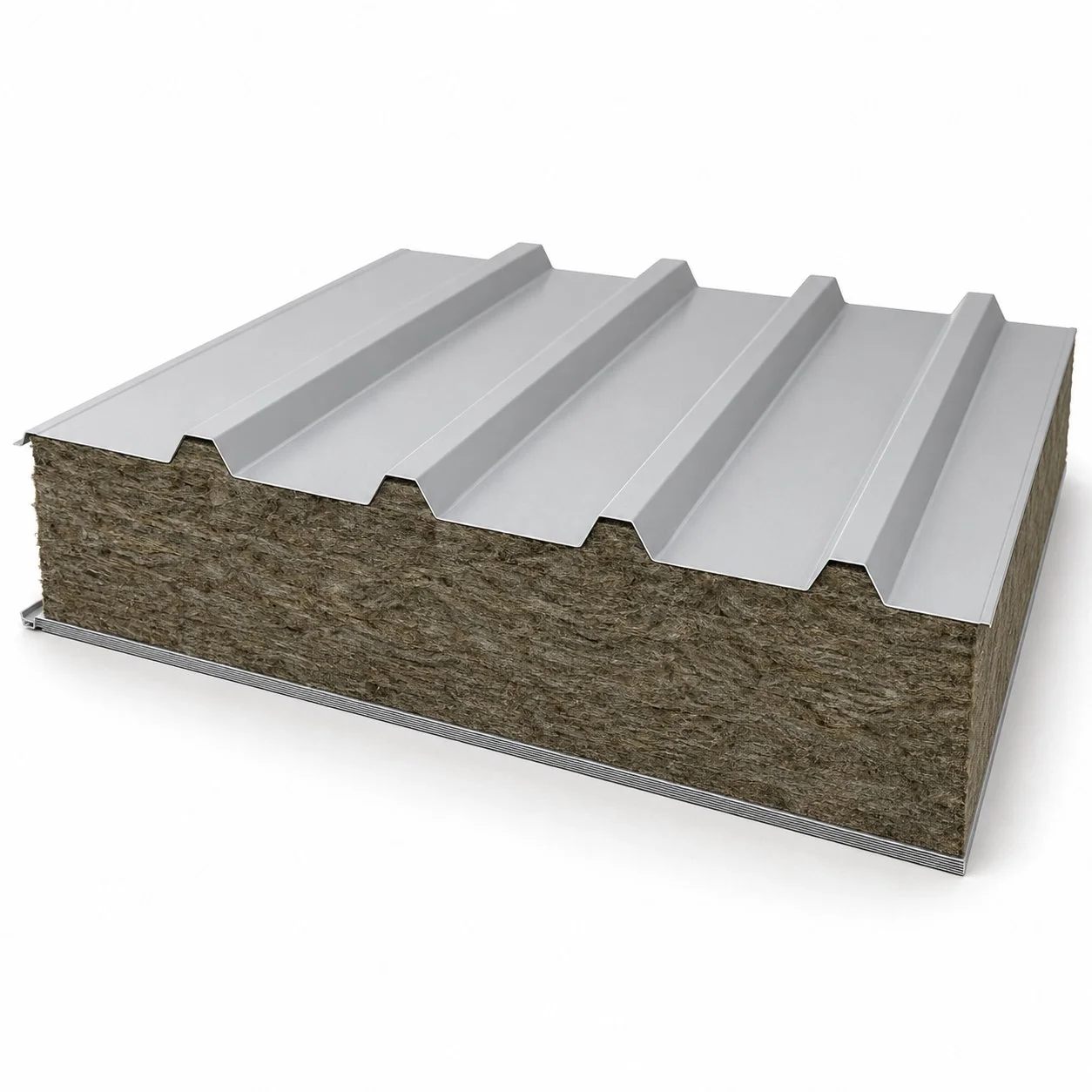
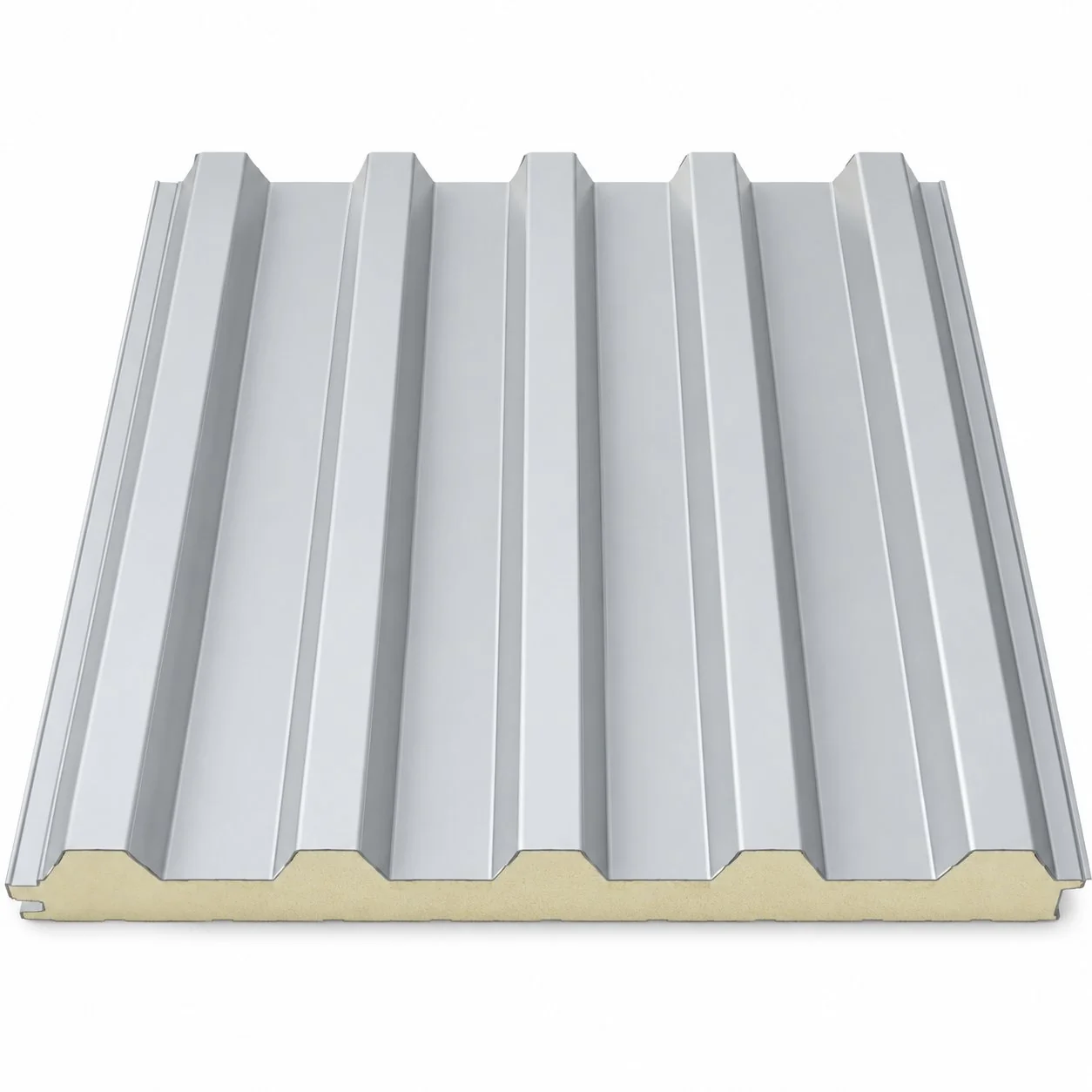
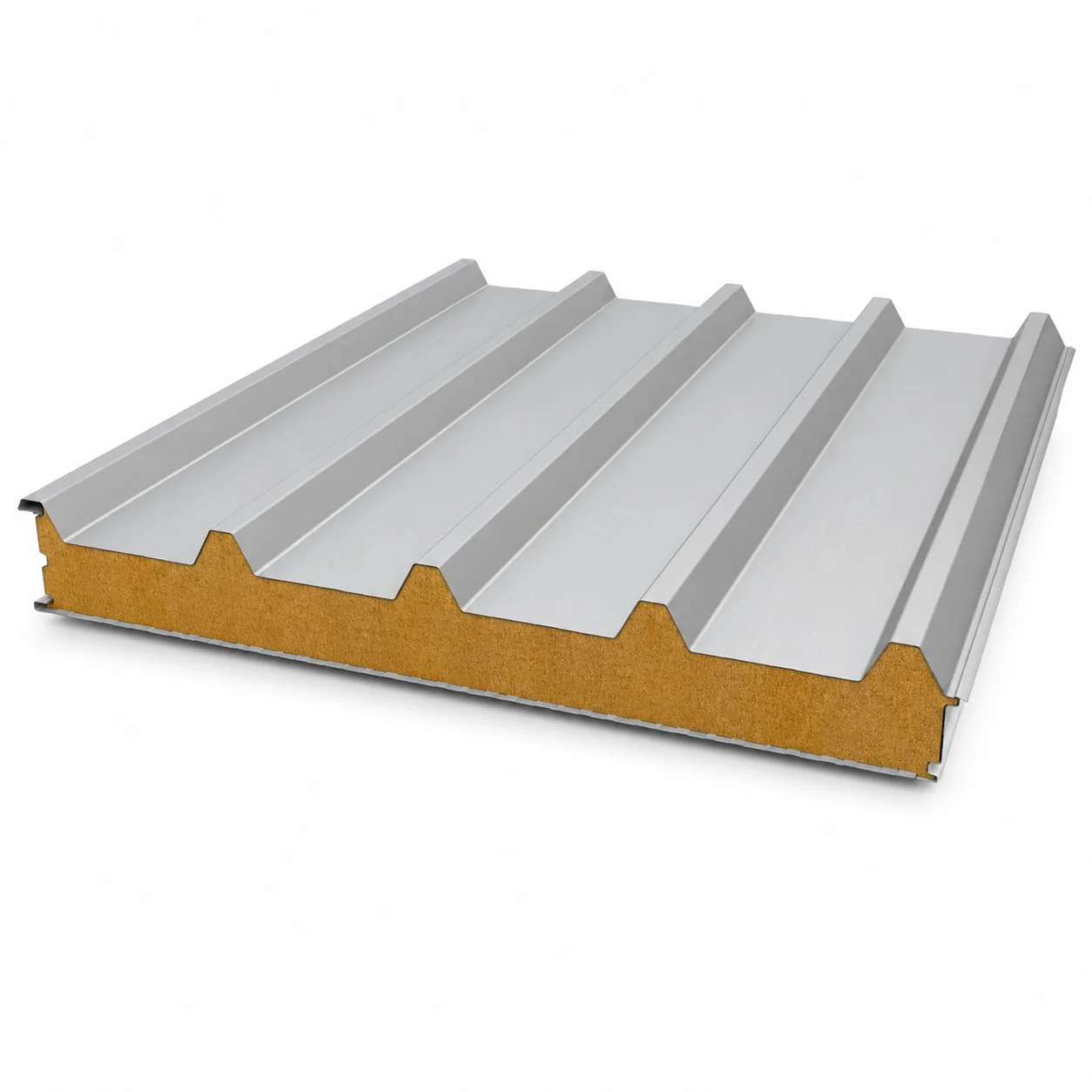
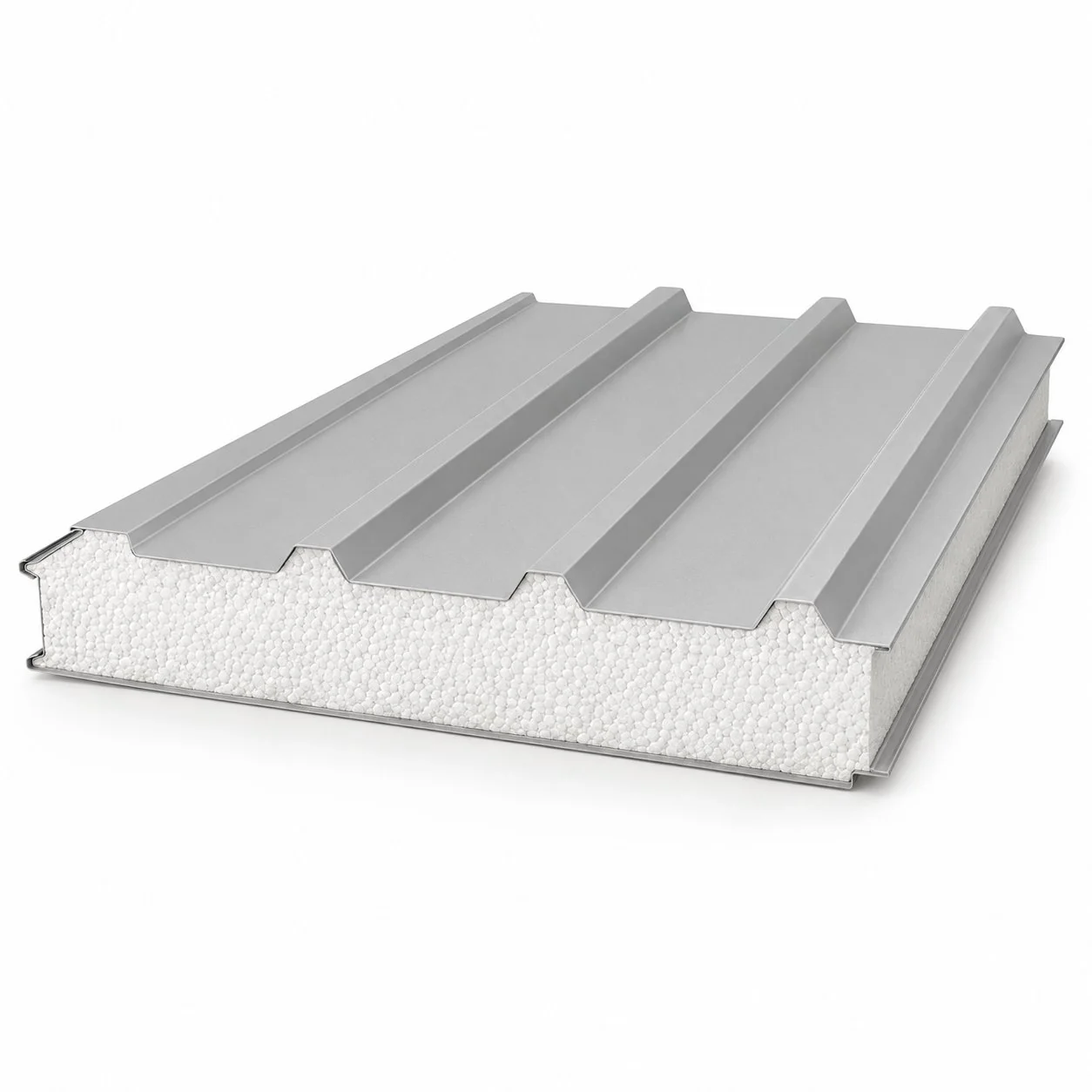
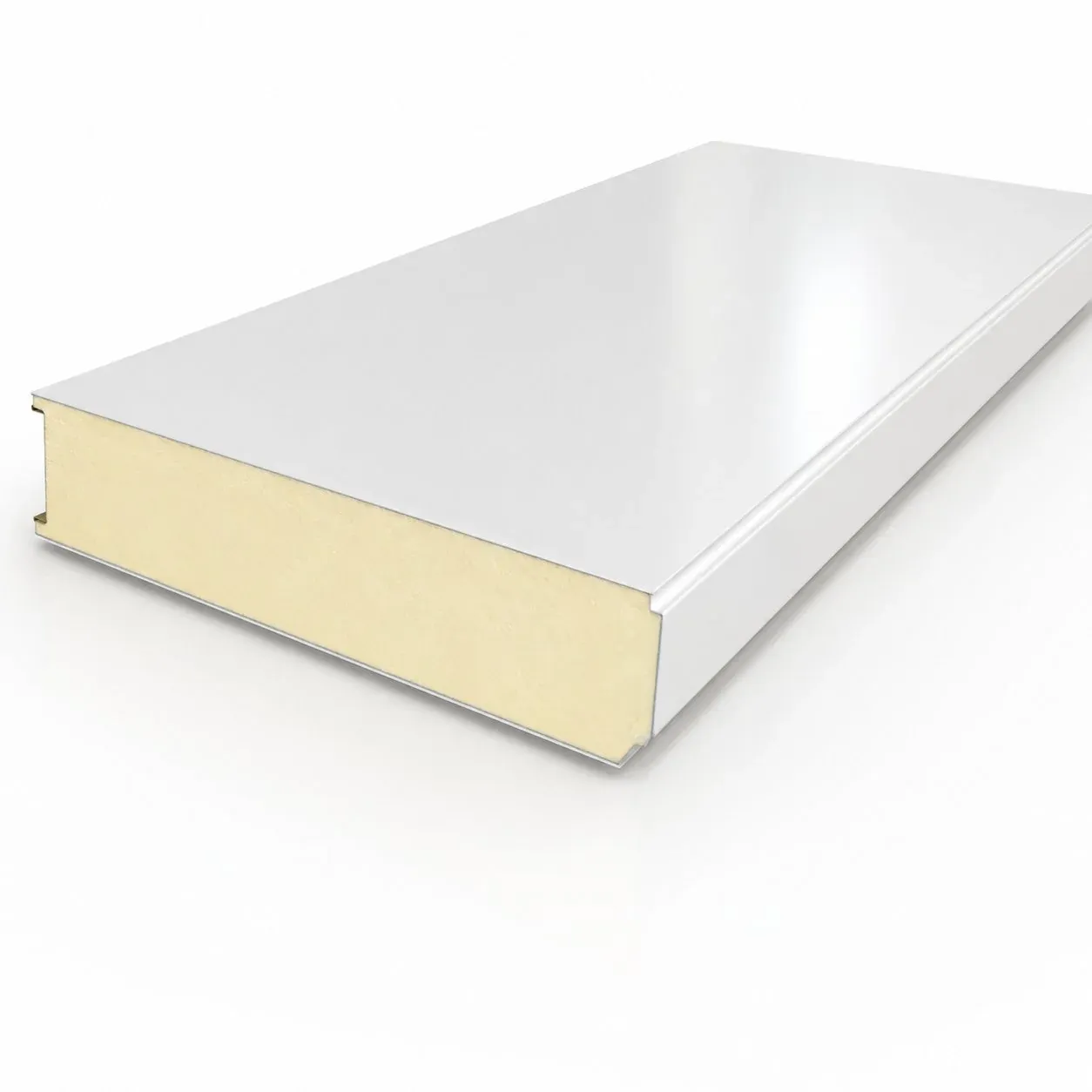
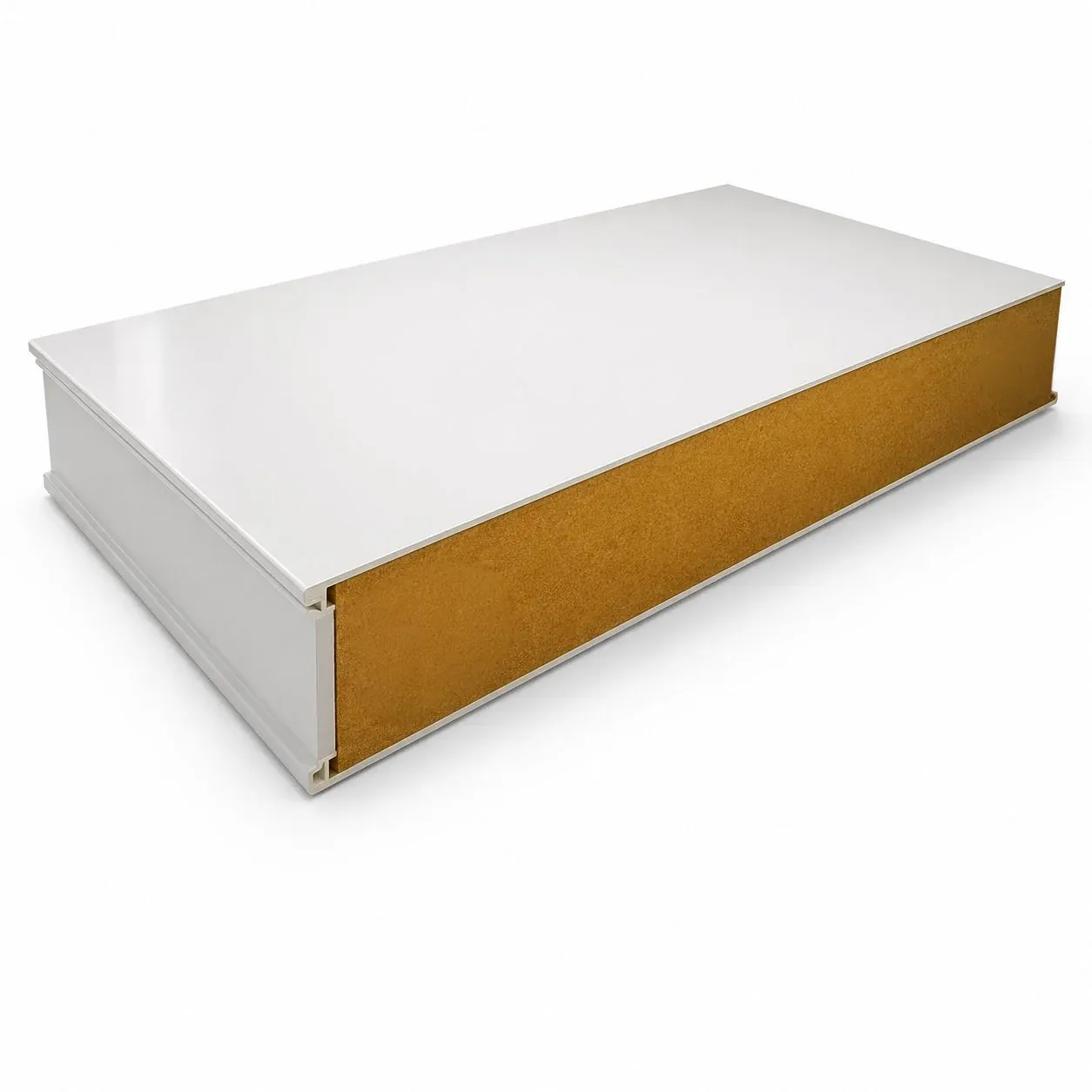


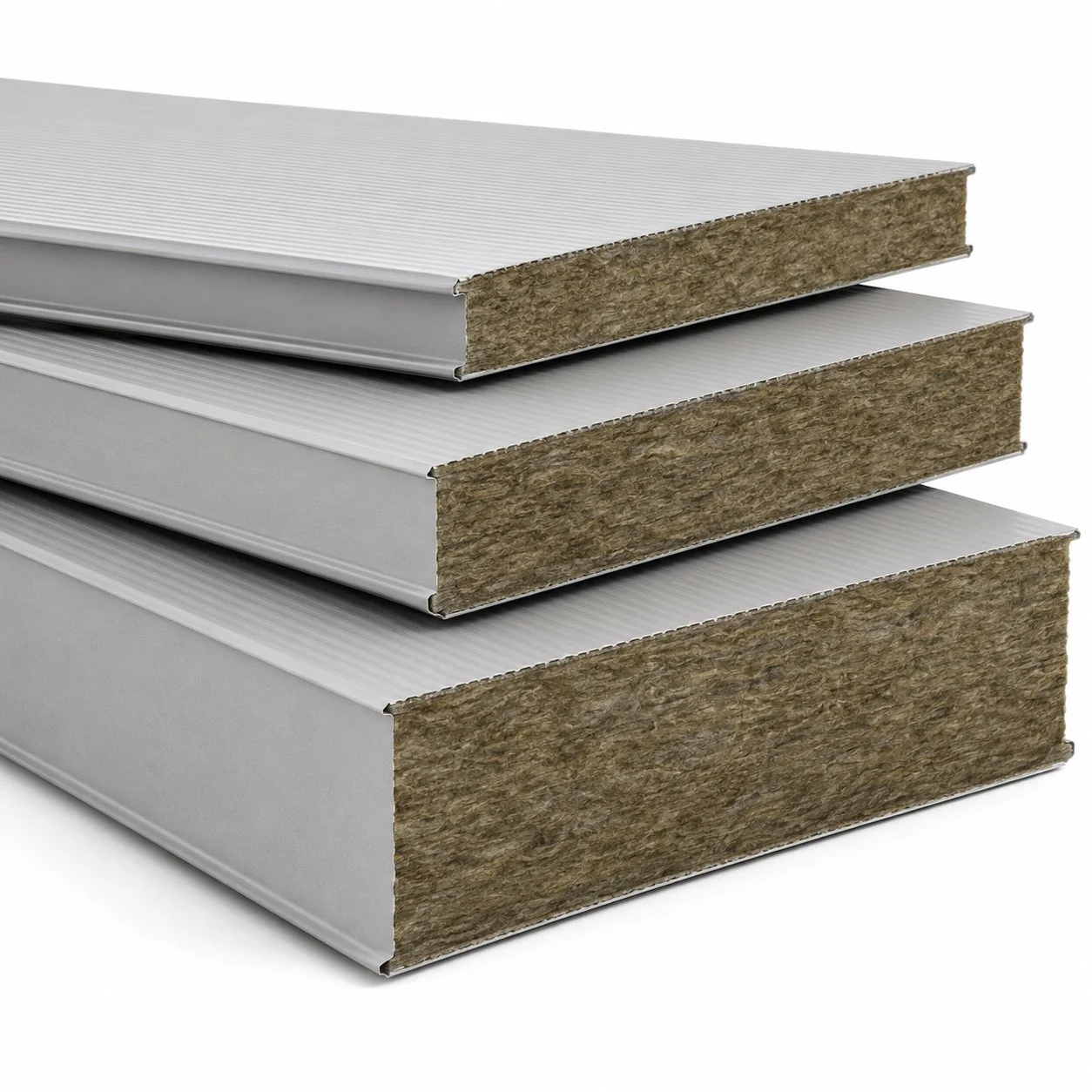
Rockwool Facade Panel
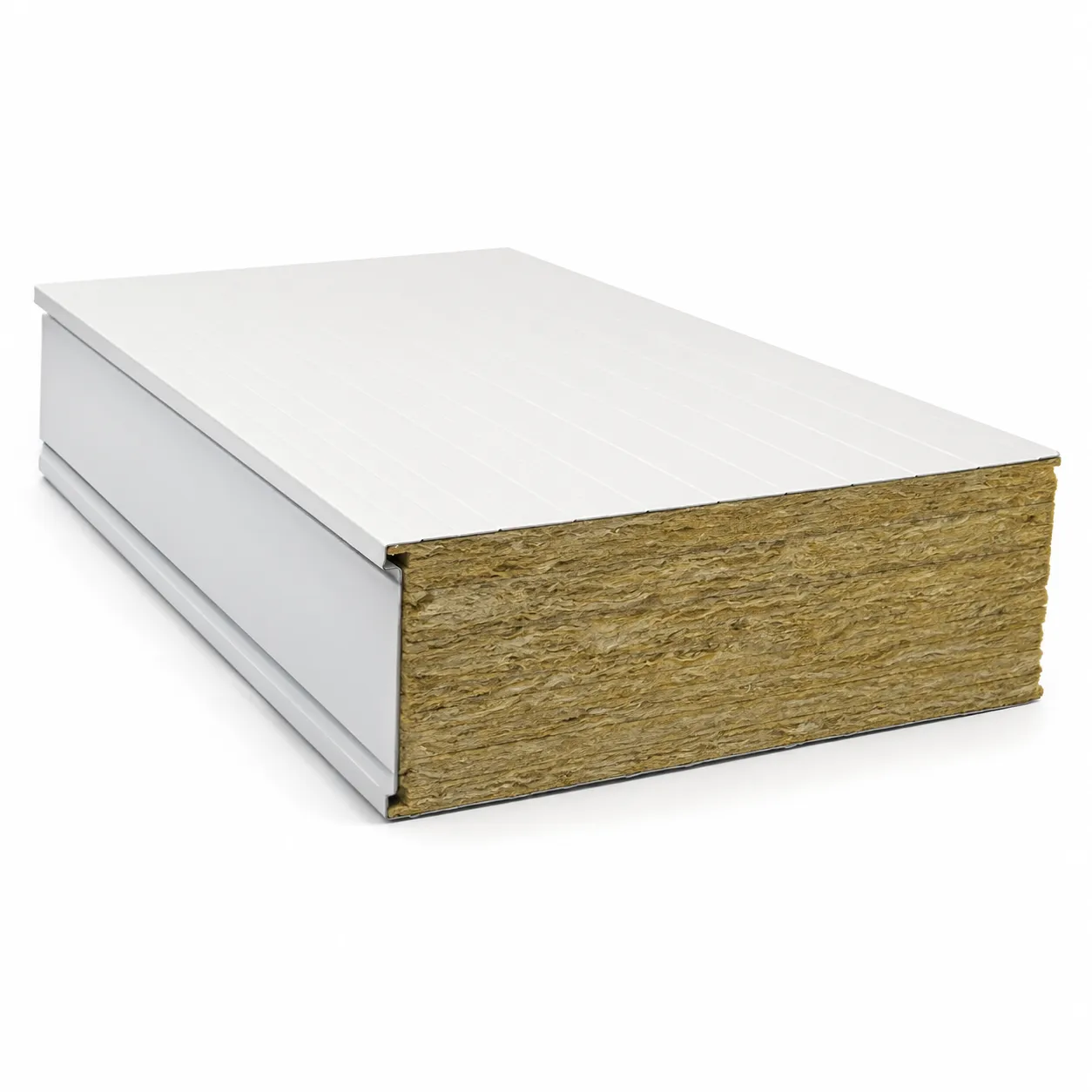
Non-combustible rockwool facade panel with stone wool core — the ultimate choice when fire safety, acoustic performance, and regulatory compliance are non-negotiable. Euroclass A1/A2 rated.
- Fire Classification: A1 or A2-s1, d0 (Euroclass) — non-combustible
- Thermal Conductivity: 040 W/mK
- Acoustic Insulation: Rw up to 32 dB — best in our range
- Thickness Range: 50 – 200 mm
- Core Density: 100–150 kg/m³ — high-density stone wool
- Standards: EN 14509, CE Marked
When zero compromise on fire safety matters. Compare with PIR (B-s1) or try our Panel Selector.
The Non-Combustible Standard
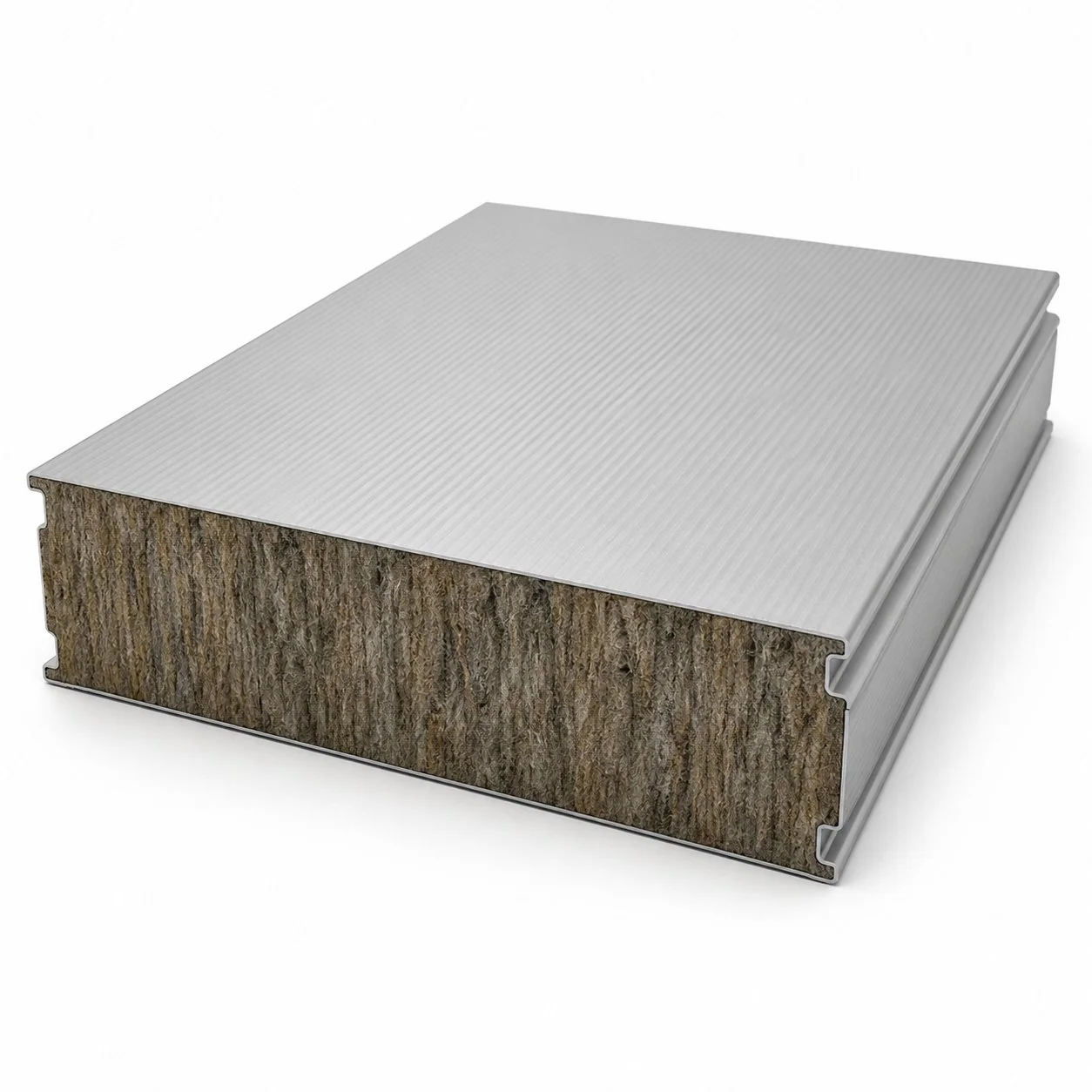
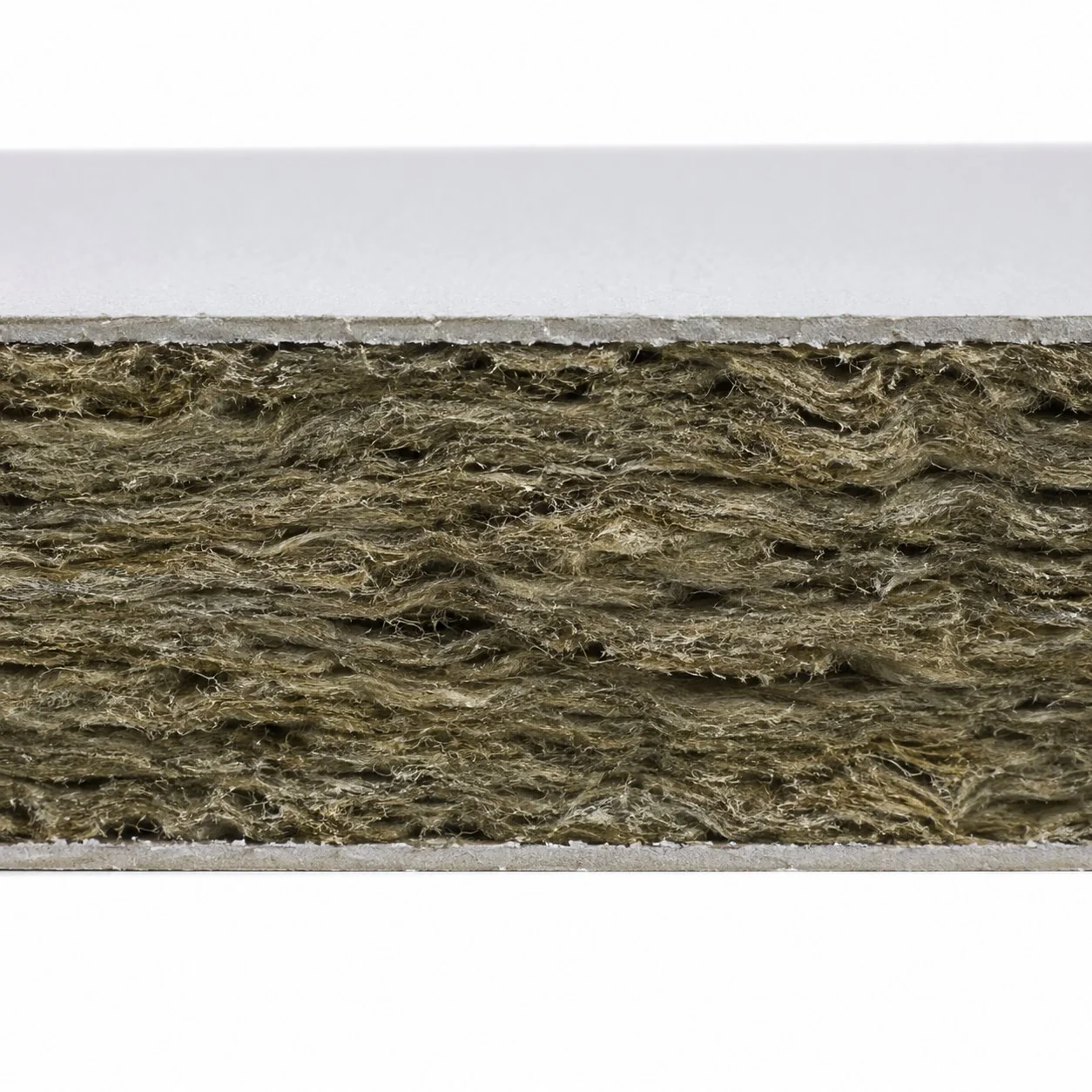
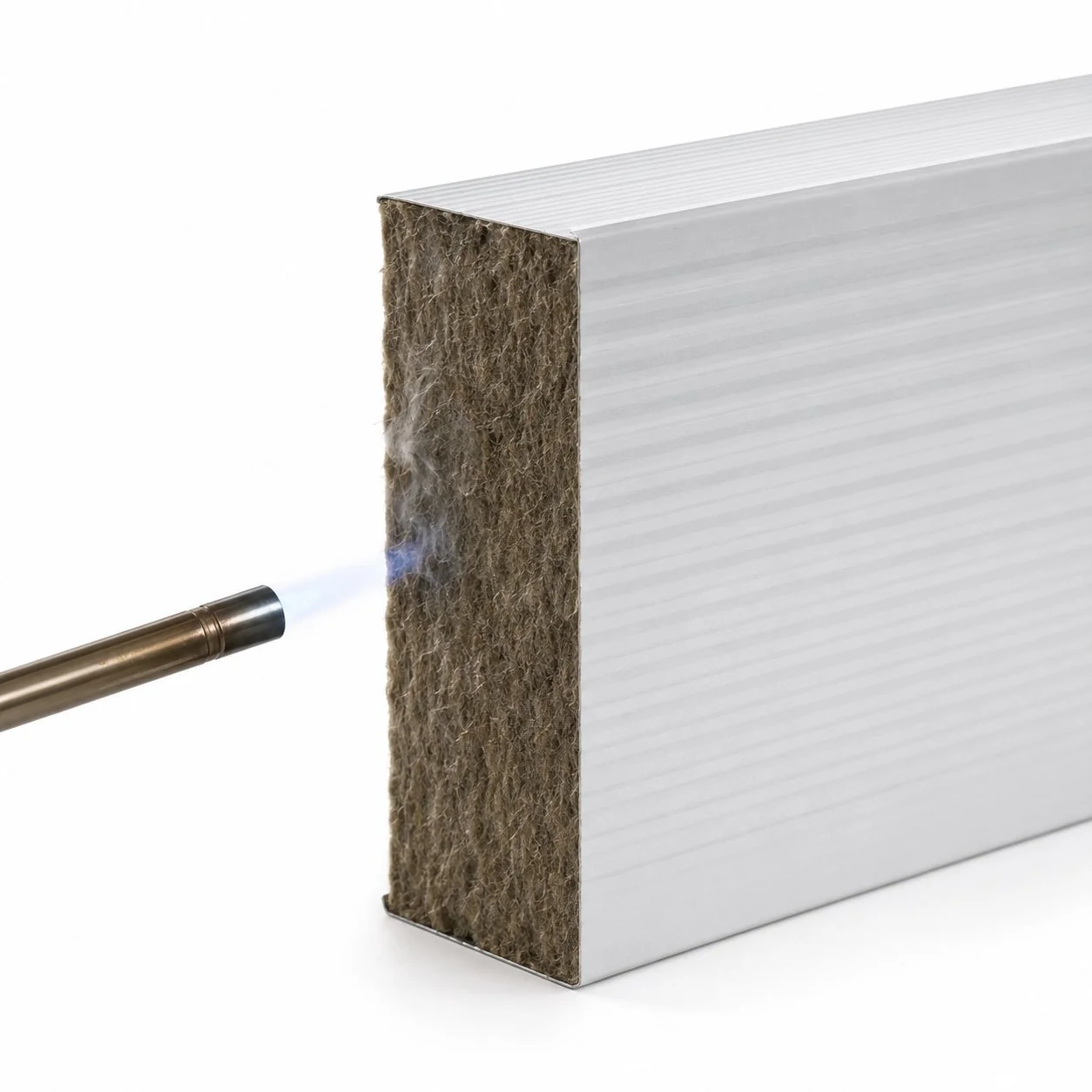
The rockwool facade panel represents the highest level of fire safety available in Real Panel’s product range. With a core made from basalt-derived stone wool (mineral wool), these panels achieve Euroclass A1 or A2-s1, d0 — the only classification that means truly non-combustible. In a fire scenario, rockwool panels will not burn, will not produce smoke, and will not release flaming droplets.
This is not incremental improvement over PUR or PIR — it is a fundamentally different material category. While foam-core panels (PUR B-s2, PIR B-s1) offer limited combustibility, rockwool panels offer zero combustibility. For projects where building codes, insurance requirements, or simple risk management demand the absolute maximum in fire protection, rockwool is the only answer.
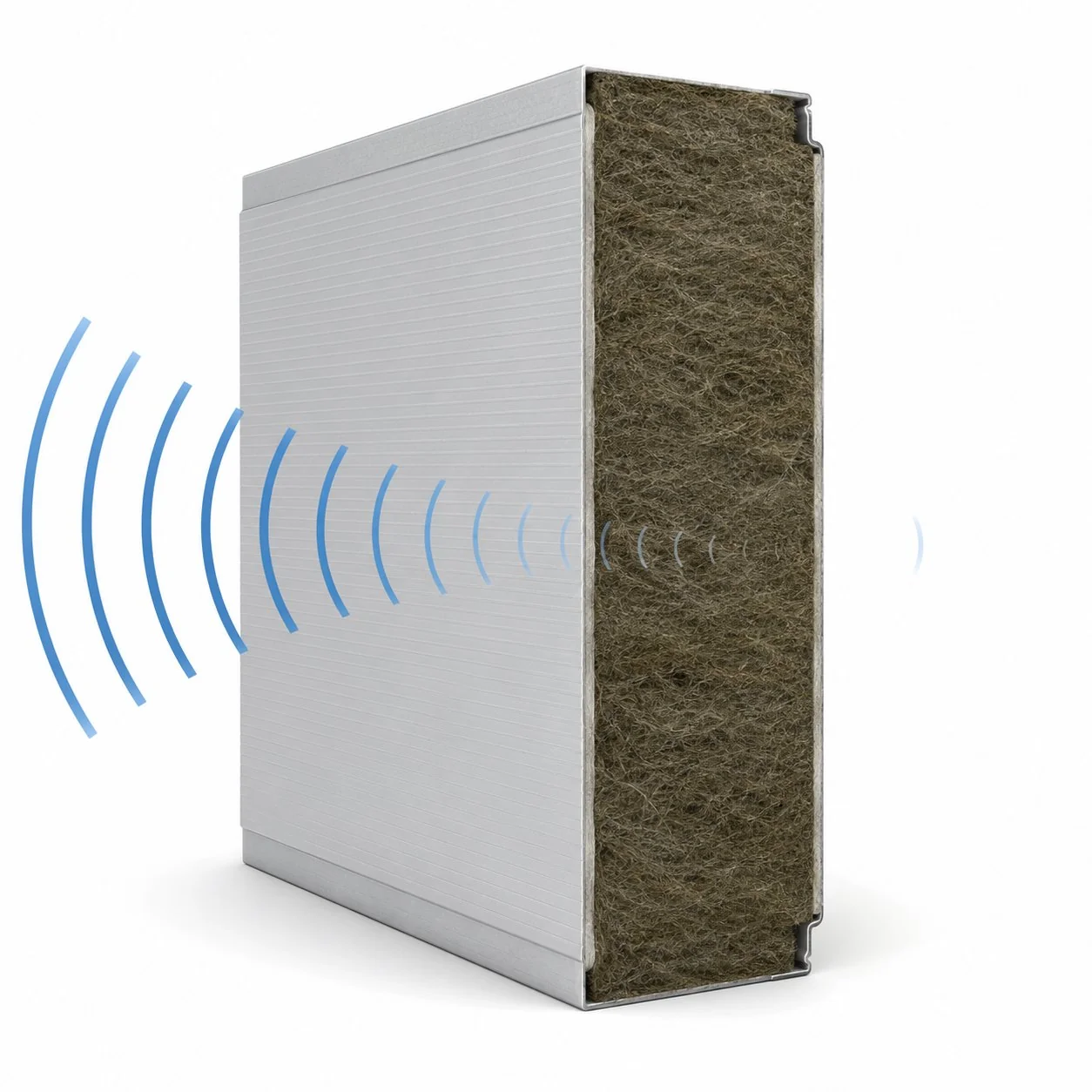
Beyond fire safety, rockwool delivers a second major advantage that no foam-core panel can match: exceptional acoustic insulation. The fibrous structure of stone wool absorbs sound energy far more effectively than rigid foam, making rockwool facade panels the preferred choice for buildings near highways, airports, railways, or industrial noise sources.
Key Benefits
- Non-Combustible (A1/A2): The highest fire classification achievable. Rockwool does not burn, even at temperatures exceeding 1000°C. Zero contribution to fire spread, zero smoke, zero flaming droplets.
- Superior Acoustic Insulation: Weighted sound reduction index (Rw) up to 32 dB — significantly better than PUR, PIR, or EPS panels. Ideal for noise-sensitive environments.
- Thermal Performance: Lambda 0.040 W/mK. While higher than PUR/PIR, rockwool provides reliable thermal insulation with the added advantage of non-combustibility and stability at extreme temperatures.
- Temperature Stability: Rockwool maintains its structural integrity and insulation performance up to 1000°C, far exceeding the service limits of foam-core alternatives.
- Moisture Management: Stone wool fibers are hydrophobic (water-repellent) by treatment. Unlike untreated mineral wool, our rockwool panels resist water absorption and allow moisture vapor to pass through, reducing condensation risk.
- Sustainability: Basalt (volcanic rock) is an abundant natural resource. Rockwool is recyclable and contributes to green building certifications. Manufacturing energy is partially offset by the lifetime energy savings the panels provide.
Manufactured on our dedicated EPS/Rockwool line at our production facility in Turkey. Available for domestic and export markets.
Ideal Applications
Rockwool facade panels are specified when fire performance and/or acoustic insulation are critical project requirements:
- Fire Resistance Solutions — buildings requiring non-combustible cladding by code
- Food & Pharma — clean rooms and process areas with strict fire and hygiene codes
- Commercial Buildings — multi-story offices, public buildings, schools, hospitals
- Acoustic Insulation — buildings near highways, airports, railways, or noisy industrial zones
- Property-boundary walls — where regulations require non-combustible cladding within specified distances
- High-value asset storage — data centers, archives, server rooms, museum storage where fire cannot be tolerated
- Insurance-driven specifications — when underwriters mandate A-class fire rating for coverage
Panel Specifications
| SPECIFICATION | VALUE |
| Core Material | Basalt stone wool (rockwool / mineral wool), hydrophobic treated |
| Core Density | 100–150 kg/m³ |
| Thermal Conductivity (λ) | 0.040 W/mK (declared value per EN 14509) |
| Panel Thickness | 50 / 60 / 80 / 100 / 120 / 150 / 200 mm |
| Effective Width | 1000 mm (standard) |
| Maximum Length | Up to 12,000 mm (project-specific) |
| External Facing | Pre-painted galvanized steel (PPGI), 0.5–0.7 mm |
| Internal Facing | Pre-painted galvanized steel (PPGI), 0.4–0.5 mm |
| Coating Options | Polyester (25 µm), PVDF (25 µm) |
| Joint System | Tongue & groove (concealed fix) / Visible fix |
| Fire Reaction | A1 or A2-s1, d0 (Euroclass per EN 13501-1) |
| Smoke Classification | s1 — very low (A2 panels) / N/A (A1 = non-combustible) |
| Acoustic Performance | Rw up to 32 dB (thickness dependent) |
| Weight (approx.) | ~18–25 kg/m² (at 80 mm) |
| Melting Point | >1000°C |
| Service Temperature | -40°C to +250°C (continuous) |
| Color Options | Full RAL color range |
| Standards | EN 14509, EN 13162, CE Marked, ISO 9001 |
U-Value by Panel Thickness
| SPECIFICATION | VALUE |
| 50 mm | U = 0.74 W/m²K |
| 60 mm | U = 0.62 W/m²K |
| 80 mm | U = 0.47 W/m²K |
| 100 mm | U = 0.38 W/m²K |
| 120 mm | U = 0.32 W/m²K |
| 150 mm | U = 0.26 W/m²K |
| 200 mm | U = 0.19 W/m²K |
For project-specific calculations: U-Value Calculator.
Acoustic Performance by Thickness
Rockwool panels provide significantly better sound insulation than foam-core alternatives:
| SPECIFICATION | VALUE |
| 50 mm | Rw = 25 dB |
| 80 mm | Rw = 28 dB |
| 100 mm | Rw = 30 dB |
| 150 mm | Rw = 32 dB |
| 200 mm | Rw = 33 dB |
For comparison, a 100 mm PUR panel achieves approximately Rw = 22 dB. Rockwool provides 8–10 dB better sound reduction at equivalent thickness — a perceptible and significant difference.
Understanding A1 and A2 Fire Classifications
The Euroclass fire rating system (EN 13501-1) classifies building materials from A1 (best) to F (worst). Rockwool facade panels achieve the top two classifications:
- Euroclass A1: Completely non-combustible. No contribution to fire whatsoever. No smoke, no droplets. The panel core itself will not ignite under any conditions.
- Euroclass A2-s1, d0: Very limited combustibility (from adhesive/facing layers), with very low smoke (s1) and no flaming droplets (d0). Functionally equivalent to A1 for most building codes.
Fire Performance Comparison
| Property | Rockwool | PIR | PUR | EPS |
| Fire Class | A1 / A2 | B-s1, d0 | B-s2, d0 | E |
| Combustible? | NO | Limited | Limited | Yes |
| Smoke | None | Very Low | Low | Moderate |
| Melting Point | >1000°C | ~300°C | ~250°C | ~100°C |
| Structural Integrity | Maintained | Chars | Chars | Melts |
When Non-Combustible Is Required
Building codes and insurance policies may mandate non-combustible cladding in these scenarios:
- Buildings over a certain height (typically 11–18 meters depending on jurisdiction)
- Buildings within specified distances of property boundaries (fire spread prevention)
- Public buildings with high occupancy: hospitals, schools, shopping centers, airports
- Buildings housing flammable or high-value contents: chemical storage, data centers, archives
- Insurance requirements for reduced premiums or coverage eligibility
- Post-fire reconstruction where upgraded fire ratings are mandated
Acoustic Insulation Advantage
Sound travels through rigid foam panels with relatively little resistance. Stone wool’s fibrous structure converts sound energy into heat through friction, providing significantly better noise reduction:
- Highway/road noise: 100 mm rockwool panel reduces perceived traffic noise by approximately 50% compared to same-thickness PUR.
- Industrial noise: Machinery vibration and impact sounds are absorbed more effectively by rockwool’s dense fiber matrix.
- Aircraft noise: Buildings near airports benefit substantially from rockwool’s broadband sound absorption across low and high frequencies.
For projects where acoustic insulation is the primary concern: Acoustic Insulation Solutions.
How does the rockwool facade panel compare?
| Feature | Rockwool | PIR | PUR | EPS |
| Thermal (λ) | 0.040 | 0.023 | 0.022 | 0.035 |
| Fire Class | A1 / A2 | B-s1, d0 | B-s2, d0 | E |
| Acoustic (Rw) | 30–33 dB | ~22 dB | ~22 dB | ~20 dB |
| Weight | Heavy | Low | Low | Very Low |
| Cost | $$$$ | $$$ | $$ | $ |
| Best For | Fire/acoustic | Fire zones | All-round | Budget |
Alternatives: PUR Facade · PIR Facade · EPS Facade · Fibercement Facade
Not sure? Panel Selector helps you decide.
Certifications
- EN 14509: Self-supporting double skin metal faced insulating panels.
- CE Marking: Full compliance for European markets.
- EN 13501-1: Fire reaction — Euroclass A1 or A2-s1, d0.
- EN 13162: Thermal insulation products — factory made mineral wool.
- EN ISO 717-1: Acoustics — rating of sound insulation in buildings.
- ISO 9001: Manufacturing quality management.
All certificates: Quality & Certificates
Is rockwool truly fireproof?
Rockwool (stone wool) is classified as non-combustible under European fire testing standards. It achieves Euroclass A1 or A2-s1, d0, meaning it does not burn, does not produce smoke, and does not release flaming droplets. The core material maintains structural integrity at temperatures exceeding 1000°C. However, no building product should be described as absolutely “fireproof” — the correct term is non-combustible.
Why are rockwool panels heavier than PUR/PIR?
Stone wool has a core density of 100–150 kg/m³, compared to 38–45 kg/m³ for PUR/PIR and 15–25 kg/m³ for EPS. This higher density is inherent to the mineral fiber structure that provides non-combustibility and acoustic performance. It means rockwool panels require stronger structural support, but the fire and acoustic benefits often justify this trade-off.
Are rockwool panels good for sound insulation?
Excellent. Rockwool facade panels achieve weighted sound reduction (Rw) values of 25–33 dB depending on thickness, compared to approximately 20–22 dB for foam-core panels. The fibrous stone wool structure absorbs sound energy across a broad frequency range, making these panels ideal for buildings near noise sources like highways, railways, and airports.
How does rockwool thermal performance compare to PUR?
Rockwool has a lambda value of 0.040 W/mK versus PUR’s 0.022 W/mK. This means you need approximately 80% more thickness to achieve the same U-value: a 100 mm PUR panel (U = 0.22) requires approximately 180 mm of rockwool. The trade-off is that rockwool provides non-combustible fire performance and superior acoustic insulation that PUR cannot match.
When should I choose rockwool over PIR?
Choose rockwool when: (1) building regulations require A-class non-combustible cladding, (2) the project is near a property boundary with fire spread restrictions, (3) acoustic insulation is a design requirement, (4) the building is high-rise or public-access with strict fire codes, or (5) insurance mandates non-combustible materials.
Can rockwool panels get wet?
Our rockwool panels use hydrophobic-treated stone wool that repels liquid water. However, rockwool fibers can absorb moisture if exposed to prolonged dampness (unlike EPS or PUR). Proper installation with sealed joints and flashings prevents moisture ingress. Panels should be stored dry on site before installation.
Do you export rockwool panels?
Yes. Available for Romania, Bulgaria, Georgia, Macedonia, and Kosovo. Request a quote or visit Export Markets.